Automatic Household Oil Press Machine Suppliers and Manufacturers
Compare 14 verified suppliers of automatic household oil press machines by location, response time, lead time, and certifications. Review product specifications like capacity and power to find the right fit for your needs; review the available evidence before requesting comparable quotations from suitable candidates.
Suppliers List

Hangzhou Creato Machinery Co., Ltd.
- Verified by BV
- Trading Company
- China Zhejiang
- Lead time30 days
- Avg. response≤ 6h
Main productsFood Mixer, Vegetable Cutter, Drywall Sanders, Chocolate Fountain, Airless Paint Sprayer, Constructions Tool, Ice Cream Machine, Paint Remover, Meat Mincer, Bone Saw Machine
Main marketsSouth America,Africa,Southeast Asia/ Mideast,Europe,Australia,North America


Household Automatic Oil Press Machine with Precise Temperature Control
$185.00 - $193.00
MOQ: 1 Pieces


- Verified by BV
- Trading Company,Manufacturer/Factory
- China Henan
- Lead time15 days
- Avg. response≤ 4h
Main productsOil Expeller, Oil Press Machine, Oil Refinery, Pellet Machine, Food Processing Machine, Animal Feed Machine, Packing Machine, Filling Machine, Briquette Machine, Brick Machine
Main marketsSouth America,Eastern Europe,Mid East,North America,Southeast Asia,Eastern Asia,Oceania,Western Europe,Africa


Multifunctional Household Oil Press Machine for Efficient Oil Extraction
$300.00 - $320.00
MOQ: 1 Sets


Intelligent electric oil pressing fully automatic household soybean oil press machine
$510.00 - $520.00
MOQ: 1 Sets

Zhengzhou Sinoder Indutech Machinery Co., Ltd.
- Verified by BV
- Trading Company
- China Henan
- Lead time60 days
- Avg. response≤ 15h
Main productsOil Press Machine, Oil Refining Machine, Oil Solvent Extraction Plant, Oil Extraction Machine, Fertilizer Machine, Egg Tray Machine, Pellet Mill, Animal Feed Plant, Load Cell, Sensor Meter
Main marketsAfrica,Southeast Asia/ Mideast

ZHENGZHOU HONGLE MACHINERY EQUIPMENT CO., LTD.
- Trading Company,Manufacturer/Factory
- China Henan
- Lead time0 days
- Avg. response≤ 9h
Main productsVegetable Fruit Production Machine, Meat Processing Machines, Nuts Processing Machine, Water Treatment System, Snack Processing Machine
Main marketsSouth America,Eastern Europe,Mid East,North America,Southeast Asia,Eastern Asia,Oceania,Western Europe,Africa

Household Coconut Oil Press Machine Sunflower Oil Press Peanut Oil Presser
$930.00 - $986.00
MOQ: 1 Pieces

Automatic Stainless Steel Household Use Oil Press Machine Commercial Oil Press Wholesale Oil Presser
$930.00 - $986.00
MOQ: 1 Pieces

Henan Lewin Industrial Development Co., Ltd.
- Verified by TUVRHEINLAND
- Manufacturer/Factory
- China Henan
- Lead time23 days
- Avg. response≤ 3h
Main productsOil Presser, Filling Machine, Roasting Machine, Peeling Machine, Oil Refinery System
Main marketsSouth America,Eastern Europe,Mid East,North America,Southeast Asia,Eastern Asia,Western Europe,Africa

Automatic Mini Oil Press Machine Wholesale Household Oil Processing Machine
$500.00 - $620.00
MOQ: 1 Sets


HENAN WIN-GLOBAL MACHINERY AND EQUIPMENT CO., LTD.
- Verified by SGS
- Trading Company,Manufacturer/Factory
- China Henan
- Lead time30 days
- Avg. response≤ 5h
Main productsScrew Oil Press, Oil Expeller Machine, Small Oil Refinery, Palm Oil Press, Sunflower Oil Extraction Machine, Coconut Oil Expeller, Spiral Oil Press, Oil Extractor, Oil Extruder
Main marketsSoutheast Asia,Africa


Factory Price Household Commercial Multifunctional Automatic Grain Oil Press
$420.00 - $800.00
MOQ: 1 Pieces


Easy Maintenance Is Widely Used in Household Commercial Grain Oil Press Machine
$420.00 - $800.00
MOQ: 1 Pieces


Zhengzhou Gashili Machinery Co., Ltd.
- Manufacturer/Factory
- China Henan
- Lead time23 days
- Avg. response≤ 4h
Main productsInstant Noodle Making Line, Oil Pressing Machine, Peanut Butter Making Line, Candle Making Machine, Paper Cone Making Machine for Textile, Nut Processing Equipment, Vegetable and Fruit Processing Equipment, Wood Pallet Making Machine, Waste Recycling Equipment, Fertilizer Production Line
Main marketsSouth America,Eastern Europe,Mid East,North America,Southeast Asia,Eastern Asia,Oceania,Western Europe,Africa

CANGZHOU XINBANG MECHANICAL EQUIPMENT MANUFACTURE CO.,LTD
- Verified by CTI
- Combined
- China Hebei
- Lead time60 days
- Avg. response≤ 4h
Main productsOil Press and Oil Press Parts
Main marketsDomestic,North America
Nanchang Alex Machinery Manufacturing Co., Ltd.
- Verified by Intertek
- Manufacturer, Trading Company
- Lead time3 days
- Avg. response≤ 2h
Main productsIncubator, Temperature and Humidity Controller, Plastic Products, Poultry Plucker, Other Livestock Equipment
Main marketsSouth America(30%), Mid East(30%), Southeast Asia(10%)
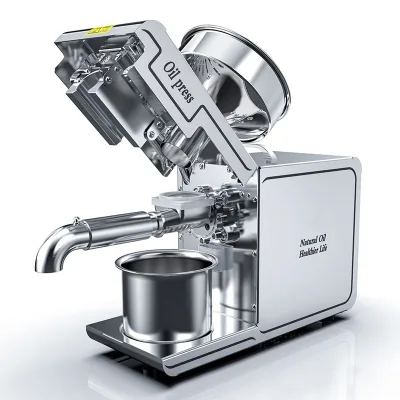
Fully Automatic Household Intelligent Oil Press, Small Oil Press, Soybean Oil Press
$260.00 - $325.00
MOQ: 1
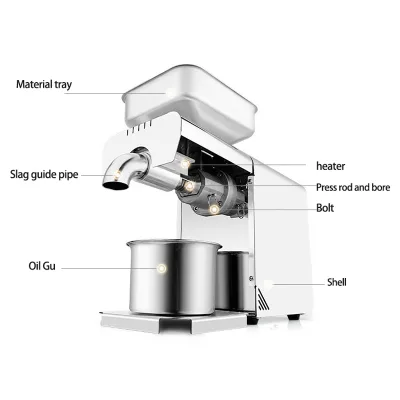
$139.00 - $169.00
MOQ: 1 units

Henan Yishen Machinery Co., Ltd.
- Verified by BV
- Trading Company
- China Henan
- Lead time23 days
- Avg. response≤ 4h
Main productsMachinery and Equipment Sales, Agricultural Machinery Sales, Mining Machinery Sales.
Main marketsAfrica,Southeast Asia/ Mideast,North America

ZHENGZHOU YUSHOU HEAVY INDUSTRY CO., LTD.
- Combined
- China Henan
- Lead time15 days
- Avg. response≤ 3h
Main productsSoap Machinery Laundry Soap Line, Three Roll Mill, Soap Stamper, Soap Mixer, Oil & Fat Saponification Machinery
Main marketsAfrica,Southeast Asia/ Mideast,East Asia(Japan/ South Korea),Domestic,Europe


Professional Palm Oil Press Machine for Home Use with High Efficiency
$660.00 - $30000.00
MOQ: 1 Pieces


Henan Yearmega Industry Co., Ltd.
- Trading Company,Manufacturer/Factory
- China Henan
- Lead time23 days
- Avg. response≤ 6h
Main productsAnimal Feed Processing Machine, Fish Feed and Pet Food Processing Machine, Wood Processing Machine, Oil Processing Machine, Food Processing Machine, Vegetable and Fruit Processing Machine, Nuts Processing Machine
Main marketsSouth America,Eastern Europe,Mid East,North America,Southeast Asia,Eastern Asia,Oceania,Western Europe,Africa

Qingdao Glad Engineering Technology Co., Ltd.
- Verified by BV
- Manufacturer/Factory
- China Shandong
- Lead time23 days
- Avg. response≤ 2h
Main productsDrying Machine, Food Processing Machine, Packing Machine, Dryer, Nuts Processing Machine, Fruit and Vegetable Processing Machine, FM PIR Panel, Food Machine, Milling Machine
Main marketsSouth America,Eastern Europe,Mid East,North America,Southeast Asia,Eastern Asia,Oceania,Western Europe,Africa

Jiaozuo Fineway Trading Co., Ltd
- Verified by BV
- Trading Company,Manufacturer/Factory
- China Henan
- Lead time23 days
- Avg. response≤ 4h
Main productsTortilla Roti Pita Machines, Bakery Equipment, Textile Machines, Milk and Yogurt Production Machine, Chocolate Processing Machines, Candy Making Machines, Meat Processing Machines, Vegetable Processing Machine, Sausage Production Line, Juice Making Production Line
Main marketsSouth America,Eastern Europe,Mid East,North America,Southeast Asia,Eastern Asia,Oceania,Western Europe,Africa


Comprehensive Sourcing Guide
Automatic Household Oil Press Machine Supplier Concentration and Factory Types
The current search results indicate a distinct concentration of suppliers in China, specifically within the Zhejiang and Henan provinces. Zhejiang-based entities appear primarily as trading companies offering a diverse range of kitchen and agricultural machinery, including food mixers and vegetable cutters alongside oil press units. These suppliers often list products like the R8S-A and R6S models, suggesting a manufacturing cluster focused on compact, stainless steel extraction equipment for home use. In contrast, the Henan-based results highlight a mix of trading companies and manufacturers that specialize in broader industrial food processing, such as oil expellers and pellet machines, alongside their household oil press offerings. This geographic split suggests that buyers should expect different product depths depending on the region, with Zhejiang potentially offering more consumer-grade variety and Henan providing more industrial-capacity options.
When evaluating factory types, the data reveals a prevalence of trading companies in the Zhejiang cluster, which may imply a sourcing model where the supplier aggregates products from various workshops rather than operating a single dedicated facility. Conversely, the Henan results explicitly list "Manufacturer/Factory" alongside trading company status, indicating a higher likelihood of direct production capabilities for items like the S-05B and VIC-F3 models. Buyers must verify whether a supplier is a direct manufacturer or a middleman by checking their company type designation and asking for factory audit reports. The presence of ISO 9001 certification in the Henan results provides a baseline for quality management systems, but this should not be assumed for all suppliers without specific verification. Understanding this distinction is critical for determining who controls the production timeline and quality assurance processes for the Automatic Household Oil Press Machine.
How to Verify Automatic Household Oil Press Machine Suppliers
Verification begins with checking the specific business credentials provided in the supplier profile, such as BV verification status or ISO 9001 system certification. The available data shows that some suppliers hold BV verification, which serves as a third-party confirmation of business legitimacy, while others display ISO 9001 certification, indicating adherence to international quality management standards. Buyers should not assume all suppliers possess these credentials; instead, they must request current certificates and cross-reference them with the issuing body. For suppliers claiming to be manufacturers, asking for a video tour of the production line or a recent factory audit report is essential to confirm the existence of the claimed facilities. This step is particularly important when distinguishing between the trading companies in Zhejiang and the mixed entity types in Henan, as the level of direct control over the manufacturing process varies significantly between these models.
Response time and lead time data offer another layer of verification regarding supplier reliability and operational efficiency. The observed response times range from approximately 3.74 hours to 5.56 hours, with lead times varying between 15 and 30 days. A supplier with a consistently short response time and a shorter lead time, such as the 15-day window seen in the Henan results, may indicate a more streamlined production process or better inventory management. However, buyers should treat these numbers as benchmarks rather than guarantees, as they can fluctuate based on order volume and seasonality. It is advisable to test the supplier's communication speed before placing a large order to ensure they can handle urgent requests. Additionally, verifying the "Customized" status and "Customization" availability listed in product attributes helps confirm the supplier's flexibility and technical capability to meet specific buyer requirements for the Automatic Household Oil Press Machine.
What to Compare Across Automatic Household Oil Press Machine Suppliers
When comparing suppliers, the primary focus should be on the technical specifications and pricing structures associated with different product models. The data reveals a wide range of power ratings, from 750W to 1100W, and varying capacities, such as 3-5kgs or 5-9kgs per hour. Buyers must align these specifications with their intended usage volume; a model with a 1100W rated power and 5-9kgs capacity, like the R8S-A, suits higher throughput needs, whereas an 800W unit with 3-5kgs capacity may be sufficient for smaller households. Price points also vary significantly, ranging from approximately $90 to $320 depending on the model and features like temperature control or screw size. Comparing the price per unit against the specific motor power and net weight helps determine the true value proposition, ensuring that a lower price does not come at the cost of insufficient power or durability.
Beyond technical specs, buyers should compare logistical attributes such as minimum order quantity (MOQ), packaging standards, and warranty terms. The search results indicate an MOQ of 1 for several models, which is advantageous for small buyers or those testing the market, while other industrial-grade options may have different thresholds. Packaging details, such as "Carton" versus "Wood Case," impact shipping costs and product protection during transit. Furthermore, warranty information, like the "1 Year" warranty on core components found in the Henan results, is a critical differentiator that affects long-term ownership costs. Buyers should also evaluate the "Applicable Industries" listed, such as "Farms, Home Use, Food Shop," to ensure the machine is rated for their specific environment. A comprehensive comparison requires weighing these factors together rather than focusing on price alone, as the total cost of ownership includes shipping, potential customs duties, and after-sales support.
Common Automatic Household Oil Press Machine Sourcing Risks
One significant risk involves the discrepancy between claimed capabilities and actual production capacity, particularly when dealing with trading companies that may not own the manufacturing facilities. The data shows a mix of trading companies and manufacturers, but without direct factory audits, it is difficult to confirm if a supplier can consistently meet the "Automatic" grade and specific power requirements listed. There is a risk that a supplier might source generic components and assemble them locally, leading to inconsistencies in quality control or motor performance. Buyers should be wary of suppliers who cannot provide detailed technical drawings or component specifications beyond the basic product attributes. Verifying the origin of key parts, such as the screw size and motor power, is essential to ensure the machine meets the advertised performance standards for oil extraction efficiency.
Another risk relates to the variability in lead times and the potential for delays in shipping or production. While some suppliers offer a 15-day lead time, others list 30 days, and these timelines can be extended by unforeseen supply chain disruptions or raw material shortages. The difference in packaging, from standard cartons to wood cases, also introduces a risk of damage during transit if the packaging is not robust enough for the machine's weight and dimensions. Additionally, the lack of standardized certifications across all suppliers means that some units may not meet the safety or electrical standards required in the buyer's destination country. Buyers must verify voltage compatibility, such as the 220V/110V options, and ensure that the frequency matches local grid standards to prevent equipment failure. Proactive risk mitigation involves requesting pre-shipment inspections and confirming that the supplier has a clear policy for handling defects or delays.
Automatic Household Oil Press Machine Regional Sourcing and Logistics
Sourcing from China involves navigating distinct regional logistics profiles based on the supplier's location, with Zhejiang and Henan presenting different advantages. Zhejiang suppliers, often trading companies, may benefit from proximity to major coastal ports, potentially offering faster export processing for smaller, carton-packaged units. The product dimensions in this region, such as 355180330MM, suggest compact packaging that is easier to consolidate in container loads. In contrast, Henan-based suppliers, which include manufacturers, might be located further inland, potentially increasing inland transportation costs before the goods reach a port. However, their focus on industrial machinery like oil expellers and pellet machines suggests they may have more experience handling larger, heavier units, such as those packed in wood cases, which require specialized loading procedures.
Logistics planning must account for the specific dimensions and weight of the chosen model to calculate accurate freight costs. For instance, a 14kg unit with dimensions of 460200390MM will occupy more space and incur higher shipping fees than a 6.5kg unit in a smaller carton. Buyers should request detailed packing lists that include the gross weight and volume of each package to optimize container utilization. The "Wood Case" packaging seen in some Henan results offers superior protection for heavy machinery but adds significant weight and volume, impacting the total landed cost. Conversely, "Carton" packaging is lighter and cheaper to ship but may require additional internal bracing for fragile components. Understanding these regional and logistical nuances allows buyers to select the most cost-effective shipping method and avoid unexpected delays caused by improper packaging or port congestion.
Automatic Household Oil Press Machine Commercial Terms and Order Planning
Commercial terms for the Automatic Household Oil Press Machine vary significantly based on the supplier's location and product type, with pricing ranging from $90 to $320 per unit. Buyers must carefully review the price ranges provided, noting that some models have a fixed price while others offer a range, which may depend on order quantity or customization options. The availability of customization, such as specific voltage requirements or branding, should be confirmed before finalizing the order, as this can affect the unit price and lead time. Additionally, the MOQ of 1 for many models allows for flexible ordering, but buyers should be aware that larger orders might qualify for volume discounts not explicitly listed in the initial search results. Clear communication regarding payment terms, such as the use of escrow services, is vital to protect the buyer's financial interests during the transaction.
Order planning should also consider the warranty and after-sales support provided by the supplier. The data indicates a "1 Year" warranty on core components for some models, which is a standard expectation but must be explicitly confirmed in the contract. Buyers should clarify what is covered under the warranty, such as motor failures or screw wear, and whether the supplier provides replacement parts or technical support remotely. For suppliers with a 30-day lead time, planning for production delays and shipping transit is crucial to ensure the equipment arrives when needed. Establishing a clear timeline for production, quality checks, and delivery helps manage expectations and prevents bottlenecks. Finally, buyers should verify the supplier's ability to handle returns or repairs, ensuring that the commercial terms align with their long-term operational needs for the Automatic Household Oil Press Machine.
FAQs
What is the typical lead time for these machines?
Lead times vary by supplier location and order volume. Suppliers in Zhejiang China typically require 30 days for production and shipping. In contrast, manufacturers in Henan China can often deliver within 15 days. Always confirm the specific timeline with the seller before placing an order.
Are these oil press machines available with customization options?
Yes, most listed models support customization for specific needs. The product attributes indicate that customization is available for various automatic oil press machines. Buyers can request tailored specifications to match their unique production requirements or kitchen setups effectively.
What is the minimum order quantity for household oil presses?
The minimum order quantity is generally one unit for most household models. This low threshold allows buyers to test the equipment without committing to large bulk orders. It is ideal for small businesses or individual home users seeking to start oil production immediately.
Do these suppliers hold any specific quality certifications?
Some suppliers in the results hold ISO 9001 system certification. This indicates adherence to international quality management standards for their manufacturing processes. Buyers should verify the specific certification status of their chosen supplier to ensure product reliability and safety compliance.
What is the price range for automatic household oil press machines?
Prices range from approximately 90 to 350 US dollars depending on the model and features. Basic units start around 90 dollars while more advanced models with temperature control cost up to 350 dollars. The final price depends on the specific capacity and power rating selected.
How quickly do suppliers typically respond to inquiries?
Response times vary between 3.74 and 5.56 hours for active suppliers. Faster response rates are often associated with manufacturers in Henan China compared to trading companies in Zhejiang. Quick communication helps clarify technical details and negotiate terms efficiently before finalizing a purchase agreement.
What power ratings are available for these automatic machines?
Rated power options range from 750 watts to 1100 watts across different models. Motor power typically falls between 200 and 300 watts for efficient operation. Selecting the right power rating ensures the machine handles the desired capacity of seeds like peanuts or sesame effectively.