CE Digital Phase Sequence Tester Suppliers and Manufacturers
Compare 11 verified suppliers offering ce digital phase sequence testers with varying lead times, response speeds, and origins in China. Review specifications like accuracy and warranty before contacting factories for quotes; review the available evidence before requesting comparable quotations from suitable candidates.
Updated
Suppliers List
Chongqing Blue Jay Technology Co., Ltd.
- Manufacturer
- Chongqing, China
- Lead time20 days
- Avg. response≤ 5h
Main productsPower & Energy Meter,Protection Relay,Insulation Monitoring Device,Partial Discharge Monitoring,Arc Flash Relay
Main marketsSoutheast Asia(20.00%), Western Europe(15.00%), Northern Europe(10.00%), Domestic Market(10.00%), Oceania(10.00%), Africa(10.00%), North America(10.00%), Eastern Europe(10.00%), South America(5.00%)
Xiongan Jinsheng Trading Co., Ltd.
- Verified by TüVRheinland
- Trading Company
- Lead time15 days
- Avg. response≤ 2h
Main productsMultimeter, Metal Detector, Industrial Thermal Imager, Spot Welder, Resistance Tester
Main marketsMid East(30%), Southeast Asia(20%), Africa(20%)
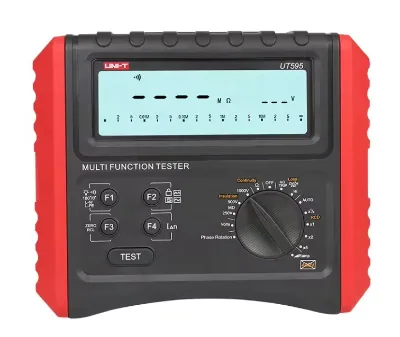
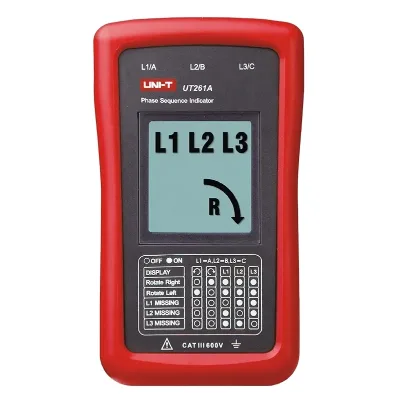
$37.0388 - $43.2117
MOQ: 1 bags
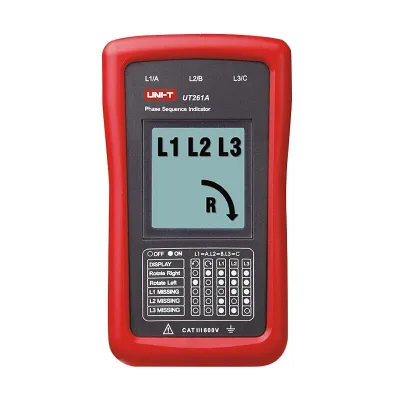
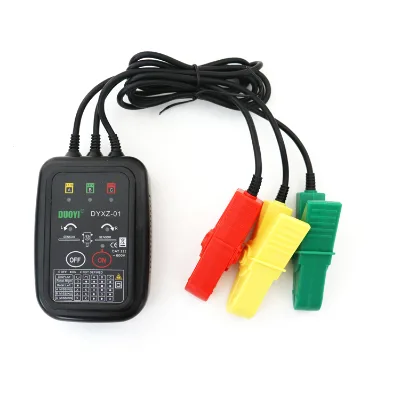
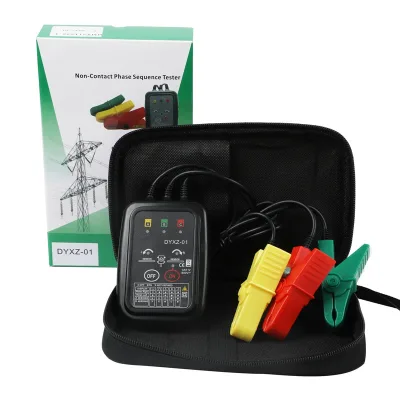
Non-contact Phase Sequence Instrument 600V Auto Testing Duoyi Brand 2-Year Warranty
$19.5485 - $23.6632
MOQ: 10 bags

Wuhan Kaidi Zhengda Electric Co., Ltd.
- Verified by BV
- Combined
- China Hubei
- Lead time15 days
- Avg. response≤ 1h
Main productsSeries Resonance, Hipot Tester, High Voltage Test Equipment, Cable Fault Locator, Electric Power Analyser
Main marketsSoutheast Asia/ Mideast,Australia,North America

Digital Three Phase Phase Sequence Tester High Precision with Auto Load Recognition for Field Use
$770.00 - $850.00
MOQ: 1 sets

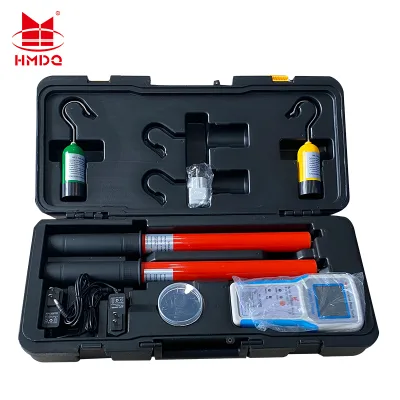
Reliable China Supplier Wholesale Digital 35kv Non-Contact Phase Sequence Tester
$1742.00 - $1928.00
MOQ: 1 sets


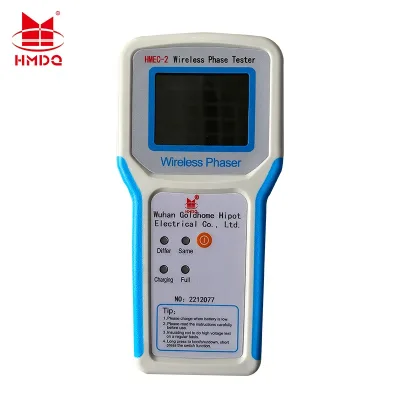
Multifunction Wireless Phase Voltage Frequency Sequence Detector Tester for Ring Main Unit
$1742.00 - $1928.00
MOQ: 1 sets
Shenzhen Graigar Technology Co., Ltd.
- Manufacturer, Trading Company
- Guangdong, China
- Lead time3 days
- Avg. response≤ 2h
Main productsUltrasonic Flaw Detector,Ultrasonic Flow Meter,Thickness Gauge,Underground Metal Detector,Leeb Hardness Tester
Main marketsNorth America(20.00%), Western Europe(15.00%), South America(10.00%), Mid East(10.00%), Oceania(10.00%), Africa(10.00%), Southeast Asia(10.00%), Eastern Europe(10.00%), Domestic Market(5.00%)
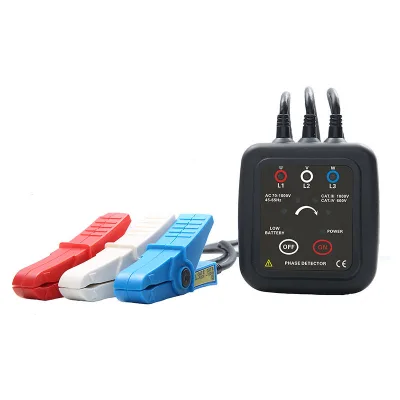
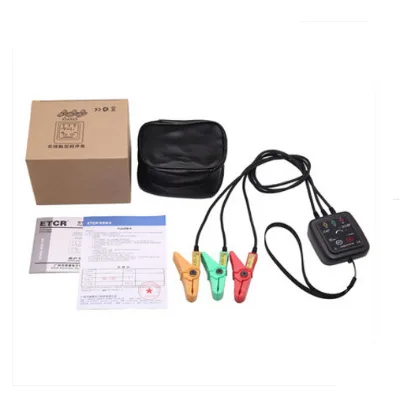
ETCR1000C Phase Sequence Tester DC Line Power Failure Detection Non Contact Phase Sequence Detector
$40.00 - $69.00
MOQ: 1 Minimum
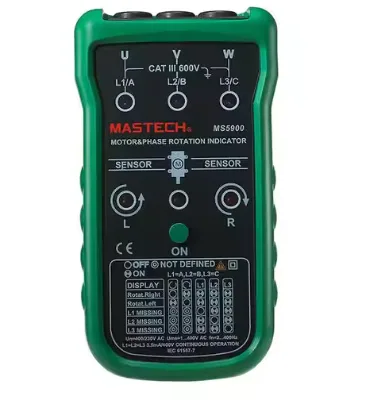
$51.4772 - $72.0674
MOQ: 1 Minimum
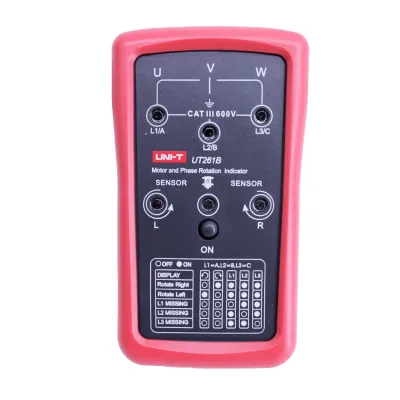

Shenzhen Guang You Shang Technology Co., Ltd.
- Manufacturer, Trading Company, Distributor/Wholesaler
- Guang Dong, China
- Lead time0 days
- Avg. response≤ 3h
Main productstemperature controller,digital thermometer,digital hygrometer,temperature data logger,smart lock
Main marketsSouthern Europe(10.00%), Western Europe(10.00%), Southeast Asia(10.00%), Eastern Europe(10.00%), South America(10.00%), North America(10.00%), Mid East(8.00%), Central America(7.00%), Oceania(5.00%), Northern Europe(5.00%), Eastern Asia(5.00%), South Asia(5.00%), Africa(3.00%), Domestic Market(2.00%)
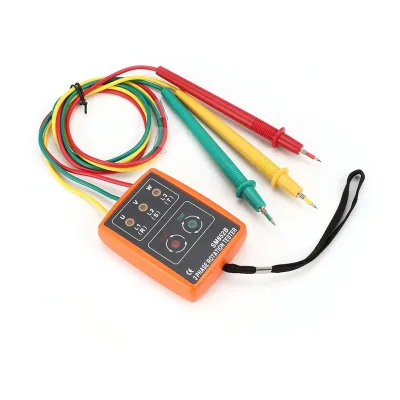
$4.6019 - $5.3185
MOQ: 50 pieces
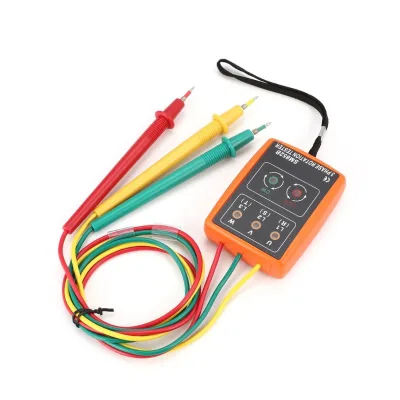
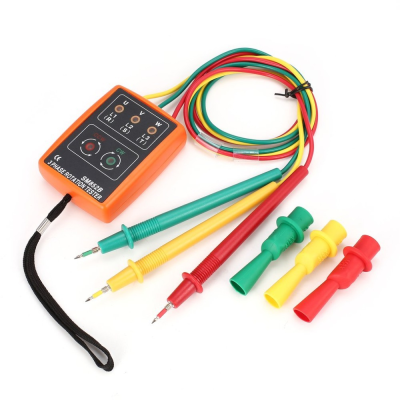
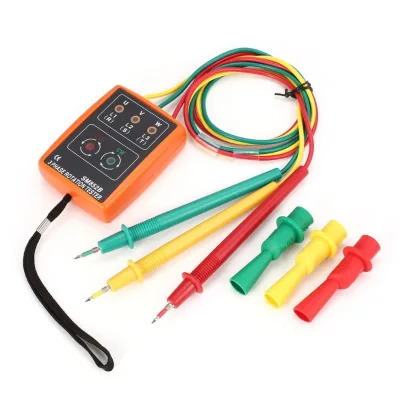
Convenient Phase Sequencer Three-phase Ammeter 3 Phase Rotation Tester SM852B
$6.20 - $6.80
MOQ: 5 pieces
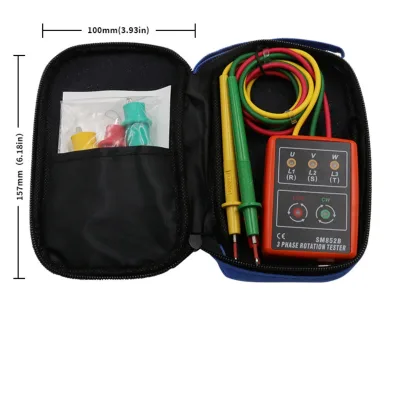
Haosen (Shenzhen) Electronics Co., Ltd.
- Manufacturer
- Guangdong, China
- Lead time5 days
- Avg. response≤ 2h
Main productsIndustrial infrared thermometer,Moisture Meter,Refractometer,Battery Charger,Battery Tester
Main marketsNorth America(30.00%), Western Europe(20.00%), South America(15.00%), South Asia(10.00%), Eastern Europe(10.00%), Northern Europe(10.00%), Southern Europe(5.00%)
Wuhan Goldhome Hipot Electrical Co., Ltd.
- Verified by TüVRheinland
- Manufacturer, Trading Company
- Lead time15 days
- Avg. response≤ 5h
Main productsHigh Voltage Tester, Partial Discharge Test, AC Resonant Test System, Primary Current Injection Test Set, Transformer Tester
Main marketsDomestic Market(52%), Southeast Asia(8%), Western Europe(7%)
Guangzhou ETCR Electronic Technology Co., Ltd.
- Manufacturer, Trading Company
- Guangdong, China
- Lead time5 days
- Avg. response≤ 3h
Main productsEarth Resistance Tester,Insulation Resistance Tester,Clamp Current Meter,High Voltage Electroscope,Current Sensor
Main marketsDomestic Market(100.00%), Southeast Asia(20.00%), South America(15.00%), Eastern Europe(10.00%), Mid East(10.00%), South Asia(5.00%), Southern Europe(5.00%), Northern Europe(5.00%), Central America(5.00%), Western Europe(5.00%), Africa(5.00%), Eastern Asia(5.00%), North America(5.00%), Oceania(5.00%)
Hangzhou Frankever Imp. & Exp. Co., Ltd.
- Verified by SGS Group
- Trading Company
- Lead time30 days
- Avg. response≤ 3h
Main productsSoldering Iron, Smart Home Products, Multimeter, Remote control
Main marketsWestern Europe(35%), North America(30%), South America(20%)

Shenzhen Ever Good Electronic Co., Ltd.
- Manufacturer, Trading Company
- Guangdong, China
- Lead time3 days
- Avg. response≤ 18h
Main productsMetal Detector,Instrument Meter,Oscilloscopes,Temperature Instruments,Clamp Meters
Main marketsSoutheast Asia(15.00%), Mid East(15.00%), North America(15.00%), Western Europe(10.00%), Southern Europe(5.00%), Northern Europe(5.00%), Central America(5.00%), Eastern Europe(5.00%), South Asia(5.00%), South America(5.00%), Oceania(5.00%), Africa(5.00%), Eastern Asia(3.00%), Domestic Market(2.00%)

Huazheng Electric Manufacturing (Baoding) Co., Ltd.
- Verified by SGS
- Manufacturer
- China Hebei
- Lead time15 days
- Avg. response≤ 1h
Main productsHipot Tester, Insulation Resistance Tester, Oil Tester, Circuit Breaker, Relay Protection Tester, Capacitor, High Voltage Generator, Testing Transformer, Power Quality Analyzer, Clamp Meter
Main marketsSouth America


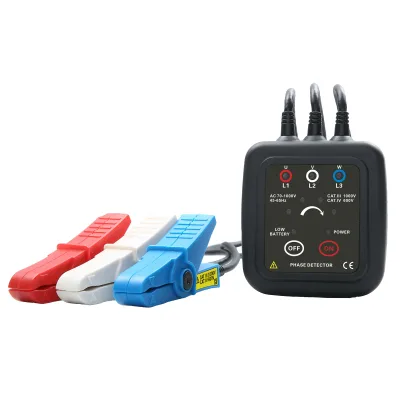
Multifunctional Wireless High Low Voltage Phase Detector for Power Circuit and Substation
$500.00 - $678.00
MOQ: 1 Pieces
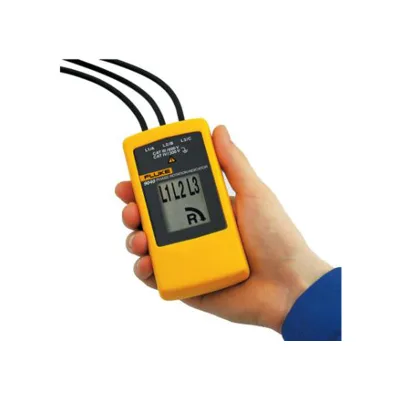
Comprehensive Sourcing Guide
CE Digital Phase Sequence Tester Supplier Concentration and Factory Types
The current supplier landscape for ce digital phase sequence testers reveals a distinct split between manufacturing entities and trading companies, each offering different value propositions for procurement teams. Evidence indicates that manufacturers are primarily concentrated in specific industrial hubs, with Chongqing, China, identified as a key location for production facilities. These factories often specialize in core electrical instrumentation, listing main products such as power and energy meters, protection relays, and insulation monitoring devices alongside phase sequence testers. This specialization suggests that buyers seeking direct factory engagement can find suppliers with deep technical expertise in electrical safety and monitoring systems. The presence of manufacturers in Chongqing provides a tangible anchor for sourcing strategies, allowing buyers to focus their due diligence on facilities in this region that possess the necessary infrastructure for producing high-accuracy testing equipment.
In contrast, trading companies operate with a different operational model, often sourcing from multiple manufacturers to offer a broader catalog of electrical tools. One observed trading company is verified by TüVRheinland, indicating a layer of third-party validation for their business operations. These entities typically list diverse main products, including multimeters, metal detectors, and industrial thermal imagers, suggesting they act as aggregators rather than originators of the technology. For buyers, this distinction is critical because it affects lead times, customization capabilities, and direct communication with engineering teams. While manufacturers in Chongqing may offer OEM and ODM support for specific models, trading companies might provide faster response times and access to established brands like UNI-T. Understanding this concentration helps buyers decide whether they need a dedicated production partner or a flexible distributor for immediate procurement needs.
How to Verify CE Digital Phase Sequence Tester Suppliers
Verifying the legitimacy and capability of suppliers requires a multi-layered approach that goes beyond basic company profiles. Buyers should prioritize suppliers who hold recognized third-party verifications, such as TüVRheinland certification, which provides an external audit of business practices and product quality standards. This verification status is a strong indicator of reliability, particularly for trading companies that may not have their own manufacturing facilities but act as intermediaries for reputable brands. Additionally, buyers must scrutinize the product evidence provided, ensuring that specifications such as accuracy classes, voltage ratings, and protection classes match the technical requirements of the intended application. For instance, checking if a supplier offers products with an accuracy class of ±0.5% or higher is essential for precision electrical testing. The presence of detailed product attributes, such as specific model numbers and warranty periods, further validates the supplier’s transparency and confidence in their inventory.
Beyond certifications and product specs, buyers should assess the supplier’s responsiveness and operational history. Response times are a critical metric for evaluating supplier engagement, with some suppliers demonstrating a response time of just two hours, while others may take up to five hours. Faster response times often correlate with better customer service and quicker resolution of technical queries. Furthermore, buyers should verify the place of origin listed for each product, ensuring it aligns with the supplier’s stated location. For example, products originating from Guangdong, China, should be associated with suppliers operating in that region. Buyers are advised to request recent test reports or calibration certificates for phase sequence testers to confirm compliance with international standards. If evidence is unavailable, buyers should explicitly ask for these documents before placing orders to mitigate the risk of receiving non-compliant equipment.
What to Compare Across CE Digital Phase Sequence Tester Suppliers
When evaluating multiple suppliers, buyers must compare key operational metrics to determine the best fit for their procurement strategy. Lead times are a primary differentiator, with some suppliers offering a lead time of 15 days, while others may require up to 20 days. This difference can significantly impact project timelines, especially for urgent maintenance or installation projects. Buyers should also compare minimum order quantities (MOQ), which range from as low as one unit for certain portable testers to ten units for other models. Lower MOQs are advantageous for small-scale purchases or trial orders, whereas higher MOQs may offer better unit economics for bulk procurement. Additionally, supply ability is a crucial factor, with some manufacturers stating a capacity of 1000 pieces per month, ensuring they can handle large volume orders without delays. Comparing these logistical parameters helps buyers align supplier capabilities with their demand forecasts.
Price and customization options are equally important comparison points. Unit prices for phase sequence testers vary, with some models priced around $110 to $200, depending on features and accuracy. Buyers should also evaluate the customized support offered, such as OEM, ODM, or OBM services. Manufacturers in Chongqing, for example, explicitly list OEM and ODM support, allowing buyers to brand products or modify designs. In contrast, some products may have no customized support, limiting buyers to off-the-shelf solutions. Warranty periods also differ, with some suppliers offering one-year warranties and others providing three-year coverage. Buyers should weigh these factors against the total cost of ownership, including potential maintenance and replacement costs. By systematically comparing lead times, MOQs, prices, and customization capabilities, buyers can make informed decisions that balance cost, speed, and flexibility.
Common CE Digital Phase Sequence Tester Sourcing Risks
Sourcing ce digital phase sequence testers involves several inherent risks that buyers must proactively manage to ensure successful procurement. One significant risk is the discrepancy between advertised specifications and actual product performance. Buyers may encounter products with vague accuracy claims or incomplete technical data, such as unknown power ratings or unspecified protection classes. This lack of detail can lead to compatibility issues in the field, particularly in high-voltage environments where precision is critical. Another risk is the variability in warranty coverage. While some suppliers offer robust three-year warranties, others provide only one year, leaving buyers exposed to higher repair costs if defects arise. Buyers must carefully review warranty terms and ensure they are clearly documented in the purchase agreement to avoid disputes later.
Additionally, buyers face risks related to supply chain transparency and logistics. Products dispatched from different ports, such as Shanghai, may have varying transit times and customs clearance complexities. Buyers should verify the port of dispatch for each order to anticipate potential delays. Furthermore, the risk of receiving non-compliant products is heightened when sourcing from trading companies that aggregate goods from multiple manufacturers. Without direct oversight of the production process, buyers may struggle to verify quality control measures. To mitigate these risks, buyers should request detailed packaging information and single package weights to ensure proper handling and shipping. Engaging in clear communication about quality expectations and delivery timelines can help reduce the likelihood of misunderstandings and ensure that the received products meet the required standards.
CE Digital Phase Sequence Tester Regional Sourcing and Logistics
Regional sourcing strategies play a vital role in optimizing the procurement of ce digital phase sequence testers, particularly when dealing with suppliers located in China. The concentration of manufacturers in Chongqing and trading companies in Guangdong offers buyers distinct logistical advantages. Products originating from Chongqing may benefit from established industrial supply chains, while those from Guangdong often leverage the region’s robust export infrastructure. Buyers should consider the port of dispatch when planning logistics, as Shanghai is a common departure point for many suppliers. Understanding the geographic origin of products helps buyers estimate transit times and calculate landed costs more accurately. For instance, shipments from Guangdong to major international ports may have more frequent sailings, potentially reducing lead times compared to other regions.
Logistics planning also involves managing packaging and handling requirements. Suppliers provide specific single package sizes and weights, which are crucial for calculating shipping volumes and costs. For example, some phase sequence testers have a single gross weight of 1.000 kg, while others may weigh up to 2.5 kg. Buyers should use this data to optimize container loading and minimize freight expenses. Additionally, buyers should be aware of any special handling instructions, such as protection classes like IP40, which indicate the device’s resistance to dust and water. Proper packaging details, often provided upon consultation, ensure that products arrive in pristine condition. By aligning regional sourcing choices with logistical capabilities, buyers can streamline the supply chain and reduce the risk of damage or delay during transit.
CE Digital Phase Sequence Tester Commercial Terms and Order Planning
Effective order planning for ce digital phase sequence testers requires a thorough understanding of commercial terms and financial implications. Buyers must carefully review pricing structures, which can vary based on order volume and customization requirements. For instance, some models have a fixed price of $200.00, while others range from $110 to $43, depending on the specific features and brand. Buyers should negotiate bulk discounts where applicable, especially when ordering quantities that exceed the minimum order quantity. Additionally, payment terms and escrow services should be evaluated to ensure secure transactions. Using escrow protection can safeguard buyers against non-delivery or product discrepancies, providing peace of mind during the procurement process.
Order planning also involves coordinating with suppliers on delivery schedules and after-sales support. Buyers should confirm the lead time for each order, whether it is 15 or 20 days, and align this with their project timelines. Clear communication regarding packaging details and shipping instructions is essential to avoid logistical bottlenecks. Furthermore, buyers should establish a relationship with suppliers for ongoing support, including warranty claims and technical assistance. Suppliers offering OEM and ODM services can provide long-term value by allowing buyers to customize products for specific market needs. By integrating commercial terms, logistics, and support services into their order planning, buyers can create a resilient supply chain that meets their operational demands and budget constraints.
FAQs
What is the price range for digital phase sequence testers?
Prices for these devices typically range from approximately $37 to $200 per unit. Specific costs depend on the model and features, such as the UT261B starting near $37 or the 9040 model priced at $200. Buyers should consult suppliers for exact quotes based on quantity and customization needs.
What is the minimum order quantity for these testers?
Minimum order quantities vary by supplier and product model. Some listings accept orders as low as one unit, while others require a minimum of ten pieces. Buyers should verify the specific MOQ with the supplier before placing an order to ensure it aligns with their procurement requirements.
How long does delivery take for these instruments?
Lead times for manufacturing and shipping these testers generally range from 15 to 20 days. This timeframe covers production and preparation for dispatch. Buyers should confirm the exact delivery schedule with the supplier, as lead times can vary based on order volume and specific product configurations.
Are these testers customizable for private labeling?
Many suppliers offer customization support including OEM, ODM, and OBM services. This allows buyers to add their brand name or specific design elements to the devices. However, some models may not support customization, so buyers must verify the specific options available for their chosen product model.
What warranty is provided for phase sequence meters?
Warranty periods for these testers typically range from one to three years. Specific coverage depends on the manufacturer and model, with some offering a one-year warranty and others providing up to three years. Buyers should review the warranty terms provided by the supplier to understand the coverage details.
Where are these testers manufactured?
These devices are primarily manufactured in China, with specific origins including Chongqing and Guangdong provinces. The place of origin is a key detail for buyers assessing supply chain logistics. Buyers should verify the exact manufacturing location with the supplier to ensure it meets their sourcing preferences.