Crab Shell Chitosan Oligosaccharide Suppliers and Manufacturers
Find 12 verified suppliers offering Crab Shell Chitosan Oligosaccharide from China Jiangsu, Shandong, and Shaanxi. Compare response times, lead times, certifications like ISO 9001, and product specifications including purity and mesh size to source the right partner for your needs.
Suppliers List

- Verified by SGS
- Trading Company,Manufacturer/Factory
- China Jiangsu
- Lead time15 days
- Avg. response≤ 9h
Main productsWater Decoloring Agent, Sodium Polyacrylate, Sizing Agent, Poly Dadmac, Polyamine, Dispersing Agent, Water Treatment Chemical, PAM-Polyacrylamide, PAC Polyaluminum Chloride, Defoamer
Main marketsEastern Europe,Mid East,North America,Southeast Asia,Eastern Asia,Oceania,Western Europe,Africa

Jinan Fusen Bio-Chemicals Co., Ltd.
- Manufacturer/Factory
- China Shandong
- Lead time23 days
- Avg. response≤ 25h
Main productsSpinosad, Biological Pesticides, Biological Fungicides, Bacillus Thuringiensis, Bacillus Subtilis, Polyoxin, Kasugamycin, Gibberellic Acid, Bti, Streptomycin Sulfate
Main marketsSouth America,Mid East,Southeast Asia

Xi'an Sentian Biotechnology Co., Ltd.
- Verified by SGS
- Manufacturer/Factory
- China Shaanxi
- Lead time0 days
- Avg. response≤ 8h
Main productsBenfotiamine, Rennet, Chymosin, Alpha Lipoic Acid, Olmesartana Medoxomil, Rosuvastatin Calcium
Main marketsSouth America,Eastern Europe,North America,Western Europe

Qingdao Hibong Industrial Technology Co., Ltd.
- Verified by TUVRHEINLAND
- Manufacturer/Factory
- China Shandong
- Lead time150 days
- Avg. response≤ 5h
Main productsOrganic Liquid Fertilizer, Seaweed Extract and Seaweed Fertilizer, Organic Granular Fertilizer, EDDHA Fe 6, Amino Acid and Amino Acid Chelation Fertilizer, Potassium Humate and Fulvic Acid, Chitosan and Chitosan Fertilizer, NPK Water Soluble Fertilizer
Main marketsSouth America,Eastern Europe,Mid East,North America,Southeast Asia,Western Europe

Qingdao Haidelong Biotechnology Co., Ltd.
- Manufacturer
- China Shandong
- Lead time15 days
- Avg. response≤ 8h
Main productsSeaweed Extract, Water Soluble Fertilizer, Microbial Fertilizer, Chelate Trace Fertilizer, Amino Acid
Main marketsSouth America,Africa,Southeast Asia/ Mideast

Tianjin Zhuofeng Biotechnology Co., Ltd.
- Verified by BV
- Trading Company
- China Tianjin
- Lead time15 days
- Avg. response≤ 10h
Main productsFood Additives, Plant Extract, Amino Acid, Nutrient Supplements, Feed Additives, Vitamin, Water Treatment, Coffee Bean/Cacao Beans, Cocoa Butter Cocoa Powder, Plastic Particle
Main marketsSoutheast Asia/ Mideast

Qingdao Seawin Biotech Group Co., Ltd.
- Combined
- China Shandong
- Lead time23 days
- Avg. response≤ 19h
Main productsOrganic Fertilizer, Seaweed Fertilizer, Fertilizer, Fertilizer Equipment, NPK Fertilizer, NPK Fertilizer Equipment, Organic Fertilizer Equipment, Compound Fertilizer Production Line
Main marketsSouth America,Europe,North America
Qingdao Hibong Industrial Technology Co., Ltd
- Verified by SGS Group
- Manufacturer, Trading Company
- Lead time10 days
Main productsOrganic Fertilizer, Water Treatment Chemicals, Micronutrients, Food additives, SAP for Fertilizer
Main marketsSouth America(30%), North America(25%), Southeast Asia(15%)

- Verified by TUVRHEINLAND
- Trading Company
- China Shandong
- Lead time15 days
- Avg. response≤ 7h
Main productsNeotame, Sucralose, Stevia Extract, Erythritol, Soya Lecithin, Food Thickener Pullulan, Coenzyme Q10, L-Glutathione, Entecavir Monohydrate, Caramel Color
Main marketsSouth America,Africa,Others(foreignTradeCapacity.exportBusinessCapacityMarketOther),Southeast Asia/ Mideast,Europe,North America


Water Soluble Chitosan Powder Natural Chitosan as a Coagulant Chitosan Price Per Kg
$20.00 - $45.00
MOQ: 1 kg


Shaanxi Dongjiang Kangtai Health Industry Co., Ltd.
- Verified by SGS
- Manufacturer
- China Shaanxi
- Lead time15 days
- Avg. response≤ 5h
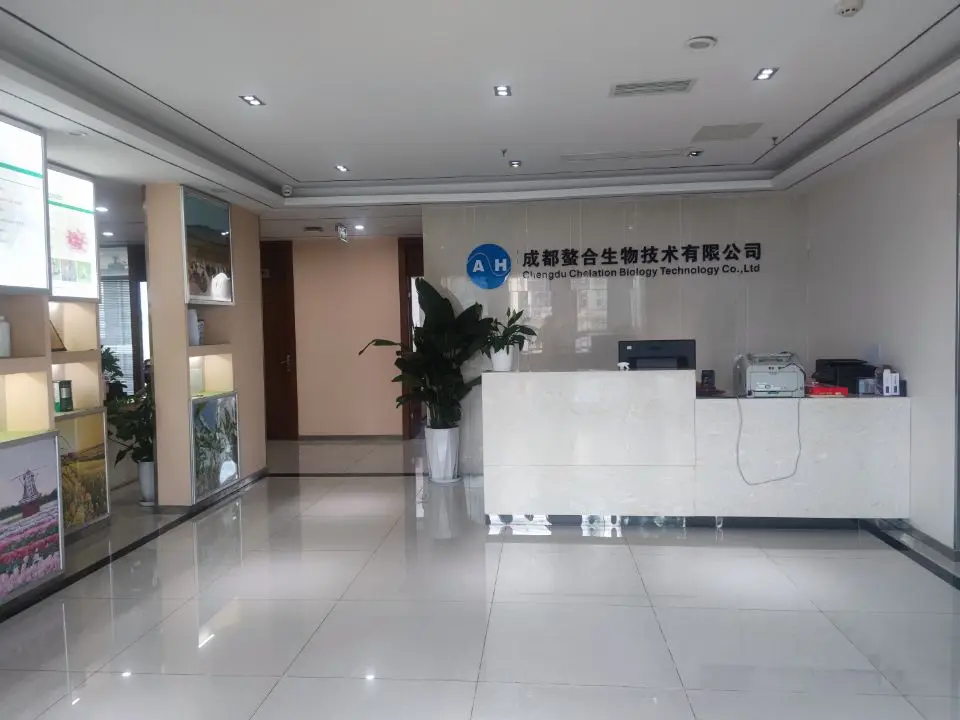
Chengdu Chelation Biology Technology Co., Ltd.
- Trading Company
- Sichuan, China
- Lead time7 days
- Avg. response≤ 7h
Main productsAmino Acid Powder,Amino Acid Chelated Minerals,Feed Additive Chelate mineral,Industrial-grade Amino Acid Powder,Liquid Amino Acid
Main marketsDomestic Market(7.14%), South Asia(7.14%), Southern Europe(7.14%), Northern Europe(7.14%), Central America(7.14%), Western Europe(7.14%), Eastern Asia(7.14%), Mid East(7.14%), Oceania(7.14%), Africa(7.14%), Southeast Asia(7.14%), Eastern Europe(7.14%), South America(7.14%), North America(7.14%)

Tianjin Dongfang Import and Export Co., Ltd.
- Trading Company
- China Tianjin
- Lead time15 days
- Avg. response≤ 4h
Main productsFood Additive, Medical Intermediate, Nutritional Supplement, Vitamin, Natural Plant Extracts, Amino Acid
Main marketsSoutheast Asia/ Mideast,Europe

Chitosan Oligosaccharide 148411-57-8 Water Soluble Chitosan Oligosaccharide
$5.50 - $12.50
MOQ: 1000 kg

Agricultural / Food Grade Chitosan Oligosaccharide Shrimp Extract Chitooligosaccharide 95%
$2.50 - $6.50
MOQ: 1000 kg

Chitosan Oligosaccharide/Water Soluble Chitosan/Carboxymnethyl /Hydroxypropy Chitosan
$3.25 - $5.25
MOQ: 1000 kg


Comprehensive Sourcing Guide
Crab Shell Chitosan Oligosaccharide Supplier Concentration and Factory Types
Current data indicates that active suppliers for this category are concentrated in specific Chinese provinces, with verified results showing operations in Jiangsu, Shandong, and Shaanxi. These regions host a mix of trading companies and manufacturer-factories, suggesting that buyers may encounter different operational models depending on the specific cluster. For instance, suppliers in Jiangsu are identified as both trading entities and manufacturing facilities, while those in Shandong are explicitly classified as manufacturer-factories. This variation implies that the supply chain structure is not uniform, and the origin of the product often dictates the type of business entity involved in the transaction.
When evaluating the factory types, buyers should note that some suppliers offer OEM capabilities, which is a critical factor for customizing product specifications. The presence of both trading companies and manufacturers means that a single search result might represent a direct production source or an intermediary. In the Shandong cluster, the focus appears to be on biological pesticides and agricultural applications, whereas the Jiangsu and Shaanxi entries show a broader range including food ingredients and chemical additives. Understanding this distinction helps buyers determine whether they are dealing with a production house capable of direct customization or a trading firm that aggregates products from various sources.
How to Verify Crab Shell Chitosan Oligosaccharide Suppliers
Verification of supplier credibility relies heavily on checking for specific third-party certifications and verification badges provided in the search results. Several suppliers in the dataset display ISO 9001 certification, and some also hold BSCI or ISO 14001 system certifications, which serve as indicators of quality management and environmental compliance. Additionally, the presence of an SGS verification badge on certain profiles provides an external layer of trust regarding the company's operational status. Buyers must confirm that these certifications are current and relevant to the specific grade of chitosan oligosaccharide being sourced, as agricultural grades may have different compliance requirements than food or medical grades.
Beyond certifications, the response time and verification status of the supplier are essential metrics for assessing reliability. The data shows response times varying significantly, with some suppliers responding within approximately 9 hours while others take up to 25 hours. A faster response time often correlates with better communication channels and operational efficiency, which is vital for resolving technical queries about product specifications. Buyers should prioritize suppliers who have been verified by recognized agencies and demonstrate a consistent ability to communicate within a reasonable timeframe. It is also important to cross-reference the listed certifications with the specific product attributes, such as purity levels or heavy metal content, to ensure the supplier's claims align with the actual product evidence provided.
What to Compare Across Crab Shell Chitosan Oligosaccharide Suppliers
Comparing suppliers requires a detailed analysis of lead times, minimum order quantities, and pricing structures, as these factors vary widely across the available results. Lead times in the dataset range from immediate availability to 23 days, with some suppliers indicating a 15-day window and others offering a 7-day delivery for specific agricultural applications. Minimum order quantities also differ, with some suppliers accepting orders as low as 1 kilogram, while others require a minimum of 500 units. These discrepancies mean that buyers must align their order volume and timeline expectations with the specific capabilities of the supplier they choose to avoid delays or unnecessary inventory costs.
Pricing and product specifications are another critical area for comparison, as the cost per unit can fluctuate based on the grade and purity of the chitosan oligosaccharide. The observed price ranges span from approximately 1.00 to 100.00 per unit, depending on whether the product is agricultural grade, food grade, or technical grade. Buyers should also compare the molecular weight, mesh size, and extraction source, as these attributes directly impact the product's performance in applications ranging from fertilizers to dietary supplements. For example, some products specify a molecular weight of less than 5000, while others focus on purity levels exceeding 85%. A thorough comparison ensures that the selected supplier meets both the technical requirements and the budget constraints of the project.
Common Crab Shell Chitosan Oligosaccharide Sourcing Risks
One significant risk in sourcing this category is the potential mismatch between the claimed product grade and the actual specifications delivered. The dataset shows products labeled as agricultural grade, food grade, and technical grade, each with distinct purity and safety requirements. For instance, food-grade products must meet strict limits for heavy metals like lead and arsenic, with some results specifying lead levels below 10ppm and arsenic below 2ppm. If a buyer orders a food-grade product but receives an agricultural-grade equivalent, the product may fail regulatory compliance checks in the destination market. This risk underscores the need for buyers to explicitly verify the intended application and corresponding safety standards before finalizing an order.
Another risk involves the variability in packaging and storage requirements, which can affect product stability during transit. The search results indicate that products are typically packed in drums or bags, with some specifying vacuum packing or aluminum foil bags for moisture protection. However, the storage methods vary, with some products requiring normal storage conditions while others need to be kept in cool, dry places. If the logistics provider does not adhere to these specific storage conditions, the chitosan oligosaccharide could degrade, losing its efficacy or changing its physical state. Buyers must ensure that their shipping partners are aware of these requirements and that the supplier provides clear instructions on handling and storage to mitigate the risk of product damage.
Crab Shell Chitosan Oligosaccharide Regional Sourcing and Logistics
Regional sourcing strategies should account for the specific locations of suppliers, as the data highlights operations in Jiangsu, Shandong, and Shaanxi provinces. Each region may offer different logistical advantages depending on the proximity to ports and the availability of specialized transport for chemical or agricultural products. For example, suppliers in Jiangsu and Shandong are likely to have established export channels due to their coastal locations, which can facilitate faster shipping times to international markets. In contrast, suppliers in Shaanxi, being inland, might require different logistics planning to ensure timely delivery, potentially involving rail or air freight options to reach major ports.
Logistics planning must also consider the express time and shipping methods offered by the suppliers, as these can vary significantly. Some suppliers indicate an express time of 5 to 7 days, while others rely on standard sea or air freight. The choice of shipping method, whether by express, air, or sea, will impact the overall cost and delivery speed. Buyers should verify the shipping method capabilities of the supplier to ensure they can meet their project deadlines. Additionally, the packaging specifications, such as drum or bag sizes, will influence the volume of goods that can be shipped in a single container, affecting the efficiency of the logistics process. Understanding these regional and logistical nuances helps buyers optimize their supply chain for cost and speed.
Crab Shell Chitosan Oligosaccharide Commercial Terms and Order Planning
Commercial terms and order planning are critical for managing the financial and operational aspects of the procurement process. The dataset reveals that payment methods can include credit cards, T/T, PayPal, and Western Union, offering flexibility but also requiring careful verification of the payment security. Buyers should establish clear payment terms that align with their risk tolerance and cash flow needs, ensuring that the supplier accepts the preferred method. Furthermore, the minimum order quantities and lead times must be factored into the order planning to avoid stockouts or overstocking. For instance, a supplier with a 1kg MOQ and a 15-day lead time offers different planning constraints compared to one requiring 500 units and a 23-day lead time.
Customization options and product specifications also play a vital role in order planning, as many suppliers offer customization services for product models and packaging. The ability to customize the mesh size, molecular weight, or packaging type allows buyers to tailor the product to their specific application needs. However, customization often comes with additional lead times and potentially higher costs, which must be accounted for in the budget and timeline. Buyers should confirm the customization capabilities and associated costs before placing an order to ensure that the final product meets their exact requirements. By carefully planning the commercial terms and customization needs, buyers can streamline the procurement process and ensure a successful transaction.
FAQs
What is the typical lead time for Crab Shell Chitosan Oligosaccharide orders?
Lead times vary by supplier and product grade. Some manufacturers offer delivery within 15 days, while others may require up to 23 days. Specific agricultural grade products can sometimes be delivered in just 7 days depending on stock availability and customization needs.
What are the minimum order quantities for chitosan oligosaccharide products?
Minimum order quantities differ significantly across suppliers. Some vendors accept orders as low as 1 kilogram for food grade samples, while others require a minimum of 500 units for agricultural fungicide applications. Buyers should verify specific MOQs before placing bulk orders.
Which certifications are available for chitosan oligosaccharide suppliers?
Many suppliers hold ISO 9001 and ISO 22000 certifications. Some also possess GMP or BSCI system certifications. Specific products may carry ISO certification for purity standards. Buyers should request current certificates to ensure compliance with their regional safety and quality regulations.
Where are the main manufacturing locations for these products?
Manufacturers are primarily located in Jiangsu, Shandong, and Shaanxi provinces in China. These regions host both trading companies and factories specializing in seafood extracts. Buyers can filter results by these specific locations to find suppliers with established logistics networks.
What is the price range for agricultural grade chitosan oligosaccharide?
Prices vary based on purity and packaging. Agricultural grade products range from 1.00 to 4.00 per unit. Higher purity food grade options may cost between 50.00 and 100.00. Buyers should compare specific product attributes to determine the accurate cost for their needs.
How quickly do suppliers typically respond to inquiries?
Response times vary among the listed suppliers. Some vendors respond within 7 hours, while others may take up to 25 hours. Faster response times are often associated with trading companies, whereas manufacturers might have slightly longer processing times for technical queries.
What are the common physical forms of chitosan oligosaccharide?
Products are typically available as powders with mesh sizes like 80 mesh. Some forms appear whitish to yellowish, while others are yellow powders. The state is generally solid, and packaging options include drums or vacuum-packed bags for various industrial applications.