Dust-Free Hydraulic Hose Cutter Suppliers and Manufacturers
Explore 16 verified suppliers offering Dust-Free Hydraulic Hose Cutter machines with ISO9001 and CE certifications. Compare response times, lead times, and pricing to find the right fit. Contact suppliers directly to request quotes and verify specifications; review the available evidence before requesting comparable quotations from suitable candidates.
Suppliers List

Handanshi Kangmai Hydraulic Equipment Co., Ltd.
- Combined
- China Hebei
- Lead time15 days
- Avg. response≤ 13h
Main productsHydraulic Hose Crimping Machine, Hose Crimping Machine, Hose Crimper, Cable Hose Crimping Machine, Rubber Hose Crimping Machine, High Pressure Hose Crimping Machine, Manual Hose Crimping Machine, Portable Hose Crimping Machine, Hose Cutting Machine, Nut Crimping Machine
Main marketsSouth America,Africa,Southeast Asia/ Mideast,East Asia(Japan/ South Korea),Domestic,Europe,Australia,North America

Ningbo Yinzhou Pehel Machinery Co., Ltd.
- Verified by BV
- Combined
- China Zhejiang
- Lead time30 days
- Avg. response≤ 4h
Main productsHydraulic Fitting, Hydraulic Hose Fitting, Hydraulic Ferrule, Hydraulic Adapters, Hydraulic Hose, Manifold Block, Hose Crimping Machine, Power Unit, Hydraulic Hose Assembly, Hydraulic Quick Coupling
Main marketsSouth America,Europe,North America

Weifang Jyc Import and Export Co., Ltd.
- Verified by SGS
- Trading Company
- China Shandong
- Lead time15 days
- Avg. response≤ 4h
Main productsHose Crimping Machine, Hose Cutting Machine, Hose Skiving Machine, Hose Test Bench
Main marketsSouth America,Africa,Europe,North America

CE 6-51mm 2" 4sp Dust Free Hydraulic Rubber Hose Cutter/Cutting Hose Machine
$299.00 - $499.00
MOQ: 1 Pieces

6-51mm 2" 4sp Dust Free Hydraulic Rubber Hose Smokeless Pipe Cutting/Cutter Machine
$299.00 - $499.00
MOQ: 1 Pieces

High-Speed Dust-Free Cut off Cutters Machine Pipe Hydraulic Hose Cutting Machine
$299.00 - $499.00
MOQ: 1 Pieces

Dust-Free Pipe Cutting Machine Hydraulic Hose Saw Pipe Cutting Skiving Machine
$299.00 - $499.00
MOQ: 1 Pieces


CE 6-51mm 2" Dust Free Hydraulic Smokeless Rubber Hose Cutting/Cutter Skiving Machine
$299.00 - $499.00
MOQ: 1 Pieces

Oriental Mj Hydraulic Machinery (Tianjin) Co., Ltd.
- Verified by SGS
- Manufacturer/Factory
- China Tianjin
- Lead time0 days
- Avg. response≤ 3h
Main productsHose Crimping Machine, Hose Cutting Machine, Hose Skiving Machine, Hydraulic Hose, Hydraulic Fitting, Hose Pressure Test Machine, Hose Cleaning Machine, Hydraulic Hose Crimping Machine, Hydraulic Hose Crimper, Hose Crimper
Main marketsSouth America,Eastern Europe,Mid East,North America,Southeast Asia,Eastern Asia,Oceania,Western Europe,Africa

CE 6-51mm 2" Dust Free Hydraulic Rubber Hose Cutter Smokeless Cutting Hose Machine
$400.00 - $650.00
MOQ: 1 Pieces

$559.00 - $649.00
MOQ: 1 Pieces


High Quality Hydraulic Hose Cutter Tool 1/4-2inch 6wire Flexible Hose Cutting and Skiving Machine
$559.00 - $649.00
MOQ: 1 Pieces

Most Popular Industrial Hydraulic Hose Cutter Flexible Hose Cutting and Skiving Machine
$559.00 - $799.00
MOQ: 1 Pieces


Henan Geyu Machinery Manufacturing Co., Ltd.
- Verified by BV
- Combined
- China Jiangsu
- Lead time15 days
- Avg. response≤ 3h
Main productscnc pipe cutting machine
Main marketsSouth America,Southeast Asia/ Mideast,North America

Hengshui Jiaer Rubber and Plastic Technology Co., Ltd
- Verified by SGS
- Combined
- China Hebei
- Lead time15 days
- Avg. response≤ 6h
Main marketsSouth America,Europe

High Efficiency Dust Free Hydraulic Hose Cutting Machine Easy Operation 6-51mm
$499.00 - $559.00
MOQ: 1 Unit

Factory Direct 6-51mm High Precision Dustless Hydraulic Rubber Hose Cutter Machine
$499.00 - $559.00
MOQ: 1 Unit


Professional 1/4-2 Inch Hydraulic Hose Cutter for 4 Layers Steel Wire Reinforced Hoses
$499.00 - $559.00
MOQ: 1 Unit


Hengyu Group Hydraulic Fluid Technology Hebei Co., Ltd.
- Verified by TUVRHEINLAND
- Combined
- China Hebei
- Lead time15 days
- Avg. response≤ 7h
Main productsHydraulic Hose, Hydraulic Rubber Hose
Main marketsSouth America,Africa,Southeast Asia/ Mideast,Domestic,Europe,Australia,North America
Shandong keruide Heavy Machinery co.,ltd
- Verified by TüVRheinland
- Manufacturer, Trading Company
- Lead time3 days
- Avg. response≤ 5h
Main productsExcavator, Forklift, Skid Steer Loader, Tricycle, Road Roller
Main marketsDomestic Market(25%), North America(20%), Eastern Europe(20%)

Hebei Orient ADMA Tech Group Co., Ltd.
- Verified by SGS
- Trading Company,Manufacturer/Factory
- China Hebei
- Lead time30 days
- Avg. response≤ 8h
Main productsPVC Hose, Rubber Hose, Hydraulic Hose, Silicone Hose, Pneumatic Hose, Oil Field Hose/Dredging Hose, Hose Crimping Machine, Hose Couplings and Clamps, Hose Protection Sleeve, Packaging Film
Main marketsSouth America,Eastern Europe,Mid East,North America,Southeast Asia,Eastern Asia,Oceania,Western Europe,Africa


Automatic Rubber Hydraulic Hose Cutter Cutting Machine Manufacturers
$1000.00 - $1950.00
MOQ: 1 Pieces


Ningbo Yinzhou Guoten Industrial Co., Ltd.
- Verified by TUVRHEINLAND
- Trading Company
- China Zhejiang
- Lead time30 days
- Avg. response≤ 11h
Main productsElectric Tools, Garden Tools, Hand Tools, Power Tools, Air Tools
Main marketsSoutheast Asia/ Mideast,Europe,North America

ZHEJIANG VICTAULIC-TUWEI PIPING EQUIPMENT CO., LTD.
- Verified by TUVRHEINLAND
- Manufacturer/Factory,Group Corporation
- China Zhejiang
- Lead time0 days
- Avg. response≤ 25h
Main productsRoll Grooving Machine, Grooved Machine, Grooving Tool, Groove, Pipe Cutting Machine, Hole Cutting Tool, Pipe Threading Machine, Dies, Pipe Cutter, Hole Saw

- Verified by TUVRHEINLAND
- Manufacturer/Factory
- China Jiangsu
- Lead time90 days
- Avg. response≤ 3h
Main productsFlexible Metal Hose, Expansion Joint, Metal Bellow Forming Machine, Metal Hose Forming Machine, Tube Welding Machine, Metal Hose Testing Bench, Hose Fitting Welding Machine, Fire Hose Forming Machine, Stainless Steel Hose, Metal Hose
Main marketsSouth America,Eastern Europe,Mid East,North America,Southeast Asia,Eastern Asia,Oceania,Western Europe,Africa


Automatic Hydraulic Rubber Hose Cutter 6-51 mm 1/4'' to 2'' Industrial Hose Cutting Machine
$14800.00 - $15000.00
MOQ: 1 Sets


Wenzhou Ang Rui Machinery Co., Ltd.
- Verified by CTI
- Trading Company
- China Zhejiang
- Lead time15 days
- Avg. response≤ 7h
Main productsAir Fitting, Air Cylinder, Solenoid Valve, Pneumatic Fittng, Pneumatic Component, PU Tube, Tube Cutter, Air Source, Nylon Tube, PU Spring Tube
Main marketsSouth America,Africa,Southeast Asia/ Mideast,Europe,Australia,North America

JIANGSU ALSTON TOOLS CO., LTD.
- Combined
- China Jiangsu
- Lead time30 days
- Avg. response≤ 3h
Main productsDiamond Saw Blade, Tct Saw Blade, Diamond Blade, Saw Blades, Diamond Cup Wheel, Diamond Cutters, Cutting Saws, Diamond Tools, Diamond Discs, Building Material
Main marketsSouth America,Southeast Asia/ Mideast,Europe

Qingdao Judong Industry Co., Ltd.
- Verified by TUVRHEINLAND
- Trading Company,Manufacturer/Factory,Group Corporation
- China Shandong
- Lead time38 days
- Avg. response≤ 24h
Main productsRubber Vulcanizing Press, Rubber Mixing Mill, Rubber Extruder Machine, Rubber Kneader, Plate Vulcanizing Press, Reclaimed Rubber, Rubber Calendar Machine, Conveyor Belt Machine, Banbury Mixer, Rotocure Machine
Main marketsSouth America,Eastern Europe,Mid East,North America,Southeast Asia,Eastern Asia,Oceania,Western Europe,Africa

Suzhou Sanao Electronic Equipment Co., Ltd.
- Verified by TUVRHEINLAND
- Combined
- China Jiangsu
- Lead time23 days
- Avg. response≤ 7h
Main productsCrimping Machine
Main marketsEast Asia(Japan/ South Korea),Europe,North America

Automatic Stainless Steel Hose Cutting Machine Metal Hose Cutting Machine
$3000.00 - $3500.00
MOQ: 1 Pieces




Comprehensive Sourcing Guide
Dust-Free Hydraulic Hose Cutter Supplier Concentration and Factory Types
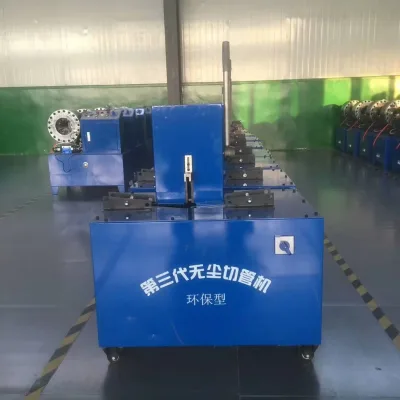
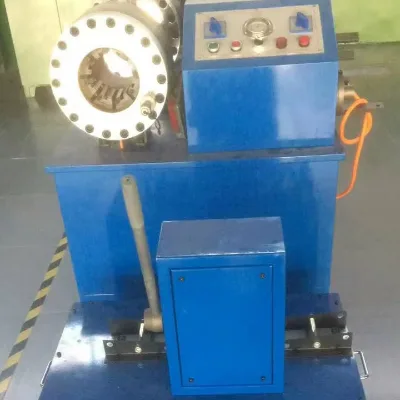
The current supplier landscape for dust free hydraulic hose cutters shows a concentration of manufacturing activity in specific Chinese provinces, with Hebei and Zhejiang emerging as key industrial hubs. Fact-based observations confirm that suppliers in Hebei, particularly around Handan, produce a wide range of hydraulic machinery including hose crimping and cutting units. These facilities often operate as combined entities, offering both original design manufacturing and original equipment manufacturing capabilities alongside their own branded products. This dual capacity allows them to handle custom specifications while maintaining standard production lines for high-volume orders.
In contrast, suppliers located in Zhejiang demonstrate a different operational profile, often focusing on hydraulic fittings and adapters alongside their cutting machinery. These factories frequently hold third-party verification badges, such as BV, which adds a layer of credibility to their business operations. The distinction between these regional clusters is critical for buyers, as Hebei-based units may prioritize heavy-duty horizontal structures while Zhejiang facilities might emphasize vertical configurations and automation features. Understanding these geographic and structural differences helps buyers align their specific project needs with the appropriate manufacturing base without relying on unverified generalizations about the entire market.
How to Verify Dust-Free Hydraulic Hose Cutter Suppliers
Verification of potential partners requires a rigorous check of system certifications and third-party audit results rather than relying solely on marketing claims. Current data indicates that many suppliers possess ISO9001:2015 certificates, and some products specifically list ISO and CE compliance as standard attributes. Buyers must request valid documentation for these certifications to ensure the machinery meets international safety and quality standards. Additionally, the presence of BV verification on certain supplier profiles serves as a tangible indicator of a factory that has undergone external business verification, distinguishing them from unverified trading entities.
Beyond certifications, the response time and lead time metrics provide immediate insight into a supplier's operational efficiency and reliability. Observed response times vary significantly, with some suppliers replying within hours while others take over a week, directly impacting project timelines. Lead times also differ, ranging from fifteen days to thirty days depending on the specific factory's workload and production capacity. Buyers should prioritize suppliers who demonstrate a consistent response pattern and a clear, documented lead time that aligns with their project schedule. Confirming these operational metrics before engagement ensures that the supplier can deliver the Dust-Free Hydraulic Hose Cutter within the required timeframe without unexpected delays.
What to Compare Across Dust-Free Hydraulic Hose Cutter Suppliers
When evaluating multiple sources, buyers must compare specific product attributes such as automatic grade, structure type, and working range to ensure technical compatibility. The market offers both semiautomatic horizontal models and fully automatic vertical units, each suited for different production environments. For instance, some machines feature a working range from 1/8 inch to 2 inches, while others are designed for specific hose diameters up to 2 inches with four-shore reinforcement. Comparing these technical specifications against the buyer's existing hose inventory is essential to avoid purchasing equipment that cannot handle the required materials or hose types.
Price and minimum order quantity (MOQ) are equally critical factors in the comparison process, as they directly influence the total cost of ownership. Current listings show price ranges starting from approximately one thousand dollars up to nearly four thousand dollars, depending on the model's complexity and features. The MOQ for many suppliers is set at one unit, which is advantageous for small-scale operations or testing phases, though bulk orders may yield different commercial terms. Buyers should also examine the warranty period, which is listed as twelve months for some models, and the availability of spare parts like dies and blades. A comprehensive comparison of these commercial and technical variables ensures the selected supplier offers the best value proposition for the specific application.
Common Dust-Free Hydraulic Hose Cutter Sourcing Risks
One significant risk in sourcing this equipment involves the discrepancy between advertised customization options and actual production capabilities. While many product listings state that customization is available, some specific models are marked as non-customized, creating potential confusion for buyers seeking tailored solutions. This inconsistency can lead to delays if a buyer assumes a machine can be modified to fit unique requirements only to find the factory cannot accommodate the request. It is vital to verify the customization status directly with the supplier before finalizing any order to ensure the machine can be adapted to specific operational needs.
Another risk relates to the variability in packaging and shipping standards, which can affect the condition of the machinery upon arrival. Some suppliers utilize export plywood cases, while others opt for wooden cartons or pallets, and the dimensions of these packages vary significantly. Inadequate packaging can lead to damage during transit, especially for heavy units weighing over two hundred kilograms. Buyers must confirm the specific packing details and ensure the supplier uses robust methods to protect the equipment. Additionally, the noise level and motor specifications, such as 380V/3kw, must match the buyer's facility power infrastructure to prevent installation failures or safety hazards.
Dust-Free Hydraulic Hose Cutter Regional Sourcing and Logistics
Logistics planning must account for the specific origins of the machinery, as suppliers are located in distinct regions like Hebei and Zhejiang, each with different port access and shipping routes. Factories in Hebei, such as those in Handan, may have different logistical advantages compared to those in Zhejiang, influencing transit times and freight costs. Buyers should request detailed shipping terms from the supplier to understand the Incoterms and the specific port of loading. This information is crucial for calculating the total landed cost and ensuring the delivery schedule aligns with the buyer's operational requirements.
The physical dimensions and weight of the machines also play a pivotal role in logistics planning, as they determine the required shipping container size and handling equipment. For example, some units have dimensions around 720 by 530 by 730 millimeters, while others are larger, requiring careful planning for warehouse space and forklift capacity. The package weight can exceed three hundred kilograms, necessitating specialized lifting equipment at the destination. Buyers must verify these physical attributes early in the sourcing process to avoid unexpected logistical challenges, such as the inability to move the machine into the production area or the need for expensive freight upgrades.
Dust-Free Hydraulic Hose Cutter Commercial Terms and Order Planning
Order planning for dust free hydraulic hose cutters requires a clear understanding of the payment terms and the availability of escrow services to protect the buyer's investment. While specific payment structures are not detailed in the provided facts, the presence of escrow options is a standard safety measure in international trade that should be confirmed. Buyers should ensure that the supplier offers a secure payment method that releases funds only after the goods are verified to meet the agreed specifications. This step is essential for mitigating financial risk and ensuring that the supplier fulfills their obligations before receiving full payment.
Establishing a realistic timeline for the entire procurement process is equally important, considering the lead times and potential customization delays. With lead times ranging from fifteen to thirty days, buyers must factor in production time, shipping duration, and customs clearance when planning their inventory replenishment. The response time of the supplier also impacts the speed of order confirmation and any subsequent technical clarifications. A proactive approach to order planning involves maintaining open communication channels with the supplier to track production progress and address any issues promptly. This ensures a smooth transition from order placement to machine installation and operation.
FAQs
What is the price range for dust-free hydraulic hose cutters?
Prices for these machines typically range from $1,000 to $3,740 depending on the model and automation level. Basic semiautomatic units start near $1,150, while fully automatic vertical models can reach higher price points. Buyers should verify specific pricing for their required hose diameter and voltage configuration before ordering.
What certifications do hydraulic hose cutting machines have?
Most available models hold ISO and CE certifications, ensuring compliance with international safety and quality standards. Some suppliers also provide ISO9001 certificates for their manufacturing systems. Buyers should request valid certification documents to verify that the equipment meets the specific regulatory requirements for their region or industry application.
What is the typical lead time for these machines?
Lead times generally range from 15 to 30 days after order confirmation. The exact duration depends on the supplier's location and current production capacity. Buyers should confirm the specific delivery schedule with the supplier to ensure it aligns with their project timeline and operational requirements.
What is the minimum order quantity for these machines?
The minimum order quantity is typically one unit, allowing buyers to purchase single machines for testing or small-scale operations. This low MOQ makes it accessible for businesses needing specific tools without committing to large inventory. Buyers should confirm if bulk discounts apply for larger orders.
Where are these hydraulic hose cutters manufactured?
These machines are primarily manufactured in China, with specific production hubs in Hebei and Zhejiang provinces. Buyers can expect products originating from these regions, which are known for industrial machinery production. Verifying the exact origin helps in assessing shipping logistics and potential import duties.
What customization options are available for these cutters?
Customization is widely available, including voltage adjustments and specific hose diameter ranges. Suppliers offer OEM and ODM services to tailor machines to unique requirements. Buyers should specify their needs for voltage, cutting range, and automation level to ensure the machine fits their existing infrastructure and workflow.