Gazebo Suppliers and Manufacturers in China Zhejiang
Compare 13 verified suppliers offering Gazebo products with OEM and ODM capabilities. Review certifications like ISO 9001 and BSCI, response times, and lead times to select a factory. Contact suppliers directly to request quotes for specific sizes and materials; review the available evidence before requesting comparable quotations from suitable candidates.
Suppliers List

Ningbo Yilong Outdoor Products Co., Ltd.
- Verified by TUVRHEINLAND
- Manufacturer/Factory
- China Zhejiang
- Lead time0 days
- Avg. response≤ 13h
Main productsAluminium Foldable Gazebo, Aluminium Umbrella, Wooden Umbrella, Beach Umbrella, Swing Chair, Steel Gazebo, Outdoor Furniture, Campling, Chair, Table
Main marketsSouth America,Eastern Europe,Mid East,North America,Southeast Asia,Eastern Asia,Oceania,Western Europe,Africa

Shaoxing ShunXin Pipe Making Co., Ltd.
- Combined
- China Zhejiang
- Lead time30 days
- Avg. response≤ 21h
Main productsTent, Folding Tent, Pop up Tent, Party Tent, Gazebo, Canopy, Marquee, Shelter, Awning, Pavlion
Main marketsSouth America,Africa,Southeast Asia/ Mideast,Domestic,Europe,Australia,North America

Ningbo Unitent Outdoor Products Co., Ltd.
- Combined
- China Zhejiang
- Lead time30 days
- Avg. response≤ 18h
Main productsTent, Gazebo, Canopy, Folding Tent, Folding Gazebo, Foldable Tent, Foldable Gazebo, Folding Table, Easy-up Tent, Camping Tent
Main marketsSouth America,Europe,Australia,North America
Linhai Beautyhouse Arts And Crafts Co., Ltd.
- Verified by TüVRheinland
- Trading Company
- Lead time30 days
- Avg. response≤ 3h
Main productsPergola, Gazebo, Patio Umbrellas, Garden Sofas, Sun Loungers
Main marketsNorth America(60%), Western Europe(25%), South America(10%)
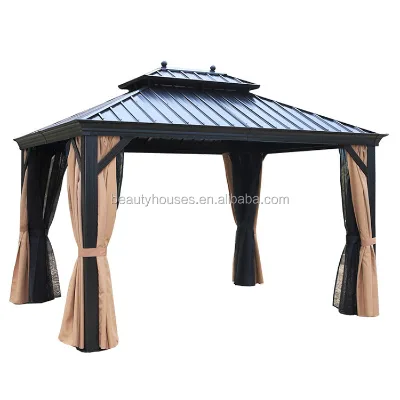
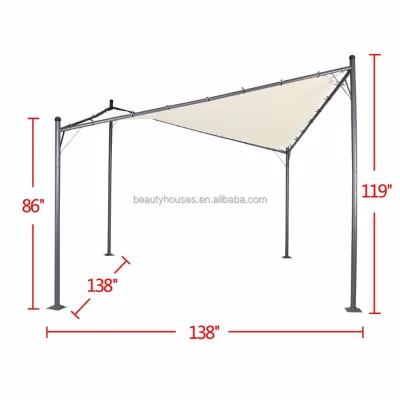
Used Pop up Portable Canvas Aluminum Waterproof butterfly Gazebo
Contact supplier

- Verified by SGS
- Combined
- China Guangdong
- Lead time15 days
- Avg. response≤ 14h
Main productsTent, Party Tent, Marquee, Wedding Tent, Exhibition Tent, Warehouse Tent, Gazebo, Garden Gazebo, Wholesale Military Tent, Dome Tent
Main marketsSouth America,Southeast Asia/ Mideast,North America

Shenzhen OCT Leisure Products Co., Ltd.
- Trading Company,Manufacturer/Factory,Group Corporation
- China Guangdong
- Lead time23 days
- Avg. response≤ 17h
Main productsBeach Umbrella, Bodyboard, Golf Umbrella, Folding Gazebo, Assembly Gazebo, Outdoor Umbrella, Surfboard, Skim Board, Gazebo, Boogie Board
Main marketsSouth America,Eastern Europe,Mid East,North America,Southeast Asia,Eastern Asia,Oceania,Western Europe,Africa

Shanghai Liguo Industrial Co., Ltd.
- Verified by SGS
- Trading Company,Manufacturer/Factory
- China Shanghai
- Lead time60 days
- Avg. response≤ 5h
Main productsWindow, Glass Window, Glass Door, Aluminum Window, Aluminum Door, Custom Window, Stainless Steel Door, Sliding Windows, Casement Windows, Folding Windows
Main marketsSouth America,Eastern Europe,Mid East,North America,Southeast Asia,Eastern Asia,Oceania,Western Europe,Africa

Yangzhou Reking Industrial & Trading Co., Ltd.
- Trading Company,Manufacturer/Factory
- China Jiangsu
- Lead time23 days
- Avg. response≤ 14h
Main productsDoor Canopy, Door Entrance, Window Awning, Pergola, DIY Product, Patio, Sun Shade, Shelter, Garden Furniture, Carport
Main marketsSouth America,Eastern Europe,Mid East,North America,Southeast Asia,Eastern Asia,Oceania,Western Europe,Africa

Yangzhou Yinjiang Canvas Products Co., Ltd.
- Verified by TUVRHEINLAND
- Combined
- China Jiangsu
- Lead time30 days
- Avg. response≤ 13h
Main productsTarpaulin, Truck Cover, Curtain Side, PVC Tarpaulin, Trailer Cover, Canvas, Side Container Cover, Open Container Cover, Car Cover, Cotton Canvas
Main marketsEurope

Hefei Jingyi Image Printing Co., Ltd.
- Verified by CTI
- Trading Company,Manufacturer/Factory
- China Anhui
- Lead time15 days
- Avg. response≤ 8h
Main productsTent, Inflatable Arch, Flag, Banner, Sticker, Photo Booth Props, Event Display Stands, Pop up Tent, Star Tent, Inflatable Advertising
Main marketsSouth America,Eastern Europe,Mid East,North America,Southeast Asia,Eastern Asia,Oceania,Western Europe,Africa

Wholesale Outdoor Promotional Display Beach Gazebo Advertising Canopy Folding Tent
$40.00 - $400.00
Moq: 1

outdoor gazebo 3x3 Folding tent pop up canopy gazebo trade show tent movable for event
$40.00 - $400.00
Moq: 1


Hebei New Sight Outdoor Products Co., Ltd.
- Verified by SGS
- Combined
- China Hebei
- Lead time23 days
- Avg. response≤ 4h
Main productspop up tent
Main marketsEurope

Foshan Oscar Building Materials Co., Ltd.
- Verified by SGS
- Combined
- China Guangdong
- Lead time15 days
- Avg. response≤ 5h
Main productsPergola, Gazebo, Pavilion, Awning, Sunrooms, Aluminum Carport, Aluminum Doors, Aluminum Fence, Outdoor Roller Blinds, Container House
Main marketsEurope,North America

Ningbo High-Sunway Imp. & Exp. Co., Ltd.
- Verified by SGS
- Trading Company
- China Zhejiang
- Lead time30 days
- Avg. response≤ 21h
Main marketsSoutheast Asia/ Mideast,Europe,North America


Comprehensive Sourcing Guide
Gazebo Supplier Concentration and Factory Types
When evaluating the landscape for Gazebo manufacturing, it is essential to distinguish between pure manufacturers and combined entities that may blend trading and production capabilities. The current data indicates a mix of company types, with some suppliers explicitly identified as Manufacturer/Factory while others are classified as Combined. This distinction significantly impacts your sourcing strategy, as factories typically offer more direct control over production schedules and customization, whereas combined entities might provide broader product ranges but potentially less transparency in the manufacturing process. Understanding this split helps you align your expectations with the supplier’s actual operational model. For instance, a factory might specialize in specific materials like steel or aluminum frames, while a combined supplier might offer a wider variety of tent styles, from pop-up gazebos to permanent pergolas.
Location plays a crucial role in identifying manufacturing clusters, which can influence logistics costs and supply chain resilience. Evidence points to suppliers located in China, specifically in the Zhejiang region, which is known for its robust outdoor furniture and tent manufacturing industry. If you are sourcing from this area, you can expect a concentration of expertise in folding mechanisms, fabric treatments, and metal frame fabrication. However, if the search results do not explicitly confirm a location, you should not assume a specific cluster exists. Instead, verify the supplier’s address and ask about their factory’s proximity to ports or raw material sources. This verification ensures that you are not misled by marketing claims about “global manufacturing” when the actual production might be in a less established industrial zone. Always cross-reference the stated location with the supplier’s business license or factory audit reports to confirm the physical presence of manufacturing facilities.
How to Verify Gazebo Suppliers
Verification is the cornerstone of mitigating risk when sourcing gazebos, especially given the variety of materials and construction methods involved. One of the most reliable indicators of a supplier’s credibility is third-party verification, such as TUVRHEINLAND certification. This type of verification confirms that the supplier has undergone rigorous audits regarding their business legitimacy, production capacity, and quality management systems. When you encounter a supplier with such verification, it provides a baseline of trust, but it should not be the sole factor in your decision. You must also examine their system certifications, such as ISO 9001 or BSCI, which indicate adherence to international standards for quality management and social compliance. These certifications are particularly important for large orders or when supplying to markets with strict regulatory requirements, such as the European Union or North America.
Beyond certifications, you should assess the supplier’s responsiveness and transparency as part of your verification process. The response time is a critical metric that reflects the supplier’s operational efficiency and customer service quality. A supplier with a response time of around 12 to 20 hours may be operating in a different time zone or have a streamlined communication process, but it is essential to test their responsiveness directly. Send detailed inquiries about customization options, material specifications, and production timelines to gauge their ability to provide accurate and timely information. Additionally, verify their main products to ensure they align with your specific needs. If a supplier claims to specialize in gazebos but their main products list includes unrelated items like wooden umbrellas or swing chairs, it may indicate a lack of focus or expertise in the Gazebo category. Always request recent factory photos or video tours to visually confirm their production capabilities and inventory levels.
What to Compare Across Gazebo Suppliers
Comparing suppliers requires a structured approach that evaluates multiple dimensions beyond just price. One of the most critical factors is the Minimum Order Quantity (MOQ), which can vary significantly across different suppliers and product models. For example, some Gazebo models may have an MOQ of 100 units, while others might require 300 or even 200 units. This variation can impact your inventory management and cash flow, so it is essential to align your order size with the supplier’s requirements. Additionally, consider the customization options available. Many suppliers offer OEM and ODM services, allowing you to tailor the Gazebo’s design, color, and material to your brand’s specifications. However, customization often comes with higher MOQs or longer lead times, so you must balance your desire for unique features with your production timeline.
Another key comparison point is the lead time and production capacity. Some suppliers may have a lead time of zero, indicating they have ready-to-ship inventory, while others might require 30 days or more for production. This difference is crucial for planning your supply chain, especially if you have tight deadlines for events or seasonal sales. You should also compare the materials used in the Gazebo construction, such as steel frames versus aluminum, and the fabric quality, such as polyester with PA coating for waterproofing. These material choices affect the durability, weight, and price of the final product. Furthermore, evaluate the supplier’s pricing structure, noting that prices can range from $45 to $80 per unit depending on the model and specifications. By systematically comparing these factors, you can identify the supplier that offers the best value for your specific requirements, ensuring that you do not compromise on quality or reliability for a lower price.
Common Gazebo Sourcing Risks
Sourcing gazebos involves several inherent risks that buyers must proactively manage to avoid costly mistakes. One significant risk is the discrepancy between the advertised product specifications and the actual delivered goods. This can occur when suppliers use vague terms like “waterproof” or “high-quality steel” without providing detailed technical data. To mitigate this, you must request specific product attributes, such as the frame material thickness, fabric denier, and coating type. For instance, a Gazebo with a “PA Coated” cover may offer different levels of water resistance depending on the coating’s weight and application. Without clear specifications, you risk receiving a product that fails to meet your performance standards, leading to customer complaints and returns. Always insist on detailed product datasheets and, if possible, request samples before placing a large order.
Another common risk is the inconsistency in production quality across different batches. This is particularly relevant when working with suppliers who have high production volumes or multiple factory lines. To address this, you should implement a robust quality control process, including pre-shipment inspections and third-party testing. Verify that the supplier adheres to relevant standards, such as SGS or other recognized testing protocols, which ensure that the Gazebo meets safety and durability requirements. Additionally, be cautious of suppliers who offer unusually low prices, as this may indicate the use of inferior materials or shortcuts in the manufacturing process. For example, a Gazebo priced at $45 might use thinner steel or lower-grade fabric compared to a $80 model. Always balance cost with quality, and consider the total cost of ownership, including potential warranty claims and replacement costs, when evaluating supplier offers.
Gazebo Regional Sourcing and Logistics
Regional sourcing decisions significantly impact your logistics costs, delivery times, and overall supply chain efficiency. If you are sourcing from China, particularly from the Zhejiang region, you benefit from a well-established manufacturing ecosystem with access to raw materials and skilled labor. This region is known for its expertise in outdoor furniture and tent production, which can lead to higher quality and more competitive pricing. However, you must also consider the logistical implications of importing from this region, including shipping costs, customs duties, and potential delays due to port congestion or regulatory changes. To optimize your logistics, work with suppliers who have experience in international shipping and can provide accurate estimates for freight costs and delivery times.
For buyers in other regions, such as Europe or North America, sourcing locally or from nearby manufacturing hubs can reduce lead times and simplify customs clearance. If the search results do not specify a location, you should inquire about the supplier’s primary manufacturing base and their experience with exporting to your target market. Ask about their packaging methods, as proper packaging is crucial for protecting gazebos during transit. For example, gazebos are often packed in carton boxes, but the quality of the packaging can vary. Ensure that the supplier uses sturdy materials and clear labeling to prevent damage during shipping. Additionally, consider the supplier’s ability to handle different shipping terms, such as FOB or CIF, which determine who is responsible for the costs and risks associated with transporting the goods. By carefully evaluating these logistical factors, you can minimize disruptions and ensure a smooth supply chain.
Gazebo Commercial Terms and Order Planning
Effective order planning requires a clear understanding of the commercial terms offered by your supplier, including payment methods, delivery schedules, and after-sales support. Payment terms are a critical aspect of the transaction, with common options including T/T, L/C, and Western Union. Each method has its own advantages and risks, so you should choose the one that best aligns with your financial strategy and risk tolerance. For example, T/T is straightforward but requires upfront payment, while L/C offers more security but involves higher bank fees. Additionally, consider the supplier’s lead time, which can range from zero for ready-to-ship items to 30 days or more for custom orders. This lead time directly impacts your inventory planning and ability to meet customer demand.
Beyond payment and delivery, you must also plan for potential variations in order quantities and customization requirements. Some suppliers may offer flexible MOQs, allowing you to start with smaller orders to test the market, while others may require larger commitments. If you plan to customize the Gazebo, such as changing the color or adding branding, ensure that the supplier has the capability to handle these requests efficiently. Ask about the additional costs and time associated with customization, as these can impact your overall budget and timeline. Furthermore, establish clear communication channels with the supplier to address any issues that may arise during production or shipping. Regular updates and proactive problem-solving can help prevent delays and ensure that your order is completed to your satisfaction. By carefully planning these commercial terms, you can build a reliable and efficient sourcing relationship.
FAQs
What is the minimum order quantity for Gazebo products?
The minimum order quantity varies by model, typically ranging from 10 to 300 units. Specific items like the 3X3 Steel Gazebo require a minimum of 10 pieces, while other steel Gazebo models may require 100 or 200 units. Buyers should check the specific product listing for the exact MOQ applicable to their chosen configuration.
What materials are used in the Gazebo frames?
Gazebo frames are primarily constructed from steel, with some models featuring aluminum components. The steel frames often utilize 32mm steel series for durability. Cover materials include polyester and poly fabrics, with options for PA coating to enhance waterproofing and weather resistance for outdoor use.
What certifications do the suppliers hold?
Suppliers hold several key certifications including BSCI, ISO 9000, and ISO 9001. Products may also comply with SGS standards. Verification is conducted by TÜV Rheinland, ensuring quality and safety standards are met for international buyers seeking reliable outdoor furniture and tent manufacturers.
What is the typical lead time for orders?
Lead times generally range from 25 to 30 days, depending on the order quantity. Some suppliers indicate a lead time of zero for specific stock items, while others specify delivery within 25-30 days. Buyers should confirm exact timelines with the supplier based on their specific order volume and customization requirements.
Where are the Gazebo manufacturers located?
Manufacturers are primarily located in Zhejiang, China. This region is a hub for outdoor furniture and tent production. Buyers can source directly from these verified suppliers who offer OEM and ODM services, ensuring access to a wide variety of Gazebo styles and sizes.
What is the price range for steel gazebos?
Prices for steel gazebos typically range from $45 to $80 per unit. Specific models like the 3X3 Steel Gazebo are priced between $45 and $80, while other models may have fixed prices around $51 or $69. Costs depend on size, material, and customization options.