Heavy Duty Folding Handcart Suppliers and Manufacturers
Explore 15 verified options for Heavy Duty Folding Handcart from China Fujian, Shandong, and Guangdong. Compare response times, lead times, certifications, and product specifications like material and load capacity to source the right equipment for your warehouse needs; review the available evidence before requesting comparable quotations from suitable candidates.
Suppliers List

Jinjiang Shenggong Machinery Co., Ltd.
- Verified by SGS
- Combined
- China Fujian
- Lead time15 days
- Avg. response≤ 4h
Main productsMachinery for Building Industry
Main marketsDomestic

Shandong Phoenixking Group Co., Ltd
- Verified by SGS
- Trading Company
- China Shandong
- Lead time15 days
- Avg. response≤ 25h
Main productsWheelbarrow, Shelf
Main marketsDomestic


Widely Used Metal Steel Material Folding Transport Handcart with Two-Wheel
$11.90 - $13.90
MOQ: 500 Pieces


Heavy-Duty Two Wheels Hand Carts 200kg Capacity, Lift Trolley Hand Carts
$14.00 - $17.00
MOQ: 500 Pieces

Heavy Duty Foldable Platform Trolley Hand Cart for Easy Transport of 200kg
$14.00 - $17.00
MOQ: 500 Pieces

Foshan Yougu Storage Equipment Co., Ltd
- Verified by BV
- Combined
- China Guangdong
- Lead time15 days
- Avg. response≤ 2h
Main productsMetal Pallet, Rack, Steel Container, Stillage, Roll Container, Metal Storage Equipment, Metal Cage, Trolley, Steel Pallet, Wire Mesh Container
Main marketsAustralia,North America

YONGKANG JEK INDUSTRY AND TRADE CO., LTD
- Verified by SGS
- Combined
- China Zhejiang
- Lead time30 days
- Avg. response≤ 5h
Main marketsSouth America,Southeast Asia/ Mideast,Europe

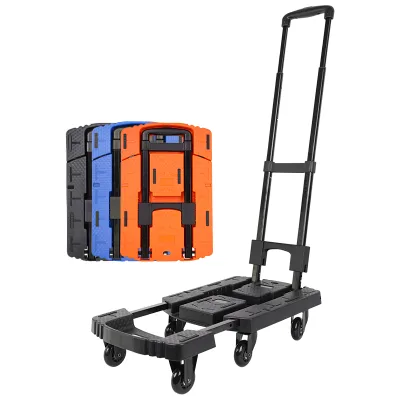
Convertible Hand Truck 150kg Heavy Duty Folding Cart Four Orange Wheels
$24.88 - $25.98
MOQ: 50 Pieces

for Moving Heavy Loads Easily with Auxiliary Handle Grip Folding Hand Trolley
$17.98 - $18.98
MOQ: 50 Pieces

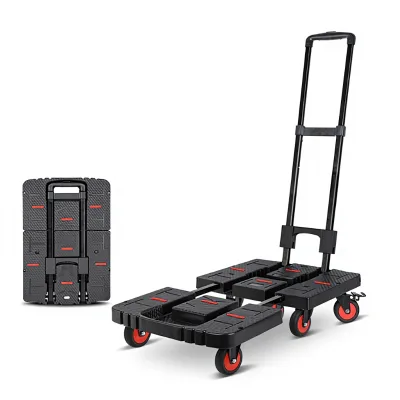
Heavy Duty Flat Platform on Four Wheels for Stable Transport Folding Hand Trolley
$26.88 - $27.68
MOQ: 50 Pieces

Heavy-Load Folding Hand Truck Platform Hand Trolley with Reinforced Handle & Frame
$10.98 - $15.98
MOQ: 50 Pieces


Heavy-Duty 4-Wheel Cart with Foldable Design Non-Slip Deck & Folding Platform Hand Truck
$13.78 - $14.88
MOQ: 50 Pieces

Hubei Space Double Rhombus Logistics Technology Co., Ltd.
- Manufacturer/Factory,Group Corporation
- China Hubei
- Lead time23 days
- Avg. response≤ 10h
Main productsCaster, Wheel, Airport Trolley, Check-in Counter, Queue Stand, Airport Chair, Wheelchair, Commode Chair, Walker, Walking Sticker
Main marketsSouth America,Eastern Europe,Mid East,North America,Southeast Asia,Eastern Asia,Oceania,Western Europe,Africa


$24.50 - $27.50
MOQ: 838 Pieces


$19.47 - $21.90
MOQ: 500 Pieces

Shandong Wilk Kitchen Equipment Co., Ltd
- Verified by SGS
- Trading Company
- China Shandong
- Lead time15 days
- Avg. response≤ 2h
Main productsStainless Steel Worktable, Stainless Steel Sink, Stainless Steel Shelf, Commercial Rice Steamer, Commercial Gas Stove, Refrigeration Equipment, Western Kitchen Equipment, Bakery Equipment, Cleaning&Sterilizing Equipment, Changing Room Equipment
Main marketsSoutheast Asia/ Mideast


Customizable Heavy Duty 300kg Capacity Foldable Platform Hand Truck Cart
$50.00 - $140.00
MOQ: 10 Sets


Guangzhou Nanjie Machinery Manufacturing Co., Ltd.
- Verified by BV
- Combined
- China Guangdong
- Lead time15 days
- Avg. response≤ 6h
Main productsElectric Trolleys, Electric Lifting Electric Trolley, Standing or Sitting Electric Cart, Hand Pull Electric Trolley, Electric Cylinder
Main marketsSouth America,Africa,Southeast Asia/ Mideast,East Asia(Japan/ South Korea),Europe,Australia,North America

Wuxi Buytool Industrial Equipment Co., Ltd.
- Verified by SGS
- Trading Company,Manufacturer/Factory
- China Jiangsu
- Lead time30 days
- Avg. response≤ 6h
Main productsHydraulic Lift Table, Electric Lift Table, Stackers, Pallet Truck/Pallet Jack, Drum Handling Equipment, Drum Truck, Packaging Machine, Forklift, Oil Drum Carrier, Roller Lifter
Main marketsSouth America,Eastern Europe,Mid East,North America,Southeast Asia,Eastern Asia,Oceania,Western Europe,Africa

Guangzhou Orda Logistics System Co., Ltd
- Verified by CTI
- Combined
- China Guangdong
- Lead time30 days
- Avg. response≤ 1h
Main productsTrolley, Roll Container, Hand Cart, Auto Parts Pallet, Wire Mesh Container, Metal Container, Stack Rack, Steel Pallets, Bicycle Rack
Main marketsEast Asia(Japan/ South Korea),Domestic,Europe,North America
Dongguan Baoyu Hardware Products Co., Ltd.
- Manufacturer, Trading Company
- Guangdong, China
- Lead time25 days
- Avg. response≤ 3h
Main productsShopping Cart; Flatbed Trolley; Luggage Cart; Storage Box; Hand Cart
Main marketsDomestic Market(60.00%), North America(20.00%), Western Europe(10.00%), Mid East(5.00%), Eastern Asia(5.00%)

Hebei Shangze Rubber and Plastic Products Co., Ltd.
- Manufacturer/Factory
- China Hebei
- Lead time15 days
- Avg. response≤ 3h
Main productsSteel Fiber for Concrete, Bridge Bearing Pad, Expansion Joint, Rubber Waterstop & Sealing Products, Viscous Fluid Damper, Steel Fiber Production Mach, Traffic Safety Products, Building Decoration Materials
Main marketsSouth America,Mid East,Southeast Asia,Eastern Asia,Africa

Foldable Push Cart Platform Hand Truck Heavy Duty Space Saving Collapsible Cart
$33.00
MOQ: 100 Pieces


Baoding Aogong Import and Export Trading Co., Ltd.
- Verified by SGS
- Manufacturer
- China Hebei
- Lead time15 days
- Avg. response≤ 3h
Main productsPallet Truck

Durable Heavy Duty Platform Cart with Foldable Handle for Warehouse and Loading Area
$18.00 - $20.00
MOQ: 100 Pieces


Qingdao Free Trade Zone Health International Co., Ltd.
- Trading Company
- China Shandong
- Lead time23 days
- Avg. response≤ 24h
Main productsWooden Dolly, Mover Dolly, Furniture Moving Dolly, Tool Carts, Piano Skid Boards, Hand Trolly, Panel Mover Cart, Swivel Casters for Mover Dolly, Ferrule Loop Insert, Glass Beverage Dispensers
Main marketsSouth America,Australia,North America

Nanjing Toutru Trading Co., Ltd.
- Trading Company,Manufacturer/Factory
- China Jiangsu
- Lead time45 days
- Avg. response≤ 21h
Main productsHand Tool
Main marketsSouth America,Eastern Europe,Western Europe,Africa

ZHENGZHOU YITUO MACHINERY CO., LTD.
- Verified by BV
- Combined
- China Henan
- Lead time30 days
- Avg. response≤ 4h
Main productsFood Truck, Food Trailer, Food Cart, Airstream Food Trailer, Ice Cream Bicycle, Electric Food Truck, Mobile Kitchen, Food Kiosk, Food Van, Restaurant Car
Main marketsEurope,Australia,North America




Comprehensive Sourcing Guide
Heavy Duty Folding Handcart Supplier Concentration and Factory Types
Current data indicates a concentration of manufacturers and trading entities within China, specifically highlighting Fujian, Shandong, and Guangdong as active sourcing regions for this equipment. In Fujian, suppliers often operate as combined entities offering both manufacturing and trading capabilities, frequently focusing on machinery for the building industry alongside material handling solutions. These combined firms may leverage their own brand capacity to produce specialized items like versatile foldable climbing handcarts designed for heavy-duty warehouse environments. The presence of such diverse company types suggests a supply chain where production and sales functions are integrated, potentially streamlining communication for buyers seeking custom specifications.
In contrast, suppliers located in Shandong and Guangdong present different operational profiles, with some identified strictly as trading companies or those specializing in specific product lines like wheelbarrows and metal storage equipment. A trading company model in Shandong might focus on aggregating products from various factories, offering a broader catalog that includes heavy-duty hand trolleys with pneumatic wheels and fixed handles. Meanwhile, Guangdong-based suppliers often emphasize rapid response times and extensive research and development capabilities, supporting both OEM and ODM customization requests. Buyers should verify the specific company type for each potential partner, as the distinction between a direct factory and a trading intermediary significantly impacts lead times, pricing structures, and the ability to implement custom engineering changes for heavy-duty folding handcart projects.
How to Verify Heavy Duty Folding Handcart Suppliers
Verification of supplier credibility relies heavily on third-party audit reports and specific certification markers provided in the product data. For instance, some suppliers in the current results have undergone verification by SGS, while others hold BV verification status, indicating a baseline level of operational legitimacy. Additionally, product-specific certifications such as RoHS and CE are explicitly listed for electric variants of the handcart, confirming compliance with safety and environmental standards for markets in Europe and beyond. Buyers must cross-reference these claims against the supplier's profile to ensure that the certifications apply to the specific heavy-duty folding models being considered, rather than just general company credentials.
Beyond certifications, response time serves as a critical metric for assessing supplier reliability and communication efficiency. Data shows response times varying significantly, with some suppliers responding in under two hours while others may take up to twenty-five hours. A rapid response time, such as the 1.44-hour average observed in certain Guangdong listings, often correlates with a more active sales team and better project management capabilities. Conversely, slower response times may indicate a high volume of inquiries or limited staffing. Buyers should prioritize suppliers with documented fast response metrics and verified audit statuses to mitigate the risk of working with unresponsive partners who might delay critical production schedules or fail to address technical queries regarding the folding mechanisms and load capacities of the handcarts.
What to Compare Across Heavy Duty Folding Handcart Suppliers
When evaluating potential partners, buyers must compare key operational dimensions including lead times, minimum order quantities, and pricing structures to ensure alignment with project requirements. Lead times for heavy-duty folding handcarts can vary, with some suppliers indicating a standard production window of fifteen days, while others may have different schedules based on customization needs. Minimum order quantities also differ substantially; some listings show a low threshold of one unit for testing or small-scale procurement, whereas others require bulk orders of five hundred units to activate pricing tiers. Understanding these constraints is essential for determining whether a supplier can accommodate a pilot order or if they are strictly geared toward large-volume industrial distribution.
Pricing and product specifications provide another layer of comparison that directly impacts the total cost of ownership. The market data reveals a wide price range, with manual folding handcarts listed between thirty-six and sixty-six dollars, while electric heavy-duty models command prices between five hundred sixty and six hundred twenty-eight dollars. These figures are influenced by factors such as material composition, wheel type, and motor power for electric units. Buyers should also scrutinize attributes like load capacity, which ranges from 200kg to 1000kg, and features such as foldability and wheel configuration. Comparing these specific technical details alongside the commercial terms allows for a precise assessment of value, ensuring that the selected supplier offers a product that meets the rigorous demands of heavy-duty applications without unnecessary cost inflation.
Common Heavy Duty Folding Handcart Sourcing Risks
One significant risk in sourcing heavy-duty folding handcarts involves the discrepancy between advertised specifications and actual product performance, particularly regarding load capacity and structural integrity. Some product listings describe heavy-duty capabilities with specific load limits, yet the physical construction materials, such as steel grade or welding quality, may vary between suppliers. For example, while one supplier offers a model with eight wheels and powder coating for durability, another might provide a two-wheel design with a fixed handle that lacks the same stability for uneven terrain. Buyers must verify that the stated load capacity, such as 500 lbs or 1000kg, is backed by rigorous testing data and not merely a marketing claim, as failure in this area can lead to safety hazards and product liability issues.
Another critical risk pertains to the reliability of customization support and the consistency of production quality across different batches. While many suppliers claim to support ODM and OEM services, the actual ability to deliver custom dimensions, colors, or functional modifications depends on their in-house R&D capacity. Some suppliers list their capacity as "Own brand," suggesting a focus on standard products, while others explicitly state ODM and OEM capabilities. If a buyer requires a unique folding mechanism or specific wheel configuration, relying on a supplier with limited customization experience can result in delays or substandard output. Additionally, the lack of standardized packaging, with some items shipped in bulk and others in hardwood crates, introduces risks of damage during transit, necessitating clear agreements on protective measures before production begins.
Heavy Duty Folding Handcart Regional Sourcing and Logistics
Sourcing heavy-duty folding handcarts from China involves navigating distinct regional logistics advantages and challenges associated with Fujian, Shandong, and Guangdong provinces. Fujian-based suppliers often specialize in machinery for the building industry, which may influence their logistics networks and familiarity with shipping heavy industrial equipment. The proximity of these manufacturers to major ports can facilitate efficient export processes, though buyers must confirm the specific shipping terms and handling capabilities for oversized or heavy items like electric handcarts. Understanding the regional strengths helps in selecting a supplier whose logistical infrastructure aligns with the buyer's delivery requirements and timeline expectations.
In contrast, suppliers in Shandong and Guangdong offer different logistical profiles, with Guangdong often noted for faster response times and potentially more agile supply chains for customized orders. The presence of trading companies in these regions can simplify the procurement process by aggregating products from multiple factories, but it may also add layers to the shipping and documentation workflow. Buyers should verify the origin of the goods, as some listings specify "China" as the origin without detailing the specific province, which can impact customs clearance and duty calculations. Furthermore, the packaging standards, ranging from simple cartons to hardwood crates, vary by region and supplier, directly affecting the safety of the handcarts during long-distance transport and the overall cost of freight insurance and handling.
Heavy Duty Folding Handcart Commercial Terms and Order Planning
Commercial terms for heavy-duty folding handcarts are heavily influenced by the supplier's minimum order quantity and pricing tiers, which can vary from single-unit orders to bulk purchases of five hundred units. Buyers must carefully review the price ranges, which span from approximately thirty-six dollars for basic manual models to over six hundred dollars for electric variants with high load capacities. These prices often reflect the complexity of the product, including features like pneumatic wheels, battery specifications, and motor power. Establishing a clear understanding of the cost structure is vital for budgeting, as the difference between a standard model and a customized heavy-duty unit can be substantial, impacting the overall financial viability of the sourcing project.
Order planning also requires attention to lead times and warranty provisions, which are critical for maintaining supply chain continuity. Some suppliers indicate a lead time of fifteen days, while others may have different schedules depending on the level of customization required. Warranty terms, such as a one-year coverage period mentioned in specific listings, provide a safety net for buyers against manufacturing defects. However, the availability of such warranties may vary by supplier and product type, necessitating explicit confirmation before finalizing the order. Buyers should also consider the payment terms and escrow options to ensure financial security, ensuring that funds are only released once the heavy-duty folding handcarts meet the agreed-upon specifications and quality standards upon delivery.
FAQs
What is the price range for heavy duty folding handcarts?
Prices for heavy duty folding handcarts range from 11.90 to 66.00 USD per unit depending on the specific model and features selected. Electric versions with higher load capacities generally cost more than manual steel models. Buyers should verify the exact price based on their required customization and order volume.
What are the minimum order quantities for these handcarts?
Minimum order quantities vary significantly by supplier and product type. Some manual hand trucks require a minimum of one unit, while others may demand orders of 500 units. Electric models and specialized industrial trolleys often have different thresholds, so buyers must check specific product listings for accurate MOQ details.
How long does it take to receive these handcarts after ordering?
Lead times for heavy duty folding handcarts are typically around 15 days from the date of order confirmation. Response times from suppliers can vary, with some replying within 1.44 hours and others taking up to 25 hours. Buyers should confirm the exact delivery schedule with the specific manufacturer before finalizing the purchase agreement.
Are these handcarts available with CE or RoHS certifications?
Yes, certain heavy duty folding handcarts come with CE and RoHS certifications, particularly the electric models designed for warehouse and construction use. Manual steel trolleys may also carry CE certification. Buyers should verify the specific authentication documents provided by the supplier to ensure compliance with their local safety and environmental regulations.
What materials are used to construct these heavy duty handcarts?
Most heavy duty folding handcarts are constructed from durable steel with powder coating for corrosion resistance. Some models feature aluminum components for lighter weight while maintaining strength. The wheels are often pneumatic, and the frames are designed to support loads up to 1000kg depending on the specific industrial grade selected.
Can these handcarts be customized for specific brand requirements?
Many suppliers offer ODM and OEM customization services for heavy duty folding handcarts, allowing for specific branding and design modifications. Customization options often include color, packaging, and structural adjustments. Buyers should confirm the customization capabilities and any associated costs directly with the supplier to ensure their specific needs are met.
Where are these heavy duty handcarts manufactured?
These heavy duty folding handcarts are manufactured in China, specifically in regions like Fujian, Shandong, and Guangdong. Each region may host different types of manufacturers specializing in various aspects of material handling equipment. Buyers should verify the exact origin of the product to understand shipping logistics and potential regional quality standards.