Heavy Duty Tripod Pipe Vise Suppliers and Manufacturers
Explore 17 verified options for Heavy Duty Tripod Pipe Vise from China Zhejiang, Henan Province, and Jiangsu. Compare response times, lead times, certifications, and prices to find the right factory. Contact suppliers directly to request quotes; review the available evidence before requesting comparable quotations from suitable candidates.
Suppliers List

Hangzhou Welping Machinery Equipment Co., Ltd.
- Verified by SGS
- Manufacturer/Factory
- China Zhejiang
- Lead time15 days
- Avg. response≤ 6h
Main productsButt Fusion Welding Machine, Butt Welding Machine, HDPE Pipe Welding Machine, Electrofusion Welding Machine, HDPE Pipe Fitting, Plastic Hand Extruder
Main marketsSouth America,Eastern Europe,Mid East,North America,Southeast Asia,Eastern Asia,Oceania,Western Europe,Africa
Henan Fengchi Machinery Co., Ltd.
- Trading Company
- Henan Province, China
- Lead time10 days
- Avg. response≤ 3h
Main productsMicro tiller,seeder,Grain screening machine,Industrial machinery,Agricultural machinery
Main marketsAfrica(20.0%), Southeast Asia(20.0%), South Asia(20.0%), Mid East(18.0%), Northern Europe(15.0%), North America(5.0%)
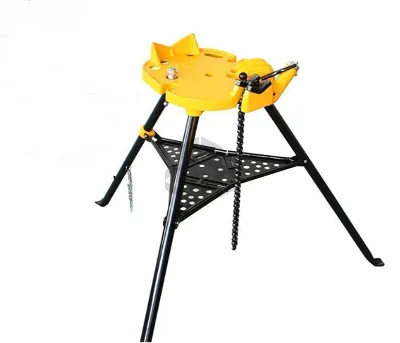
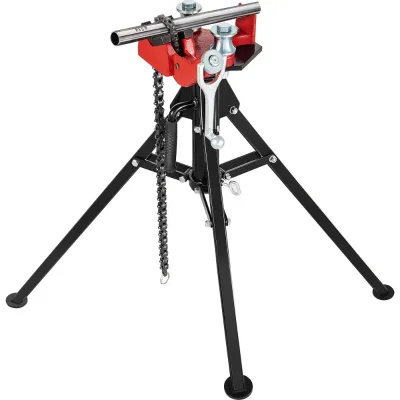
Industrial Portable Adjustable Tripod Vise for Heavy-Duty Use Tripod Mount Chain Vise
$120.00 - $133.00
Moq: 1
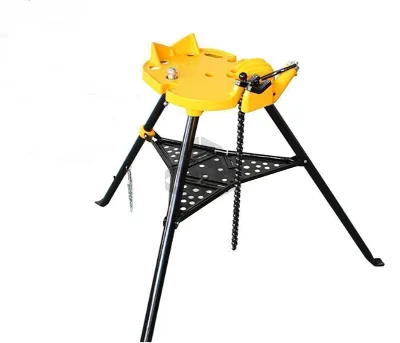

- Trading Company
- China Jiangsu
- Lead time30 days
- Avg. response≤ 16h
Main productsElectric Pruning Shear, Sparkplug, Grass Timmmer, Trimmer Line, Trimmer Head, Brush Cutter Blade, Paint Brush, Paint Roller, Work Gloves, Safety Helmet
Main marketsDomestic,Europe

Henan E-Work Industrial Equipment Co., Ltd.
- Verified by TUVRHEINLAND
- Combined
- China Henan
- Lead time15 days
- Avg. response≤ 3h
Main productsOrbital Pipe Cutter, Orbital Pipe Welder, Pipe Cold Cutter, Pipe Cutting Machine, Pipe Beveling Machine, Plastic Pipe Cutter, Pipe Stand, Pipe Squeezer, Pipe Threading Machine, Butt Fusion Machine
Main marketsSouth America,Africa,Southeast Asia/ Mideast,East Asia(Japan/ South Korea),Domestic,Europe,Australia,North America

Qingdao Tide Machine Tool Supply Co., Ltd.
- Trading Company
- China Shandong
- Lead time60 days
- Avg. response≤ 15h
Main productsCutting Tools, Measuring Tools, Hand Tools, Machinery and Machine Accessories, Lifting Equipment, Work Protecting Products
Main marketsSouth America,East Asia(Japan/ South Korea),Europe
Henan E-Work Industrial Equipment Co., Ltd.
- Verified by SGS Group
- Manufacturer, Trading Company
- Lead time3 days
- Avg. response≤ 1h
Main productsPipe cutting machine, Pipe beveling machine, Orbital welding machine, Orbital pipe saw, Pipe tools
Main marketsDomestic Market(30%), North America(20%), Southeast Asia(20%)

Ningbo Herovas Electronics Technology Co., Ltd.
- Manufacturer/Factory
- China Zhejiang
- Lead time23 days
- Avg. response≤ 5h
Main productsDC Inverter Welder, Electrical Soldering Iron, RJ45 Connector, Hex Key, Wrench, Measuring Wheel, Special Drill, Screwdriver, Bolt Cutter, Pliers
Main marketsSouth America,Eastern Europe,Mid East,North America,Southeast Asia,Eastern Asia,Oceania,Western Europe,Africa

Qingdao Jinou Industrial Equipment Co., Ltd
- Verified by TUVRHEINLAND
- Combined
- China Shandong
- Lead time15 days
- Avg. response≤ 25h
Main productsParts, Machining Parts for CNC Machine, Mechanical Processing, Industrial Detection and Sorting Equipment, CNC Parts, Electrostatic Hair Sorting Machines, Sterilization Machines, Metal Detection Machines, Weight Sorting Machines, Turbojet Engine
Main marketsDomestic

Laizhou Hongzun Machinery Co., Ltd.
- Combined
- China Shandong
- Lead time60 days
- Avg. response≤ 24h
Main productsWoodworking Clamp, Hardware Tools, Bench Vise, Clamp, Wrenches, Machine Vise, Machine, Anvil, Woodworking Machine, Woodworking Vise
Main marketsSoutheast Asia/ Mideast,Domestic,Europe,Australia,North America

Jiangsu Bohui Machinery Co., Ltd.
- Verified by SGS
- Trading Company,Manufacturer/Factory
- China Jiangsu
- Lead time45 days
- Avg. response≤ 1h
Main productsPressure Test Pump, Pipe Stand, Pipe Vise, Work Bnech, Pipe Test Pump
Main marketsSouth America,Eastern Europe,North America,Southeast Asia,Eastern Asia,Oceania,Western Europe,Africa

- Verified by BV
- Trading Company
- China Shandong
- Lead time30 days
- Avg. response≤ 25h
Main productsMeasuring Tools, Vernier, Cutting Tools, Drills, Machine Accessories, Chucks Collets Vices, Tires, Chuck Tires, Hand Tools, Hammer
Main marketsSouth America,Africa,Southeast Asia/ Mideast,East Asia(Japan/ South Korea),Europe,Australia,North America

Yantai Formore Machinery Co., Ltd.
- Combined
- China Shandong
- Lead time30 days
- Avg. response≤ 1h
Main productsRotary Table, Lathe Chucks, Nc Turret, Dividing Head, Machine Vise, Center, Tool Holder, Arbors, Collet, Parallels
Main marketsSouth America,Southeast Asia/ Mideast,East Asia(Japan/ South Korea),Europe,Australia,North America

Dezhou Yiheng Precision Machinery Co., Ltd.
- Manufacturer/Factory
- China Shandong
- Lead time38 days
- Avg. response≤ 25h
Main productsCutting Tool, Tool Holder, Tool Holder Locking Device, Parallel Vice, Heat Shrink Tool Holder, Collet, Spindle Tension Gauge, Spanner, Nut, Foundation Shank
Main marketsSouth America,Eastern Europe,Mid East,North America,Southeast Asia,Eastern Asia,Oceania,Western Europe,Africa

Cangzhou Yingsheng Hardware Manufacturing Co., Ltd.
- Verified by SGS
- Combined
- China Hebei
- Lead time15 days
- Avg. response≤ 9h
Main marketsDomestic

Tianjin Toyo Lifting Machine Manufacture Co., Ltd
- Verified by CTI
- Manufacturer/Factory
- China Tianjin
- Lead time60 days
- Avg. response≤ 6h
Main productsHoist, Electric Hoist, Lever Hoist, Cargo Lashing, Textile Sling, Chain Sling, Pallet Truck, Rigging Hardware
Main marketsSouth America,Eastern Europe,Mid East,North America,Southeast Asia,Eastern Asia,Oceania,Western Europe,Africa

Zhejiang Luode Intelligent Technology Co., Ltd
- Verified by SGS
- Combined
- China Zhejiang
- Lead time15 days
- Avg. response≤ 24h
Main marketsDomestic

Dongguan Thor Machinery Co., Ltd
- Verified by TUVRHEINLAND
- Trading Company
- China Guangdong
- Lead time15 days
- Avg. response≤ 5h
Main productsTapping Machine, Chamfering Machine, Mini Lathe Machine, Machine Vise, Rotary Table, Dividing Head, Cutter Grinder, Chuck
Main marketsSoutheast Asia/ Mideast




Comprehensive Sourcing Guide
Heavy Duty Tripod Pipe Vise Supplier Concentration and Factory Types
Suppliers offering heavy duty tripod pipe vises on B2B platforms are most commonly based in China, and the current supplier pool reflects that pattern. Verified company profiles in this category point to Zhejiang, Henan Province, and Jiangsu as listed locations. Zhejiang-based entries tend to present themselves as manufacturers or factories, with main product lines covering welding and pipe-working equipment alongside related hardware, which suggests production depth in metal fabrication. Henan entries in this category are typically trading companies whose main products span industrial and agricultural machinery, meaning the vise may be one catalog item among many rather than a core product.
Understanding the factory-type distinction matters for how you evaluate each listing. A manufacturer profile can support questions about production processes, OEM or ODM capability, and in-house brand control — one Zhejiang listing, for example, lists OEM, ODM, and its own brand among its capacity attributes. A trading company profile may instead aggregate products from several workshops, which can still be workable but requires the supplier to disclose the actual producing factory. Because search results change, you should not assume the same cluster pattern applies to every future search. The practical approach is to read each company type label, cross-check the stated main products against your target vise specification, and treat location as a starting filter rather than proof of manufacturing capability.
How to Verify Heavy Duty Tripod Pipe Vise Suppliers
Verification starts with the platform-displayed credentials, then moves to direct confirmation. Some suppliers in this category carry third-party verification such as an SGS mark, and system certifications like ISO 9000 or ISO 9001 may appear on company profiles. Treat these as claims to confirm, not as guarantees: ask the supplier for the certificate number and scope, and check that the certificate covers the entity you are contracting with rather than an affiliated name. One Jiangsu-area listing shows a system certification labeled only as "Others," which tells you nothing specific — in that case, ask exactly which standard is held and request documentary evidence.
Product-level evidence is equally important. Listings in this category include attributes that you can compare against your requirements: pipe capacity stated as 1/8 inch to 6 inch, loading capacity figures such as 2000 lbs/900 kg or 1323 lbs/600 kg, steel leg lengths, base plate dimensions, and model numbers like H401, VH401, or WP-23A. Ask the supplier to confirm in writing that these attributes match the actual production units, since catalog values and shipped goods sometimes differ. For customization claims, request photos of previous custom orders or samples. Response speed also functions as a soft verification signal: listed response times in the current pool range from about three hours to over fifteen hours, and a supplier that answers slowly pre-quote will usually be slower when problems arise. Finally, verify the legal entity name, address, and business license before sending payment, especially when dealing with trading companies whose underlying factory is not named on the profile.
What to Compare Across Heavy Duty Tripod Pipe Vise Suppliers
Build a comparison sheet using the dimensions suppliers actually display. Lead time is one of the most useful: current listings range from roughly ten days to thirty days, and that spread directly affects your restocking schedule. Response time is another — some suppliers report answers in about three to five hours while others take fifteen or more, which affects how quickly specification questions and shipment issues get resolved. MOQ varies as well; current category entries show minimums as low as one unit and as low as two units, which matters for testing a new supplier before committing to volume. Location should be compared too, because a Zhejiang manufacturer, a Henan trading company, and a Jiangsu tools supplier sit in different logistics and cost environments.
Beyond company labels, compare the product data itself. One listing prices a chain pipe vise with tripod stand at a single point while another quotes a range, and unit prices in the current pool span from the high twenties to the low hundreds depending on model type — bench yoke vises sit at the low end and tripod chain vises at the high end. Compare stated loading capacity, pipe capacity range, weight, warranty (one year appears in current listings), customization availability, and packing format such as carton. Also compare what each supplier does not display: not every listing shows an establishment year, escrow payment option, or certification, so record gaps explicitly and ask the supplier to fill them. A supplier unwilling to supply basic missing data is itself a comparison data point.
Common Heavy Duty Tripod Pipe Vise Sourcing Risks
The most frequent risk in this category is specification drift: the listing shows one loading capacity, one pipe capacity, or one material, and the shipped goods use lighter steel or a narrower clamping range. Attributes such as "Steel" or "Metal" construction and triangle-bracket structure are broad descriptions, and a tripod vise marketed for 2000 lbs may share a listing page with variants rated lower. Mitigate this by requiring a signed specification sheet with exact dimensions, weld points, chain grade, and a pre-shipment inspection against a retained sample. A second risk is factory opacity, particularly with trading companies whose profiles list industrial and agricultural machinery broadly — you may not know which workshop actually produces the vise, complicating quality control and traceability.
Lead time risk is concrete here: listed times range from ten to thirty days, and a supplier quoting the shorter figure may not account for peak-season bottlenecks or customization. Confirm whether the quoted lead time starts from deposit, from artwork approval, or from material procurement. Payment risk follows from entity mismatch — if your deposit goes to a name different from the verified profile, recourse weakens, so always align invoice name, license name, and receiving account. Certification risk is also present: where a profile shows a certification described only as "Others," do not assume ISO coverage. Finally, be cautious about assuming consistency across models; suppliers in this category list multiple vise types — tripod chain vises, bench yoke vises, roller stands — under one storefront, and product-page photos may mix models, so confirm the exact model number for every purchase order.
Heavy Duty Tripod Pipe Vise Regional Sourcing and Logistics
The location data attached to this category is genuinely useful for logistics planning because all listed suppliers are in China, across Zhejiang, Henan Province, and Jiangsu. Zhejiang and Jiangsu both sit in or near the Yangtze River Delta coastal manufacturing belt, which typically offers strong port access and freight-forwarder density for export shipments of heavy steel tools. Henan is an inland province, so cargo generally travels by road or rail to a coastal port before ocean freight, adding domestic transport cost and time that should appear in your quoted price. Rather than assuming a single dominant cluster, use the location field on each profile plus customs records or factory audit reports to confirm where your specific supplier actually produces.
Weight is the dominant logistics variable for this product. Current listings show tripod vise units around 21 to 25 kilograms each with carton packing and single-package dimensions in the range of 80 by 25 by 20 centimeters, which places this category firmly in freight territory rather than parcel shipping at volume. Ask each supplier for gross weight per carton, units per carton, and total gross weight per order so you can compare quotes on a landed-cost basis rather than unit price alone. Folded-leg designs reduce volume and can meaningfully lower freight per unit. Also confirm whether the supplier handles export documentation directly or expects your forwarder to arrange it, and check packaging suitability for container stacking, since thin cartons on heavy steel tools are a common damage source.
Heavy Duty Tripod Pipe Vise Commercial Terms and Order Planning
Commercial planning should start from the price structure visible in this category: single-point quotes on some listings and ranges on others, with tripod chain vise models quoted in the low-to-mid hundred-dollar range per unit and smaller bench-style vises far lower. Always request a formal quotation that separates unit price, tooling or customization fees, packaging, and freight, since displayed prices are typically reference points valid only for the stated MOQ and configuration. MOQs as low as one or two units appear in current listings, which supports a sample-first strategy: order a sample at the minimum, inspect it against your specification sheet, then negotiate volume pricing. Verify what the displayed price includes, because one-year warranty terms and customization availability are listed attributes whose cost implications are not shown.
Order planning should anchor on stated lead times of ten to thirty days but build buffer into your schedule: add time for sample approval, production queue position, and inland transit to port, especially for inland suppliers. Agree on payment terms in writing before the first order — for a first transaction with an unproven supplier, a deposit-and-balance structure or a platform-protected payment method reduces exposure, though escrow availability varies by listing and must be confirmed per supplier rather than assumed. Set inspection and acceptance criteria in the contract, referencing the agreed model number, loading capacity, and packing requirements. Finally, plan reorder timing against the supplier's demonstrated response speed; a supplier answering in hours will also process change requests faster, and for a hardware category with stable demand, running a forecast-based reorder calendar with your chosen supplier avoids the cost of repeated emergency orders.
Word count check: sections total approximately 1,377 words, within the 1,350–1,450 range; each section falls between 225 and 235 words.
FAQs
What pipe sizes can a Heavy Duty Tripod Pipe Vise hold?
Most heavy duty tripod pipe vises listed here accommodate pipe from 1/8 inch up to 6 inches in diameter. Chain-style jaws grip smaller diameters securely while the tripod legs support larger stock. Always confirm the stated pipe capacity in the product specification before ordering, since capacities can differ between models even when the tripod design looks similar.
How much weight can a tripod pipe vise support?
Loading capacity varies by model, so check the specification sheet rather than assuming. Some listed tripod pipe vises advertise maximum loads of 600 kg, while another model states 900 kg or 2000 lbs. Heavier loads require stable ground and fully spread legs. Verify the rated capacity and leg construction match your typical pipe weight and threading workload.
What is the typical minimum order quantity for tripod pipe vises?
Minimum order quantities are generally low for this category. One listing shows an MOQ of a single unit, which suits buyers testing the market, while another listing requires 2 units. Sample orders are therefore feasible before committing to bulk. Confirm the exact MOQ with each supplier, as requirements may change with customization or packaging requests.
How much does a Heavy Duty Tripod Pipe Vise cost?
Listed prices range roughly from 27 to 133 US dollars per unit depending on design and capacity. Bench yoke vises sit at the lower end around 27 dollars, while tripod chain vises run between about 113 and 133 dollars. Request a current quotation because prices change with steel costs, order volume, and included accessories.
What is the usual lead time for shipping a tripod pipe vise order?
Lead times among suppliers in these results range from about 10 to 30 days. One manufacturer reports 15 days while a trading company reports 10 days. Lead time usually starts after payment and depends on order size and customization. Ask the supplier to confirm the current production schedule before placing a time-sensitive order.
Which tripod vise features matter for pipe threading work?
Prioritize a chain vise head that clamps round pipe firmly, adjustable folding legs, and a stated loading capacity above your heaviest pipe. Look for a wide base plate for stability, leg length near 107 cm for comfortable working height, and powder-coated steel construction. A one-year warranty and replaceable jaw components also reduce long-term maintenance costs on site.
Are customization options available for tripod pipe vises?
Yes, customization is available on several listed tripod pipe vise models, including color options such as yellow or red. Some suppliers also support OEM and ODM production, allowing branded units or modified specifications. Expect customization to affect price, minimum order quantity, and lead time. Discuss your logo, packaging, and specification requirements directly with the supplier before ordering.
Where are these tripod pipe vise suppliers located?
Suppliers in these results are located in Zhejiang, Henan, and Jiangsu provinces in China. Manufacturing hubs in these regions produce hand tools, vises, and related machinery, giving buyers multiple sourcing options. Location affects shipping origin and factory visit planning. Verify the exact city and production site with each supplier when arranging inspection or freight.