ISO9001 Engine Mounting Suppliers and Manufacturers
Compare 16 verified suppliers offering ISO9001 Engine Mounting solutions with varying lead times, certifications, and locations. Review response times and product specifications to select the right partner for your needs; review the available evidence before requesting comparable quotations from suitable candidates.
Suppliers List

Milesun Rubber & Plastic Technology Co., Ltd.
- Verified by CTI
- Manufacturer/Factory
- China Guangdong
- Lead time23 days
- Avg. response≤ 12h
Main productsRubber Components, Rubber Damper/Shock Absorber/Sheet, Rubber-Metal Components, Sealing Ring, Home Appliance Rubber and Metal Components, Power Tool Rubber and Metal Components, Auto Rubber and Metal Components, Sanitary Rubber and Metal Components, Kitchen Ware / Daily Use Rubber Products, Food Grade Rubber Products/Toy
Main marketsSouth America,Eastern Europe,Mid East,North America,Southeast Asia,Eastern Asia,Oceania,Western Europe,Africa

ISO9001 Manufacturer of Rubber Bonding Metal Engine Mounts
Contact supplier

Left Engine Mount (Engine Bracket Glue)
Contact supplier


Right Engine Mount (Engine Bracket Glue)
Contact supplier

Front Suspension Mounting Bracket (Engine Support Rubber)
Contact supplier

Ningbo Hansheng Machinery Parts Co.,Ltd.
- Verified by TUVRHEINLAND
- Combined
- China Zhejiang
- Lead time15 days
- Avg. response≤ 8h
Main productsInvestment Casting/Lost Wax Casting, Steel Casting/Sand Casting, Open Die Forging/Forging/Steel Forging, Bucket Tooth/Auto Part/Train Parts, Precision Casting/Die Casting, Lost Foam Casting/Die Casting, Open Die Forging, Machining Part, Steel Sand Casting, Open Forging
Main marketsDomestic

Car Engines Front Mounting Bracket Rubber Mount Auto Engine Parts Engine Mounts
$33.00 - $35.00
MOQ: 10 Pieces

Stainless Steel Auto Parts Engine Rear Mount Mounting Motor Mounting Bracket
$16.00 - $18.00
MOQ: 10 Pieces

Ningbo Eastiger Products Co., Limited
- Verified by BV
- Trading Company
- China Zhejiang
- Lead time30 days
- Avg. response≤ 17h
Main productsTruck Parts, Truck Spare Parts, Trailer Parts, Auto Parts, Engine Parts, Loader Parts, Car Parts, Bus Parts
Main marketsSouth America,Southeast Asia/ Mideast,Australia,North America

HaiYan OuYaTe Automobile Fittings Co., Ltd.
- Verified by TUVRHEINLAND
- Combined
- China Zhejiang
- Lead time23 days
- Avg. response≤ 19h
Main productsRubber Hose /Silicon Hose/Intake Hose, Brake Lining, Rubber Parts for Auto, High Strength Wheel Bolt, Oil Seal, Fan Belt, Engine Mounting, Steel Bumper Block, Extrusion Hose, Brake Friction Material
Main marketsDomestic
XINGTAI FULANGMU FILTER MANUFACTURE CO., LTD.
- Verified by CTI
- Combined
- China Hebei
- Lead time30 days
- Avg. response≤ 6h
Main productsAir Filter, Oil Filter, Cabin Filter, Fuel Filter, Engine Mount, Center Bearing, Suspension Bushing
Main marketsSouth America,Africa,Southeast Asia/ Mideast,East Asia(Japan/ South Korea),Domestic,Europe,Australia,North America


OEM 11223-H1000 Engine Mount, High-Performance Automotive Mounting Solution
$0.89 - $1.11
MOQ: 500 Pieces

Qingdao Senseco Materials Co., Ltd.
- Manufacturer
- China Shandong
- Lead time15 days
- Avg. response≤ 13h
Main productsO Ring, Oil Seal, Rubber Seal, Rubber Damper, Damper, Silica Rubber Seal, Magnetic Rubber, Rubber Gasket, Rubber Product, Damping Rubber
Main marketsEurope,Australia,North America

JINAN GUYUE AUTO PARTS CO., LTD.
- Verified by SGS
- Trading Company
- China Shandong
- Lead time15 days
- Avg. response≤ 9h
Main productsFAW Sinotruck Shacman Beiben Truck Spare Part, Bus Spare Parts, Light Truck Spare Parts, Tyre, Construction Machinery, Fuwa Ror BPW Trailer Spare Parts
Main marketsAfrica,Southeast Asia/ Mideast,North America

Wenzhou Yize Industrial Co., Ltd.
- Trading Company,Manufacturer/Factory
- China Zhejiang
- Lead time0 days
- Avg. response≤ 16h
Main productsAutomobile Pumps, Suspension Parts, C. V. Joint, Auto Parts, Car Parts, Air Filter, Auto Filter, Wheel Hub Bearing, Shork Absorber, Brake Pad

Guangzhou Hengxin Auto Parts Trading Co., Ltd.
- Verified by SGS
- Manufacturer/Factory
- China Guangdong
- Lead time23 days
- Avg. response≤ 16h
Main productsFilter, Ball Joint, Water Pump, Break Pads, Rubber Sleeve, Coil Ignition, Spark Plug, Gasket
Main marketsSouth America,Eastern Europe,Mid East,North America,Southeast Asia,Eastern Asia,Oceania,Western Europe,Africa
Ningbo Joy International Trade Co., Ltd.
- Verified by BV
- Trading Company
- China Zhejiang
- Lead time30 days
- Avg. response≤ 6h
Main marketsEurope
Shanghai Spb Industry Co., Ltd.
- Verified by SGS
- Trading Company,Manufacturer/Factory,Group Corporation
- China Shanghai
- Lead time30 days
- Avg. response≤ 4h
Main productsCar Spare Part, Suspension Parts, Ball Joint, Shock Absorber, C. V Joint, Brake Pad, Radiator, Stabilizer Bar, Oil Filter, Steering Rack
Main marketsSouth America,Eastern Europe,Mid East,North America,Southeast Asia,Eastern Asia,Oceania,Western Europe,Africa

Qingdao Weilian Plastic & Rubber Co., LTD.
- Trading Company,Manufacturer/Factory
- China Shandong
- Lead time23 days
- Avg. response≤ 10h
Main productsRubber Sealing Strip, Rubber Metal Bonded Part, Rubber Hose, Rubber Grommet, Rubber Buffer, Rubber Bushing, Rubber Gasket Seal, Silicone Rubber Cap, Rubber Stopper
Main marketsSouth America,Eastern Europe,Mid East,North America,Southeast Asia,Eastern Asia,Western Europe


Anti Vibration Rubber Auto Engine Buffer Mounting
Contact supplier
- Verified by SGS
- Trading Company,Manufacturer/Factory
- China Zhejiang
- Lead time0 days
- Avg. response≤ 8h
Main productsTools, Car Equipments, Rubber Material, Auto Parts, Slipper, Construction Hand Tool, Garden Tools, Hardware Tools, Food Packing Material
Main marketsSouth America,Eastern Europe,Mid East,North America,Southeast Asia,Eastern Asia,Oceania,Western Europe,Africa
Jinan Bochuangwei Fire Technology Co., Ltd.
- Trading Company
- Shandong Province, China
- Lead time5 days
- Avg. response≤ 5h
Main productsUniversal Coupling Ductile Flange,Flange Adaptor Ductile,Ductile Rubber Clamp,OIL TANKS,Ductile Tapping Saddle Clamp
Main marketsAfrica(20.00%), Mid East(10.00%), Southeast Asia(9.00%), South America(3.00%), Eastern Europe(3.00%), Western Europe(1.00%), Eastern Asia(1.00%), North America(1.00%)
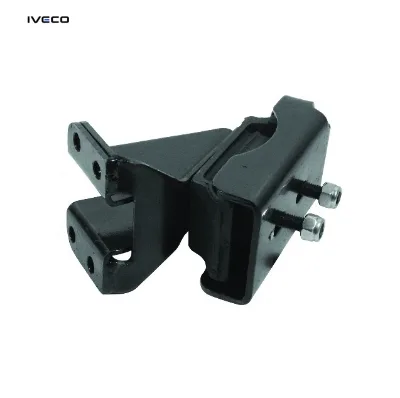
500342992 New Steel Right-side Engine Mount for Daily
$30.00 - $50.00

Xiamen Monake Import and Export Co., Ltd.
- Verified by TUVRHEINLAND
- Trading Company
- China Fujian
- Lead time30 days
- Avg. response≤ 3h
Main productsEngine Mounting, Strut Mount, Rubber Bush, Center Bearing, Control Arm, Arm Bushing, Auto Parts, Fan Blade, Auto Spare Parts, Car Parts
Main marketsOthers(foreignTradeCapacity.exportBusinessCapacityMarketOther),Domestic

Baishan Power (Fuzhou) Co., Limited
- Verified by SGS
- Manufacturer/Factory,Group Corporation,Other
- China Fujian
- Lead time15 days
- Avg. response≤ 6h
Main productsDiesel Generators and Parts, AVR Automatic Voltage Regulator, ATS Auto Transfer Switch
Main marketsEastern Europe,Mid East,North America,Western Europe,Africa


Comprehensive Sourcing Guide
ISO9001 Engine Mounting Supplier Concentration and Factory Types
Buyers searching for ISO9001-certified engine mounting components will encounter a mix of manufacturer-factories, combined manufacturing-and-trading entities, and pure trading companies. Supplier results for this category show manufacturers based in Guangdong and Zhejiang, with trading companies also active in the truck and auto parts space. Understanding this mix matters because a factory-direct relationship typically gives you closer control over rubber-to-metal bonding processes, while a trading company may offer broader catalog coverage across engine mounts, suspension mountings, and related vehicle parts. Neither structure is inherently better; the right choice depends on whether your priority is process control or range consolidation across many engine mounting SKUs.
The product landscape within these results clusters around rubber-bonded metal engine mounts, left and right engine bracket mounts, front suspension mounting brackets, anti-vibration cylindrical mounts, and truck engine mountings spanning over a hundred items. Some suppliers list capabilities such as OEM, ODM, and own-brand development, which signals engineering involvement rather than pure catalog resale. When identifying clusters on your own, look for repeated origin labels in product attributes, city names in product listings, and regional patterns across main-product lines. In this category, rubber and plastics manufacturing, casting and forging operations, and auto-parts trading all overlap, so classify each candidate by its declared company type before shortlisting. A factory that lists engine mounts among its main products is usually a stronger technical partner than a generalist trader.
How to Verify ISO9001 Engine Mounting Suppliers
Verification starts with the platform-verified status shown on each supplier listing. The results in this category display third-party verification labels from bodies such as CTI, TÜV Rheinland, and BV (Bureau Veritas). These indicate an on-site or documentary check has occurred, but they are not a substitute for reading the actual ISO9001 certificate. Ask each candidate for the certificate number, the issuing body, the scope statement, and the expiry date. A genuine automotive-focused supplier may also hold TS 16949 (now IATF 16949), and some listings in these results reference TS 16949 alongside ISO 9001 and ISO 14001 system certifications. Confirm that the scope covers rubber-to-metal bonded components, not just generic rubber goods.
Beyond certificates, verify manufacturing reality against the declared company type. A manufacturer/factory listing rubber components, rubber-metal parts, and engine mounts as main products should be able to describe its mixing, vulcanization, and bonding inspection processes in detail. Request evidence of in-house testing for hardness (one listed product specifies 60–80A hardness), adhesion strength, and fatigue performance. Check whether third-party product certifications such as CE, FDA, LFGB, REACH, or PAHs appear on specific product attributes, and confirm which apply to your target market. Finally, probe responsiveness before committing: response-time figures in these results range from roughly 7 to 17 hours, so send identical technical questions to each candidate and compare the speed and depth of their engineering answers, not just sales replies.
What to Compare Across ISO9001 Engine Mounting Suppliers
Build a comparison sheet using only the attributes actually displayed, since not every supplier shows every field. Useful dimensions from this category include: declared location (for example, Guangdong versus Zhejiang), company type, verification body, system certifications, average response time, stated lead time, research-and-development capacity labels (own brand, OEM, ODM), and main-product lists. One supplier in these results shows a 23-day lead time with an 11.6-hour response average; another shows 15 days and roughly 7 hours; a trading company shows 30 days and about 16.5 hours. Treat these as directional indicators and confirm current figures directly, because displayed metrics can lag real operational performance.
Compare commercial and technical fields side by side. Product-level data points worth capturing include material specifications (steel brackets, EPDM rubber compounds), customization availability, hardness ranges, packing and origin attributes, model numbers, and quoted price bands where shown. One listing displays prices of roughly $16–18 and $33–35 with a minimum order quantity of 10 pieces, while another rubber-sheet product lists a 1000-piece MOQ and 7-day delivery after sample confirmation — illustrating how widely MOQ and lead time can vary even within one supplier's catalog. Also weigh establishment year if displayed, escrow or secure-payment availability if the platform shows it, and whether the main-product line aligns with engine mounts specifically rather than adjacent categories like castings, forgings, or general truck parts.
Common ISO9001 Engine Mounting Sourcing Risks
The most frequent risk is certification scope mismatch. A supplier may hold ISO9001 for one registered entity while quotes come from a related trading arm, or the certificate scope may exclude rubber-bonded metal parts. Because engine mounts are safety-relevant vibration-isolation components, an uncertified bonding process creates failure risk even when paperwork looks complete. Another common trap is assuming a verified badge equals quality approval; verification in these results (CTI, TÜV Rheinland, BV) confirms supplier identity and legitimacy checks, not product performance. Always separate company verification from product-level certification claims such as CE, REACH, FDA, or LFGB that appear in product attributes.
Technical and commercial risks follow. Engine mounts require precise stiffness and damping characteristics; listings in this category describe attributes like small damping, small stiffness, decoupling discs, and high-frequency dynamic hardening, which means a sample that fits dimensionally may still fail acoustically or in fatigue. Risks include substitute rubber compounds, skipped salt-spray or adhesion tests on metal brackets, and inconsistent hardness between production batches. Commercially, watch for lead-time figures that exclude sample-approval cycles — one product lists 7-day delivery only after sample confirmation — and MOQs that differ sharply between catalog items and custom parts. Trading companies may add a margin while routing production to unnamed factories, reducing your visibility into process changes. Mitigate by locking material specifications, first-article inspection requirements, and re-approval conditions into the purchase contract before any deposit.
ISO9001 Engine Mounting Regional Sourcing and Logistics
The supplier results for this category point to two manufacturing regions: Guangdong and Zhejiang. Guangdong listings emphasize rubber components, rubber dampers, rubber-metal parts, and engine mounts for automotive, power tool, home appliance, and sanitary applications, with one product origin marked as Guangzhou. Zhejiang listings center on casting, forging, and machining operations supplying engine mounting brackets, with a product origin noted as Ningbo. These are the only region-specific facts supported by the current results; treat everything else about regional advantage as unverified until you confirm it with individual suppliers.
Logistics planning should start from the declared lead times and your delivery destination. Displayed lead times in this category range from about 15 to 30 days, with faster figures attached to manufacturing-focused suppliers and slower figures to trading companies handling broader truck-parts catalogs. Confirm whether quoted lead times cover tooling for custom mounts, since rubber-to-metal bonded parts often need molds for new geometries. Ask each supplier about consolidation options if you are also sourcing brackets, bushings, or seals from other suppliers in the same region, and clarify packing standards — some listings show customized packing while others show standard packaging. Request FOB, CIF, and DAP quotations for your actual destination port so you can compare landed cost rather than unit price. Finally, verify export documentation experience: engine mounts for vehicles may need certificates of origin and, for some markets, compliance paperwork tied to the product certifications listed in supplier attributes.
ISO9001 Engine Mounting Commercial Terms and Order Planning
Structure your commercial terms around the verification and production evidence you have gathered. Typical planning steps for this category: first, freeze the specification — drawing, material (steel bracket grade and rubber compound such as EPDM), hardness range, and bonding requirements; second, agree sample terms including cost, freight, and approval criteria; third, confirm the production MOQ, which in this category's displayed data ranges from as low as 10 pieces for some bracket items to 1000 pieces for rubber products; fourth, align on lead time, recognizing that one listed product promises 7-day delivery after sample confirmation while supplier-level lead times run roughly 15 to 30 days.
Payment and quality-protective terms deserve explicit attention. Where a platform offers escrow or trade-assurance-style protection, use it for initial orders; otherwise negotiate staged payments tied to first-article approval and pre-shipment inspection. Build these contract elements into every order: certification copies (ISO9001, and TS 16949 where claimed), batch traceability, hardness and adhesion test reports per lot, and a defined rejection and replacement process. Plan order quantities against demand volatility — over a hundred truck engine mounting variants exist in one supplier's listing, so consolidate forecasts by mount type rather than ordering each SKU at minimum quantity. Finally, schedule reorders against confirmed current lead times, not the figures you saw at first contact, and keep a qualified second source in each region so a single factory's capacity or certification lapse cannot halt your supply.
FAQs
What certifications do rubber engine mount manufacturers hold?
Suppliers in this category hold ISO 9001, TS 16949, and ISO 14001 certifications. Some also provide FDA, CE, LFGB, CIQ, and EEC approvals for specific rubber products. These standards ensure quality management and safety compliance for automotive and industrial applications.
What is the typical lead time for engine mounting orders?
Lead times vary by supplier, with observed ranges from 15 to 30 days. Some manufacturers offer delivery within 7 days after sample confirmation. Buyers should verify specific timelines based on order volume and customization requirements before placing a purchase order.
Where are these engine mounting manufacturers located?
Manufacturers are primarily located in China, specifically in Guangdong and Zhejiang provinces. Key cities include Guangzhou and Ningbo. These regions host factories specializing in rubber bonding, metal components, and precision casting for automotive engine mounting systems.
What is the minimum order quantity for rubber mounts?
Minimum order quantities depend on the specific product and supplier. Some listings require 1000 pieces, while others accept orders as low as 10 units. Buyers must check individual product pages to confirm the exact MOQ applicable to their specific engine mount needs.
Do suppliers offer customization for engine mounting brackets?
Yes, customization is available for many engine mounting products. Suppliers offer OEM and ODM services with options for specific materials like EPDM or steel. Buyers can request custom shapes, hardness levels, and packaging to match their vehicle or machinery specifications.
What materials are used for automotive engine mounts?
Common materials include EPDM rubber, steel, and pure gum rubber sheets. Products often combine rubber bonding with metal components for durability. Some listings also mention stainless steel and various plastic products depending on the specific application and performance requirements.
How quickly do suppliers respond to inquiries?
Response times vary among suppliers, with observed averages ranging from 7 to 16 hours. Some manufacturers respond within 11 hours. Buyers should expect prompt communication but should verify current response speeds directly with the supplier before initiating a detailed negotiation.