Modern Wireless Charging Table Lamp Suppliers and Manufacturers
Explore 16 verified options for Modern Wireless Charging Table Lamp suppliers and manufacturers in China Guangdong. Compare response times, lead times, certifications, and pricing to find the right partner. Contact suppliers directly to request samples or custom quotes; review the available evidence before requesting comparable quotations from suitable candidates.
Suppliers List

SHANGLI LIGHTING CRAFTS CO.,LTD
- Verified by BV
- Manufacturer/Factory
- China Guangdong
- Lead time30 days
- Avg. response≤ 10h
Main productsPortable Table and Floor Lamp, LED Lamp, Hotel Lamp, Chandelier Lamp, Pendant Lamp, Ceiling Lamp, Wall Lamp, Lampshade, Accessory, Mirror
Main marketsSouth America,Eastern Europe,Mid East,North America,Southeast Asia,Eastern Asia,Oceania,Western Europe,Africa

2024 Study Room Lighting Wireless Charging Intelligent Modern Table Lamp
$20.00 - $40.00
MOQ: 100 Pieces

Bedroom Bedside Desk Lamp with Dual USB Charger Wireless Charging Table Lamp
$18.00 - $35.00
MOQ: 1 Pieces

Touch Control Cute Crystal Table Lamp with 2 USB Charging Ports Bedside Light
$24.00 - $45.00
MOQ: 1 Pieces
Shenzhen Highstar Electrical Co., Ltd.
- Verified by TüVRheinland
- Manufacturer, Trading Company
- Lead time30 days
- Avg. response≤ 2h
Main productsBaby White Noise Machine, White Noise Machine, Sunrise Alarm Clock, White Noise Machine With Wireless Charger, Night Light
Main marketsDomestic Market(30%), Western Europe(15%), North America(10%)
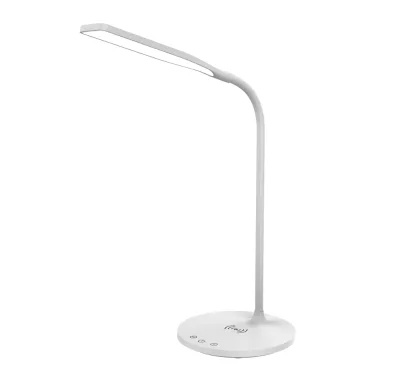
Cost Effective Eye protection Table Lamp with Fast Wireless Charging 15W for Mobile Phone
$11.00 - $13.20
MOQ: 1000

NINGBO HAISHU HOPE-U INTERNATIONAL TRADING CO., LTD.
- Manufacturer/Factory
- China Zhejiang
- Lead time45 days
- Avg. response≤ 8h
Main productsGift, Beauty Device, Bluetooth Speaker, Skin Care, Cosmetics, Promotional Products, Camping Lamp, Fan, Keyboard and Mouse, Humidifier
Main marketsSouth America,Eastern Europe,North America,Southeast Asia,Western Europe


Rechargeable Touch LED Colorful Night Light Bedside Table Lamp with Remote Control
$5.41
MOQ: 3000 Pieces

Huizhou Homelighting Technology Co., Ltd.
- Verified by BV
- Trading Company,Manufacturer/Factory
- China Guangdong
- Lead time0 days
- Avg. response≤ 8h
Main productsTable Lamp, Wall Lamp, Floor Lamp, Hotel Lamp, Tiffany Lamp, Lampshade, Chandelier Lamp
Main marketsSouth America,Eastern Europe,Mid East,North America,Southeast Asia,Eastern Asia,Oceania,Western Europe,Africa


$35.00 - $40.00
MOQ: 100 Pieces


Bedside Table Lamp with USB Port Wireless Charging Hotel Nightstandlamps
$23.00 - $30.00
MOQ: 100 Pieces

Jlt-9308 Convenient Wireless Charging Table Desk Lamp with USB, Office Lamp
$23.00 - $30.00
MOQ: 100 Pieces


- Verified by BV
- Manufacturer/Factory
- China Fujian
- Lead time23 days
- Avg. response≤ 5h
Main productsCeiling Fan Light, Lighting, Electronic Product, Electrocity Product
Main marketsSouth America,Eastern Europe,Mid East,Southeast Asia,Western Europe,Africa
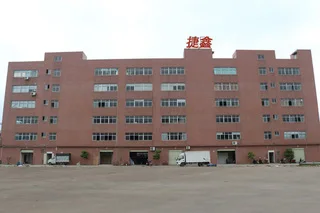
Huizhou Jiexin Electronic Products Co., Ltd.
- Manufacturer, Trading Company
- Guangdong, China
- Lead time45 days
- Avg. response≤ 4h
Main productsTable lamp, Floor lamp, Ceiling light, Switch lamp
Main marketsNorth America(65.00%), South America(5.00%), Oceania(5.00%), Southern Europe(5.00%), Eastern Asia(5.00%), Northern Europe(5.00%), Eastern Europe(5.00%), Mid East(5.00%)
- Verified by SGS Group
- Manufacturer, Trading Company
- Lead time20 days
- Avg. response≤ 6h
Main productsLED Bulb, LED Filament Bulb, LED Desk Night Light, LED Strip Light, LED Solar Light
Main marketsWestern Europe(20%), North America(15%), Eastern Asia(15%)

Xuzhou Risen Industry and Supply Co., Ltd
- Verified by TUVRHEINLAND
- Trading Company
- China Jiangsu
- Lead time30 days
- Avg. response≤ 3h
Main productsHousehold Adornment, Household Supplies, Home Decoration, Compressed Sofa, Dining Furniture, Bothroom Organizer, Kitchen Storage, Glass Ornaments, Ceramic Tableware, Home Fragrance
Main marketsSouth America
Jianbian Lighting Technology (Zhongshan) Co., Ltd.
- Verified by CTI
- Combined
- China Guangdong
- Lead time15 days
- Avg. response≤ 2h
Main productsTable Lamp, Cordless Table Lamp, Rechargeable Table Lamp
Main marketsSouth America,Domestic,Europe,North America

Huanyu Electronics Industrial Co., Limited
- Verified by BV
- Trading Company,Manufacturer/Factory
- China Guangdong
- Lead time15 days
- Avg. response≤ 9h
Main productsPower Bank, Wireless Charger, Bluetooth Speaker, Bluetooth Earphone/Earbuds/Headphone, Smart Watch, Drone, Charger/Adapter, Solar Radio, USB Cable, Other Mobiles& Computer Accessoriess
Main marketsSouth America,Eastern Europe,Mid East,North America,Southeast Asia,Eastern Asia,Oceania,Western Europe,Africa


LED Qi Wireless Charger Desk Lamp with USB Charging Port Touch Control Eye-Caring Table Lamps
$18.70 - $23.00
MOQ: 10 Pieces

Zhuhai DB-Way Technology Co.,Ltd.
- Manufacturer, Trading Company
- Guangdong, China
- Lead time7 days
- Avg. response≤ 2h
Main productsLED Table Lamp,LED Desk Lamp,Night Light
Main marketsWestern Europe(81.00%), North America(18.00%), Oceania(1.00%)
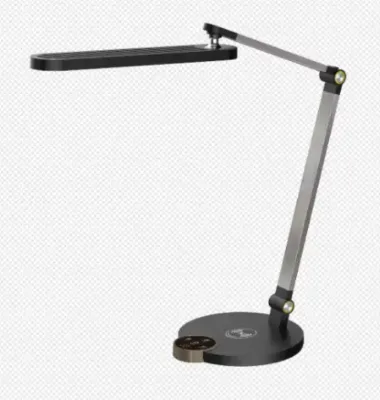
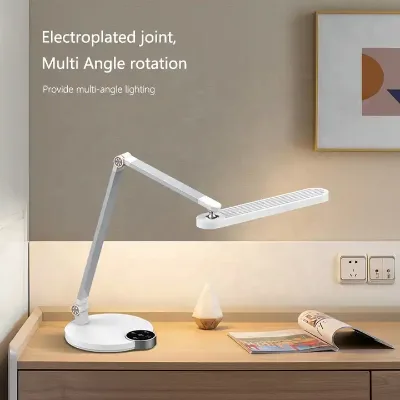
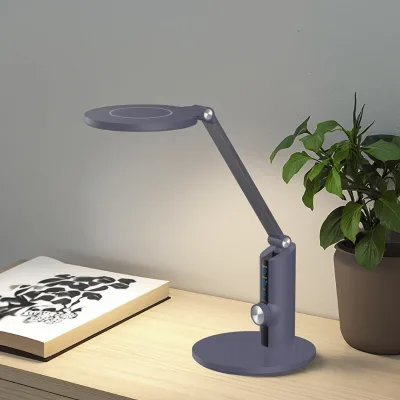
$23.30 - $26.00
MOQ: 100 pieces

Zhong Shan Rima Lighting Co., Ltd.
- Verified by CTI
- Combined
- China Guangdong
- Lead time23 days
- Avg. response≤ 2h
Main marketsSoutheast Asia/ Mideast,Domestic,Europe,North America
Shenzhen 4u Tech-King Technology Co., Ltd.
- Verified by Intertek
- Trading Company
- Lead time5 days
- Avg. response≤ 6h
Main productsLED Night Light
Main marketsNorthern Europe(50%), Eastern Europe(20%), Western Europe(20%)
Gd (shenzhen) Lighting Co., Ltd.
- Manufacturer
- Guangdong, China
- Lead time30 days
- Avg. response≤ 5h
Main productsLED cabinet light,LED wardrobe light,LED linear light,LED reading light,LED closet light
Main marketsDomestic Market(30.00%), Eastern Europe(20.00%), Western Europe(15.00%), North America(10.00%), Southern Europe(5.00%), Mid East(5.00%), Northern Europe(5.00%), South Asia(3.00%), Oceania(3.00%), Southeast Asia(2.00%), South America(2.00%)

Ningbo Qingyang Import and Export Co., Ltd.
- Verified by SGS
- Trading Company
- China Zhejiang
- Lead time45 days
- Avg. response≤ 1h
Main productsLED Lights, Table Lamp, Night Light, Solar Garden Light, LED Sensor Light, LED String Light, Decorative Light, LED Work Light, Camping Lantern, LED Candle
Main marketsEast Asia(Japan/ South Korea),Europe,North America

Guangzhou Raiseking Electronics Co., Ltd.
- Combined
- China Guangdong
- Lead time23 days
- Avg. response≤ 10h
Main productsTable Lamp, Rechargeable Lamp, Night Lamp, LED Modern Lighting, Decorative Lamp, LED Wall Light, Home Decor Lamp, Indoor Lighting, Sconce, Rechargeable Wall Light
Main marketsSouth America,Southeast Asia/ Mideast,East Asia(Japan/ South Korea),Domestic,Europe,Australia,North America

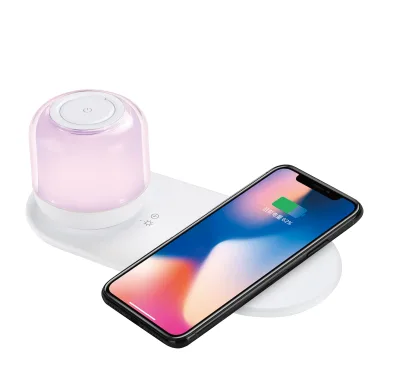
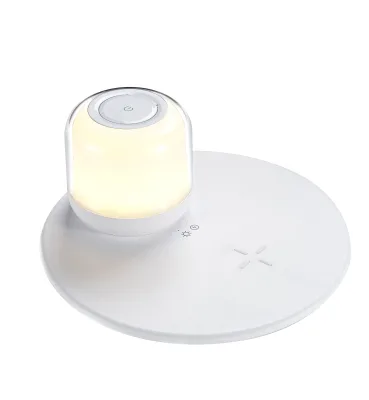
Wireless Charging Rechargeable Table Lamp, Crystal LED Night Light with Touch Remote
$9.30 - $10.80
MOQ: 20 Pieces

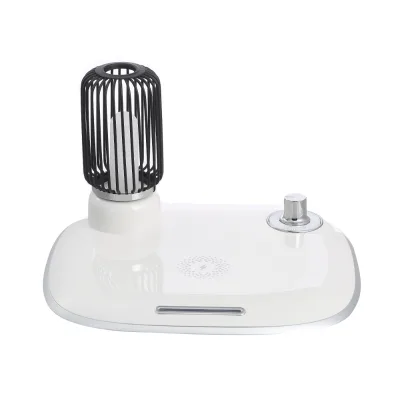
Luxury Aluminum USB-C Rechargeable Table Lamp, 5200mAh Qi Wireless Charging with Remote
$19.00 - $21.00
MOQ: 36 Pieces

Crystal LED Desk Lamp, Wireless Charging Rechargeable Night Light Touch Remote Control
$9.30 - $10.80
MOQ: 20 Pieces


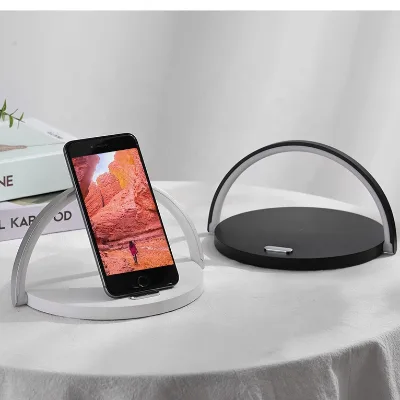


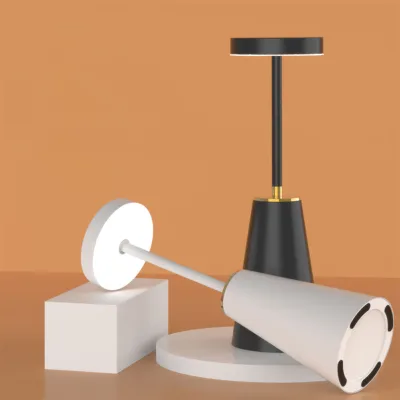
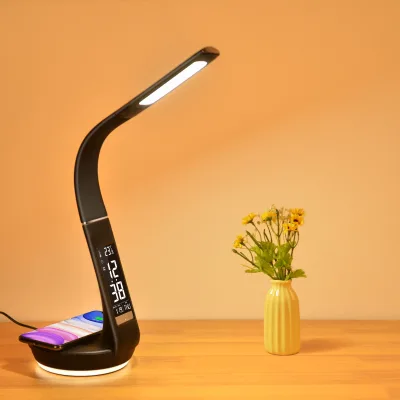
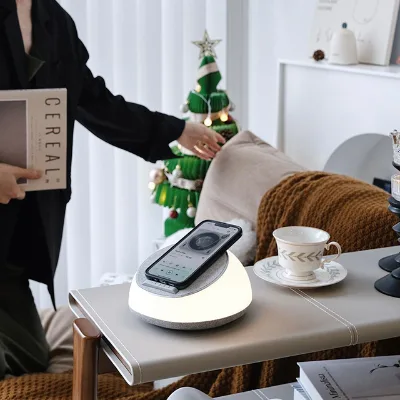


Comprehensive Sourcing Guide
Modern Wireless Charging Table Lamp Supplier Concentration and Factory Types
The available data indicates a significant concentration of manufacturers and factories located in Guangdong, China, specifically within the lighting manufacturing cluster. This region hosts a diverse mix of company types, ranging from pure manufacturers to entities operating as both manufacturers and trading companies. The primary product focus for these suppliers includes a wide array of lighting solutions such as portable table lamps, floor lamps, and specialized wireless charging units. Buyers should note that the specific mix of company types can vary, with some suppliers offering OEM and ODM capabilities while others focus on sample processing and graphic customization.
When evaluating the factory types, it is essential to distinguish between entities that solely manufacture and those that combine production with trading functions. The observed data shows that some suppliers list their company type as "Manufacturer/Factory," while others identify as "Manufacturer, Trading Company." This distinction impacts the supply chain structure, as trading companies may offer broader product ranges including baby white noise machines and sunrise alarm clocks alongside the core lighting products. Buyers must verify the actual production capacity and whether the supplier manages the entire process in-house or relies on external partners for specific components like the wireless charging modules or LED drivers.
How to Verify Modern Wireless Charging Table Lamp Suppliers
Verification of suppliers requires a rigorous check of third-party audit reports and system certifications to ensure compliance with international standards. The data highlights that some suppliers hold BV verification status, while others are verified by TüVRheinland, indicating different levels of external scrutiny. Buyers should look for specific system certifications such as BSCI, TS 16949, ISO 9001, Sedex, and various product-specific marks like CE, RoHS, UL, ETL, and GS. These certifications are critical for ensuring that the wireless charging table lamps meet safety requirements for electrical components and electromagnetic compatibility, particularly given the integration of charging coils and LED drivers.
Beyond certifications, buyers must assess the response time and verification status to gauge supplier reliability and communication efficiency. The observed response times vary significantly, with some suppliers showing a response time of 9.08 hours while others demonstrate a faster 2-hour response window. A rapid response time often correlates with a more active sales team and better project management capabilities. Additionally, the presence of specific product attributes like "Customization: Available" and detailed material specifications, such as iron or ABS lamp bodies, serves as a proxy for the supplier's technical depth. Buyers should request proof of these certifications and verify the authenticity of the BV or TüVRheinland reports before proceeding with any order.
What to Compare Across Modern Wireless Charging Table Lamp Suppliers
Comparing suppliers requires a detailed analysis of key operational metrics including lead times, minimum order quantities, and pricing structures. The data reveals a lead time of 30 days for certain manufacturers, which is a standard benchmark for custom lighting orders. However, buyers must also scrutinize the Minimum Order Quantity (MOQ), which varies widely from 1 unit for some sample-friendly suppliers to 100 or even 1000 units for others. This variation directly impacts the initial investment and inventory risk, especially for buyers testing new product lines or seeking small-batch customization. Pricing also fluctuates based on these factors, with observed ranges spanning from $11 to $45 per unit depending on the specific model and feature set.
In addition to logistics and cost, buyers should compare the technical specifications and customization capabilities offered by different suppliers. The product evidence shows diverse attributes such as power sources (DC or Electric), light sources (LED), and control modes (Touch Control). Some suppliers offer advanced features like 15W fast wireless charging, while others focus on basic USB charging or energy-saving LED sources. The ability to customize voltage (110V/220-240V), color temperature (2700-6500K), and materials (Iron, ABS, Silicone) is a crucial differentiator. Buyers must align these technical capabilities with their specific market requirements, ensuring that the supplier can deliver the exact product configuration needed for their target customers.
Common Modern Wireless Charging Table Lamp Sourcing Risks
One of the primary risks in sourcing modern wireless charging table lamps involves the discrepancy between claimed certifications and actual product compliance. While suppliers may list extensive certifications like UL, ETL, CE, GS, and VDE, buyers must verify that these apply to the specific model being ordered, particularly the wireless charging component. The integration of wireless charging coils introduces complex electromagnetic interference risks that require rigorous testing. If a supplier claims a product is "Energy Saving" or has a specific lifespan like 8000 hours, buyers should demand independent test reports to validate these claims, as generic marketing statements do not guarantee performance or safety standards.
Another significant risk relates to the supply chain transparency and the potential for mixed manufacturing sources. Some suppliers operate as trading companies, which can obscure the actual factory location and production processes. This lack of transparency can lead to inconsistencies in quality control, especially when dealing with complex electronic assemblies. The variation in company types, from pure manufacturers to trading entities, means that the level of direct oversight on production lines may differ. Buyers should be wary of suppliers who cannot clearly articulate their production flow or who provide vague answers regarding the origin of critical components like the wireless charging modules or the LED drivers used in the lamps.
Modern Wireless Charging Table Lamp Regional Sourcing and Logistics
Sourcing from the identified region of Guangdong, China, offers access to a mature lighting manufacturing ecosystem, but it also presents specific logistical considerations. The concentration of suppliers in this province means that many factories are located in close proximity, facilitating easier factory audits and faster communication. However, buyers must account for the specific shipping requirements associated with electronic goods containing batteries or charging modules, which may be subject to special handling regulations during international transport. The product origin is consistently listed as Guangdong, China, which simplifies the initial logistics planning but requires careful coordination with freight forwarders experienced in handling LED and electronic lighting products.
Logistics planning must also consider the packaging standards and shipping volumes to ensure product integrity upon arrival. The data indicates that products are typically packed in polyfoam or PE foam within paper cartons, which provides a baseline for protection. However, for larger orders or specific customizations, buyers should verify if the packaging meets the requirements for long-distance shipping and potential customs inspections. The single volume and gross weight of items, such as a 0.165 kg product or a 15.0 kg gross weight for a specific model, are critical for calculating freight costs and container utilization. Buyers should request detailed packing lists and dimensions to optimize their shipping strategy and minimize damage risks during transit.
Modern Wireless Charging Table Lamp Commercial Terms and Order Planning
Commercial terms for modern wireless charging table lamps vary significantly based on the supplier's capacity and the buyer's order volume. The observed data shows a wide range of pricing, from $11 to $45 per unit, with corresponding MOQs ranging from 1 to 1000 units. Buyers must carefully evaluate these terms to determine the most cost-effective strategy for their business model. For instance, a supplier with a low MOQ of 1 unit may be ideal for prototyping or small retail orders, while a supplier requiring 1000 units might offer better unit economics for large-scale distribution. Understanding the price tiers and the associated volume thresholds is essential for accurate budgeting and financial planning.
Order planning should also incorporate the lead times and warranty terms provided by the supplier to ensure a smooth supply chain. With a standard lead time of 30 days, buyers need to factor this into their production schedules and inventory management to avoid stockouts. Additionally, warranty periods, such as the 1-Year warranty observed in some product listings, provide a safety net for product failures but require clear understanding of the claim process. Buyers should also consider the customization options available, such as branding or specific design styles, and ensure these are clearly defined in the purchase agreement. Clear communication regarding these commercial terms is vital to prevent misunderstandings and ensure a successful partnership.
FAQs
What is the typical lead time for modern wireless charging table lamps?
The typical lead time for these lamps is 30 days based on current supplier data. This duration applies to standard orders from manufacturers in Guangdong, China. Buyers should confirm specific timelines with suppliers before placing large orders to ensure production schedules align with delivery needs.
What certifications do these lamps typically hold for safety compliance?
Common certifications include CE, RoHS, GS, VDE, UL, and ETL for various markets. Some suppliers also hold BSCI, ISO 9001, and TS 16949 system certifications. Buyers must verify that specific product models match their target market requirements before finalizing any purchase agreements.
What is the minimum order quantity for these wireless charging lamps?
Minimum order quantities vary significantly, ranging from 1 unit to 1000 units depending on the supplier. Some listings allow single unit purchases while others require bulk orders of 100 or more. Buyers should check individual product pages to find options matching their specific volume requirements.
Where are the manufacturers of these lamps located geographically?
Most manufacturers are located in Guangdong, China, which is a major hub for lighting production. This region offers access to established supply chains and manufacturing capabilities. Buyers can expect products to originate from this specific province when sourcing from verified suppliers in this category.
How quickly do suppliers typically respond to inquiries about these lamps?
Response times vary, with some suppliers responding within 2 hours and others taking around 9 hours. Faster response times often indicate higher availability or dedicated sales teams. Buyers seeking urgent quotes should prioritize suppliers with the quickest documented response metrics.
What is the price range for modern wireless charging table lamps?
Prices generally range from 11 to 45 dollars per unit depending on features and order volume. Lower prices often apply to larger quantities while higher prices reflect specialized designs or certifications. Buyers should compare specific product listings to find the best value for their budget.
Can these lamps be customized for specific brand or design needs?
Yes, customization is available for many models including OEM and ODM services. Suppliers offer options for material, style, and branding to meet specific requirements. Buyers should discuss their unique needs directly with manufacturers to confirm feasibility and any additional costs involved in the customization process.