Oil Resistant Anti Fatigue Mat Suppliers and Manufacturers
Compare 17 verified Oil Resistant Anti Fatigue Mat suppliers in China based on location, lead times, and certifications. Review product specs like material and MOQ before contacting factories for quotes; review the available evidence before requesting comparable quotations from suitable candidates.
Suppliers List

Shanghai Leenol Industrial Co., Ltd.
- Verified by SGS
- Trading Company,Manufacturer/Factory
- China Shanghai
- Lead time15 days
- Avg. response≤ 12h
Main productsSMT PCB Magazine Rack, ESD Workbench, ESD Box/Tray/Trolley, ESD Packing Bags, Cleanroom Products, ESD Testers, ESD PCB Trolley, Sticky Mat, ESD PVC Flooring/Tile, ESD Chairs
Main marketsSouth America,Eastern Europe,Mid East,North America,Southeast Asia,Eastern Asia,Oceania,Western Europe,Africa


$20.00 - $30.00
MOQ: 20 Pieces

Qingdao Kingstone Industry Co., Ltd.
- Verified by TUVRHEINLAND
- Combined
- China Shandong
- Lead time30 days
- Avg. response≤ 4h
Main productsRubber Flooring, Rubber Mat
Main marketsEast Asia(Japan/ South Korea)


5% Discount Oil Resistance Rubber Anti Fatigue Interlocking Protection Mat for Dry Area
$3.50 - $9.30
MOQ: 200 Pieces


Shanghai Pujia Metal Manufacturing Co., Ltd.
- Combined
- China Jiangsu
- Lead time15 days
- Avg. response≤ 15h
Main productsPet Cage, Dog Treadmill, Pet Operating Table, Vet Exam Table, Pet Bath Tub, Pet Grooming Table, Pet Grooming Hair Dryer, Veterinary Instruments
Main marketsSouth America,Domestic,Europe,North America

Qingdao Zeerjia Trading Co., Ltd.
- Trading Company
- China Shandong
- Lead time30 days
- Avg. response≤ 2h
Main productsAnti Slip Floor Mat, PVC Tube Mat, Interlocking PVC Floor Tile, Threshold Access Ramp, Safety Mat, Wheel Chocks, Anti Fatigue Mat, Rubber Mudflaps, Rubber Cable Protector, Rubber Floor Mat
Main marketsSoutheast Asia/ Mideast,Europe,North America

Drainage Rubber Mat Acid Resistant Rubber Mat Anti Slip Oil Resistance Rubber Mat
$15.00 - $25.00
MOQ: 700 Pieces

Work Safe Anti Fatigue Mat If Greasy Floors Are a Problem, This Is Your Ideal Anti-Slip Mat!
$8.00 - $16.00
MOQ: 500 Pieces

Industrial Anti Fatigue Mat Rubber Bubble Mats for Workshops/Workstation/Standing Area Floor Mat
$5.00 - $8.00
MOQ: 1000 Pieces

Qingdao Hvsun Industry Co., Ltd.
- Verified by BV
- Trading Company
- China Shandong
- Lead time15 days
- Avg. response≤ 12h
Main productsRubber Mat, Rubber Floor, Rubber Flooring, Rubber Tile, Gym Rubber Floor, Fitness Rubber Floor, Playground Rubber Tiles, Rubber Paver, Rubber Brick, Rubber Sheet
Main marketsEurope,Australia

Nanjing Demeters Rubber & Plastic Products Co., Ltd.
- Manufacturer/Factory
- China Jiangsu
- Lead time23 days
- Avg. response≤ 12h
Main productsIndustrial Rubber Sheet, Special Industrial Rubber Sheet, Anti-Slip Flooring, Livestock Rubber Mat, Insulation Rubber Sheet, Waterproof Rubber Sheet and Rubber Lining
Main marketsSouth America,Eastern Europe,Mid East,North America,Southeast Asia,Eastern Asia,Oceania,Western Europe,Africa
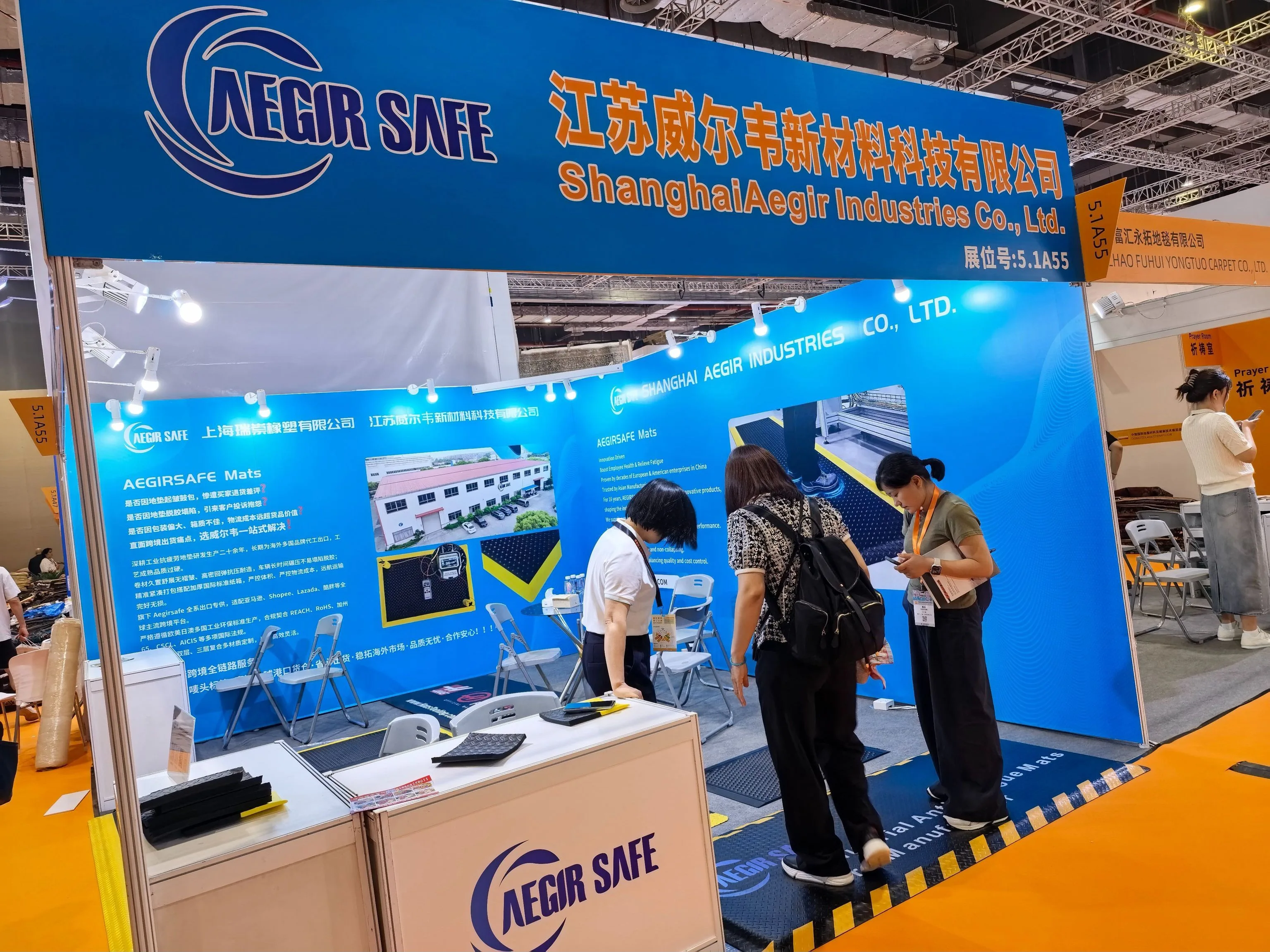
Shanghai Ruichong Rubber Plastic Co., Ltd.
- Manufacturer, Trading Company
- Shanghai, China
- Lead time3 days
- Avg. response≤ 3h
Main productsANTI-FATIGUEMATS,ENTRANCE MATS,ANTI-SLIP MATS,ESD MATTING,SPECIALITY MATTING
Main marketsNorth America(30.00%), Eastern Asia(20.00%), Eastern Europe(20.00%), South America(20.00%), Southern Europe(10.00%)
Changzhou Broad New Materials Technology Co., Ltd.
- Manufacturer
- Lead time旺季: "1 - 2":2,"3 - 10":5,"> 10":"To be negotiated", 淡季: "1 - 2":2,"3 - 10":5,"> 10":"To be negotiated"
- Avg. response≤ 5h
Main productsPU Anti Fatigue Mat; PVC Mat,Memory Foam Pillow,Polyurethane Plastering Float,Auto Interior Parts

Zhejiang Green Valley Sports Industry Co., Ltd.
- Verified by BV
- Trading Company,Manufacturer/Factory
- China Zhejiang
- Lead time15 days
- Avg. response≤ 4h
Main productsRubber Tiles, Rubber Rolls, EPDM Granule, EPDM/SBR Rubber Mats, Rubber Flooring, PU Adhesive/Glue, Playground Rubber Tile, Rubber Machine, Elastic Interlocking Tiles, PVC Flooring
Main marketsSouth America,Eastern Europe,Mid East,North America,Southeast Asia,Eastern Asia,Oceania,Western Europe,Africa

Sanhe Bestrubber Import & Export Co., Ltd.
- Verified by SGS
- Trading Company
- China Hebei
- Lead time15 days
- Avg. response≤ 5h
Main productsSilicone Rubber Sheet, Silicone Sponge Rubber Sheet, PTFE Sheet, PTFE Rod, Polyurethane Sheet, Polyurethane Rod, Rubber Mounting, Rubber Sheet, Plastic Sheet, Plastic Rod
Main marketsSouth America,Southeast Asia/ Mideast,Europe
Changzhou Hiyou Microline Electron Co., Ltd.
- Verified by SGS
- Manufacturer/Factory
- China Jiangsu
- Lead time23 days
- Avg. response≤ 1h
Main productsUSB 3.1 Type-C Cable, High-Speed 4K/8K HDMI Cable, 4K Fiber Active Optical Cable, S/FTP Cat. 7 and Cat. 8 Patch Cord, Displayport 4K/8K Cable, BNC Coaxial 3G/6g/12g HD SDI Cable, USB Charger 20W/30W/45W/60W, Power Bank 2500mAh/5000mAh/10000mAh, Screen Panel Green Background for Photography, Audio Video Splitter and Switch
Main marketsSouth America,Eastern Europe,Mid East

- Manufacturer/Factory
- China Shandong
- Lead time23 days
- Avg. response≤ 6h
Main productsHydraulic Hose, Welding Hose, Rubber Hose, Conveyor Belt, Air Hose, Water Hose, Rubber Sheet, Rubber Tiles, V Belt, Fittings
Main marketsSouth America,Eastern Europe,Mid East,North America,Southeast Asia,Eastern Asia,Oceania,Western Europe,Africa


Anti-Shock Rubber Mat Anti Slip Rubber Sheet
MOQ: 3000 Square Meters

Hebei Orient ADMA Tech Group Co., Ltd.
- Verified by SGS
- Trading Company,Manufacturer/Factory
- China Hebei
- Lead time30 days
- Avg. response≤ 11h
Main productsPVC Hose, Rubber Hose, Hydraulic Hose, Silicone Hose, Pneumatic Hose, Oil Field Hose/Dredging Hose, Hose Crimping Machine, Hose Couplings and Clamps, Hose Protection Sleeve, Packaging Film
Main marketsSouth America,Eastern Europe,Mid East,North America,Southeast Asia,Eastern Asia,Oceania,Western Europe,Africa
Hebei Xiongqian Wire Mesh Manufacturing Co., Ltd.
- Verified by TUVRHEINLAND
- Combined
- China Hebei
- Lead time15 days
- Avg. response≤ 4h
Main productsPerforated Metal Sheet, Perforated Panel, Windbreak Fence, Expaned Metal, Gutter Guard, Security Screen, Safety Grating, Fence Mesh
Main marketsSoutheast Asia/ Mideast,Domestic,Europe,North America
- Verified by TUVRHEINLAND
- Trading Company,Manufacturer/Factory
- China Zhejiang
- Lead time23 days
- Avg. response≤ 2h
Main productsEp/Ee/Cc56 Conveyor Belt, Steel Cord Conveyor Belt, Sidewall Conveyor Belt, Wrapped V Belt, Poly Ribbed Belt, Raw Edge Cogged V Belt, Timing Belt, PVC/PU/PP/Pvg Conveyor Belt, Conveyor Roller, Pulley
Main marketsSouth America,Mid East,North America,Southeast Asia,Eastern Asia,Western Europe

Sansd (Jiangsu) Environmental Technology Co., Ltd.
- Verified by BV
- Combined
- China Jiangsu
- Lead time15 days
- Avg. response≤ 3h
Main productsEVA Foam, EVA Mat, EVA Sheet, EVA Roll, EVA, Yoga Mat, EVA Foam Sheet, PE Foam, EVA Foam Ma, EVA Products
Main marketsDomestic
Anhui Boom Auto Parts Co., Ltd.
- Verified by SGS
- Combined
- China Anhui
- Lead time30 days
- Avg. response≤ 9h
Main marketsNorth America


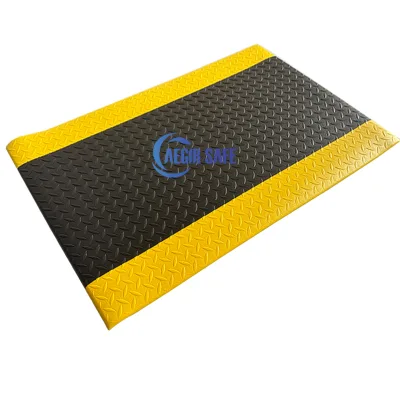
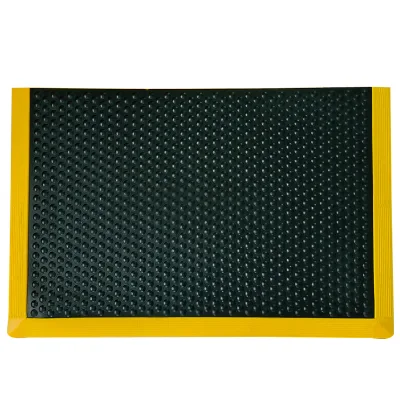
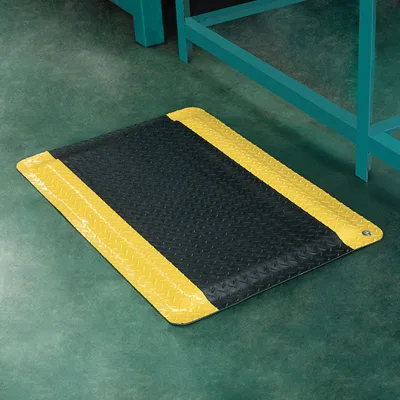


Comprehensive Sourcing Guide
Oil Resistant Anti Fatigue Mat Supplier Concentration and Factory Types
Suppliers of oil resistant anti fatigue mats on this page cluster in China, with results showing suppliers based in Shanghai and Shandong. The Shanghai-based suppliers present themselves as trading companies, manufacturers/factories, or a mix, and their main product lines extend well beyond mats into ESD workbenches, ESD packing bags, cleanroom products, PCB trolleys and testers, sticky mats and ESD flooring. This indicates electronics-workplace suppliers who carry anti fatigue matting as part of a broader static-control range. Shandong-based suppliers, by contrast, list rubber flooring and rubber mats as their main products, suggesting a matting-focused manufacturer profile rooted in rubber processing.
When results do not disclose a cluster, buyers should infer concentration by examining the product categories each supplier lists, the origin stated on individual product attributes, and whether the supplier describes itself as a factory, trading company, or combined operation. For this keyword, product evidence shows mats listed under rubber products, kitchen mats, fitness accessories and protective flooring, which means the same search can surface both industrial rubber specialists and home or fitness mat traders. Factory-type suppliers typically list customization options, material details such as natural rubber, and model numbers on their product attributes, while trading suppliers often carry wider, unrelated catalogs. Distinguishing these types early helps buyers decide whom to approach for engineered, oil-resistant rubber matting versus general-purpose comfort mats, and sets expectations for technical communication and sampling behavior.
How to Verify Oil Resistant Anti Fatigue Mat Suppliers
Verification should start with the credentials shown in search results rather than assumptions. On this page, suppliers display third-party verification badges from SGS and TUV Rheinland, and system certifications such as ISO 9001 or an ISO 9001:2015 certificate. These are meaningful signals, but buyers should confirm the certificate scope and validity directly with the issuer or by requesting the current certificate, since displayed badges describe the company profile, not necessarily every product it sells. Response time is another visible data point: results on this page show figures ranging from roughly three to twelve, and a slower responder may affect sampling and issue resolution, though it does not prove unreliability on its own.
Next, verify product-level claims against the attributes each supplier publishes. For this keyword, relevant attributes include material listed as natural rubber, performance described as insulating rubber slab, features such as corrosion-resistant, wear-resistant, heat-resistant, cold-resistant and impact-resistant, and stated standards like specific mat dimensions. Ask the supplier to confirm which of these attributes apply to the specific Oil Resistant Anti Fatigue Mat you intend to buy, and request material data or test evidence rather than accepting keyword strings such as "oil resistant" from product listings. Check whether customization is marked available, since customizable listings give more room to specify thickness, size and rubber compound. Finally, cross-check the supplier type: a manufacturer should be able to describe its own production process, while a trading company should disclose who manufactures the mat and where.
What to Compare Across Oil Resistant Anti Fatigue Mat Suppliers
Build a comparison table using the dimensions visible on this page. Lead time is displayed for some suppliers, with examples of 15 and 30, and this materially affects reorder planning for heavy rubber goods that ship by sea. MOQ appears at both supplier and product level, with examples ranging from 20 pieces on some mats to 200 or 500 pieces on others, so a small pilot order may only be feasible with lower-MOQ listings. Response time, shown in the results, tells you how quickly an inquiry is likely to receive a reply, which matters when iterating on rubber compound or size specifications. Location, such as Shanghai versus Shandong, affects freight cost and port access for your destination market.
Compare the main product lines as well. A supplier whose catalog is dominated by rubber flooring and mats will likely handle material questions, thickness options and interlocking designs more competently than one that lists mats among dozens of unrelated ESD or cleanroom items. Product attributes give further comparison points: sizes such as 600900 or 910910 millimeters, thicknesses around 13 to 18 millimeters, color options including black, red, green, blue and grey, and packing methods like pallets or film. Price ranges shown in results vary widely between listings, so compare price per piece against size, thickness and MOQ rather than in isolation. Not every supplier displays every attribute; treat missing values as questions to ask, not as failures, and weight the dimensions that matter most for your order volume.
Common Oil Resistant Anti Fatigue Mat Sourcing Risks
The most common risk in this category is keyword inflation. Product listings aggregate many keyword phrases, including ESD, cleanroom, anti-slip, kitchen, sports and eco-friendly terms, on the same mat. A listing that says "oil resistant" in its keyword string may not have a documented oil resistance rating, and a mat marketed for kitchens may not suit an industrial workshop with cutting fluids. Tie every performance claim to a written specification before ordering, and treat listed features such as insulating rubber slab as attributes to confirm, not guarantees. Another risk is size and thickness confusion, since results show different standards such as 90060018mm, 4504508mm and 60090013/16mm on similar-looking mats.
Verification gaps are a second risk area. Some suppliers are verified by SGS, others by TUV Rheinland, and some hold ISO 9001 certification, but coverage is not uniform across all suppliers, so an unverified result is not automatically disqualified; it simply requires more diligence. The word "combined" as a company type also signals mixed manufacturing and trading activity, which can obscure who actually produces the mat. Color and packing expectations create further risk: black is the default, but multi-color options and packing by film, pallets or cartons may carry cost or lead-time consequences. Finally, minimum order quantities in the hundreds can lock buyers into inventory before they have validated oil resistance in their actual working environment, so scale orders gradually.
Oil Resistant Anti Fatigue Mat Regional Sourcing and Logistics
The location facts on this page point to two Chinese sourcing regions: Shanghai and Shandong. Shanghai-based suppliers combine anti fatigue mats with a broad ESD and cleanroom product range, which can consolidate freight if you also need workbenches, trays, trolleys or flooring for an electronics facility. Shandong-based suppliers focus on rubber flooring and mats, list products with an origin such as Qingdao, and describe packing by pallets or iron cages, which is consistent with heavy rubber goods moving through northern Chinese ports. Neither region is inherently superior; the right choice depends on whether your priority is consolidated ESD procurement or matting depth.
Logistics planning should account for the weight and volume of rubber mats. Thick natural rubber mats in the 13 to 18 millimeter range are heavy, and displayed packing methods such as pallets, cartons, cast or film wrapping change how many units fit in a container and how they are protected in transit. Lead times shown in the results, such as 15 or 30, give a starting point for planning, but interlocking designs, custom sizes and non-standard colors can extend production. Ask each supplier how oil resistance is achieved in the compound and whether it affects cure time or surface finish, since formulation changes can move delivery dates. For destination planning, confirm which port the supplier ships from, whether they support mixed product loads, and how they handle customs documentation for rubber goods in your market.
Oil Resistant Anti Fatigue Mat Commercial Terms and Order Planning
Commercial terms on this page show the practical levers. Price ranges for listed mats vary from under two dollars per piece on thin anti-vibration tiles to roughly thirty dollars on thicker comfort mats, so define the size and thickness you need before comparing prices across suppliers. MOQs range from 20 pieces on some listings to 200 or 500 on others, and one listing advertises a percentage discount on oil resistance interlocking mats for dry areas, suggesting negotiable pricing at volume. Because some suppliers display lead times of 15 or 30, build reorder cycles around the slower figure rather than assuming the faster one applies to custom orders.
Order planning should sequence samples, pilot orders and volume commitments. Request a sample of the specific model number listed, such as those shown in product attributes, and test it against your actual oils, coolants or greases before scaling. Confirm whether customization is genuinely available for size, thickness and compound, since several listings mark customization as available but with different lead-time consequences. Clarify packing, from film wrapping to pallets, because it affects landed cost and warehouse handling. Verify payment protection arrangements directly with the supplier and marketplace, as escrow availability is not uniform across all results and should not be assumed. Finally, align your first order with the displayed MOQ of the chosen supplier, keeping volume commitments contingent on satisfactory oil resistance performance in real working conditions.
Word count: approximately 1,410.
FAQs
What materials are oil resistant anti fatigue mats typically made from?
Most oil resistant anti fatigue mats in these listings are made from natural rubber, often with a pad or fabric backing. Rubber provides resistance to oil, wear, heat, cold and impact, which suits industrial workplaces. Some listings also mention PVC cushion mats, so buyers should confirm the exact compound and oil resistance rating with each supplier before ordering.
What is the typical minimum order quantity for these mats?
Minimum order quantities vary by supplier and product. Listings on this page show MOQs ranging from 20 pieces for rubber sheet mats up to 200 or 500 pieces for interlocking and commercial industrial mats. Always confirm the MOQ for your chosen size, thickness and customization level, since customized orders may carry different quantity requirements.
How long does production and delivery usually take?
Listed lead times among suppliers on this page range from about 15 to 30 days, depending on the factory and order complexity. Standard sizes in stock may ship faster, while customized sizes, thicknesses or colors add production time. Confirm the lead time in writing before placing an order and factor in shipping time to your destination port.
Can I order custom sizes and thicknesses?
Yes, customization is listed as available across these mat products. Suppliers advertise customizable sizes, with standard options such as 600x900x16mm or 914x914x16mm, and thicknesses around 8 to 18mm. When requesting customization, specify dimensions, color, surface pattern and application area, then ask for a sample to verify oil resistance and comfort before mass production.
What certifications should I verify before ordering?
Some suppliers on this page hold ISO 9001 quality management certification and have verification from third-party inspection bodies such as SGS or TUV Rheinland. Certification applies at the company level, not necessarily to every product. Ask each supplier for current certificates, material safety data and test reports specific to oil resistance and slip performance for the batch you order.
How much do oil resistant anti fatigue mats cost?
Listed unit prices on this page range from roughly $1.90 to $30 per piece, depending on size, thickness, material and construction. Small interlocking mats sit at the lower end, while larger rubber sheet mats command higher prices. Request quotations based on your exact dimensions and volume, since bulk orders and customization affect the final price.