Lace Border Dyed Tablecloth Suppliers and Manufacturers
Compare 21 verified Lace Border Dyed Tablecloth suppliers in China based on response times, lead times, certifications, and pricing. Review product features like material and customization options before contacting factories directly; review the available evidence before requesting comparable quotations from suitable candidates.
Suppliers List

Rizhao Best-Buy Home & Kitchen Co., Ltd.
- Verified by SGS
- Trading Company
- China Shandong
- Lead time90 days
- Avg. response≤ 3h
Main productsTable Linens, Kitchen Decor, Bathroom, Kitchen Curtain, Quilts, Pillow Cover, Toys, Bedings, Bath Rugs, Runner
Main marketsSouth America,Eastern Europe,Mid East,North America,Africa


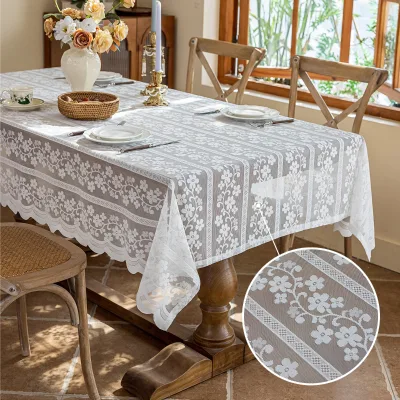
Wholesale Embroidery Lace Table Tablecloth European Fabric Tablecloth Lace Rectangular Table Cloth
$2.60 - $3.90
MOQ: 100 Pieces


GRAND RESOURCES HOME CO., LTD.
- Trading Company
- Beijing, China
- Lead time40 days
- Avg. response≤ 13h
Main productstablecloth,table runner,placemat,doily,curtain
Main marketsSouth America(40.00%), Western Europe(20.00%), Eastern Europe(20.00%), Southeast Asia(10.00%), Mid East(10.00%)

Qingdao Rainbow Textile Co. Ltd
- Verified by TUVRHEINLAND
- Trading Company,Manufacturer/Factory
- China Shandong
- Lead time60 days
- Avg. response≤ 10h
Main productsTablecloth, Table Runner, Napkin, Placemat, Tablecloth Fabric, Aluminium Foil Tapes
Main marketsSouth America,Eastern Europe,Mid East,North America,Western Europe


White Cross Stitch Wedding Hotel Tablecloths Embroidered with Lace Tablecloth
$4.00 - $6.00
MOQ: 300 Pieces

Luxury Home Tablecloths for Events Gold Lace Edge Embroidered Tablecloth
$2.00 - $6.00
MOQ: 300 Pieces

Guangzhou Mega Plastics Manufacturing Co., Ltd.
- Manufacturer/Factory
- China Guangdong
- Lead time30 days
- Avg. response≤ 17h
Main productsPVC Leather, PU Leather, Bag Leather Fabric, PVC Artificial Leather, PVC Synthetic Leather, PVC Rexine, PVC Leather Cloth, Sofa Leather, Furniture Leather, Car Seat Leather
Main marketsSouth America,Eastern Europe,Mid East,North America,Southeast Asia,Eastern Asia,Oceania,Western Europe,Africa

HangZhou Aspiring Textile and Accessories Co., Ltd.
- Verified by BV
- Trading Company,Manufacturer/Factory
- China Zhejiang
- Lead time23 days
- Avg. response≤ 6h
Main productsT/C Fabric, Denim Fabric, Non-Woven Fabric, Cotton Fabric, Accessories, Polyester Fabric, Printing Fabric, Flannel Fabric, Home Textile, Grey Fabric
Main marketsSouth America,Eastern Europe,Mid East,North America,Southeast Asia,Eastern Asia,Oceania,Western Europe,Africa

Ningbo General Union Co., Ltd.
- Verified by SGS
- Trading Company
- China Zhejiang
- Lead time45 days
- Avg. response≤ 11h
Main productsChristmas Tree, Party Supply, Christmas Ball, LED Light Strip, Halloween Product, Holiday Decoration, Santa Claus, Valentine's Day Product, Balloon Decoration, Birthday Decoration
Main marketsSouth America,Europe,North America


$11.20 - $11.50
MOQ: 50 Pieces

European Fabric Tablecloth Lace Table Cloth Wholesale Rectangular Coffee Tablecloth
$23.00 - $23.20
MOQ: 30 Pieces

Wholesale European Linen Wedding Decoration Table Cloth Velvet Lace Tablecloth
$14.00 - $15.00
MOQ: 30 Pieces

Shanghai Tongjie Printing Production Co., Ltd.
- Verified by TUVRHEINLAND
- Combined
- China Shanghai
- Lead time15 days
- Avg. response≤ 4h
Main productsBanner, Outdoor Banner, Sticker, Flag, Flatbed Printing, Pull up Banner, Decal, Poster, Digital Printing, Indoor Banner
Main marketsEurope,Australia,North America
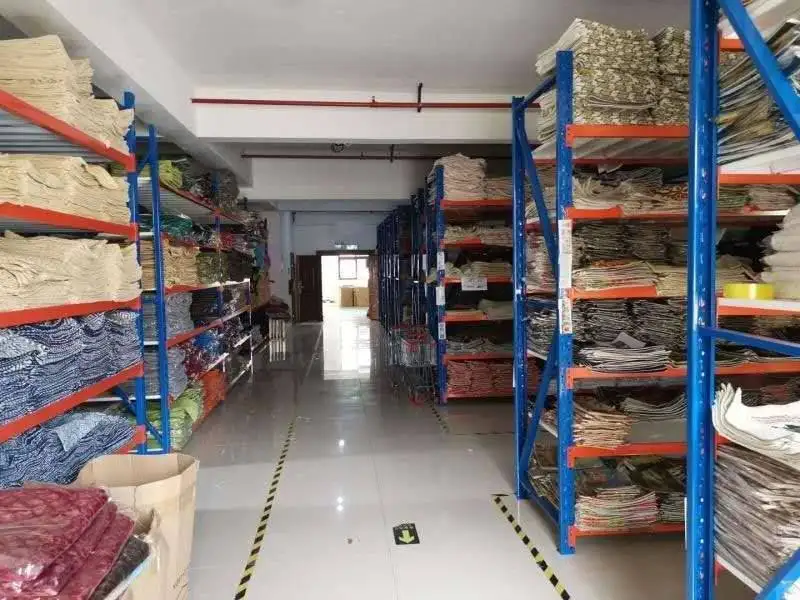
Shaoxing Bretton Textile Co., Ltd.
- Trading Company
- Zhejiang, China
- Lead time12 days
- Avg. response≤ 2h
Main productswedding backdrop,tablecloths,Customized cushion covers,home decor fabric,massage bed sheet
Main marketsNorth America(27.00%), Western Europe(16.00%), Northern Europe(10.00%), Eastern Europe(10.00%), Africa(7.00%), Southern Europe(5.00%), Mid East(5.00%), Southeast Asia(5.00%), Eastern Asia(3.00%), South Asia(3.00%), Central America(3.00%), South America(3.00%), Oceania(2.00%), Domestic Market(1.00%)

SHAOXING GOLD SUN TEXTILE CO., LTD.
- Combined
- China Zhejiang
- Lead time15 days
- Avg. response≤ 15h
Main productsBlankets, Carpet, Pillow, Pillowcase, Headrestcover, Table Cloth, Home Textile, Surgical Gown, Protective Clothing
Main marketsSouth America,Southeast Asia/ Mideast,East Asia(Japan/ South Korea),Domestic,Europe,Australia,North America


American Christmas Tablecloth Red Polyester Lace Coffee Tablecloth for Indoor
$2.80 - $3.89
MOQ: 200 Pieces

Tassels Picnic Family Dining Tablecloth Cotton Linen Lace Tablecloth Photography Backdrop Cloth
$1.38 - $1.39
MOQ: 2000 piece

Table Linen Printed Table Cloth Table Cover Textile Tablecloth for Home Decoration
$0.45
MOQ: 10000 Pieces

- Verified by SGS
- Trading Company
- China Zhejiang
- Lead time15 days
- Avg. response≤ 3h
Main productsWooden Toy, Kids Play Tent, Fabric, Craft, Pet Supply, Kids Toy, Light, Camping Tent, Outdoor Desk, Daily Necessities
Main marketsAustralia


New Cotton Linen Tablecloth Rectangular Coffee Table Fringed Lace Tablecloth
$4.40 - $5.00
MOQ: 5 Pieces

Cotton Linen Tablecloth Rectangular Coffee Table Fringed Lace Tablecloth Table Cover
$4.40 - $5.00
MOQ: 5 Pieces

Dongguan Tengjia Plastic & Hardware Co., Ltd.
- Verified by TUVRHEINLAND
- Manufacturer
- China Guangdong
- Lead time30 days
- Avg. response≤ 16h
Main productsPVC Tablecloth, PVC Table Cloth, Tablecloth, Nonwoven Tablecloth, Flannel Tablecloth, PEVA Tablecloth, Placemat, Place Mat, PVC Placemat, Polyester Tablecloth
Main marketsDomestic

Fujian Angel Nonwoven Fabric Tech Co., Ltd.
- Verified by SGS
- Manufacturer
- China Fujian
- Lead time15 days
- Avg. response≤ 9h
Main productsNonwoven Fabric, Disposable Bed Sheet, Meltblown, Nonwoven Bag, Mattress Cover, Earloop/Nose Wire for Mask, PLA/Pet Nonwoven Fabric, Landscape Cover, Weed Control, TNT Table Cloth
Main marketsSoutheast Asia/ Mideast,Europe

Yiwu Desheng Home Textile Co., Ltd
- Verified by SGS
- Combined
- China Zhejiang
- Lead time23 days
- Avg. response≤ 8h
Main productsCushion, Hug Pillow, Pillow, Seat Cushion, Floor Cushion, Cushion Cover, Pillow Case, Bay Window Seat Chushion, Chair Cushion, Leather Cushion
Main marketsOthers(foreignTradeCapacity.exportBusinessCapacityMarketOther)


Trendy Lace Design Tablecloth: Premium Protection for Your Dining Surface
$2.90 - $8.90
MOQ: 100 Pieces

Shanghai Easun Group Imp & Exp Co., Ltd.
- Verified by TUVRHEINLAND
- Trading Company
- China Shanghai
- Lead time15 days
- Avg. response≤ 21h
Main productsBlankets, Home Slippers, Bedding Sets, Towel, Amenity Kits, Airline Supply, Hospital Supply, Hotel Supply, Railway Supply, Pillow&Case
Main marketsAfrica,Southeast Asia/ Mideast,Europe

Table Cloth Design Linen Tablecloth White Christmas Tablecloth Square Table Cloth
$2.99 - $3.99
MOQ: 1000 piece

Extra Large Tablecloth Tablecloth Custom Tablecloth Cover Large Table Cloth
$2.99 - $3.99
MOQ: 1000 piece


Wujiang Hailihong Textile Co., Ltd.
- Verified by CTI
- Combined
- China Jiangsu
- Lead time15 days
- Avg. response≤ 12h
Main productsKnitted Textiles, Chemical Fibers, Home Textiles, Clothing and Accessories, Swim Trunks, T-Shirt, Hawaiian Shirt, Beach Pants, Bikini, Hoodie
Main marketsAfrica,Southeast Asia/ Mideast,East Asia(Japan/ South Korea),Domestic,Europe,Australia,North America


Lace Tablecloth Linen Cotton Customized Cloth for Wedding Party Wholesale Rectangular Table Cover
$1.39 - $2.10
MOQ: 10 Pieces

$3.40 - $3.99
MOQ: 200 Pieces

- Verified by TUVRHEINLAND
- Combined
- China Zhejiang
- Lead time30 days
- Avg. response≤ 7h
Main productsThread, Zipper, Lace, Button, Webbing & Tape, Ribbon, Interlining, Fabric, Tailoring Materials, Hook & Loop
Main marketsSouth America,Africa,Europe,Australia

Plaid Cloth Facric Embroidered Lace Fabric
MOQ: 300 Yards

Polyester Embroidered Lace Fabric
MOQ: 300 Yards

New Polyester Organza Lace Fabric
MOQ: 300 Yards

Hebei New Sight Outdoor Products Co., Ltd.
- Verified by SGS
- Combined
- China Hebei
- Lead time23 days
- Avg. response≤ 7h
Main productspop up tent
Main marketsEurope

Tablecloths for Fabric Tables Tablecloth for Events Party Wedding Decoration on Tablecloth
$30.28 - $35.00
MOQ: 1 Pieces

Fabric Tablecloth for Decoration Tablecloths for Events Custom Table Cover
$2.60 - $4.40
MOQ: 1 Pieces

Jining Mingchuang International Co., Ltd.
- Manufacturer/Factory,Group Corporation
- China Shandong
- Lead time15 days
- Avg. response≤ 21h
Main productsPVC Film, Transparent Film, LLDPE Stretch Film, PVC Tarpaulin and Canvas, PE Shrink Film, PVC Sheet, HDPE Liner, PVC Tapes, Packaging Film, PVC Products
Main marketsSouth America,Eastern Europe,Mid East,North America,Southeast Asia,Eastern Asia,Oceania,Western Europe

Shaoxing City Xinlan Textile CO., LTD.
- Verified by TUVRHEINLAND
- Combined
- China Zhejiang
- Lead time23 days
- Avg. response≤ 2h
Main productsHome Textile, Curtain, Cushion Cover, Shower Curtain, Macrame Handmade Products, Curtain Fabric, Tablecloth, Placemat, Blankets, Bedding
Main marketsNorth America

Solid Color Lace Round Table Cloth Living Room Wedding Dining Tea Table Decoration Table Cloth
$3.00 - $5.00
MOQ: 100 pieces

Lace Tassel Linen Cotton Solid Color Table Cloth Hotel Picnic Home Dining Tea Table Decoration
$1.45 - $4.00
MOQ: 100 pieces


Lanxi Sange Industry Co., Ltd.
- Verified by TUVRHEINLAND
- Trading Company
- China Zhejiang
- Lead time15 days
- Avg. response≤ 20h
Main productsLace, Lace Fabric, Cotton Lace, Chemical Lace, Fringe Tassel, Tassel Fringe, Garment Accessories, Chainette Fringe, Embroidery Lace, Crochet Lace
Main marketsSouth America,Africa,Others(foreignTradeCapacity.exportBusinessCapacityMarketOther),Southeast Asia/ Mideast,Europe,North America

Hot Sale Fashion Design Wide 8.5cm Lace Cotton Trimming for Tablecloth
$0.28 - $0.55
MOQ: 100 Yard/Yards

Hot Sale Fashion Design 6.5cm Colorful Lace Cotton Trimming for Table Cloth
$0.25 - $0.55
MOQ: 660 Yard/Yards

Hot Sale Fashion Design 5.5cm Crochet Cotton Lace Trimming for Tablecloth
$0.12 - $0.42
MOQ: 150 Yard/Yards

Wide Thick Thin Cotton Crochet Lace for Table Cloth Curtain Hometextiles
$0.02 - $0.18
MOQ: 200 Meters

Guangzhou Govolon Trade Co., Ltd.
- Trading Company,Manufacturer/Factory
- China Guangdong
- Lead time15 days
- Avg. response≤ 24h
Main productsGarment Accessories, Lace, Button, Zipper, Fringe and Tassels, Belt Ribbon, Garment Trimming, Patch Badge, Buckle, Hotfix
Main marketsSouth America,Mid East,North America,Southeast Asia,Western Europe,Africa

Embroidery Lace Fabric for Textile
MOQ: 1000 Pieces

New Polyester Crochet Lace Fabric
MOQ: 500 Pieces
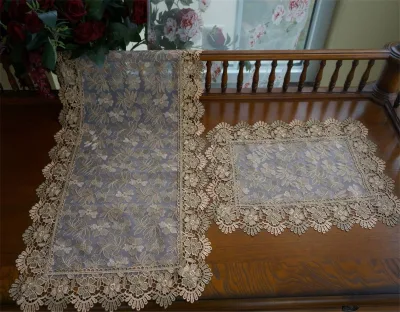
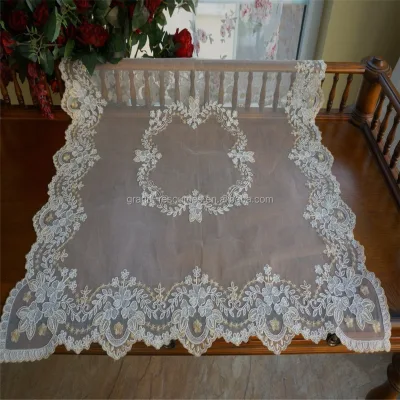
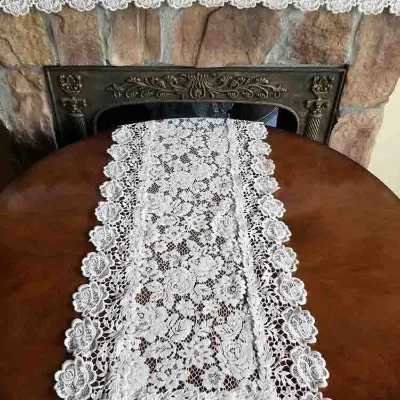




Comprehensive Sourcing Guide
Lace Border Dyed Tablecloth Supplier Concentration and Factory Types
Suppliers of lace border dyed tablecloths on this page cluster heavily in China, with results pointing to Shandong province and Beijing. Shandong appears repeatedly as the place of origin for embroidered and lace-trimmed table linens, suggesting a genuine manufacturing cluster where embroidery workshops, dyeing facilities, and lace border suppliers operate close to one another. Beijing, by contrast, shows up as a company location for a supplier listing tablecloths, table runners, placemats, doilies, and curtains, which may indicate a trading office sourcing from surrounding textile regions. When a location is not displayed with high confidence, buyers should ask directly for the factory address, the city of production, and whether that site is owned or subcontracted.
The supplier mix on this page includes both trading companies and manufacturers. One verified trading company lists table linens, kitchen and bathroom textiles, quilts, pillow covers, toys, and bedding, offering OEM and ODM services. Broader product ranges like this often signal trading intermediaries that consolidate output from multiple workshops, which can simplify ordering mixed home-textile assortments but may add a layer between you and the sewing floor. Specialists focused mainly on tablecloths, runners, placemats, and doilies tend to be closer to production. Verify whether a "manufacturer" claim corresponds to an actual factory by requesting business license details, workshop photos or video, and the name of the production city, since location claims alone do not prove in-house capability.
How to Verify Lace Border Dyed Tablecloth Suppliers
Verification should begin with the platform signals actually displayed. At least one supplier on this page carries SGS verification, meaning a third party has audited company documentation, and one holds BSCI system certification, which relates to social compliance and working conditions rather than product quality. Treat both as positive but incomplete evidence: an audit certificate confirms a point-in-time status, and buyers should request the certificate number, scope, and validity date, then confirm them independently where possible. Do not assume suppliers without visible badges lack credentials; some factories hold certifications that simply are not displayed on their listing, so ask directly for ISO, OEKO-TEX, or other documentation and judge each response on its completeness.
Beyond certificates, verify operational reality through behavior. Response speed is measurable: results on this page range from roughly two hours to around thirteen hours for supplier replies, and this gap often predicts how smoothly a long production cycle will run. Build a verification checklist that includes the factory's registered name and legal representative, a live video walkthrough of embroidery and cutting lines, references from past export customers, and physical samples of the exact lace border construction you need. For this category specifically, request a sample dyed in your target colorway, because dye lot consistency and the lace border's ability to hold color are common failure points. Suppliers who answer all five items quickly and completely are generally safer partners than those who answer selectively.
What to Compare Across Lace Border Dyed Tablecloth Suppliers
Build a comparison table using the dimensions actually displayed on listings rather than assumptions. Lead time is one of the sharpest differentiators on this page: one supplier lists a ninety-day lead time, while a Beijing-based tablecloth specialist lists forty days, a difference that determines whether you can serve a holiday season or must reorder mid-cycle. Minimum order quantities also diverge significantly; visible products range from a 100-piece MOQ to 500-piece MOQs, and one Beijing supplier states 300 pieces. Response time, establishment year where shown, location, verified status, and the main-products list complete the label-level comparison before you even request quotes.
Product-level attributes deserve equal weight. Compare material composition, since results include both polyester blend and 100% polyester constructions; compare dimensions such as 88x88cm squares versus 150x220cm rectangular pieces; and compare features like water-proof treatment, high temperature resistance, machine washability, and gold thread or net embroidery techniques. Customization availability appears on several listings, but its depth varies from size specification to full bespoke development. Also compare packing information, where listed formats range from single-piece poly bags to 100-piece cartons, because packing density affects freight cost. Finally, weigh the main-products list against your needs: a supplier whose core line is table linens with runners and placemats is likelier to handle lace border construction consistently than a generalist whose catalog spans toys and bedding. Record every claimed value in writing and treat unverified claims as items to confirm in the sample stage.
Common Lace Border Dyed Tablecloth Sourcing Risks
The most frequent risk in this category is color mismatch between the dyed base fabric and the lace border, or across production lots. Several listings on this page describe dyed colorways such as red fabric with gold thread embroidery, and dye uptake differs between lace trims and woven ground cloth. Without a sealed pre-production sample and an agreed tolerance standard, bulk shipments can arrive with borders visibly lighter or darker than the body. A second risk is specification drift: one listing shows a standard size of 88x88cm while another offers customized 150x220cm dimensions, and a third simply lists "specification: customized." Ambiguity here invites suppliers to substitute the size that is easiest to produce.
Communication and lead-time risks follow. A supplier quoting a ninety-day lead time leaves little margin for error if approval samples are slow; combine that with the two-hour versus thirteen-hour response-time spread observed across results, and slow respondents can consume weeks through simple delays. Additional risks include: quality gaps between the approved sample and mass production, particularly on embroidery density; misleading claims of factory status from trading companies that subcontract to unknown workshops; and packing shortcuts, since poly-bag-only packing leaves fabric exposed to moisture in transit. Mitigate all of these by specifying fabric composition, exact dimensions, dye references, embroidery thread quality, packing format, and inspection rights in a written specification sheet before any deposit changes hands, and by requiring a signed pre-production sample as the quality benchmark.
Lace Border Dyed Tablecloth Regional Sourcing and Logistics
China is the dominant origin visible on this page, with suppliers located in Shandong and Beijing, and individual product records explicitly stating place of origin as Shandong. Shandong's concentration of table linen production means buyers can often consolidate lace tablecloths, runners, and placemats from one region, reducing inland freight complexity. Beijing-based suppliers may trade goods manufactured elsewhere, so clarify the actual shipping origin city before quoting freight. When evaluating suppliers whose locations are not clearly displayed, identify clusters by asking where embroidery and dyeing occur, checking whether the business license address matches the production address, and comparing shipping port suggestions, since ports cited in logistics plans reveal where goods actually leave the country.
Logistics planning should reflect the category's physical characteristics. Tablecloths are relatively light but bulky, and packing choices matter: one listing describes 100 pieces per carton, another 30 pieces per carton, and carton density directly affects container utilization and freight cost per piece. Confirm whether quotes are quoted on FOB, CIF, or ex-works terms, and which port the supplier uses, since a Shandong producer may naturally ship from a northern Chinese port. Air freight is rarely economical for dyed polyester table linens, so plan ocean shipments around the observed lead-time range of forty to ninety days, adding buffer for dye approval and inspection. Always request carton dimensions, gross weight, and packing configuration before booking, and confirm labeling requirements for your destination market in writing.
Lace Border Dyed Tablecloth Commercial Terms and Order Planning
Commercial terms should be negotiated with the category's visible MOQ and price structures in mind. Listed products on this page show MOQs of 100, 300, and 500 pieces, and price ranges spanning roughly 0.20 to 0.90, 0.80 to 3.50, and 1.50 to 9.50 per piece depending on size, embroidery, and material. Wide ranges like these mean your final price depends almost entirely on specification, so quote against a precise data sheet: exact size, composition (polyester blend or 100% polyester), dye color reference, lace border type, and embroidery technique. Confirm in writing whether customization carries tooling or sampling charges, since several listings state customization is available without disclosing costs.
Order planning should sequence payments and milestones to match lead time. Structure orders as: deposit against a proforma invoice, pre-production sample approval, dye lot approval with physical reference, mass production, third-party or in-house inspection before shipment, and balance payment against shipping documents. For suppliers quoting ninety-day lead times, place seasonal orders two to three lead-time cycles before your sales window; for the forty-day end of the range, monthly replenishment is feasible. Repeat orders benefit from locked specifications and retained dye references on file with the supplier. Finally, ask whether the supplier accepts mixed-SKU orders within one MOQ tier, which several trading companies serving broader home-textile catalogs can accommodate, allowing you to combine tablecloths with runners or placemats and hit workable order volumes without overstocking a single design.
FAQs
What is the typical MOQ for lace border dyed tablecloths?
Most listed suppliers set minimum orders between 100 and 500 pieces per design. One lace table cover listing specifies 300 pieces, while embroidered lace tablecloths range from 100 pieces for larger 150x220cm styles to 500 pieces for 88x88cm designs. Confirm the exact MOQ for your chosen model and size before requesting a sample.
How long does production and delivery usually take?
Lead times on this page range from 40 to 90 days depending on the supplier. A Beijing-based table linen supplier lists around 40 days, while a Shandong trading company quotes roughly 90 days. Order quantity, customization level, and embroidery complexity can extend these timelines, so confirm the schedule in writing before placing a deposit.
What materials are common for these tablecloths?
Polyester dominates this category. Listings include 100% polyester woven tablecloths and polyester blends with waterproof or high temperature-resistant finishes. One red embroidered style uses a polyester blend, while a white rose border design is machine washable. Always request fabric composition, weight, and washing test reports before confirming bulk production.
Can I customize the size, color, and embroidery design?
Yes, customization is listed as available on multiple lace border tablecloth products. Buyers can request custom specifications, different dye colors, and own embroidery artwork, with one listing stating copyright authorization is provided free. Provide technical drawings or physical samples, and expect minimum order quantities to apply to customized runs. Confirm customization fees upfront.
What sizes and price ranges are available?
Listed tablecloths come in standard sizes such as 88x88cm square and 150x220cm rectangular, with customized sizing offered. Unit prices range from about $0.20 to $0.90 for small 88x88cm embroidered pieces, $0.80 to $3.50 for organza lace styles, and $1.50 to $9.50 for larger rose border designs. Size, embroidery density, and order volume drive final pricing.
Which supplier credentials should I verify before ordering?
Suppliers on this page hold SGS verification and BSCI system certification, which support social-compliance checks. One operates as a trading company with OEM and ODM capability, so clarify whether you need a manufacturer or trader. Independently verify business licenses, request recent audit reports, and confirm certifications are current before committing to a large order.