Painted Buddha Tabletop Fountain Suppliers and Manufacturers
Source 16 verified suppliers for Painted Buddha Tabletop Fountain units. Compare dimensions like MOQ, lead times, certifications, and response rates. Review product specs and request samples to evaluate quality and fit for your needs; review the available evidence before requesting comparable quotations from suitable candidates.
Suppliers List
Xiamen Geno Industry Co., Ltd.
- Verified by TüVRheinland
- Manufacturer, Trading Company
- Lead time45 days
- Avg. response≤ 7h
Main productsGarden Pots, Fire Pits, Water Fountain, Chimney, Garden Accessories
Main marketsNorth America(35%), Western Europe(35%), South America(5%)

Xiamen Silu Technology Co., Ltd.
- Verified by BV
- Manufacturer/Factory
- China Fujian
- Lead time60 days
- Avg. response≤ 8h
Main productsResin Crafts, Snow Globe, Resin Figurine, Resin Flower Pots, Cloth Crafts, Iron Crafts, Fabric Toys, Christmas Gifts, Trophies, Home Furnishings
Main marketsEastern Europe,North America,Southeast Asia,Western Europe

Indoor Water Fountain Indoor Waterfall Fountain Table Top Water Fountain Indoor
$6.40 - $14.24
MOQ: 1000 Pieces

Indoor Tabletop Decor Rockery Polyresin Water Fountain Zen Meditation Indoor Waterfall Figurines
$11.50 - $13.00
MOQ: 300 Pieces

Contact supplier
MOQ: 100 Pieces

Zhengzhou Relong Arts & Crafts Co., Ltd.
- Trading Company
- China Henan
- Lead time60 days
- Avg. response≤ 3h
Main productsBronze Sculpture, Marble Sculpture, Stainless Steel Sculpture, Marble Fountain, Marble Gazebo, Iron Gazebo, Landmark Sculpture, Stone Sculpture, Bronze Animal Sculpture, Bronze Fountain
Main marketsEurope,Australia,North America


Customized Outdoor Garden Ornament Copper Bronze Meditating Buddha Fountain
$1000.00 - $3880.00
MOQ: 1 Pieces

Xiamen Flowechoing Crafts Co., Ltd.
- Manufacturer, Trading Company, Distributor/Wholesaler
- Fujian, China
- Lead time30 days
- Avg. response≤ 4h
Main productswater fountain,home decoration,garden decoration,Gifts,other crafts
Main marketsDomestic Market(40.00%), South America(20.00%), North America(15.00%), Eastern Europe(5.00%), Southern Europe(5.00%), Central America(5.00%), Western Europe(5.00%), Southeast Asia(5.00%)
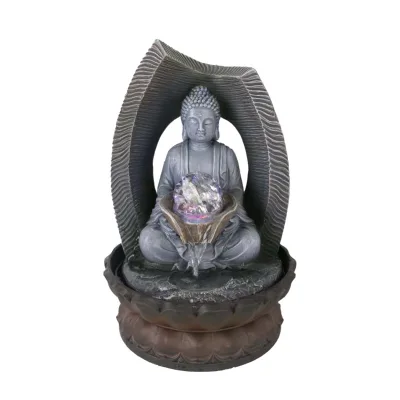
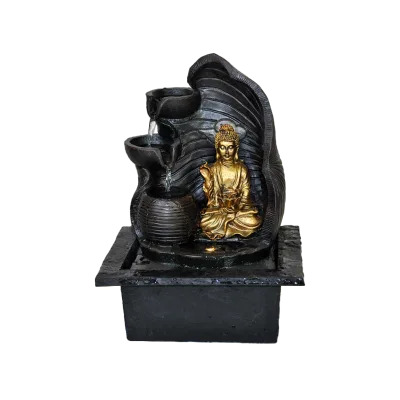
$8.00 - $15.00
MOQ: 20 pieces
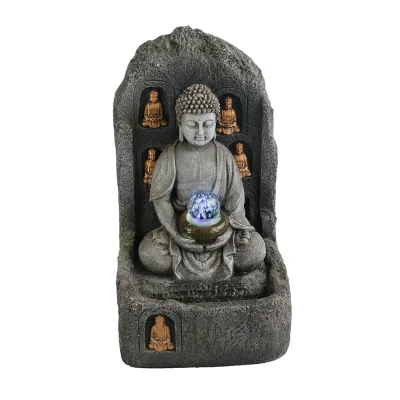
Dehua Beauty Rich Arts & Crafts Co., Ltd.
- Manufacturer, Trading Company
- Fujian, China
- Lead time30 days
- Avg. response≤ 10h
Main productsPolyresin crafts,Ceramic crafts,PVC crafts,Home decoration,Garden decoration
Main marketsEastern Europe(15.00%), North America(15.00%), South America(12.00%), Mid East(5.00%), Oceania(5.00%), South Asia(3.00%), Southern Europe(3.00%), Northern Europe(3.00%), Central America(3.00%), Western Europe(3.00%), Eastern Asia(3.00%), Domestic Market(3.00%), Southeast Asia(3.00%), Africa(2.00%)

Yixing Sea Fountain Equipment Co., Ltd.
- Verified by SGS
- Combined
- China Jiangsu
- Lead time30 days
- Avg. response≤ 17h
Main productsFountain
Main marketsAfrica,Others(foreignTradeCapacity.exportBusinessCapacityMarketOther),Southeast Asia/ Mideast,East Asia(Japan/ South Korea),Domestic,Europe

- Verified by SGS
- Trading Company
- China Guangdong
- Lead time60 days
- Avg. response≤ 14h
Main productsOutdoor Furniture, Garden Furniture, Rattan Furniture, Patio Furniture, Outdoor Chair, Egg Swing Chair, Sun Lounger, Table Base, Table Top, Hotel Furniture
Main marketsSouth America,Southeast Asia/ Mideast,Europe,Australia,North America

Qu Yang Sheng Ya Sculpture Factory
- Combined
- China Hebei
- Lead time60 days
- Avg. response≤ 4h
Main productsStone Sculpture, Marble Fireplace, Marble Fountain, Statue, Planter and Pots, Tables and Benches, Animals, Marble Slabs, Column, Pillars
Main marketsSouth America,Africa,Southeast Asia/ Mideast,Domestic,Europe,Australia,North America

Quyang Zhongou Yishu Marble Sculpture Manufactory
- Verified by TUVRHEINLAND
- Combined
- China Hebei
- Lead time30 days
- Avg. response≤ 5h
Main productsStatue, Fireplace, Sculpture, Fountain, Gazebo, Animal Statue, Column, Urn, Tombstone & Monument, Kitchen Hood
Main marketsDomestic

Yixing Five Union Industry & Trade Co., Ltd.
- Trading Company
- China Jiangsu
- Lead time30 days
- Avg. response≤ 3h
Main productsOutdoor Fountain
Main marketsAfrica,Others(foreignTradeCapacity.exportBusinessCapacityMarketOther),Southeast Asia/ Mideast,Europe,Australia,North America

Shandong Zhanhong Metal Products Co., Ltd
- Verified by BV
- Manufacturer/Factory
- China Shandong
- Lead time23 days
- Avg. response≤ 5h
Main productsFire Pit, Garden Planter, BBQ Fireplace, Screen
Main marketsEastern Europe,Mid East,North America,Eastern Asia,Oceania,Western Europe

HENAN JINBAILAI INDUSTRIAL CO., LTD.
- Verified by BV
- Trading Company
- China Henan
- Lead time23 days
- Avg. response≤ 3h
Main productsBBQ, Gas Fire Pit, Wood Fireplace, Stove, Steel Planter, Metal Decors, Garden Furniture, Garden Landscape
Main marketsEurope,North America

Quyang Grace Stone Industry Co., Ltd.
- Combined
- China Hebei
- Lead time23 days
- Avg. response≤ 23h
Main productsMarble Fireplace Mantel, Marble Sculpture, Marble Fountain, Fountain, Marble Flower Pot, Lamp, Gazebo, Wrought Iron Fence, Cast Iron Gate, Statue
Main marketsSoutheast Asia/ Mideast,East Asia(Japan/ South Korea),Domestic,Europe,North America

Zhengzhou Millie Arts & Crafts Co., Ltd.
- Verified by TUVRHEINLAND
- Trading Company
- China Henan
- Lead time45 days
- Avg. response≤ 3h
Main productsBronze Sculpture, Marble Sculpture, Stainless Steel Sculpture, Sculpture, Marble Fountain, Marble Gazebo, Bronze Fountain, Iron Gazebo, Landscape Sculpture, Bronze Animal Sculpture
Main marketsNorth America

Guangdong Optimum Show Technology Co., Ltd.
- Verified by BV
- Combined
- China Guangdong
- Lead time15 days
- Avg. response≤ 7h
Main productsWater Fountain, Dancing Fountain, Music Fountain, Water Screen, Water Treatment, Fog
Main marketsSoutheast Asia/ Mideast


Small Outdoor Dancing Water Fountain
Contact supplier

Hebei Shuoying Landscape Engineering Co., Ltd.
- Verified by BV
- Combined
- China Hebei
- Lead time15 days
- Avg. response≤ 1h
Main productsLandscape Fountain, Music Fountain, Dance Fountain, Large Floating Fountain, Garden Fountain, Courtyard Fountain, Water Curtain Fountain, Floating Fountain
Main marketsDomestic


Comprehensive Sourcing Guide
Painted Buddha Tabletop Fountain Supplier Concentration and Factory Types
The current supplier landscape for painted buddha tabletop fountains reveals a mix of manufacturer and trading company entities operating primarily within China. Specific facility locations identified in verified results include Fujian and Henan provinces, which serve as key production hubs for resin crafts and decorative fountains. These regions host factories capable of handling sample processing, graphic processing, and customized on-demand production for polyresin items. Some suppliers list their main products as resin crafts, snow globes, and resin figurines, indicating a specialized focus on decorative resin goods rather than general hardware.
Factory types vary between pure manufacturers and trading companies, with some entities holding dual designations. Verified suppliers in this category often possess specific capabilities such as OEM and ODM services, alongside their own branding. The presence of TüVRheinland and BV verification badges suggests that certain facilities have undergone third-party audits for quality and operational standards. Buyers should note that while some suppliers offer a broad range of garden accessories, others specialize strictly in indoor water features and religious figurines. This concentration allows for targeted sourcing but requires careful filtering to match specific production capabilities with order requirements.
How to Verify Painted Buddha Tabletop Fountain Suppliers
Verification of suppliers for painted buddha tabletop fountains relies heavily on third-party audit reports and system certifications rather than self-declared claims. Current data indicates that some facilities hold TüVRheinland verification status, while others are verified by BV. These external validations provide a baseline for assessing the legitimacy of the manufacturing entity. Additionally, system certifications such as CE, UKCA, BSCI, ISO 9000, and ISO 9001 are present in the profiles of certain suppliers. These certifications cover product safety, quality management systems, and social compliance, which are critical for international trade compliance.
Buyers must cross-reference these credentials against the specific product attributes listed, such as material composition and safety standards. For instance, product evidence shows certifications like CE, ROHS, SAA, CUL, and GS, which are essential for electrical components often integrated into water fountains. It is crucial to confirm that the certification applies to the specific model being ordered, as some suppliers may hold general company certifications that do not cover every product line. The response time metrics, such as a seven-day window, also serve as a proxy for operational responsiveness, though this should be validated through direct communication before finalizing any agreement.
What to Compare Across Painted Buddha Tabletop Fountain Suppliers
When evaluating potential partners, buyers should prioritize comparing minimum order quantities, lead times, and response speeds to ensure alignment with project timelines. Current data shows significant variation in these metrics, with some suppliers requiring a minimum of 120 pieces while others demand 1000 pieces. Lead times also fluctuate, ranging from 30 to 45 days for some manufacturers to 60 days for others. Response times are generally recorded around seven days, but this can vary based on the specific trading company or factory structure. These operational differences directly impact inventory planning and cash flow management for the buyer.
Price structures and supply abilities are another critical dimension for comparison across the supplier pool. Product evidence indicates price points starting around 9.00 USD for specific resin models, with other listings showing ranges between 6.40 and 14.24 USD. Supply abilities are listed as 1000 pieces per month for certain factories, which may limit large-scale orders if not planned in advance. Buyers must also compare packaging details, such as styro foam and white box configurations, against their logistical needs. The availability of customization, including size and color options, varies by supplier, with some accepting OEM requests while others offer fixed designs.
Common Painted Buddha Tabletop Fountain Sourcing Risks
One primary risk in sourcing painted buddha tabletop fountains involves discrepancies between advertised lead times and actual delivery capabilities. While some suppliers state a lead time of 30 to 45 days, others list 60 days, creating potential bottlenecks if the buyer assumes the shorter window. Inconsistent delivery times can disrupt supply chains, especially for seasonal decorations or time-sensitive retail launches. Furthermore, the reliance on polyresin materials introduces quality risks if the supplier does not strictly adhere to the specified material standards, such as polyresin plus plastic combinations. Variations in material quality can affect the durability and finish of the final product.
Another significant risk is the variation in minimum order quantities, which can lead to overstocking or underutilization of capital. Some suppliers enforce a strict 1000-piece MOQ, while others accept orders as low as 100 or 120 pieces. This disparity forces buyers to either commit to larger volumes or pay higher unit costs for smaller batches. Additionally, the complexity of customization requests, such as specific colors or sizes, may not be uniformly supported across all factories. If a supplier claims to accept customization but lacks the necessary graphic processing or sample processing capacity, the final product may deviate from the intended design, leading to rejection or financial loss.
Painted Buddha Tabletop Fountain Regional Sourcing and Logistics
Sourcing from the identified regions of Fujian and Henan in China offers distinct logistical advantages and challenges for international buyers. Fujian-based suppliers often utilize ports like Xiamen for dispatch, which provides established shipping routes for resin crafts and decorative items. The proximity to major ports can streamline the export process, potentially reducing transit times and handling costs. However, buyers must verify the specific port of dispatch for each order, as some listings may indicate different locations or require consolidation from multiple factories. The regional concentration of resin manufacturers in Fujian suggests a mature supply chain for these specific materials.
Logistics planning must also account for the packaging standards provided by different suppliers, which vary from brown box packages to styro foam and white box configurations. These packaging differences affect the volume and weight of shipments, directly influencing freight costs and storage requirements. For instance, single gross weights range from 1.25 kg to 2.00 kg per unit, which impacts the total cargo weight and shipping classification. Buyers should confirm the exact packaging details and dimensions, such as 59.5x23.1x59.5 cm or 35x35x35 cm, to optimize container loading. Failure to align packaging specifications with logistics plans can result in unexpected freight charges or inefficient space utilization.
Painted Buddha Tabletop Fountain Commercial Terms and Order Planning
Commercial terms for painted buddha tabletop fountains typically include payment methods like L/C and T/T, which require careful financial planning and risk assessment. Buyers must ensure that their banking partners are equipped to handle these specific transaction types and that the terms align with their internal credit policies. The acceptance of sample orders is a common feature, allowing buyers to verify product quality before committing to larger volumes. However, the cost and lead time for samples should be factored into the overall order planning to avoid delays in the approval process. Understanding these terms is essential for maintaining a smooth transaction flow.
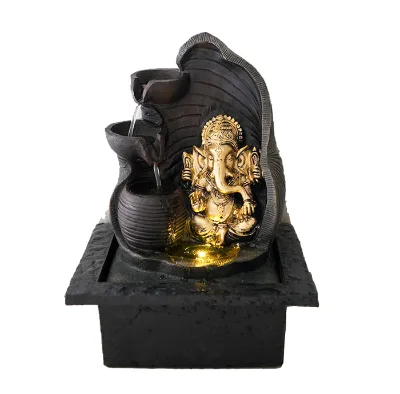
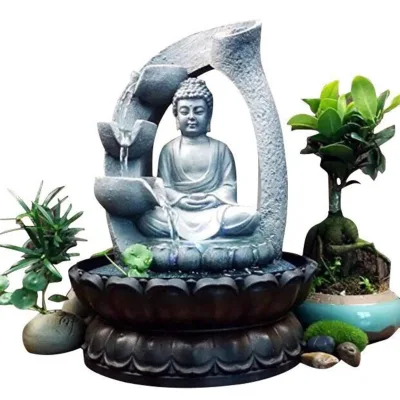
Order planning must also consider the specific attributes of the product, such as the model number, brand name, and application details. For example, products are often categorized under home decoration supplies with specific styles like Ganesha or Zen meditation themes. Buyers should verify the single package size and gross weight to ensure accurate cost estimation and inventory management. The availability of customization, including color and size options, requires clear communication of specifications to the supplier to prevent errors. By meticulously reviewing these commercial and product details, buyers can mitigate risks and ensure that the final order meets their specific market requirements.
FAQs
What is the minimum order quantity for painted buddha tabletop fountains?
The minimum order quantity varies by supplier, with some listing 100 pieces while others require 120 or 1000 pieces. Buyers should verify the specific MOQ for their chosen model before placing an order to ensure it meets their inventory needs.
How long does it take to receive painted buddha tabletop fountains?
Lead times typically range from 30 to 60 days depending on the supplier and order volume. Some manufacturers offer a standard delivery window of 45 days, while others may require up to 60 days for production and shipping completion.
Are painted buddha tabletop fountains available in polyresin material?
Yes, many options are crafted from polyresin or polyresin combined with plastic. These materials allow for detailed designs and are suitable for indoor home decoration, offering durability and a smooth finish for the painted surface.
What certifications do suppliers of painted buddha tabletop fountains hold?
Suppliers often hold certifications such as CE, UKCA, BSCI, ISO 9000, and ISO 9001. Some products also feature safety marks like ROHS, SAA, CUL, and GS, ensuring compliance with international standards for electrical and decorative home goods.
Can I customize the size of a Painted Buddha Tabletop Fountain?
Customization is available for many models, with some suppliers accepting specific size requests. While standard sizes exist, buyers can often request tailored dimensions, though this may affect the lead time and minimum order quantity requirements.
Where are painted buddha tabletop fountains manufactured?
These products are primarily manufactured in China, with specific origins noted in Fujian and Henan provinces. Buyers should check the place of origin for each listing to understand the specific manufacturing location and associated logistics.
What is the price range for painted buddha tabletop fountains?
Prices generally range from 6.40 to 14.24 USD per piece, depending on the design and material. Some specific models are listed at a fixed price of 9.00 USD, while others vary based on customization and order volume.