Source Painted Rotating Wooden Rod Stand for Shop, Supermarket, Drug Store
Compare 30 options for a Painted Rotating Wooden Rod Stand designed for retail environments. Buyers can evaluate specifications like size, weight, and customization features to find the ideal display solution for shops, supermarkets, and drug stores; compare the available evidence and request quotations based on your requirements.
Key considerations
Products List
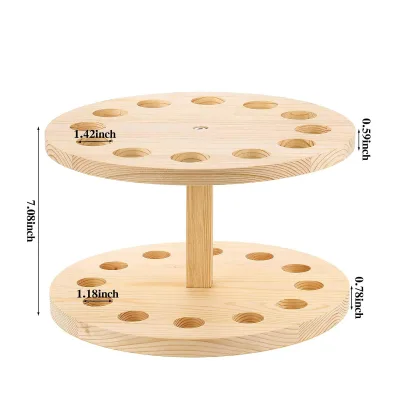


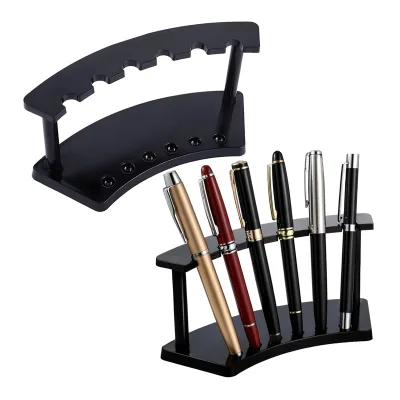


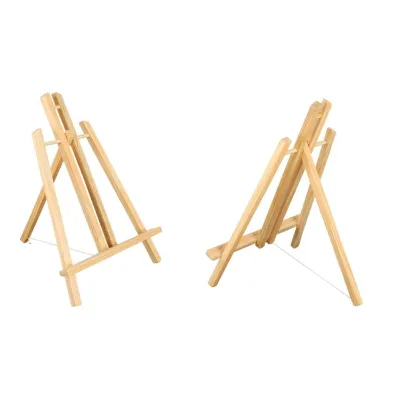
Hot Selling Wood Easel Stand Wholesale Easel for Painting High Standard Easel
$4.00 - $6.00
MOQ: 100 pieces

Comprehensive Sourcing Guide
Painted Rotating Wooden Rod Stand Sourcing Guide
A Painted Rotating Wooden Rod Stand combines a finished timber body with a rotating display function, making it a fixture that retail buyers evaluate both as furniture and as merchandising equipment. Because the category spans single-sided backplane units, rotary floor-type stands, and foldable variants, the first sourcing decision is to define which configuration actually matches your store format before contacting manufacturers. The listing data reviewed for this guide shows models ranging from compact countertop units around 30 × 30 × 18 cm up to large floor fixtures near 225 cm in length, so dimensional clarity matters from the outset.
This guide is written for procurement teams sourcing from Chinese manufacturing hubs, with several observed listings originating in Xiamen, Fujian. It walks through the specification, compliance, cost, and quality-control decisions that determine whether a quoted fixture performs in daily retail use. Treat every product attribute in a listing as an observation to confirm, not a guarantee that the supplier's full catalog meets the same standard.
Product Scope and Observed Listing Signals
Observed listings in this category cover supermarket display shelves, exhibition and specialty-store fixtures, and cosmetic display stands, with stated usage environments including shops, supermarkets, drug stores, convenience stores, and home settings. Style options in the data include backplane-style floor-type units, rotary and fixed rotation, single-sided and double-sided configurations, and A-stand formats. Colors observed include beige and black, and condition is listed as new across the sampled products. Buyers should map these variants against their floor plan before requesting quotes.
Several structural signals deserve attention. Models such as NCT-78, NCT-58, NCT-204, NCT-77, NCT-18, and XGMT-WDS appear with different dimension sets, including 14.1 × 17.7 × 61.4 in, 57.2 × 225 × 60 cm, and 64 × 15 × 20.5 in, most marked as customizable. Customization and customized logo services are advertised, and design and drawing artwork support is offered by at least one listing. Not antitheft is also stated for some units, which matters if you plan to display high-value goods.
Technical Specifications to Verify
Start with the dimensional standard. Observed listings cite standards such as 1000/1250 × 370/470 × 1810/2010 mm for backplane-style shelving, while rotary stands list both fixed imperial dimensions and "customized size" options. Confirm whether the quoted dimensions refer to the assembled fixture, the flat-packed carton, or the display footprint, since flat packing is the observed packing method for at least one model. Request an assembly drawing showing base diameter, rotation clearance, and shelf spacing so the unit fits your aisle width and fixture grid.
Then verify the wood, finish, and moving parts. Material is listed as wood, but you should confirm the species, panel type, and the paint system used, including whether the coating is suitable for the indoor retail environments described in the listings. Weight is described only as "heavy weight" or "light weight" in the data, so ask for actual unit and carton weights to plan freight and floor loading. For rotary models, confirm the bearing or turntable mechanism's rated load and rotation smoothness, and for foldable variants confirm the folding hardware's cycle life.
Compliance and Safety Documentation
Certification claims in the observed data include SGS and ISO9001-2000, with one listing citing SGS as its product standard. Do not assume a certificate listed on a product page applies to the specific fixture you are buying; request the certificate number, scope, and validity, and confirm it covers the factory producing your order rather than a related entity. Ask which test reports exist for the paint and coating system, particularly for fixtures destined for European markets, which one listing identifies as its main market.
Because these are display fixtures rather than consumer products, obligations differ by destination, but buyers should still verify what documentation the supplier can supply: material composition declarations, coating safety information, and any stability or load testing performed on the stand. If you plan to display cosmetics or other customer-handled goods, ask whether the supplier has tested the fixture for tipping risk under real loading. Record which documents the supplier actually holds before placing a deposit, and make certificate delivery a documented condition of the order.
Cost Drivers and Commercial Terms
Price dispersion in this category is wide, with observed listings spanning roughly USD 0.66 to USD 225, and MOQs ranging from 1 to 10,000 units. That spread reflects the difference between small accessory items and full-size floor fixtures, so benchmark only against listings of comparable size, material, and configuration. Customization is a further cost driver: customized sizes, logos, and artwork design services are advertised, and each typically moves the quote away from catalog pricing toward a project price with tooling or setup considerations.
Clarify the commercial terms before committing. Observed packing methods include flat packing and, for one model, bubble bag, foam pad, and five-layer master carton; the heavier method protects fragile painted surfaces better but raises freight volume. Ask for itemized quotes covering unit price, packing specification, assembly requirements, and port of loading, since several listings originate in Xiamen. Confirm whether quoted prices assume a specific MOQ and what the price becomes at lower trial volumes, especially for a first order of a customized rotary design.
Supplier Qualification and Quality Control
Qualify suppliers on evidence rather than listing claims. Verify business licensing, years manufacturing wooden retail fixtures, and whether the factory produces rotary mechanisms in-house or buys them from sub-suppliers, since the turntable is the component most likely to fail in service. For buyers targeting the European market mentioned in the listings, ask how the supplier currently serves that region and whether they can support documentation requests typical of European retail chains. A factory tour or third-party audit is worthwhile before large customized orders.
Structure quality control around the painted finish and the rotation function. Agree on an inspection standard covering paint adhesion, color consistency against an approved sample, surface defects visible at retail distance, and dimensional tolerance against the approved drawing. For pre-shipment inspection, test each rotary unit's rotation under the intended display load and check flat-packed cartons for completeness of hardware and assembly instructions. Define how defects are classified, what rework or replacement the supplier provides, and whether inspection happens before or after packing.
Long-Term Procurement Checks
Plan the second order before the first one ships. Confirm that the supplier archives the approved drawings, paint color standard, and packaging design so reorder tooling is not rebuilt from scratch, since listings offering design and drawing artwork support may treat each project as bespoke. Establish lead-time expectations for repeat orders of customized sizes, which typically run longer than catalog items. If you use multiple store formats, consider whether one supplier can cover both the backplane-style shelving and rotary A-stand variants with a consistent finish.
Finally, build ongoing checks into the relationship. Recyclability is listed as a feature and recycled as an attribute in the observed data; ask how the claim is substantiated if sustainability is part of your procurement policy. Track field performance of the rotary mechanism and paint finish across your stores, and feed failure data back into specification revisions. Review pricing annually against market movement in timber and coatings, and reassess whether the customization options you originally requested still justify their cost as volumes grow.
FAQs
What sizes are available for the Painted Rotating Wooden Rod Stand?
The stand comes in a standard one-size format of 30 x 30 x 18 cm, and other listed models run 14.1X17.7X61.4in, 64X15X20.5in, or 57.2cm X 225cm X 60cm. Customized sizes are available, so buyers can request dimensions matched to their retail floor plan or display products.
Can the Painted Rotating Wooden Rod Stand be customized with our logo?
Yes, customization is available, including a customized logo on the stand. Suppliers can also offer design and drawing artwork support, so you can submit brand artwork before production. Confirm artwork file formats, logo placement, and any setup fees with the supplier when requesting a quotation.
Which certifications do the wooden display stands hold?
Listed certificates include SGS and ISO9001-2000, and SGS is also noted as a production standard. Certification coverage can vary between individual models, so always request the current certificate copies from the supplier and verify that the specific stand model you order is covered before placing a purchase order.
How are the stands packed for shipping?
Packing options include flatted packing and a heavier protective method using bubble bag, foam pad, and a five-layer master carton. Flatted packing reduces freight volume for assembly on site, while foam-padded cartons suit fragile painted finishes. Confirm which packing method applies to your chosen model when negotiating the order.
What is the weight range of these wooden display stands?
Listed stands are described as either heavy weight or light weight, depending on the model and construction. Heavier floor-type backplane units offer stability for retail floors, while lighter rotary units are easier to reposition. Ask the supplier for the exact unit weight and gross packed weight before calculating shipping costs.
Where are these painted wooden rod stands manufactured?
The listed products originate from China, with Xiamen in Fujian noted as a specific production location. Xiamen is a recognized hub for wooden display fixture manufacturing, which supports sourcing of customized units. Buyers typically verify export experience and production capacity directly with factories in this region.
Can the stands be used for cosmetics and retail display?
Yes, listed usage covers supermarkets, shops, drug stores, and convenience stores, with cosmetics named as a display product. Other listed applications include exhibition shows, specialty stores, and home use. The stands are designed for indoor display, are not antitheft, so plan security separately for high-value merchandise.
What is the difference between single-sided and double-sided models?
Listed models include both single-sided and double-sided configurations, with backplane style and rotary variants available. Single-sided units sit against walls to save floor space, while double-sided units serve as aisle displays accessible from two directions. Rotary models allow shoppers to spin the stand, improving product visibility in smaller footprints.