Steel Plate Solar Bench Suppliers and Manufacturers
Source 14 verified suppliers for Steel Plate Solar Bench units from China. Compare key dimensions including ISO certification, OEM/ODM capabilities, lead times, and pricing ranges to identify suitable partners. Contact suppliers directly to request detailed specifications and quotes; review the available evidence before requesting comparable quotations from suitable candidates.
Suppliers List

Shanghai ZEMSO Urban Furniture Technology Co., Ltd.
- Verified by BV
- Combined
- China Shanghai
- Lead time60 days
- Avg. response≤ 4h
Main productsBus Shelter, Bus Stop Digital Signage, Outdoor LCD&LED Digital Signage, Container House, Smart Bench
Main marketsDomestic
Jiangsu Liyang Sign Manufacturing Co., Ltd.
- Manufacturer, Trading Company
- Jiangsu, China
- Lead time0 days
- Avg. response≤ 1h
Main productsBillboard Signs,Bus Shelters,Spacecraft Mobile Homes,Pavilions,Wrought Iron Guardrails
Main marketsDomestic Market(100.00%)

Jiangsu Hanbang Intelligent System Integration Co., Ltd.
- Verified by SGS
- Combined
- China Jiangsu
- Lead time15 days
- Avg. response≤ 2h
Main productsIntelligent Display Screen, Digital Signage, Smart Waste Bins, Digital Bus Station Signage, Self-Service Kiosk, Intelligent Interactive Machine
Main marketsSoutheast Asia/ Mideast,Domestic,Europe,Australia

Ddk Tech Elecfacility Yangzhou Co., Ltd
- Verified by SGS
- Combined
- China Jiangsu
- Lead time15 days
- Avg. response≤ 1h
Main productsSteel Pole, Lighting Fixture, Solar Smart Bench, Bus Shelter, Street Light, Solar Light
Main marketsSouth America,Africa,Others(foreignTradeCapacity.exportBusinessCapacityMarketOther),East Asia(Japan/ South Korea),Europe,Australia,North America


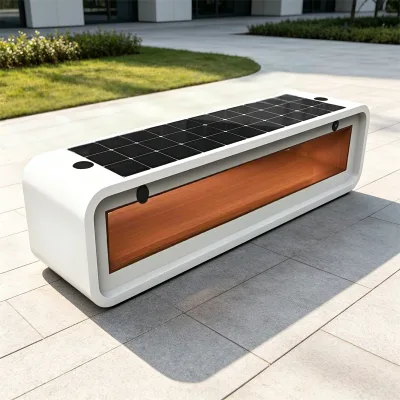
Modern Outdoor Solar Bench with Built-in Solar Panel Wooden Frame White Compartment to Store Battery
$780.00 - $890.00
MOQ: 10 pieces


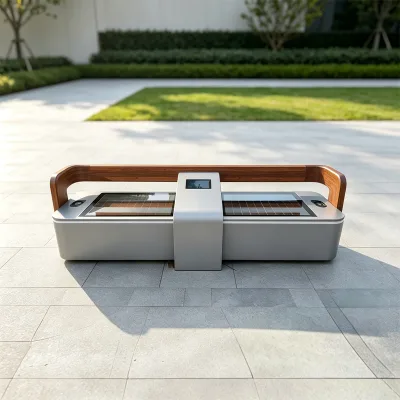
Solar Bench with USB Charging Ports and LED Light for Park Outdoor Workbench
$450.00 - $600.00
MOQ: 10 Pieces

Smart Solar Bench Multi-Functional Galvanized Steel Solar Powered Garden Park WiFi
$560.00 - $680.00
MOQ: 10 pieces
Yantai Lu Hao Lighting Co., Ltd.
- Verified by TüVRheinland
- Manufacturer, Trading Company
- Lead time10 days
- Avg. response≤ 2h
Main productsStreet Light Pole, Solar Street Light, Solar Energy Storage System, Solar Panel, Solar Mosquito Lamp
Main marketsDomestic Market(50%), North America(5%), South America(5%)
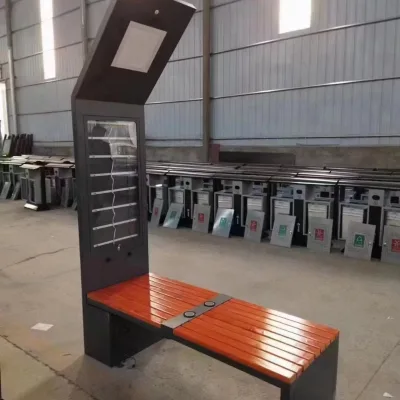
Outdoor Rectangle Solar Bench with Waterproof Metal Steel Frame and Solar Light Box for Urban Use
$246.46 - $272.13
MOQ: 2 sets
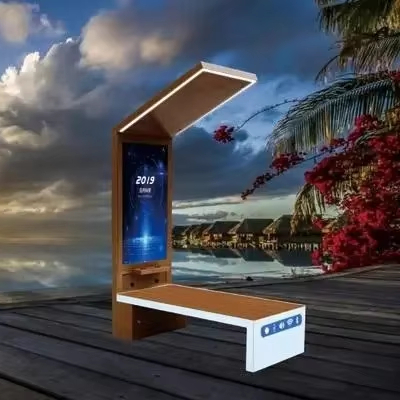
$240.00 - $265.00
MOQ: 2 sets
Patio Benches Urban Smart Bench Smart Solar Bench Solar Light Box
$240.00 - $265.00

Yangzhou Forido Photoelectric Technology Co., Ltd.
- Verified by SGS
- Combined
- China Jiangsu
- Lead time15 days
- Avg. response≤ 1h
Main productsStreet Light
Main marketsDomestic

CHONGQING WALKSON MACHINERY EQUIPMENT MANUFACTURING CO.,LTD.
- Verified by TUVRHEINLAND
- Manufacturer/Factory
- China Chongqing
- Lead time105 days
- Avg. response≤ 4h
Main productsAluminum Pergola, City Bus Shelters, Trash Can, Municipal Landscape Flower Planters, Signage Billboards, Outdoor Park Benches
Main marketsSouth America,Eastern Europe,Mid East,North America,Southeast Asia,Eastern Asia,Oceania,Western Europe,Africa

Dongguan Space Electronic Science and Tech Co., Ltd.
- Verified by SGS
- Trading Company,Manufacturer/Factory
- China Guangdong
- Lead time38 days
- Avg. response≤ 10h
Main productsBus Shelter, Trivision, Light Box, Tri-Vision Billboard, Outdoor Trivision, Bus Stop, Bus Station, Lightbox
Main marketsSouth America,Eastern Europe,Mid East,North America,Southeast Asia,Eastern Asia,Oceania,Western Europe,Africa

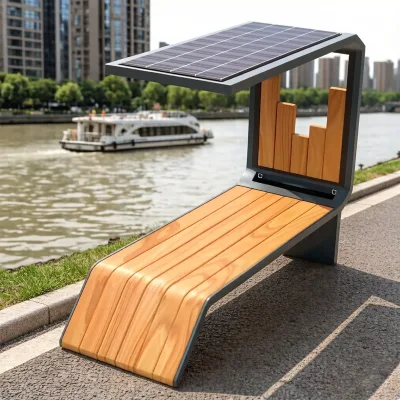
Smart Solar Bench for Outdoor Spaces with Solar Energy and Charging Capabilities
$925.00 - $1005.00
MOQ: 10 Pieces

Energy-Efficient Solar Smart Bench with Modern Design for Public Spaces
$925.00 - $1005.00
MOQ: 10 Pieces

Modern Solar Smart Bench with Solar Panels and Wireless Charging Features
$925.00 - $1005.00
MOQ: 10 Pieces

Outdoor Smart Solar Bench with Wireless Charging and Multiple USB Ports
$925.00 - $1005.00
MOQ: 10 Pieces

Modern Design Outdoor Intelligent Solar Smart Bench Eco-Friendly Materials Solar Related Products
$925.00 - $1005.00
MOQ: 10 Pieces

Jiangyin Sinpo Metal Co., Ltd.
- Verified by TUVRHEINLAND
- Trading Company
- China Jiangsu
- Lead time23 days
- Avg. response≤ 9h
Main productsSolar Panel System, Solar System, Solar Power System, Sola Energy System, Solar Mounting System, Solar Panel, Solar Inverter, Solar Pump, Solar Module, Solar Roof Brackets
Main marketsDomestic


Solar Panel Adjustable Pole Frame Stand Mounting Galvanized Steel Mount Solar Racking Bracket
$0.04 - $0.08
MOQ: 1000 W

Xiamen Kingsolar New Energy Tech. Co., Ltd
- Verified by BV
- Combined
- China Fujian
- Lead time23 days
- Avg. response≤ 6h
Main productsSolar Brackets, Solar Mounting System, Solar PV, Carport Solar, Roof Solar, Ground Solar, Tile Roof Solar, Ground Screw, Solar Walkway, Fence
Main marketsAfrica,Southeast Asia/ Mideast,East Asia(Japan/ South Korea),Europe,North America

Jiaxing Haina Fastener Co., Limited
- Verified by TUVRHEINLAND
- Trading Company,Manufacturer/Factory
- China Zhejiang
- Lead time23 days
- Avg. response≤ 7h
Main productsBolts, Nuts, Screws, Washer, Roof Hook, Steel Channel, Aluminum Accessories, Ground Screw, Threaded Rod &Stud Bolts
Main marketsSouth America,Eastern Europe,Mid East,North America,Southeast Asia,Eastern Asia,Oceania,Western Europe,Africa

Jiaxing Goshen Hardware Co., Ltd.
- Trading Company,Manufacturer/Factory
- China Zhejiang
- Lead time23 days
- Avg. response≤ 5h
Main productsFasteners, Bolts, Nuts, Screws, Stainless Steel Screw, Threaded Rod, Stainless Steel Bolt, Customized Bolt, Washer, Carriage Bolt
Main marketsSouth America,Eastern Europe,Mid East,North America,Southeast Asia,Eastern Asia,Oceania,Western Europe,Africa
Ddk Tech Elecfacility Yangzhou Co., Ltd.
- Verified by TüVRheinland
- Manufacturer, Trading Company
- Lead time12 days
- Avg. response≤ 1h
Main productsSteel Pole, Solar LED Street Light, Solar Bench, Solar Integrated Pole, Solar Panel
Main marketsSoutheast Asia(25%), Africa(20%), Mid East(12%)

Xiamen Solar First Energy Technology Co., Ltd.
- Verified by BV
- Trading Company
- China Fujian
- Lead time23 days
- Avg. response≤ 3h
Main productsSolar Mounting
Main marketsSouth America,Africa,Southeast Asia/ Mideast,East Asia(Japan/ South Korea),Europe,Australia,North America






Comprehensive Sourcing Guide
Steel Plate Solar Bench Supplier Concentration and Factory Types
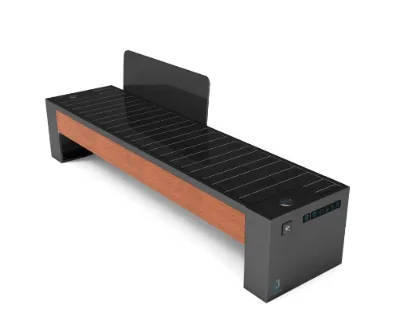
When sourcing steel plate solar benches, the supplier base on major B2B platforms tends to cluster around a small number of Chinese provinces rather than being evenly spread nationwide. In the current results, the visible origins include Jiangsu and Shanghai, which suggests that buyers searching for this category should expect listings rooted in eastern China's metal fabrication corridor. Jiangsu in particular appears as the stated place of origin for multiple solar bench models, including galvanized steel units with pedestal mounting, integrated charging, and WiFi features. This concentration matters because it shapes freight options, factory visit feasibility, and how easily you can compare several factories in one trip. However, a displayed province of origin is not always the manufacturing site itself; trading companies may list a different registered location from the workshop.
Factory types in this category fall into recognizable groups. Some suppliers describe themselves as manufacturers, others as trading companies, and a third group as combined manufacturer-and-trading entities. Combined-type suppliers often carry broader main-product lines that include bus shelters, outdoor digital signage, smart benches, and container houses, which signals a sheet-metal and outdoor-equipment capability rather than a bench specialist. Specialist solar bench suppliers, by contrast, list narrow product lines with multiple model numbers, such as A-series galvanized steel benches rated at 120 W with 12 V systems. When identifying clusters not shown in your results, filter listings by origin, note which provinces repeat across many models, and weight suppliers whose product catalogs center on outdoor steel structures.
How to Verify Steel Plate Solar Bench Suppliers
Verification begins with the platform's own trust signals, but none of them should be treated as proof on its own. In the current results, at least one supplier carries a third-party verification label from a recognized inspection body, which generally means the business license and premises were checked by that agency. Others are classified by company type, such as manufacturer or trading company, which the platform may assess but which you should confirm independently. A practical first step is to request the business license and compare the registered scope against the claimed products, since a supplier whose registration lists general trading may not operate its own steel fabrication lines. Ask specifically whether the solar panel, battery, charging module, and steel plate structure are produced in-house or purchased from sub-suppliers, because this affects both quality control and pricing.
Beyond documentation, verify the product itself. Listings in this category show material specifications such as galvanized steel construction and detailed thickness figures for seats, beams, and armrests, so ask the supplier to confirm these in writing and against a sample. One current listing references an ISO certification in its product attributes; if certification matters to your project, request the actual certificate number and scope rather than relying on the attribute field. Video calls that walk through the workshop, a request for recent photos of welding and powder-coating processes, and an independent pre-shipment inspection are all reasonable asks. For public-space installations, also confirm whether the supplier can support warranty claims on electronic components, which often fail before the steel structure does.
What to Compare Across Steel Plate Solar Bench Suppliers
Build a comparison table using the attributes suppliers actually display, and leave cells blank where data is missing rather than guessing. Useful displayed dimensions in the current results include location, company type, response time, lead time, verification status, and main-product lines. Response time is worth comparing directly: one visible supplier reports a median response of roughly four hours while another reports about one hour, a difference that matters when you are iterating on engineering drawings for customized bench sizes or light-source options. Lead times vary even more sharply, with one supplier showing an on-record lead time of 60 days and another showing a much shorter figure, so confirm in writing what a stated lead time covers, such as production only or production plus inland transit to the port.
Then compare commercial and technical terms side by side. Minimum order quantities in the current results range from single units on some smart bench models to a few units on others, which is favorable for pilot installations, but confirm whether the displayed MOQ applies to your chosen configuration. Price ranges shown for comparable solar benches span roughly from the high five hundreds to around a thousand dollars per unit, so normalize by model number and specification set before judging value. Also compare customization capability, with ODM and OEM support explicitly stated by some combined-type suppliers, and check whether model numbers, packaging options, and customization availability are documented per product rather than claimed in chat only.
Common Steel Plate Solar Bench Sourcing Risks
The most frequent risk in this category is specification drift between the online listing and the delivered product. Listings may show generic phrases such as "customized" for overall size, poster size, light source, and power supply, which is convenient for buyers but leaves the actual configuration undefined until drawings are approved. If you do not lock dimensions, steel thickness, coating type, panel wattage, and battery capacity into a signed specification sheet, a supplier can substitute cheaper components without technically breaching the order. The 120 W, 12 V figures shown for several galvanized steel bench models are a useful baseline; ask each supplier to state exactly what is inside the solar power system, including battery chemistry and capacity, because listings rarely disclose it.
Electronic-component reliability is the second major risk. The steel plate structure and the solar charging system have very different failure rates and warranty needs, and suppliers in this category often come from shelter or signage backgrounds where their strength is metalwork, not electronics. Water ingress into charging ports, WiFi modules, and light boxes is a common field failure for public-space benches. Third, be cautious about single gross weight and volume figures that appear as zero in some listings, since this suggests placeholder data that makes freight estimates unreliable. Finally, verification labels and ISO mentions should be validated against certificates, and any supplier whose lead time is listed as effectively zero should be treated as unpopulated data rather than a genuine production capability.
Steel Plate Solar Bench Regional Sourcing and Logistics
The visible origin data points to Jiangsu and Shanghai as the practical anchor region for this category, and that geography has real logistics consequences. A supplier registered in Jiangsu producing benches with stated origin Jiangsu sits close to the Shanghai port complex, which typically simplifies container booking and shortens inland drayage compared with inland provinces. If you shortlist several suppliers within the same corridor, one consolidated factory-visit trip can cover welding, coating, and assembly checks for all of them. Note that even within one province, the factory location and the registered trading address may differ, so ask for the physical production address before planning any visit, and confirm whether benches ship knocked down or fully assembled because this changes container loading dramatically.
Where your search results do not reveal a cluster, identify one yourself rather than assuming. Sort listings by origin, tally which provinces appear repeatedly across solar bench models, and look for suppliers whose broader catalogs include bus shelters, pavilions, or outdoor digital signage, since those products share the sheet-metal, steel plate, and powder-coating processes this bench category requires. For logistics planning, ask each shortlisted supplier for packaging details such as per-unit packed dimensions and gross weight, since some listings omit them or show placeholders. Solar benches are heavy steel products with glass panels and batteries, so confirm how batteries are declared for sea freight, whether the supplier supports LCL mixed loads for low MOQ orders, and who arranges inland transport to the port.
Steel Plate Solar Bench Commercial Terms and Order Planning
Order planning in this category should start from the verified lead time, not the listed one. The current results show one supplier with a documented 60-day lead time, which is a realistic planning figure for customized steel products, while others show unpopulated or very short values that need confirmation. Sequence your timeline as specification freeze, sample or pilot order, drawing approval, mass production, inspection, and shipping, and remember that customization fields shown as "available" on listings mean the clock only starts once your drawings are approved. Payment structure is the next decision: use escrow or platform-protected payment where offered, and if a supplier does not support it, structure payments as a modest deposit with the balance due after third-party inspection.
On pricing, use the displayed ranges as anchors rather than quotes. Current solar bench listings span roughly 529 to 740 dollars at the low end and 919 to 1099 dollars at the high end depending on model, with some configurations between, so request itemized quotations that split the steel structure, solar system, and electronic modules. Exploit the low MOQs shown for some models, such as single-unit or two-unit minimums, to run a pilot installation before committing to park-wide or campus-wide rollouts. Finally, agree in writing on packing per your requirements, spare-part provisions for charging modules and light fixtures, warranty terms for electronics versus structure, and a requote mechanism for repeat orders, since material and battery costs can shift between production runs.
FAQs
What is the price range for steel plate solar benches?
Steel plate solar benches typically range from $529 to $1,099 per unit. Prices vary based on features like LED lighting, wireless charging, and WiFi connectivity. Buyers should check specific product listings for exact pricing tiers and bulk order discounts available from verified manufacturers.
What is the minimum order quantity for these benches?
The minimum order quantity usually ranges from 1 to 2 units. Some suppliers accept single-unit purchases for testing, while others require a small batch. Buyers should verify the specific MOQ with the supplier before placing an order to ensure it meets their project requirements.
How long does production take for these benches?
Production lead times generally range from 0 to 60 days depending on the supplier and customization level. Standard models may ship faster, while custom designs require more time. Buyers should confirm the exact lead time with the supplier to plan their installation schedule effectively.
Are these benches customizable for specific locations?
Yes, customization is available for visual size, poster size, and light sources. Buyers can choose between scrolling or static display systems and select materials like galvanized steel or stainless steel. Suppliers offer tailored solutions to fit specific park or station environments.
What certifications do these solar benches have?
Many suppliers hold ISO certifications and BV verification for their products. Buyers should request specific test reports and certification documents to ensure compliance with local safety and quality standards. Verifying these credentials helps ensure the durability and reliability of the solar bench systems.
Where are these steel plate solar benches manufactured?
These benches are primarily manufactured in China, specifically in Shanghai and Jiangsu provinces. Buyers can source from combined supplier types that include both manufacturers and trading companies. Verifying the origin ensures alignment with logistics preferences and potential tariff considerations for international shipping.