Source 10 Inch Karaoke Speaker with Remote Control for Home, Stage, and Events
Find and compare 30 listings for a 10 Inch Karaoke Speaker with Remote Control, featuring options like 80W power, LED screens, and battery-powered models. Evaluate specifications such as THD, frequency response, and connectivity to select the best unit for commercial or home use.
Key considerations
Products List


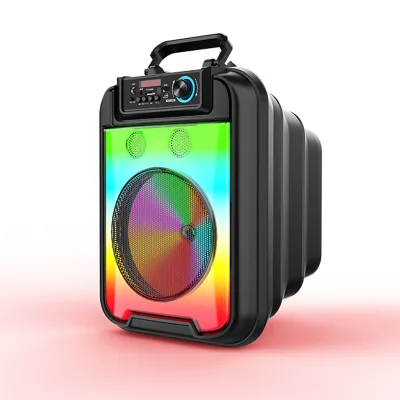

OEM Active Speaker Wireless Portable Speaker Karaoke Speaker with Flame Light
$45.17 - $46.53
MOQ: 300 Pieces

Double 10inch Portable Speaker with LED Light for Stage Karaoke System
$65.00 - $70.00
MOQ: 300 Pieces


Dual 8inch Portable Battery Party Speaker Karaoke for with Multi-Color LED
$63.00 - $77.00
MOQ: 50 Pieces


Comprehensive Sourcing Guide
10 Inch Karaoke Speaker with Remote Control Sourcing Guide
Sourcing a 10-inch karaoke speaker equipped with remote control functionality requires a nuanced understanding of the intersection between consumer entertainment features and commercial audio performance. These devices are not merely passive speakers; they are active systems designed to deliver high-fidelity sound while integrating microphone inputs, digital signal processing, and user-friendly interfaces. The presence of a remote control indicates a focus on convenience and accessibility, making these units suitable for environments where manual adjustment of volume, tone, or input sources is frequent. Buyers must recognize that the "10-inch" designation typically refers to the main woofer size, which dictates the low-frequency response and overall sound pressure level, while the inclusion of a remote suggests a more sophisticated control architecture than basic plug-and-play units.
The procurement landscape for these speakers is diverse, ranging from portable party units to stationary home theater systems. Observed market data indicates a wide variance in specifications, with power outputs ranging from 40W to 80W and battery options varying significantly in voltage and capacity. This diversity means that a single sourcing strategy cannot cover all potential products. Buyers must clearly define whether their priority is portability, indicated by rechargeable batteries and compact dimensions, or stationary performance, indicated by higher wattage and AC power requirements. The core keyword implies a specific form factor, but the actual product count and attribute variations suggest that "10-inch" may sometimes be a marketing term for the main driver, while other listings may feature dual 8-inch drivers or 15-inch subwoofers, requiring careful verification of the actual acoustic output.
Product Scope and Observed Listing Signals
The current market listings for 10-inch karaoke speakers reveal a broad spectrum of material constructions and aesthetic designs, primarily utilizing wood or plastic enclosures. Wooden cabinets are often preferred for their acoustic properties, reducing resonance and enhancing the warmth of the sound, which is critical for karaoke applications where vocal clarity is paramount. In contrast, plastic enclosures may offer greater durability and lower weight, making them suitable for portable or outdoor use cases. The observed listings show that customization is available, allowing buyers to tailor the exterior finish, branding, or internal component layout to meet specific brand identity requirements. This flexibility is a significant advantage for B2B buyers looking to create private-label products, but it also necessitates clear communication of design specifications to avoid discrepancies between the prototype and the final production run.
Functional attributes observed in the market include LED lighting effects, digital displays, and various connectivity options such as Bluetooth and USB support. These features enhance the user experience, particularly in social settings like parties or commercial venues, where visual appeal and ease of use are important. The presence of a remote control is a key differentiator, allowing users to adjust settings without approaching the unit. However, buyers should note that not all listed products include this feature, and some may rely on button controls or smartphone apps. The application scope extends beyond home use to commercial environments, including stages, DJ setups, and teaching facilities, indicating that the product must meet varying standards of durability and performance. Understanding these signals helps buyers align their procurement with the specific end-use scenario, whether it is for a luxury home theater or a rugged outdoor event.
Technical Specifications to Verify
When evaluating technical specifications, the power output and frequency response are critical indicators of performance. Observed listings show power ratings of 40W and 80W, which significantly impact the volume and clarity of the audio output. Buyers must verify whether the stated power is RMS (Root Mean Square) or peak power, as this distinction affects the perceived loudness and sustained performance. Additionally, the frequency response range, observed to be between 60Hz and 20kHz, is essential for ensuring that both bass and treble frequencies are adequately reproduced. For karaoke applications, a flat frequency response in the mid-range is particularly important to ensure that vocals are clear and not masked by bass or treble peaks. Buyers should request detailed frequency response curves from suppliers to verify that the speaker performs well across the entire audible spectrum.
The battery specifications and input voltage requirements are another area requiring careful verification. Listings indicate battery options such as 12V7a, 7.4V7200 mAh, and 12V9 mAh, which vary greatly in capacity and suitability for different use cases. A higher capacity battery, such as the 7200 mAh option, is more suitable for extended portable use, while lower capacity options may be intended for stationary use or shorter durations. The input voltage range of AC 100-240V/50-60Hz suggests global compatibility, but buyers must confirm that the included power adapter matches the local electrical standards in their target market. Furthermore, the presence of a remote control requires verification of the control protocol, whether it is infrared or radio frequency, to ensure reliability and range. Buyers should also check for additional features such as memory card support, USB disk support, and radio functionality, which add value but may increase complexity and potential points of failure.
Compliance and Safety Documentation
Compliance with international safety and electromagnetic compatibility standards is non-negotiable for audio equipment. Buyers must ensure that the suppliers provide valid certification documents, such as CE, FCC, or RoHS, depending on the target market. These certifications confirm that the product meets specific safety, emissions, and environmental standards. For instance, CE marking is required for products sold in the European Economic Area, while FCC certification is necessary for the United States. Buyers should request copies of these certificates and verify their validity with the issuing bodies. Additionally, the use of lithium-ion batteries, as indicated by the observed battery specifications, requires compliance with UN38.3 testing standards for safe transportation. Failure to verify these certifications can result in customs delays, product recalls, or legal liabilities.
In addition to regulatory compliance, buyers should assess the quality of the documentation provided by the supplier. This includes user manuals, warranty terms, and technical support resources. A comprehensive user manual should clearly explain the operation of the remote control, the various input sources, and the safety precautions. Warranty terms should specify the duration of coverage and the process for claiming repairs or replacements. Buyers should also inquire about the supplier’s quality control processes, including incoming material inspections, in-process checks, and final product testing. This documentation not only ensures compliance but also demonstrates the supplier’s commitment to quality and customer satisfaction. Buyers should prioritize suppliers who provide transparent and detailed documentation, as this reduces the risk of post-purchase issues and enhances the overall procurement experience.
Cost Drivers and Commercial Terms
The cost of 10-inch karaoke speakers is influenced by several factors, including the materials used, the complexity of the electronic components, and the level of customization required. Wooden enclosures and high-quality drivers typically increase the cost compared to plastic enclosures and basic components. Similarly, features such as LED lighting, digital displays, and advanced remote control systems add to the manufacturing complexity and cost. Buyers should request detailed cost breakdowns from suppliers to understand how these factors impact the final price. Additionally, the observed price range of 2-236 USD indicates a wide variance, suggesting that buyers can find options at various price points depending on their specific requirements. It is important to balance cost with quality, as cheaper options may compromise on performance or durability.
Commercial terms, such as minimum order quantities (MOQ) and payment terms, also play a significant role in the procurement process. Observed MOQs range from 10 to 3000 units, allowing for flexibility depending on the buyer’s scale. Smaller MOQs are suitable for testing the market or for niche applications, while larger MOQs may offer better unit prices. Buyers should negotiate payment terms that align with their cash flow, such as partial upfront payment and balance upon shipment. Additionally, buyers should consider the logistics costs, including shipping and customs duties, which can significantly impact the total landed cost. Suppliers located in Guangzhou, China, as indicated by the observed origin, may offer competitive shipping rates due to proximity to major ports. Buyers should work with suppliers who provide transparent pricing and flexible commercial terms to optimize their procurement strategy.
Supplier Qualification and Quality Control
Supplier qualification is a critical step in ensuring the reliability and consistency of the 10-inch karaoke speakers. Buyers should conduct thorough due diligence on potential suppliers, including verifying their business licenses, production capabilities, and past performance. Suppliers with a proven track record in audio equipment manufacturing are more likely to deliver high-quality products. Buyers should also assess the supplier’s research and development capabilities, as this indicates their ability to innovate and adapt to changing market demands. Additionally, buyers should request samples for evaluation before placing large orders. These samples should be tested for sound quality, durability, and functionality of the remote control and other features.
Quality control processes should be clearly defined and agreed upon with the supplier. This includes establishing quality standards, inspection criteria, and acceptance thresholds. Buyers should implement a robust quality control plan that includes pre-production inspections, during-production checks, and pre-shipment inspections. Pre-production inspections ensure that raw materials and components meet the specified standards. During-production checks monitor the manufacturing process to identify and correct any issues early. Pre-shipment inspections verify that the final products meet all quality requirements before they are shipped. Buyers should also consider hiring third-party inspection agencies to conduct independent quality checks, providing an additional layer of assurance. Effective quality control minimizes the risk of defects and ensures that the products meet the buyer’s expectations.
Long-Term Procurement Checks
Long-term procurement success depends on establishing a sustainable relationship with suppliers and continuously monitoring performance. Buyers should implement a supplier performance evaluation system that tracks key metrics such as on-time delivery, product quality, and responsiveness to issues. Regular reviews of these metrics help identify areas for improvement and ensure that suppliers remain aligned with the buyer’s expectations. Buyers should also maintain open communication with suppliers, providing feedback on product performance and market trends. This collaborative approach fosters trust and encourages suppliers to prioritize the buyer’s needs. Additionally, buyers should stay informed about industry developments, such as new technologies or regulatory changes, to anticipate potential impacts on their procurement strategy.
Continuous improvement is essential for maintaining a competitive edge in the market. Buyers should regularly review their product specifications and feature sets to ensure they remain relevant and attractive to end-users. This may involve incorporating new technologies, such as improved Bluetooth connectivity or enhanced remote control functionality, into future orders. Buyers should also explore opportunities for cost optimization, such as negotiating better prices or consolidating shipments. Furthermore, buyers should diversify their supplier base to mitigate risks associated with single-source dependency. By maintaining a proactive and strategic approach to procurement, buyers can ensure the long-term success of their 10-inch karaoke speaker offerings.
FAQs
What is the power output of the 10 inch karaoke speaker?
The 10 inch karaoke speaker model HSD-510A features an 80W power output. This specification ensures sufficient volume for home or commercial applications while maintaining clear audio performance during active use.
Can I customize the speaker material and finish?
Customization is available for this product line. Buyers can request specific material options such as wood or plastic finishes to match their aesthetic requirements for stage, DJ, or home theatre setups.
Which battery options are available for portable use?
Several battery configurations exist, including a 12V7a unit and a 7.4V7200 mAh rechargeable option. These choices support portable applications like outdoor events or mobile phone connectivity without needing constant external power.
How does the remote control function operate?
The system includes a remote control for button-based operation. This allows users to manage functions like radio, memory card support, and USB disk playback conveniently from a distance during karaoke sessions.
What is the minimum order quantity for this speaker?
The minimum order quantity ranges from 10 to 3000 units depending on the specific model and customization needs. Small orders are accepted, making it accessible for various business scales and testing requirements.
Where are these speakers manufactured and shipped from?
These speakers originate from Guangzhou, China. The products are packed in cartons and shipped with accessories like microphones and manuals, ensuring they are ready for immediate use in gaming or computer setups.