Source 10G CWDM XFP Transceiver Module for Servers, Workstations, and Computers
Find 30 listings for the 10G CWDM XFP Transceiver Module compatible with Cisco, Huawei, and HP equipment. Buyers can compare working rates, reach distances, and packaging options for data center and enterprise network applications.
Key considerations
Products List




Comprehensive Sourcing Guide
Strategic Sourcing Guide for 10G CWDM XFP Transceiver Modules
The procurement of 10G CWDM XFP transceiver modules represents a critical decision point for organizations expanding their data center infrastructure or upgrading legacy network architectures. As businesses navigate the transition from legacy copper to high-speed fiber optics, the demand for compatible, high-performance optical modules has surged. The core keyword "10G CWDM XFP Transceiver Module" points to a specific class of hardware designed for dense wavelength division multiplexing over single-mode fiber, operating at 10 gigabits per second. This guide provides a comprehensive, evidence-based framework for buyers to evaluate, select, and procure these components while adhering to strict supply chain integrity and technical compliance standards.
Technical Architecture and Operational Specifications
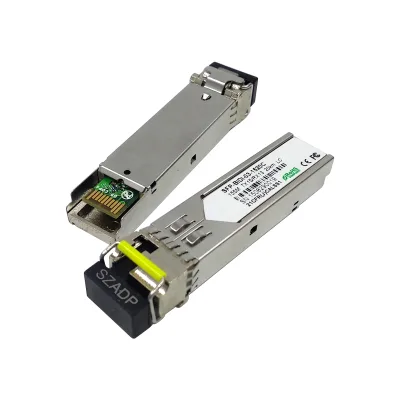
Understanding the precise technical architecture of the 10G CWDM XFP module is the first step in ensuring network compatibility. The XFP (10 Gigabit Small Form Factor Pluggable) form factor is distinct from the SFP+ in terms of physical dimensions and power consumption, often requiring specific slot configurations in switches and routers. The CWDM (Coarse Wavelength Division Multiplexing) variant allows multiple data streams to be transmitted over a single fiber strand by utilizing different wavelengths, significantly increasing bandwidth density without laying additional cabling.
Based on observed market data, these modules typically operate within a working rate range of 9.95 Gbps to 11.3 Gbps, ensuring flexibility for various 10G Ethernet standards. The optical interface is generally a Single Mode Fiber (SMF) configuration, utilizing a Dual Fiber LC Interface for transmit and receive paths. The wavelength spectrum for CWDM modules typically spans from 1270nm to 1610nm, covering the standard 18-channel grid used in telecommunications. Reach distances are variable depending on the specific wavelength and power budget, with observed specifications indicating capabilities ranging from 20km to 40km, or even customized distances up to 120km for long-haul applications.
A critical technical feature to verify is the Digital Diagnostic Monitoring (DDM) capability. Many modern XFP modules support DDM, allowing network administrators to monitor real-time parameters such as temperature, optical power, laser bias current, and supply voltage. This feature is essential for proactive network maintenance and troubleshooting. The power supply requirement is standard at 3.3V, which aligns with the electrical specifications of most enterprise-grade networking equipment. The internal construction often utilizes metal as the main material for the housing, providing necessary shielding and thermal dissipation properties to maintain signal integrity under varying environmental conditions.
Compliance, Certification, and Regulatory Standards
In the B2B procurement landscape, compliance is not merely a formality but a prerequisite for liability protection and network stability. When sourcing 10G CWDM XFP transceiver modules, buyers must rigorously verify that products meet international safety and environmental standards. The observed product attributes indicate that compliant units typically carry certifications such as ISO, GS, RoHS, and CE. These certifications confirm that the manufacturing process adheres to quality management systems, safety requirements, and restrictions on hazardous substances.
RoHS compliance is particularly vital for electronics sold in the European Union and increasingly in other global markets, ensuring the module is free from lead, mercury, cadmium, and other toxic materials. CE marking indicates conformity with health, safety, and environmental protection standards for products sold within the European Economic Area. ISO certification suggests a standardized approach to quality control and management, while GS (Geprüfte Sicherheit) is a German safety mark that implies rigorous testing.
Buyers should also verify the "prod_standard" attributes, which often reference compatibility with major brands such as Cisco, Huawei, HP, Brocade, and Juniper. While the module itself may be a third-party compatible product, it must adhere to the Multi-Source Agreement (MSA) standards for the XFP form factor to ensure physical and electrical interoperability. The absence of a specific brand name on the module does not negate the need for these standards; rather, the module must function as a drop-in replacement for the original equipment manufacturer (OEM) parts without causing errors or incompatibilities in the host device.
Cost Drivers and Pricing Dynamics
The pricing of 10G CWDM XFP transceiver modules is influenced by a complex interplay of factors, including wavelength specificity, reach distance, and the level of DDM support. The observed listed price range in the market spans from $0.10 to $6,000, a variance that reflects the difference between basic single-wavelength modules and high-performance, long-reach, or custom-configured units. The lower end of the spectrum typically corresponds to standard 10km or 20km modules with basic functionality, while the upper end may include long-haul modules (40km+), modules with advanced DDM features, or those packaged in specialized bulk configurations.
Minimum Order Quantity (MOQ) is another significant cost driver. The observed MOQ range varies from 1 to 100 units. Suppliers with lower MOQs (e.g., 1 unit) often cater to testing or small-scale deployment needs but may charge a premium per unit. Conversely, bulk orders starting at 100 units typically unlock volume discounts, reducing the cost per module significantly. Buyers should also consider the packaging configuration, which can impact logistics costs. Standard packaging often involves 10 PCS per plate or carton case, with some suppliers offering specialized packing for larger shipments.
The origin of the product, often listed as Guangdong, China, is a common factor in the supply chain for these components. While this region is a global hub for electronics manufacturing, buyers must account for shipping costs, import duties, and lead times when calculating the total cost of ownership. The material composition, primarily metal, also contributes to the weight and shipping volume, which can influence freight charges for large orders.
Typical Applications and Deployment Scenarios
The 10G CWDM XFP Transceiver Module is designed for a wide array of applications, primarily within high-density data centers, enterprise networks, and telecommunications infrastructure. The specified usage categories include Telephone, Mobile phone, Server, Workstation, Computer, and Laptop, indicating its versatility in connecting various endpoints to the core network. However, its primary utility lies in Server and Workstation connectivity, where high bandwidth and low latency are paramount.
In data center environments, these modules are frequently used to connect storage area networks (SANs) and backbone switches. The CWDM capability allows for the consolidation of multiple 10G links over a single fiber pair, reducing the cabling complexity and space requirements within server racks. This is particularly beneficial in modern data centers where density is a critical constraint. The modules are also suitable for campus-wide networks, where the reach distances of 20km to 40km can bridge buildings without the need for intermediate repeaters.
The "Integrated Wiring" attribute suggests that these modules are often part of a broader structured cabling system, working in tandem with ODF (Optical Distribution Frames) and other wiring devices. The support for Ethernet networks ensures compatibility with standard 10 Gigabit Ethernet protocols, making them a standard choice for upgrading 1G or 1G/10G mixed networks. The ability to support various working rates, from 1.25G to 40G in some broader product lines, highlights the flexibility of the ecosystem, though the specific 10G CWDM XFP module is optimized for 10G operations.
Supplier Evaluation and Compatibility Verification
Selecting the right supplier is as important as selecting the right product. Buyers must evaluate suppliers based on their ability to provide genuine, compatible modules that meet the technical specifications without compromising network performance. The "XFP Compatible Brands" attribute lists Cisco, Huawei, HP, Brocade, and Juniper, indicating that the modules are designed to work with these specific platforms. However, buyers should verify that the supplier provides a compatibility matrix or a guarantee of interoperability with their specific switch models.
The "Support Network" attribute, listing both GSM and Ethernet, suggests that the supplier may offer a broad range of communication solutions, but for the XFP module, Ethernet compatibility is the primary concern. Buyers should inquire about the supplier's technical support capabilities, including their ability to assist with DDM configuration and troubleshooting. The "Customization" attribute indicates that some suppliers offer tailored solutions, such as specific wavelengths or reach distances, which can be crucial for unique network topologies.
When evaluating suppliers, buyers should also consider the "prod_packing" standards. Consistent and protective packaging, such as placing 10 PCS in a plastic case or plate, ensures that the delicate optical components arrive in pristine condition. The weight of the packaging, noted as approximately 0.2Kg for 10 SFP GBIC units, provides a benchmark for logistics planning. Suppliers who can provide detailed product data sheets, test reports, and certification documents are generally more reliable partners.
Quality Control and Long-Term Procurement Strategy
Quality control is the backbone of a successful procurement strategy for optical modules. Given the sensitivity of optical components to environmental factors, buyers must ensure that the modules undergo rigorous testing for temperature stability, signal integrity, and long-term reliability. The "Condition: New" attribute is a basic requirement, but buyers should also verify that the modules are not refurbished or reconditioned unless explicitly stated and priced accordingly.
For long-term procurement, establishing a relationship with a supplier who can provide consistent quality and supply continuity is essential. The "Working Mode" of Single Mode Single Fiber or Dual Fiber LC Interface must be consistent across all units in a batch to prevent connectivity issues. Buyers should also consider the "Information content" provided by the supplier, which should include detailed data on the module's performance characteristics.
To mitigate risks, buyers should implement a phased testing strategy, starting with a small batch of modules to verify performance in the live network environment before committing to a large-scale deployment. This approach allows for the identification of any compatibility issues or quality defects early in the process. Additionally, maintaining a buffer stock of critical modules can help prevent network downtime in case of supply chain disruptions.
Conclusion
Sourcing 10G CWDM XFP transceiver modules requires a meticulous approach that balances technical specifications, compliance requirements, and cost considerations. By understanding the operational parameters, verifying certifications, and evaluating supplier capabilities, buyers can secure high-quality modules that enhance network performance and reliability. The observed market data provides a solid foundation for making informed decisions, but continuous verification of product attributes and standards remains crucial. As network demands evolve, the ability to adapt procurement strategies to include flexible, high-performance optical solutions will be a key differentiator for successful B2B operations.
FAQs
What certifications do 10g cwdm xfp transceiver modules typically have?
These modules typically carry ISO, GS, RoHS, and CE certifications. These marks confirm adherence to quality management systems, safety requirements, and restrictions on hazardous substances for global markets.
Which working rates are supported by these optical modules?
The modules support working rates ranging from 9.95 Gbps to 11.3 Gbps. This range ensures flexibility for various 10G Ethernet standards and compatible network equipment configurations.
Can I find customized reach distances for these transceivers?
Yes, customized reach distances are available for specific network needs. Standard options include 20km or 40km, while long-haul applications may support distances up to 120km depending on the wavelength.
What is the minimum order quantity for purchasing these modules?
The minimum order quantity varies from 1 to 100 units depending on the supplier. Bulk orders starting at 100 units often unlock volume discounts and more favorable pricing structures.
Which brands are compatible with these XFP transceiver modules?
These modules are compatible with major brands like Cisco, Huawei, HP, Brocade, and Juniper. They adhere to Multi-Source Agreement standards to ensure drop-in replacement functionality in host devices.
How are these modules packaged for shipment?
Modules are typically packed with 10 pieces per plate or carton case. Some variations use plastic cases, ensuring the delicate optical components arrive in pristine condition during transit.