Source 10G Optical Communication Module for Servers, Workstations, and Computers
Find and compare 30 listings for the 10G Optical Communication Module, featuring XFP and SFP+ transceivers with distances up to 80km. These modules support data rates of 10Gbps and are compatible with major brands like Cisco and Huawei for reliable network connectivity.
Key considerations
Products List




Comprehensive Sourcing Guide
10G Optical Communication Module Sourcing Guide
Product Scope and Observed Listing Signals
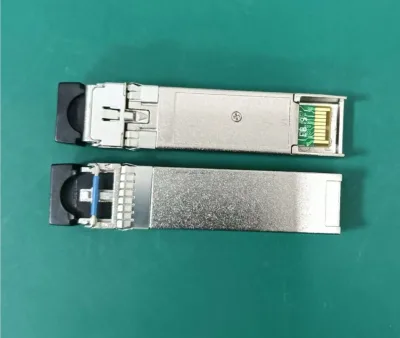
The market for 10g optical communication modules presents a diverse array of form factors and performance tiers, ranging from legacy XFP transceivers to modern SFP+ and SFP variants. Buyers will encounter listings that specify distinct data rates, such as 10gbps for high-speed server interconnects or 1.25g for lower-bandwidth applications like FTTX and FTTH deployments. It is critical to distinguish between these form factors early in the sourcing process, as the physical footprint and electrical interface requirements differ significantly between XFP, SFP+, and standard SFP modules. The observed product landscape includes specialized units designed for specific wavelengths, such as 1270/1330nm or 1490/1550nm, which dictate their suitability for single-mode fiber networks over varying distances.
Listing signals indicate a wide variance in intended usage, with modules marketed for telephone, mobile phone, server, workstation, and general computer connectivity. Some products are explicitly labeled as compatible with major networking hardware brands including Cisco, Huawei, HP, Brocade, and Juniper, suggesting a focus on enterprise-grade interoperability. However, buyers must verify that the "compatible" label refers to firmware-level coding that allows the module to function correctly within the host device, rather than just physical fitment. The presence of dual LC interfaces and single-mode fiber type specifications further narrows the scope to long-reach or metropolitan area network applications, distinguishing them from short-reach multi-mode solutions.
Technical Specifications to Verify
When evaluating technical specifications, the working rate and data rate are primary determinants of performance. Listings show working rates ranging from 9.95gbps to 11.3gbps for XFP modules, while other entries specify a strict 10g or 10gbps data rate for SFP+ transceivers. Buyers must confirm that the selected module meets the exact bandwidth requirements of their network infrastructure, as even minor deviations can impact signal integrity. Additionally, the transmission distance is a critical variable, with observed products supporting distances of 10km, 20km, 40km, and up to 80km. Selecting a module with insufficient reach for the physical layout of the data center or campus network will result in signal loss, while over-specifying may lead to unnecessary cost expenditure.
Wavelength and connector type are equally vital technical parameters that must align with existing fiber optic cabling. The core keyword and associated listings highlight wavelengths such as 1310nm, 1550nm CWDM, and specific dual-wavelength pairs like 1270/1330nm or 1490/1550nm. These wavelengths determine the type of optical amplifier or dispersion compensation that may be required in the network path. Furthermore, the connector type is predominantly listed as LC or LC Duplex, which is the standard for high-density 10g applications. Buyers should verify that the port type on their switches or servers matches the module’s connector, and check for additional features like Digital Diagnostic Monitoring (DDM), which provides real-time telemetry on temperature, voltage, and optical power for proactive maintenance.
Compliance and Safety Documentation
Compliance documentation is a non-negotiable aspect of sourcing optical modules, particularly for enterprise and industrial applications. The observed product listings frequently cite certifications such as ISO, RoHS, CE, and GS, which indicate adherence to international quality management, environmental restrictions on hazardous substances, and European safety standards. Buyers should request valid certification copies from suppliers to ensure that the modules do not contain restricted materials and meet the regulatory requirements of their target markets. The presence of these certifications also suggests that the manufacturer follows standardized production processes, which can be a proxy for overall product reliability and consistency.
Beyond regulatory certifications, buyers must verify that the modules meet industry-standard specifications for optical performance and electrical safety. While specific test results are not provided in general listings, reputable suppliers should be able to provide test reports or datasheets that confirm compliance with IEEE 802.3 standards for 10G Ethernet. The material composition, often cited as metal for the main housing, contributes to electromagnetic interference (EMI) shielding and thermal dissipation, which are crucial for maintaining performance in high-density server racks. Ensuring that the product standard aligns with the buyer’s internal compliance policies helps mitigate legal and operational risks associated with deploying non-compliant hardware.
Cost Drivers and Commercial Terms
Cost drivers for 10g optical modules are influenced by form factor, transmission distance, and compatibility coding. Modules supporting longer distances, such as 40km or 80km, typically command higher prices due to the more complex laser technology and precision optics required. Similarly, XFP modules, being a legacy form factor, may have different pricing dynamics compared to the more prevalent SFP+ and SFP variants. Buyers should analyze the price range observed in the market, which spans from low-cost entry-level modules to premium high-performance units, to determine the appropriate budget allocation for their specific network segments. Understanding these cost drivers allows for more accurate total cost of ownership (TCO) calculations, including potential savings from reduced power consumption or maintenance.
Commercial terms, including minimum order quantity (MOQ) and packaging, also impact the procurement strategy. Observed MOQs range from 1 to 100 units, offering flexibility for both small-scale upgrades and large-scale deployments. Packaging details, such as each 10 PCS in a carton case or plastic bag, are important for logistics and inventory management. Buyers should negotiate terms that align with their consumption rates to avoid excessive inventory holding costs or stockouts. Additionally, the availability of customization options for wavelength or distance can affect lead times and pricing, so it is essential to clarify these variables early in the negotiation process to ensure timely delivery and cost predictability.
Supplier Qualification and Quality Control
Supplier qualification begins with verifying the origin and manufacturing capabilities of the provider. The majority of observed products originate from Guangdong, China, a hub for electronics manufacturing, but buyers should assess the supplier’s specific production facilities and quality control processes. A robust supplier will have established support networks and standardized procedures for testing each module before shipment. Buyers should inquire about the supplier’s experience with compatible brands and their ability to provide firmware updates or coding services for specific network equipment. This level of due diligence helps ensure that the modules will integrate seamlessly into the existing infrastructure without requiring extensive troubleshooting.
Quality control measures should include checks for physical durability and optical performance consistency. The use of metal housings and dual LC interfaces suggests a focus on mechanical stability and reliable connectivity. Buyers should request samples to test the modules in their actual network environment, verifying parameters such as bit error rate (BER), optical power levels, and temperature stability. Additionally, the presence of DDM functionality allows for ongoing quality monitoring, enabling buyers to detect early signs of degradation. Establishing a clear quality assurance protocol with the supplier, including return policies for defective units, is essential for maintaining network reliability and minimizing downtime.
Long-Term Procurement Checks
Long-term procurement success depends on the supplier’s ability to provide consistent supply and technical support over time. Buyers should evaluate the supplier’s inventory management practices and their capacity to scale production in response to increasing demand. The availability of customized solutions, such as specific wavelengths or distances, indicates a flexible manufacturing process that can adapt to evolving network requirements. However, buyers must ensure that any customizations are well-documented and supported with adequate testing data to prevent compatibility issues in the future. Regular reviews of supplier performance, including delivery times and product quality, are necessary to maintain a reliable supply chain.
Furthermore, buyers should plan for the lifecycle management of their optical modules, considering the obsolescence of certain form factors like XFP in favor of more compact and efficient SFP+ and SFP variants. Monitoring industry trends and technological advancements will help buyers make informed decisions about when to upgrade their hardware. Establishing a relationship with a supplier who offers comprehensive technical support and warranty services is crucial for addressing any issues that may arise during the product’s operational life. By focusing on these long-term factors, buyers can ensure that their investment in 10g optical communication modules delivers sustained value and supports the growth of their network infrastructure.
FAQs
What is the data rate of the 10G Optical Communication Module?
The module operates at a data rate of 10gbps. It supports a working rate between 9.95gbps and 11.3gbps. This ensures reliable high-speed transmission for servers, workstations, and computers. The design meets standard 10G SFP+ transceiver requirements for consistent network performance.
Which brands are compatible with this 10G Optical Communication Module?
The module is compatible with major brands including Cisco, Huawei, HP, Brocade, and Juniper. It supports other major vendors as well. This broad compatibility ensures seamless integration into existing network infrastructure without requiring additional adapters or configuration changes.
What is the transmission distance for the 10G Optical Communication Module?
Transmission distances vary by model, offering options for 10km, 20km, 40km, or 80km. Some models support customized distances to meet specific project needs. The standard single-mode fiber configuration ensures stable signal integrity over these extended ranges for enterprise applications.
Can the 10G Optical Communication Module be customized?
Yes, customization is available for wavelength and transmission distance. Options include 1270/1330nm, 1490/1550nm, or 1310nm CWDM wavelengths. Buyers can also request specific distance requirements. This flexibility allows the module to adapt to diverse FTTX, FTTH, and wired LAN environments.
What certifications does the 10G Optical Communication Module hold?
The module holds ISO, GS, RoHS, and CE certifications. These standards ensure compliance with international safety and environmental regulations. The metal main material and dual fiber LC interface further support durability and reliable performance in professional data center and telecommunications settings.
What is the packaging format for the 10G Optical Communication Module?
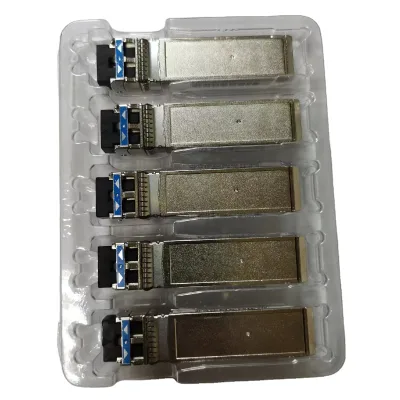
Modules are packed in cartons containing ten pieces each. SFP models come in plastic cases, while XFP models use carton cases. This standardized packaging protects the components during shipping and storage. The design facilitates easy inventory management and distribution for bulk procurement orders.