Source 2 in 1 Metal Coil Uncoiler and Straightener for Sheet Wire Pipe
Find 30 listings for the 2 in 1 Metal Coil Uncoiler and Straightener designed for sheet, wire, and pipe processing. Compare specifications including voltage, straightening principles, and coil dimensions from verified manufacturers in China.
Key considerations
Products List


Metal Coil Decoiling Machine 2 in 1 Servo Uncoiler Straightener Hydraulic Driven
$4500.00 - $10000.00
MOQ: 1 set

2 in 1 Automatic Servo Uncoiler Straightener Metal Coil Feeding Leveling Machine
$4500.00 - $10000.00
MOQ: 1 set


Nc Servo Presses Decoiler and Straightener 2 in 1 Uncoiler with Straightener Machine
$8000.00 - $20000.00
MOQ: 1 Pieces


Metal Coil Uncoiler Straightener 2 in 1 Machine for Coil Feed System
$3558.00 - $6268.00
MOQ: 1 Pieces

Straightening and Uncoiler Machine 2 In1 Metal Coiling Flattening Machine
$3558.00 - $6268.00
MOQ: 1 Pieces


2 in 1 Metal Sheet Stainless Steel Decoiler Straightener for Press Stamping
$1800.00 - $3700.00
MOQ: 1 set

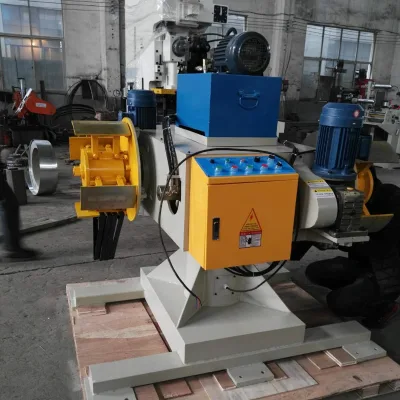

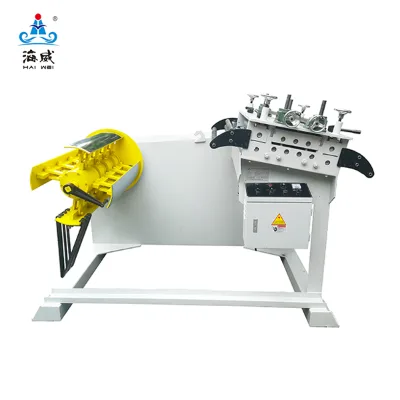

Hydraulic Pressing Coil Metal Decoiler Straightener 2 in 1 Steel Uncoiler Machine
$999.00 - $5000.00
MOQ: 1 Pieces

High Qualityuncoiler Straightener for High Efficiency Feeding Solutions
$1100.00 - $1399.00
MOQ: 1 Pieces

Reliable Uncoiler Straightener with High Efficiency Servo Feeder System
$1100.00 - $1399.00
MOQ: 1 Pieces

Comprehensive Sourcing Guide
Strategic Sourcing Guide for 2 in 1 Metal Coil Uncoiler and Straightener Systems
Understanding Core Technical Specifications and Operational Principles
When sourcing a 2 in 1 Metal Coil Uncoiler and Straightener, buyers must first distinguish between the mechanical principles driving the equipment, as these dictate the final product quality and the range of materials the machine can process. The observed market data indicates two distinct operational approaches: Large Deformation and Small Deformation principles. Machines utilizing the Large Deformation principle are typically engineered for specific heavy-duty applications, whereas those based on Small Deformation principles often target precision sheet and wire processing.
The physical configuration of the straightening rolls is a critical differentiator. In specific observed models, the roll arrangement consists of an upper set of 4 pieces and a lower set of 3 pieces. This specific 4-over-3 configuration is designed to achieve the necessary bending and unbending cycles required to remove curvature from metal strips. The feeding precision of these systems is a vital metric for high-tolerance manufacturing; documented specifications show feeding precision capabilities reaching as low as 0.02mm, which is essential for automated production lines where material waste must be minimized.
The system's versatility is further defined by its ability to handle various material forms. The observed usage categories include Sheet, Wire, Bar, Pipe, and H Beam Flange. This broad applicability suggests that the 2 in 1 configuration is not a monolithic solution but a modular platform. Buyers should verify the specific "Automatic Grade" of the machine, as the data confirms an "Automatic" classification for these units, implying integrated control systems that manage the transition from the uncoiler to the straightener without manual intervention. The voltage requirement is consistently observed at 380V, a standard industrial voltage that must be compatible with the buyer's facility infrastructure.
Compliance, Certification, and Regulatory Standards
Navigating the compliance landscape is essential for international procurement, particularly when sourcing from regions where manufacturing standards may vary. The supply chain data highlights a range of certifications, including CE, ISO, ISOCCC, and TUV. It is important to note that certification status is not uniform across all listed products; some entries list "CE,ISOCondition:New," while others specify "CE,ISOCCC,TUV." This variation implies that certification is often model-specific or batch-dependent rather than a universal attribute of the entire product category.
Buyers must treat these certifications as observations of specific units rather than guaranteed attributes of every supplier offering this keyword. For instance, while CE marking is frequently observed, the specific standard referenced in the data is "ISOCondition:New" or "ISOCCC," which requires verification against the actual certificate provided by the supplier. The data also references "GL" as a standard in certain contexts, alongside "TGL," suggesting that specific industry standards or internal grading systems may be in play.
The "prod_standard" field in the source data often reads "enquiry us," indicating that standard compliance is not pre-defined in the listing but is a subject of negotiation. This necessitates a rigorous due diligence process where the buyer explicitly requests the certificate of conformity for the specific model being purchased. Furthermore, the origin of the machinery is identified as China, which requires buyers to be vigilant about export compliance and the validity of the certifications provided for international shipping. The "Condition: New" attribute is consistently present, but the specific warranty periods vary, with observed terms of 12 Months and 24 Months, which should be cross-referenced with the certification validity.
Cost Drivers and Pricing Structure Analysis
The pricing structure for 2 in 1 uncoiler and straightener systems exhibits significant variance, with observed listed prices ranging from 120 to 20,000 USD. This wide range is not indicative of a single product tier but rather reflects differences in capacity, automation level, and material handling capabilities. The minimum order quantity (MOQ) is consistently observed as 1, suggesting that these machines are available for single-unit procurement, which is favorable for small to medium enterprises.
Several factors drive the cost differential within this range. The first is the Coil Outer Diameter (O.D.) capacity, with observed specifications reaching up to 1200mm. Machines capable of handling larger coils generally command higher prices due to the increased structural requirements and motor power needed. Similarly, the Coil Inner Diameter (I.D.) range, observed between 400mm and 540mm, influences the design of the expanding mandrel and the overall footprint of the uncoiler section.
The straightening capacity is another major cost driver. The strip thickness range of 0.5mm to 3.2mm is a standard specification for many models, but machines capable of handling the upper limits of this range or wider widths (up to 1300mm) will be priced higher. The inclusion of advanced features such as Loop Control, which is explicitly noted as "Yes" in some models, adds to the complexity and cost of the system. Additionally, the feeding length capability, observed up to 9999mm, suggests programmable limits that affect the control system's sophistication.
Buyers should also consider the packaging and shipping costs, which are not included in the base machine price. The data lists "Wooden Pallet and Wooden Case" as well as "Container" options, with standards referencing "Woodencase or 20GP or 40GP container." The choice between a wooden case and a full container shipment will significantly impact the total landed cost. The "Dimension: as Model" attribute indicates that physical size varies by specification, further influencing freight charges.
Typical Applications and Material Versatility
The 2 in 1 Metal Coil Uncoiler and Straightener is designed for a diverse array of industrial applications, serving as a critical preprocessing step in various manufacturing workflows. The primary usage categories identified include Sheet, Wire, Bar, Pipe, and H Beam Flange. This versatility allows the equipment to be integrated into production lines for automotive components, construction materials, appliance manufacturing, and general metal fabrication.
For sheet metal processing, the machine's ability to handle thicknesses from 0.5mm to 3.2mm makes it suitable for producing panels, enclosures, and structural components. The "Small Deformation" principle is particularly relevant for applications requiring high surface finish and minimal stress on the material, such as in the production of precision electronic housings or automotive trim. Conversely, the "Large Deformation" principle may be preferred for heavier structural applications where significant curvature correction is necessary.
The inclusion of "Pipe" and "H Beam Flange" in the usage list indicates that these machines are not limited to flat stock. The straightening mechanism must be adaptable to handle the unique geometry of pipes and flanges, which often requires specialized roll configurations or adjustable guides. The "Rotating Anti-Bending and Straightening Machine" type mentioned in the data suggests a specialized variant designed to counteract bending moments that occur during the straightening process, ensuring the final product remains true to its intended dimensions.
The "Automatic Grade" of the machine supports high-volume production environments where continuous feeding and precise length control are paramount. The "Loop Control" feature is particularly valuable in applications where the straightener feeds directly into a press or cutter, preventing material slack or tension issues that could disrupt the downstream process. The feeding precision of 0.02mm ensures that even in high-speed operations, the material is positioned accurately for the next manufacturing step.
Supplier Evaluation and Quality Assurance Protocols
Evaluating suppliers for 2 in 1 uncoiler and straightener systems requires a focus on transparency regarding technical specifications and post-sales support. Since the data indicates that "prod_standard" is often "enquiry us," buyers must explicitly request the technical standard documents for the specific model. The presence of certifications like CE, ISO, and TUV should be verified through direct communication with the supplier, ensuring that the certificates are current and applicable to the specific machine model.
The warranty period is a key indicator of supplier confidence. The observed data shows warranty terms of both 12 Months and 24 Months. A longer warranty period may suggest higher quality components and more robust manufacturing processes, but it is crucial to understand the scope of the warranty. Does it cover the entire machine, or are specific components like motors or control panels excluded? The "Condition: New" attribute is standard, but buyers should verify that the machine is not a refurbished unit marketed as new.
Quality control should extend to the packaging and shipping process. The data mentions "Wooden Case" and "Container" options, with specific references to 20GP or 40GP containers. Buyers should ensure that the packaging is sufficient to protect the machine during international transit, especially given the precision nature of the straightening rolls and control systems. The "prod_packing" details should be confirmed to match the shipping method selected.
When evaluating suppliers, buyers should also consider the customization options available. The data confirms that "Customization" and "Customized" options are available, including "Color: Customizable." This flexibility allows buyers to tailor the machine to their specific production line requirements. However, customization can impact lead times and costs, so these factors must be discussed early in the procurement process. The "Automatic Grade" and "Feeding Precision" should be validated through factory audits or third-party testing if possible, as these are critical performance metrics.
Long-Term Procurement and Operational Considerations
Long-term procurement success with 2 in 1 uncoiler and straightener systems depends on factors beyond the initial purchase price, including maintenance requirements, spare parts availability, and operational efficiency. The "Warranty" terms, ranging from 12 to 24 months, provide a baseline for initial support, but buyers should plan for long-term maintenance costs. The "Automatic Grade" of the machine implies a reliance on electronic control systems, which may require specialized technical support and periodic software updates.
The "Max Speed" of the machine, observed as "Below 16 RO 20m/Min," is a critical operational parameter. Buyers should ensure that this speed aligns with their production targets. If higher throughput is required, the supplier may need to offer a different model or configuration. The "Loop Control" feature, while beneficial, adds complexity to the system and may require additional training for operators to manage effectively.
Spare parts availability is another long-term consideration. The "prod_model" variations, such as BML-400, BML-200, and NGUL-400/BML-400H, indicate that different models may have different part compatibility. Buyers should secure a list of recommended spare parts and ensure that the supplier has a reliable supply chain for these components. The "prod_origin" being China suggests that logistics for spare parts may involve international shipping, which could impact downtime if parts are not readily available.
Finally, the "Dimension: as Model" attribute highlights that physical installation requirements vary. Buyers must ensure their facility has the necessary space and infrastructure, including the 380V power supply, to accommodate the specific model they choose. The "Wooden Pallet and Wooden Case" packaging suggests that the machine may require assembly or setup upon arrival, which should be factored into the project timeline. By carefully considering these long-term factors, buyers can ensure a successful and sustainable procurement of 2 in 1 Metal Coil Uncoiler and Straightener systems.
Comparative Analysis of Key Model Specifications
To assist in the decision-making process, the following table summarizes the key specifications observed across different models. This comparison highlights the variations in capacity, control, and application that buyers should consider when selecting a specific unit.
| Specification | Model BML-400 | Model BML-200 | Model NGUL-400/BML-400H | Model BML-150 | Model NGUL-800/BML-800H |
|---|---|---|---|---|---|
| Principle | Large Deformation | N/A | N/A | N/A | N/A |
| Strip Thickness | 0.5-3.2mm | N/A | N/A | N/A | 0.5-3.2mm |
| Coil I.D. | 460-540mm | 400-540mm | N/A | N/A | N/A |
| Coil O.D. | 1200mm | N/A | N/A | N/A | 1200mm |
| Straightening Roll | Upper 4, Lower 3 | N/A | N/A | N/A | N/A |
| Max Speed | Below 16 RO 20m/Min | N/A | N/A | N/A | N/A |
| Loop Control | Yes | N/A | N/A | N/A | N/A |
| Certification | CE, ISO | N/A | N/A | N/A | CE, ISOCCC, TUV |
| Warranty | 12 Months | N/A | N/A | N/A | 24 Months |
| Usage | Sheet, Wire, Bar, Pipe, H Beam Flange | Sheet, Wire, Bar | Sheet, Wire, Pipe | Sheet, Wire, Bar | Sheet, Wire, Pipe |
Note: Data points marked "N/A" indicate that specific values were not explicitly listed for that model in the provided context. Buyers should request detailed specifications for each model to fill these gaps.
This table serves as a starting point for comparison, but the "prod_standard" and "prod_packing" details should be verified for each specific unit. The variation in warranty periods and certifications underscores the importance of detailed due diligence before finalizing a purchase. By understanding these distinctions, buyers can make informed decisions that align with their specific production needs and long-term operational goals.
FAQs
What certifications are available for these machines?
Available certifications include CE, ISO, ISOCCC, and TUV depending on the specific model. Buyers must verify the certificate for the exact unit, as some listings show CE and ISO while others list ISOCCC and TUV alongside new condition status.
How does the straightening principle affect material processing?
Machines use either Large Deformation or Small Deformation principles based on application needs. Large Deformation suits heavy-duty tasks, while Small Deformation targets precision sheet and wire processing to minimize surface stress and curvature.
Which specifications define the coil handling capacity?
Coil Outer Diameter reaches up to 1200mm with Inner Diameter ranging from 400mm to 540mm. Strip thickness is typically 0.5-3.2mm, and Coil Width can extend up to 1300mm depending on the specific model configuration.
Can the machine handle various material forms like pipes?
Yes, the system processes Sheet, Wire, Bar, Pipe, and H Beam Flange. This versatility requires adaptable roll configurations or adjustable guides to handle the unique geometry of pipes and flanges alongside flat stock.
What is the warranty period for the equipment?
Warranty terms vary between 12 Months and 24 Months depending on the supplier and model. Buyers should confirm the specific scope of coverage, as longer warranties may indicate higher quality components but require verification of exclusions.
How is the machine powered and controlled?
The system operates at 380V and features an Automatic Grade with Loop Control capabilities. Feeding precision can reach 0.02mm, and maximum speed is observed below 16 to 20 meters per minute for efficient automated production.