Source 2 Stroke Mini Dirt Bike for trails, farms, and parks
Explore 30 listings of 2 Stroke Mini Dirt Bike options featuring 2-stroke engines, pull start systems, and disc brakes. Buyers can compare models like DK-5001 and DB709 with varying tank capacities and packing standards to find suitable units for recreational or utility use.
Key considerations
Products List


Factory Direct Sales Cheap Price Mini Dirt Bike 2 Stroke Engine Kids Dirtbike
$88.00 - $148.00
MOQ: 2 Pieces


$440.00 - $480.00
MOQ: 50 Pieces
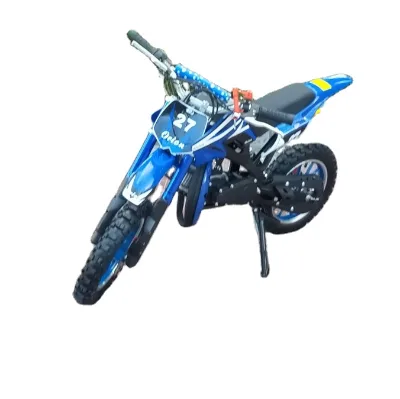
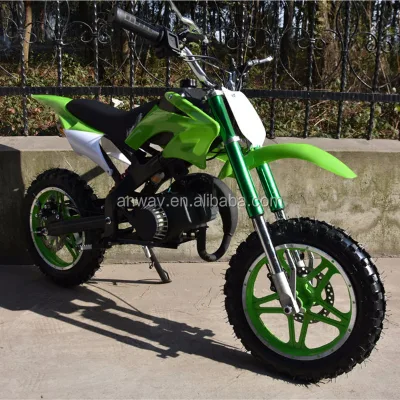
125cc Mini Size Dirt Bike/Motorcycle Standard Configuration & Luxury Configuration
$120.00 - $150.00
MOQ: 10 pieces
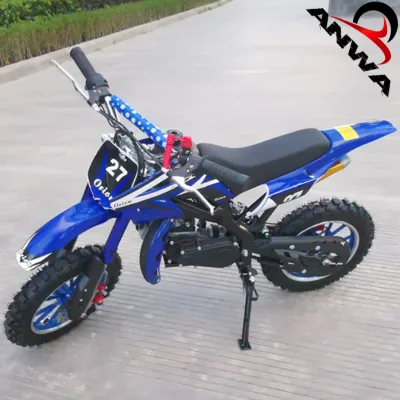
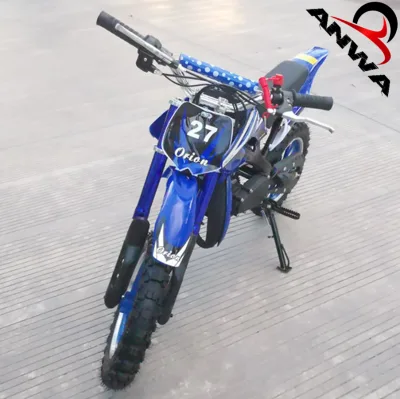
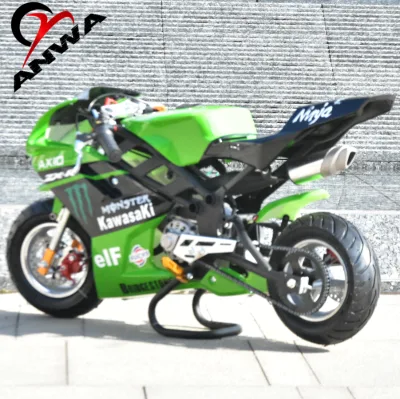
Hot Sale New 49cc Mini Trail Bike, 49cc Mini Dirt Bike, 49cc Dirt Bikes Cheap
$117.00 - $135.00
MOQ: 10 Minimum
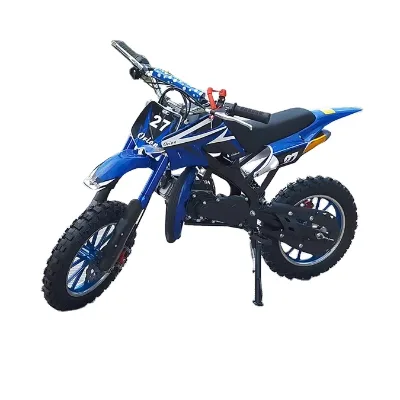


110cc 120cc 125cc 140cc 4 Stroke Racing off Road Gasoline Dirt Bike Mini
$471.00 - $680.00
MOQ: 10 Pieces


Comprehensive Sourcing Guide
Strategic Sourcing Guide for 2 Stroke Mini Dirt Bikes
The global market for off-road recreational vehicles continues to expand, with the 2 Stroke Mini Dirt Bike representing a distinct and cost-effective segment for both youth riders and entry-level enthusiasts. For B2B procurement professionals, sourcing these vehicles requires a nuanced understanding of their specific mechanical architecture, regulatory compliance landscape, and supply chain dynamics. Unlike their 4-stroke counterparts, 2-stroke engines offer a unique power-to-weight ratio that is highly desirable in mini-bike applications, yet they demand rigorous quality control and specific maintenance considerations. This guide outlines the essential factors for buyers evaluating suppliers in this category, ensuring that procurement decisions are grounded in verified product attributes and industry standards rather than unverified marketing claims.
Technical Architecture and Performance Characteristics
The defining characteristic of the 2 Stroke Mini Dirt Bike is its engine configuration. The supplied product data confirms that the target category includes models with a displacement of 50CC or less, specifically utilizing a 2-stroke engine cycle. This architecture is critical for understanding the vehicle's performance profile. The 2-stroke design typically provides a higher power output per cubic centimeter compared to 4-stroke engines, making these bikes highly responsive and suitable for the lightweight frames often associated with mini dirt bikes. The observed product specifications highlight a mix of engine types, including specific mentions of "Engine:2 Stroke" and "Engine:49cc,2-stroke," indicating that the market offers precise displacement options tailored to different regulatory environments and rider ages.
Transmission systems in this segment are predominantly chain-driven, a standard configuration that balances efficiency with the need for easy maintenance and gear ratio adjustments. The braking systems observed in the product data consistently feature disc brakes on both the front and rear wheels. This dual-disc setup is essential for the stopping power required in off-road conditions, where traction can be unpredictable. The tire specifications noted in the data, such as "2.5-10," suggest a focus on smaller, agile wheels that facilitate tight maneuvering on dirt tracks or uneven terrain. Furthermore, the starting systems vary, with "Pull Start" and "Manual/Electric Start" options available, allowing buyers to select models that align with the specific operational needs of their target demographic, whether for recreational use or competitive training.
Compliance, Certification, and Regulatory Standards
Navigating the regulatory landscape is a primary concern for international buyers. The product data explicitly lists "CE" as a certification attribute. This indicates that certain models in the supply chain meet the European Conformity standards, which is a prerequisite for selling these vehicles in the European Economic Area. The CE mark suggests compliance with safety, health, and environmental protection requirements. However, buyers must verify that this certification applies to the specific model they intend to import, as compliance can vary between different product lines from the same manufacturer.
In addition to the CE mark, the product data references specific packaging standards and dimensions, such as "112X33X58cm" and "1245560800MM." These dimensions are not merely shipping metrics; they often correlate with the physical size of the vehicle and its compliance with transport regulations. For instance, the "prod_standard" entries provide precise cubic measurements for various models like DB709, DBH02, and DB712. Buyers should cross-reference these dimensions with the import regulations of their destination country, particularly regarding vehicle classification and road legality. While the data mentions "Export Carton" and "Iron Crack and Carton Box" as packing methods, these are logistical observations rather than safety certifications. The ultimate responsibility for ensuring the vehicle meets local safety standards, such as those from the CPSC in the United States or ECE in Europe, lies with the importer.
Cost Drivers and Pricing Dynamics
The pricing for 2 stroke mini dirt bikes in the observed market ranges from $88 to $980 USD. This wide variance is driven by several key factors, including engine displacement, build quality, and the inclusion of additional features. The lower end of the price spectrum likely corresponds to basic models with minimal customization and standard components, while the higher end may reflect models with enhanced braking systems, electric start capabilities, or specialized branding. The Minimum Order Quantity (MOQ) observed ranges from 1 to 50 units, offering flexibility for buyers of all sizes. Small retailers or individual buyers can source single units, whereas larger distributors may negotiate better terms for orders approaching the 50-unit threshold.
Other cost drivers include the origin of the product and the complexity of the packaging. The data indicates that products originate from China, with specific mentions of "Zhejiang, China" as a production hub. This region is known for its robust manufacturing ecosystem, which can influence unit costs. Additionally, the "Tank Capacity" varies across models, with observations of 1.3L, 1.5L, and 2.4L capacities. Larger fuel tanks generally increase the overall cost of the vehicle due to the additional material and the potential for a larger frame. The "Maximum load capacity" is also a factor, with some models rated for 80kg/176lbs. Vehicles designed to carry heavier loads may require reinforced frames and suspension systems, contributing to a higher price point.
Typical Applications and Market Segmentation
The 2 Stroke Mini Dirt Bike serves a diverse range of applications, primarily driven by its compact size and high power-to-weight ratio. The "Type: Dirt Bike" classification confirms their suitability for off-road environments, including dirt tracks, motocross circuits, and recreational trails. The "Seat High: 610MM" specification suggests these bikes are designed for younger riders or smaller adults, making them ideal for youth training programs and family recreational use. The "Max. Speed: < 40km/h" and "Top speed: 45km/h" observations indicate that many models are speed-limited or naturally restricted, which is a critical safety feature for novice riders and children.
Beyond recreational use, these vehicles are increasingly utilized in commercial settings such as amusement parks, off-road rental services, and training facilities. The "Brand Name: ANWA" and other model numbers like "DK-5001" and "DW4901" suggest that there is a mix of branded and OEM products available. Buyers should consider the intended end-user when selecting a model; for instance, a rental service might prioritize durability and ease of maintenance, while a retail buyer might focus on aesthetic customization and brand recognition. The "Condition: New" attribute ensures that all supplied units are in pristine condition, ready for immediate deployment or sale.
Supplier Evaluation and Quality Assurance
When evaluating suppliers, buyers must look beyond the basic product attributes and assess the manufacturer's capability to deliver consistent quality. The "Customization: Available" attribute is a significant indicator of a supplier's flexibility. It suggests that manufacturers are willing to tailor products to specific buyer requirements, such as color schemes, branding, or minor mechanical adjustments. However, customization should be approached with caution, as it can introduce variability in quality control. Buyers should request samples of customized units to verify that the modifications do not compromise the structural integrity or safety of the bike.
Quality control is paramount in the motorcycle industry. The "prod_packing" details, such as "Steel Frame+ Carton" and "Carton Box," highlight the importance of robust packaging to prevent damage during transit. Buyers should verify that the packaging standards are sufficient to protect the vehicle during long-distance shipping, especially given the "Export Carton" designation. Additionally, the "Ignition Type: Manual/Electric Start" variation requires suppliers to ensure that both systems are reliable. Electric start systems, in particular, require high-quality batteries and wiring, which can be points of failure if not manufactured to high standards.
Long-Term Procurement and Maintenance Considerations
Sourcing 2 stroke mini dirt bikes involves considering the long-term maintenance and operational costs. The 2-stroke engine design typically requires a fuel-oil mixture, which can be a logistical consideration for end-users. Buyers should ensure that suppliers provide clear instructions on fuel mixing ratios and maintenance schedules. The "Fuel: Gas / Diesel" attribute in the data is somewhat ambiguous for a mini dirt bike, as 2-stroke engines typically run on gasoline mixed with oil. Buyers should clarify this specification with suppliers to avoid confusion regarding fuel requirements.
The "Cylinder Quantity: Displacement:≤50CC" and "Cylinder Quantity: Engine:2 Stroke" specifications indicate a focus on small-displacement engines. These engines are generally less complex than larger 4-stroke engines but require regular tuning and spark plug replacement. The "Brake: front and rear disc brake" system, while effective, requires regular inspection of brake pads and fluid levels. Buyers should establish a relationship with suppliers who can provide a steady supply of spare parts, such as brake pads, tires, and engine components. The "Maximum load capacity: 80kgs/176lbs" also suggests that the bikes are designed for specific weight limits, and buyers should educate their customers on these limits to prevent premature wear and tear.
Comparative Analysis of Key Specifications
To facilitate informed decision-making, the following table summarizes the key technical specifications observed in the product data. This comparison highlights the variations in model numbers, dimensions, and capacities that buyers should consider when selecting a supplier.
| Model Number | Engine Type | Displacement | Tank Capacity | Max Speed | Brake System | Packing Standard |
|---|---|---|---|---|---|---|
| DK-5001 | 2 Stroke | ≤50CC | 1.3L | < 40km/h | Disc (Front/Rear) | 112X33X58cm |
| DB709 | 2 Stroke | N/A | 1.5L | 45km/h | Disc (Front/Rear) | 1245560800MM |
| DBH02 | 2 Stroke | N/A | 1.5L | N/A | Disc (Front/Rear) | 1325640860MM |
| DB712 | 2 Stroke | N/A | N/A | N/A | Disc (Front/Rear) | 1270MM570MM810MM |
| DBK01 | 4 Stroke | N/A | N/A | N/A | N/A | 1350X630X810 MM |
| DBK11 | 4 Stroke | N/A | N/A | N/A | N/A | 1350X630X810 MM |
| HP120E | N/A | N/A | N/A | N/A | N/A | 930570690MM |
| SHDB-01 | N/A | N/A | 2.4L | N/A | N/A | 1508570CM |
| SHDB-002 | N/A | N/A | N/A | N/A | N/A | 1070x310x520mm |
| DW4901 | 2 Stroke | 49cc | N/A | < 40km/h | Disc (Front/Rear) | 1080x550x780 |
This table illustrates the diversity in the market, with some models explicitly listing 2-stroke engines and others listing 4-stroke engines. The variation in tank capacity and dimensions underscores the need for buyers to carefully review the specifications of each model to ensure they meet their specific operational requirements. By focusing on these verified attributes, buyers can navigate the complex landscape of 2 Stroke Mini Dirt Bike procurement with confidence and precision.
FAQs
What engine types are available for 2 stroke mini dirt bikes?
Most models utilize a 2-stroke engine with displacement of 50CC or less. Some listings also include 4-stroke options, but the primary category focuses on 2-stroke configurations for higher power-to-weight ratios.
Which certifications apply to these mini dirt bikes?
CE certification is a documented attribute for specific models in the supply chain. Buyers must verify that this mark applies to the exact model intended for import to ensure regulatory compliance.
How does the price range vary for these vehicles?
Prices range from 88 to 980 USD depending on features and build quality. Lower costs typically reflect basic models, while higher prices may include electric start systems or larger fuel tanks.
Can buyers request customization for these mini bikes?
Customization is available for many models in the current market. Suppliers may offer tailored options, but buyers should request samples to ensure modifications do not compromise structural integrity or safety.
What are the typical braking systems used on these bikes?
The observed products consistently feature disc brakes on both the front and rear wheels. This dual-disc setup provides the necessary stopping power for unpredictable off-road traction conditions.
Where are these mini dirt bikes primarily manufactured?
Products originate from China, with specific manufacturing hubs identified in Zhejiang. This region supports a robust ecosystem that influences unit costs and supply chain dynamics for international buyers.