Source 2000kg Steel Motorcycle Scissor Lift for workshops, garages, and repair shops
Compare 30 available options for a 2000kg Steel Motorcycle Scissor Lift designed for workshops, garages, and repair shops. Buyers can evaluate specifications like lifting height, power supply, and customization options to find the right equipment.
Key considerations
Products List


Heavy Duty Motorcycle Lift Hydraulic Garage Auto Motorcycle Scissor Lift
$1020.00 - $1150.00
MOQ: 1 Sets


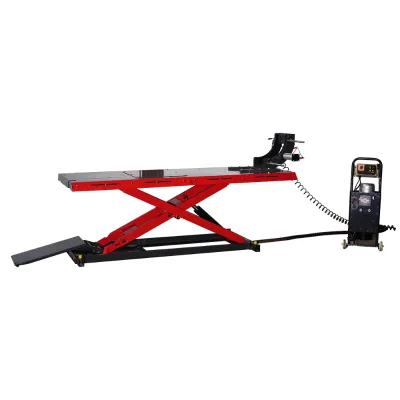


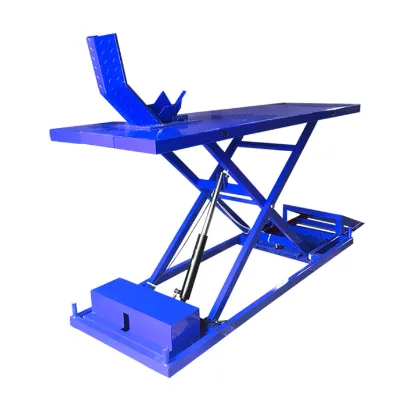


Motorcycle Scissor Lift/Scissor Lift/Lifting Equipment/Hydraulic Lift/Motorcycle Hoist
$1201.00 - $1265.00
MOQ: 1 Pieces


New Design Motorcycle Scissor Lift for Garage Equipment with 800kg Lifting Capacity
$1030.00 - $1084.00
MOQ: 1 Pieces

Auto Scissor Lift with Low Profile/Motorcycle Lift/Car Lifts/Car Lifter
$1030.00 - $1084.00
MOQ: 1 Pieces
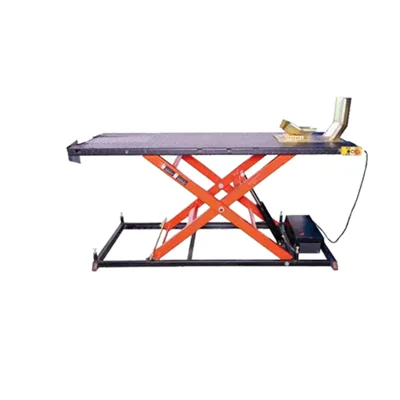

CE Pneumatic Motorcycle Scissor Lift Hydraulic Motorcycle Lifter Table Bed
$7800.00 - $8000.00
MOQ: 1 Pieces

Motorcycle Scissor Lift Used for ATV and Motorcycle Lift with CE Approved
$800.00 - $850.00
MOQ: 5 set

Comprehensive Sourcing Guide
Strategic Sourcing Guide for 2000kg Steel Motorcycle Scissor Lifts
Understanding the Core Product Architecture and Design Variants
When sourcing a 2000kg Steel Motorcycle Scissor Lift, buyers must first distinguish between the specific mechanical architectures available in the current market. The core keyword implies a lifting capacity of 2000 kilograms, yet the underlying engineering can vary significantly between single-cylinder and double-cylinder configurations. In the observed product data, distinct models such as the YM-JSMT-A-3005 and MC800 illustrate these variations. The YM-JSMT-A-3005 is identified as a "One Cylinder Hydraulic Lift" with a "Small Shear Type" design, whereas other entries in the dataset describe a "Double Cylinder Hydraulic Lift" with a "Thin Plate Type" configuration.
The design philosophy often centers on the "Scissor" mechanism, which provides the necessary stability for heavy loads like motorcycles. However, the platform dimensions are critical for compatibility with specific vehicle types. For instance, one observed specification lists a platform width of 760mm with a length of 2225mm without a ramp, extending to 2720mm with a ramp. In contrast, larger industrial-grade units may feature platform widths ranging from 2000mm to 3500mm and lengths between 4000mm and 6000mm, often customizable to fit specific workshop floor plans.
Buyers must verify the "Driving Motor Number of Mechanical Lift" to ensure the power source matches their facility's infrastructure. The data indicates options for "Hydraulic" driving types, with power supplies ranging from 220V/50Hz-2.2kw to 380V 3-phase configurations. The lifting time is another operational metric, with observed ranges between 30 and 50 seconds for a full cycle. Understanding these architectural differences is the first step in defining a procurement specification that aligns with the intended use case, whether it is a compact shop requiring a single-cylinder unit or a large-scale service center needing a double-cylinder floor-to-floor system.
Technical Specifications and Operational Parameters
Technical due diligence requires a granular analysis of the lift's physical and operational limits. The lifting capacity is the primary constraint; while the core keyword specifies 2000kg, the market data shows a broader range of capacities, including units rated for ≥5t and customizable capacities between 2000kg and 5000kg. It is imperative for buyers to confirm that the specific model selected explicitly meets or exceeds the 2000kg requirement, as overloading a scissor lift can lead to catastrophic structural failure.
The height parameters are equally critical for workshop ergonomics. The minimum height, or the height of the lift when fully retracted, varies by model. One dataset entry notes a minimum height of 160mm, while another specifies 200mm. This clearance affects how easily motorcycles can be driven onto the platform. Conversely, the maximum lifting height determines the accessibility for mechanics. Observed maximum heights range from 1200mm for smaller units to 4000-6000mm for floor-to-floor lifts. For a standard motorcycle maintenance scenario, a maximum height around 1200mm to 2500mm is typically sufficient, whereas higher lifts may be required for specialized applications.
The platform dimensions must accommodate the wheelbase and width of the motorcycles to be serviced. The observed platform width of 760mm is suitable for single motorcycles, whereas larger platforms up to 3500mm wide may be necessary for side-by-side servicing or larger vehicles. The inclusion of ramps is a significant feature; the length of the platform increases from 2225mm to 2720mm when ramps are attached, facilitating easier vehicle entry. Buyers should also verify the "Self Lubrication Bushing" status on every pin, as this feature reduces maintenance frequency and ensures smooth operation over the lifespan of the equipment.
Compliance, Certification, and Safety Standards
In the B2B procurement of heavy machinery, compliance with international safety standards is non-negotiable. The market data highlights several certifications, with CE marking appearing as a high-confidence fact for multiple products. Some entries also list ISO certification, specifically ISO9001, indicating adherence to quality management systems. When sourcing a 2000kg Steel Motorcycle Scissor Lift, buyers must verify that the supplier provides valid CE certification documents that correspond to the specific model number, such as the YM-JSMT-A-3005 or MC800.
Safety standards often dictate the design of the hydraulic system and the structural integrity of the scissor mechanism. The "Finished Treatment" of the equipment, such as spray paint, is not merely aesthetic but serves as a corrosion protection layer, which is vital for equipment longevity in workshop environments. The data mentions a "Standard Export Packing" and "Plywood" packaging, which are essential for protecting the machinery during international transit, particularly from origins like Yingkou, Liaoning, or Qingdao, China.
Buyers should also check for specific product standards listed in the documentation. One observed standard is listed as "203cm130cm80cm," which likely refers to a specific dimensional standard or packaging requirement rather than a safety code. However, the presence of "CE / ISO9001" as a product standard is a strong indicator of compliance. It is the buyer's responsibility to ensure that the supplier can provide third-party test reports or compliance certificates that verify the lift's ability to safely handle the rated 2000kg load without structural deformation. Relying solely on the "CE" label without verifying the specific test data associated with the 2000kg capacity is a procurement risk.
Cost Drivers and Pricing Structure Analysis
The pricing of a 2000kg Steel Motorcycle Scissor Lift is influenced by a complex matrix of factors, including material costs, customization levels, and logistical expenses. The observed price range in the market spans from $1 to $8000 USD, a wide variance that reflects differences in capacity, complexity, and brand positioning. A basic single-cylinder unit with standard dimensions will likely fall on the lower end of this spectrum, while a double-cylinder, floor-to-floor system with custom dimensions and extended warranty coverage will command a premium price.
Material costs are a primary driver. The dataset identifies "Aluminum" as a material for some lifts, but the core keyword specifies "steel." Steel lifts generally offer higher durability and load-bearing capacity for the 2000kg requirement, often at a higher material cost than aluminum alternatives. The "Finished Treatment" of spray paint adds to the cost, as does the complexity of the hydraulic system, such as the inclusion of "Self Lubrication Bushing" on every pin.
Customization is another significant cost variable. The data confirms that "Customization" is available for color, platform dimensions, and motor power. For example, a buyer might request a specific platform width of 2000mm or a customized motor power of 230V 1 phase instead of the standard 380V 3-phase. These customizations often increase the manufacturing time and cost. The "MOQ" (Minimum Order Quantity) is observed to be as low as 1PC, which allows for single-unit purchases but may result in a higher per-unit cost compared to bulk orders. Buyers should negotiate based on the total cost of ownership, including the "Production Time" of 35-50 days and the potential for "Optional Motor Power" configurations that might reduce long-term energy costs.
Supplier Evaluation and Geographic Considerations
Evaluating suppliers requires a focus on their manufacturing capabilities, geographic location, and track record. The data indicates that major production hubs for these lifts are located in Yingkou, Liaoning, and Qingdao, China. These regions have established supply chains for steel and hydraulic components, which can influence lead times and pricing. When selecting a supplier, buyers should verify the "prod_origin" to ensure it matches the claimed manufacturing location, as this impacts shipping logistics and potential tariffs.
The "Production Time" is a critical metric for supply chain planning. The observed range of 35-50 days suggests that buyers should factor in this lead time when scheduling workshop upgrades or new equipment installations. Suppliers offering shorter lead times may have higher inventory levels or more streamlined production processes, but buyers must balance this against the risk of quality compromises. The "Warranty" terms are also a key differentiator. One observed warranty structure includes "5 Years Structure and 1 Year Part," which indicates a high level of confidence in the product's durability. Buyers should compare warranty terms across potential suppliers to ensure they are getting adequate protection for their investment.
Supplier reliability can also be assessed through their "prod_packing" methods. Standard export packing and plywood crates are essential for preventing damage during transit. Buyers should request photos or videos of the packing process to ensure that the equipment is secured properly. Additionally, the availability of "Customization" services suggests a flexible manufacturing process, which is a positive indicator of a supplier's ability to meet specific buyer requirements. However, buyers must be cautious of suppliers who claim to offer extensive customization without providing clear timelines or cost implications.
Quality Control and Long-Term Procurement Strategy
Ensuring the long-term reliability of a 2000kg Steel Motorcycle Scissor Lift requires a robust quality control strategy. The "Condition" of the product is listed as "New," but buyers must verify the manufacturing quality through inspection protocols. The presence of "Self Lubrication Bushing" on every pin is a specific quality feature that reduces wear and tear, but buyers should confirm that this feature is implemented consistently across all units. The "Operation" method, whether manual or hydraulic, should be tested to ensure smooth and consistent lifting cycles.
For long-term procurement, the "Warranty" terms are a vital consideration. A warranty of "5 Years Structure and 1 Year Part" provides significant peace of mind, but buyers should clarify the scope of coverage. Does the structural warranty cover hydraulic leaks or motor failures? Are there specific exclusions for normal wear and tear? Understanding these details is essential for budgeting future maintenance costs. The "Lifting Time" of 30-50 seconds is a performance metric that should be monitored over time; any degradation in lifting speed could indicate hydraulic fluid leaks or pump wear.
Buyers should also consider the "Power Supply" compatibility with their facility. The data shows options for 220V/50Hz, 380V 3-phase, and 400V/230V 3-phase systems. Ensuring that the selected lift matches the facility's electrical infrastructure is crucial to avoid costly retrofitting. The "Color" customization option allows for branding consistency, but buyers should verify that the "Spray Paint" finish is durable and resistant to chemicals and abrasion common in motorcycle workshops.
Finally, buyers should establish a relationship with the supplier for ongoing support. The "Production Time" of 35-50 days suggests that spare parts should be readily available to minimize downtime. Buyers should inquire about the availability of replacement parts, such as hydraulic cylinders, motors, and bushings, and whether the supplier offers technical support for troubleshooting. By focusing on these quality control and long-term considerations, buyers can ensure that their investment in a 2000kg Steel Motorcycle Scissor Lift delivers reliable performance and value over its entire lifecycle.
Comparative Analysis of Lift Configurations
To assist in decision-making, the following table summarizes the key differences between the observed lift configurations in the market data. This comparison highlights the trade-offs between capacity, dimensions, and power requirements.
| Feature | Single Cylinder / Small Shear Type | Double Cylinder / Thin Plate Type | Floor-to-Floor / High Capacity |
|---|---|---|---|
| Model Example | YM-JSMT-A-3005 | MC800 | S-VRC |
| Max Capacity | Not explicitly stated (Standard) | ≥5t | 2000 - 5000 Kg (Customized) |
| Platform Width | 760mm | Not explicitly stated | 2000 - 3500 mm |
| Platform Length | 2225mm (w/o ramp) | Not explicitly stated | 4000 - 6000 mm |
| Min Height | 200mm | 160mm | Not explicitly stated |
| Max Height | 1200mm | Not explicitly stated | 2500 - 5000 mm |
| Power Supply | 220V/50Hz-2.2kw | 400V/230V 3 pH 2.2 Kw | 380V 3p / Customized |
| Certification | CE | CE, ISO | CE / ISO9001 |
| Origin | Yingkou, Liaoning | Qingdao, China | Qingdao, China |
This table illustrates that while the single-cylinder type offers a compact solution with a 760mm width, the double-cylinder and floor-to-floor models provide significantly higher capacities and larger platform dimensions. Buyers must align these specifications with their specific operational needs, ensuring that the 2000kg requirement is met without over-specifying the equipment, which could lead to unnecessary costs. The choice between these configurations ultimately depends on the available workshop space, the types of motorcycles to be serviced, and the electrical infrastructure of the facility.
FAQs
What certifications are available for 2000kg steel motorcycle scissor lifts?
CE certification is a standard requirement for these lifts, with some models also holding ISO9001 certification. Buyers should verify that the specific model, such as YM-JSMT-A-3005, includes valid CE documentation to ensure compliance with international safety standards for heavy machinery.
How long does production take for a customized 2000kg Steel Motorcycle Scissor Lift?
Production time typically ranges from 35 to 50 days for standard orders. This duration accounts for manufacturing, quality control, and preparation for export, so buyers must factor this lead time into their workshop upgrade schedules and installation planning.
Can I customize the platform dimensions for a 2000kg Steel Motorcycle Scissor Lift?
Yes, customization is available for platform width and length to fit specific workshop requirements. Buyers can request dimensions such as a 2000mm to 3500mm width or a length up to 6000mm, ensuring the lift accommodates the wheelbase of their motorcycles effectively.
Which power supply options are available for a 2000kg Steel Motorcycle Scissor Lift?
Power supply options include 220V/50Hz single-phase or 380V 3-phase configurations. Some models offer 400V/230V 3-phase motors with 2.2kW power, allowing buyers to select the voltage that matches their facility's electrical infrastructure for optimal operation.
What is the minimum order quantity for a 2000kg Steel Motorcycle Scissor Lift?
The minimum order quantity is 1 piece, allowing buyers to purchase a single unit without needing bulk commitments. This low MOQ supports individual workshops or small businesses looking to acquire a new lift without the financial burden of large inventory orders.
How is the 2000kg Steel Motorcycle Scissor Lift protected during shipping?
The equipment is packed in plywood crates or standard export packing to prevent damage during transit. This robust packaging protects the hydraulic system and scissor mechanism, ensuring the lift arrives in new condition from origins like Yingkou or Qingdao in China.
What warranty coverage is provided for the structure and parts of a 2000kg Steel Motorcycle Scissor Lift?
Warranty terms typically include 5 years for the structure and 1 year for parts. This coverage provides long-term protection against structural defects while covering component failures, giving buyers confidence in the durability and reliability of the hydraulic lifting system.