Source 2000W Handheld Laser Welder for Automotive, Manufacturing, and Electronics
Compare 30 listings for the 2000W Handheld Laser Welder suitable for automotive, manufacturing, and electronic industries. Buyers can review specifications including laser power, cooling methods, and welding thickness capabilities to find the right equipment.
Key considerations
Products List


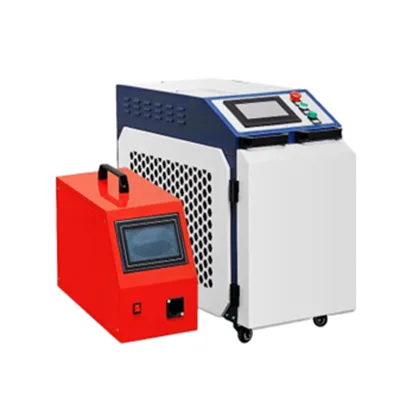


High Efficiency Hand-Held Fiber Laser Welding Machine Portable Handheld Laser Welder
$5299.00 - $5799.00
MOQ: 1 Sets


Comprehensive Sourcing Guide
Strategic Sourcing Guide for 2000W Handheld Laser Welders
Understanding the Core Technology and Classification
When sourcing a 2000W Handheld Laser Welder, the first step is to distinguish between the specific laser technologies available in the market. The observed product landscape indicates a split between optical fiber transmission laser welding machines and portable pulse laser units. Buyers must verify whether the specific unit under consideration utilizes a Continuous Wave (CW) laser or a Pulse Laser classification, as this fundamentally alters the welding dynamics.
The market data highlights specific models, such as the KPS-LHW1500/2000 and the DA-HW, which operate under different technical classes. Some units are classified as Optical Fiber Transmission Laser Welding Machines, designed for deep fusion welding, while others are categorized as Portable Welding Machines with a Pulse Laser technical class. The distinction is critical because a 2000W continuous wave system typically offers higher welding speeds and deeper penetration for thicker materials, whereas pulse systems may offer better control for delicate applications or specific material types.
Furthermore, the laser source itself is a variable that requires careful verification. Available configurations in the observed data include sources from manufacturers such as Bwt, Max, Raycus, and Raycus CE. The wavelength for these systems is generally observed in the range of 1064nm±5nm or specifically 1070nm. Buyers should confirm the exact wavelength and source brand for the specific unit they intend to purchase, as these factors influence the beam quality and the efficiency of the weld on different metals. The fiber length is another specification that varies, with some units offering a 10-meter fiber length, which directly impacts the flexibility and reach of the handheld operation.
Technical Specifications and Operational Parameters
The technical specifications of a 2000W Handheld Laser Welder define its capability to handle specific industrial tasks. A primary observation is the power density, which is described as suitable for deep fusion welding. This capability allows the machine to penetrate materials effectively, making it suitable for applications where traditional TIG or MIG welding might struggle with heat input or speed.
The welding thickness capability is a critical constraint. Data indicates that certain models are rated for welding thicknesses of less than 6mm. While the 2000W power rating suggests robust capability, the actual thickness limit depends on the specific configuration, including the beam quality and the welding speed. The welding speed range is observed to be between 0 and 120 mm/s, providing a wide operational window for both fine detailing and rapid production runs.
Cooling systems are essential for maintaining the integrity of the laser source during operation. The observed products utilize a water-cooled method, with some units specifying a cooling type of water cooling. The total power consumption for these machines varies, with observed values including 2.5kw, 3kw, and in some cases, an input power of 7.0kw. Buyers must ensure their facility's power infrastructure can support these requirements, as the power requirements are listed as 220V, which is standard but requires verification against local voltage stability.
The control mechanism is another key specification. The market presents a dichotomy between manual control and automatic control systems. Some units are explicitly listed with manual control, offering the operator direct influence over the welding process, while others feature automatic control, which may be integrated with specific fixtures or software for consistent results. The swing width for the laser beam is also a specification to note, with ranges observed from 0.1mm to 5mm, allowing for adjustments in the weld bead width depending on the joint design.
Material Compatibility and Application Scope
The versatility of a 2000W Handheld Laser Welder is largely defined by the materials it can process. The observed data confirms compatibility with carbon steel, stainless steel, and aluminum. This broad material compatibility makes the technology highly attractive for diverse sectors, including the manufacturing industry, automotive industry, electronic industry, and biomedicine. Additionally, some applications extend to powder metallurgy, indicating the machine's utility in specialized manufacturing processes.
The specific application is listed simply as "weld," but the context implies a wide range of use cases. In the automotive industry, these machines are often used for body-in-white assembly, battery tray welding, and trim components. In the electronic industry, the precision of the laser allows for welding of small, sensitive components without damaging surrounding areas. The biomedicine sector benefits from the clean welds and minimal heat-affected zones, which are crucial for surgical instruments and implants.
The gas assist system is a necessary component for achieving high-quality welds on these materials. The observed data specifies the use of Nitrogen or Argon as the assist gas. The choice of gas depends on the material being welded; for instance, nitrogen is often used for stainless steel to prevent oxidation and maintain a bright weld surface, while argon is preferred for aluminum to prevent porosity. Buyers should verify that the supplier provides the necessary gas delivery systems or compatibility with standard industrial gas supplies.
Cost Drivers and Pricing Dynamics
The pricing for 2000W handheld laser welders is influenced by several factors, including the laser source brand, the total power consumption, and the included accessories. The observed listed price range in the market is between 1450 and 8500 USD. This wide range suggests significant variation in the value proposition of different units. Lower-priced units may utilize generic laser sources or have lower total power ratings, while higher-priced units likely include premium sources like Raycus or Max, advanced control systems, and more robust cooling solutions.
The minimum order quantity (MOQ) is another factor affecting the total cost of acquisition. The observed MOQ range is between 1 and 3 units. For buyers looking to purchase a single unit for prototyping or small-scale production, an MOQ of 1 is advantageous. However, for larger procurement needs, the ability to order in batches of 3 or more might offer volume discounts or more favorable shipping terms.
Total power consumption is a significant operational cost driver. Units with a total power of 3kw or an input power of 7.0kw will incur higher electricity costs compared to lower-power models. Additionally, the cooling method, which is water-cooled, requires ongoing maintenance and water treatment, adding to the long-term operational expenses. Buyers should calculate the total cost of ownership, including energy consumption, consumables like assist gas, and maintenance, rather than focusing solely on the initial purchase price.
Supplier Evaluation and Geographic Considerations
When evaluating suppliers for 2000W handheld laser welders, the geographic origin of the product is a key indicator of the supply chain structure. The observed data lists origins in Xinxiang, Henan, China, Jinan City, China, and generally Shandong, China. These regions are known for their manufacturing capabilities in heavy machinery and laser equipment. However, the variation in specific locations suggests that buyers should verify the actual factory location rather than relying solely on the brand name or general country of origin.
The brand name "JC" is observed in the data, but buyers should be cautious about relying on a single brand. The market includes various suppliers offering different models such as KPS-LHW1500/2000, DA-HW, and LCW-1500W/2000W/3000W. It is essential to evaluate the supplier's technical support, after-sales service, and warranty terms. The observed warranty period is 1 Year, which is a standard baseline. Buyers should negotiate for extended warranty periods or specific service level agreements that cover critical components like the laser source and cooling system.
Packaging is another aspect of supplier evaluation. The observed products are packed in export-specific fumigation-free wooden crates or wooden boxes, with standard dimensions and weights varying by model. For example, one standard is listed as 464974cm with a weight of 80kg, while another is 250KG. Buyers must ensure that the packaging is robust enough to prevent damage during international shipping and that it meets the import regulations of their destination country.
Quality Control and Compliance Verification
Ensuring the quality of a 2000W Handheld Laser Welder requires a rigorous verification process. The condition of the product is listed as "New," which is a baseline expectation. However, buyers should request detailed test results or performance data to verify the actual output power, beam quality, and stability of the laser source. The technical class, whether Continuous Wave or Pulse Laser, must be confirmed against the supplier's specifications to ensure it matches the intended application.
Compliance and certification are critical for international procurement. While the observed data mentions certifications such as CE and RoHS, these are listed as low-confidence background information. Buyers should not assume that every listed product satisfies these standards without explicit verification. It is the buyer's responsibility to request valid certification documents from the supplier. The CE mark, for instance, indicates compliance with European health, safety, and environmental protection standards, which is often required for importing machinery into the EU.
The standard specifications for the machines vary, with some listed as 464974cm 80kg and others as 250KG. These standards likely refer to the physical dimensions and weight of the unit, which are important for logistics and installation. Buyers should verify that the machine meets the safety standards of their local jurisdiction, including electrical safety and laser safety classifications. The laser classification is noted as Optical Fiber Laser, but specific safety classes (e.g., Class 4) should be confirmed to ensure proper safety protocols are in place in the workplace.
Long-Term Procurement and Maintenance Strategy
Sourcing a 2000W Handheld Laser Welder is not just a one-time purchase but an investment in long-term production capability. The key selling points of these machines often include ease of operation, which is crucial for reducing training time and minimizing operator error. However, the long-term success of the investment depends on the availability of spare parts and the quality of the maintenance support.
The warranty period of 1 Year is a starting point, but buyers should consider the longevity of the laser source and the cooling system. Water-cooled systems require regular maintenance to prevent scaling and ensure efficient heat dissipation. Buyers should inquire about the recommended maintenance schedule and the availability of replacement parts such as nozzles, lenses, and cooling pumps. The fiber length of 10m is a significant feature for flexibility, but the durability of the fiber cable under repeated bending and movement should be verified.
In terms of future scalability, buyers should consider whether the machine can be upgraded or integrated with automated systems. Some models offer automatic control, which can be a stepping stone toward full automation. The application range, including manufacturing, automotive, electronics, and biomedicine, suggests that the machine has versatile potential. However, the specific welding thickness limit of less than 6mm for some models means that buyers must assess their current and future production needs to ensure the machine remains relevant as their requirements evolve.
Comparative Analysis of Key Specifications
To assist buyers in making informed decisions, the following table summarizes the key specifications observed in the market for 2000W handheld laser welders. This comparison highlights the variations in power, control, and application that buyers must consider.
| Specification | Observation A | Observation B | Observation C |
|---|---|---|---|
| Laser Power | 1500W, 2000W | 1000W, 1500W, 2000W | 1500W, 2000W, 3000W |
| Total Power | 2.5kw, 3kw | 7.0kw | N/A |
| Control Type | Manual | Automatic | N/A |
| Technical Class | Optical Fiber Laser | Pulse Laser | Continuous Wave Laser |
| Welding Thickness | <6mm | N/A | N/A |
| Cooling Method | Water-Cooled | Water Cooling | N/A |
| Wavelength | 1064nm±5nm | 1070nm | N/A |
| Fiber Length | N/A | 10m | N/A |
| Welding Speed | 0~120 mm/S | N/A | N/A |
| Material | Carbon Steel, Stainless Steel, Aluminum | Fiber | N/A |
| Origin | Xinxiang, Henan | Jinan City | China |
| Warranty | 1 Year | N/A | N/A |
This table illustrates that while the core keyword is "2000W Handheld Laser Welder," the specific implementation varies significantly. Buyers must carefully match these specifications to their operational requirements. For instance, a buyer needing automatic control for high-volume production should prioritize models with that feature, while a buyer focused on deep fusion welding on carbon steel should verify the power density and welding thickness capabilities.
In conclusion, sourcing a 2000W Handheld Laser Welder requires a thorough understanding of the technical specifications, material compatibility, and supplier capabilities. By focusing on verified facts and avoiding assumptions about certifications or performance claims, buyers can make informed decisions that align with their production goals and budget constraints. The wide range of options available in the market offers flexibility, but it also demands a disciplined approach to evaluation and selection.
FAQs
What laser power options are available for this machine?
The machine is available with laser power options of 1500W and 2000W. Some configurations also list 1000W or 3000W depending on the specific model selected. Buyers should verify the exact power rating against their welding thickness requirements.
Which materials can this handheld laser welder process?
This equipment is compatible with carbon steel, stainless steel, and aluminum. It is designed for applications in the manufacturing, automotive, and electronic industries. The gas assist system typically uses nitrogen or argon to ensure high-quality welds on these metals.
How thick of a material can the 2000W unit weld?
The observed specifications indicate a welding thickness capability of less than 6mm. This limit depends on the specific configuration and beam quality of the unit. Operators should consult the technical datasheet for precise penetration limits on different materials.
Can the machine operate with manual or automatic control?
Both manual and automatic control systems are available in the market for this product type. Some models offer direct operator control while others feature automated settings for consistent results. Buyers must verify the control type listed for the specific unit they intend to purchase.
What is the minimum order quantity for purchasing this welder?
The minimum order quantity ranges from 1 to 3 units depending on the supplier. This allows flexibility for both single-unit prototyping and small batch production. Buyers should confirm the specific MOQ with the vendor before finalizing the order.
How is the cooling system configured for this laser welder?
The machine utilizes a water-cooled method to maintain laser source integrity during operation. Total power consumption varies, with observed values including 2.5kw, 3kw, and 7.0kw input power. Facilities must ensure they have adequate water cooling infrastructure to support these requirements.
What warranty coverage is typically provided for this equipment?
A standard warranty period of 1 Year is observed for these handheld laser welders. This coverage generally applies to the new condition of the product. Buyers should negotiate specific service level agreements for critical components like the laser source and cooling system.