Find Used Komatsu Loader for Construction, Mining, and Farming
Source 30 listings of 2018-2023 used komatsu loader machines available for construction, mining, and agricultural tasks. Buyers can compare models like WA320 and WA380, specifications including bucket capacity and weight, and shipping options from Japan and China.
Key considerations
Products List

Used Wheel Loader Komatsu Wa320 Used Original Japanese Front Loader Komatsu Wa320-6
$22000.00 - $32000.00
MOQ: 1 Pieces


Used Komatsu Wa320-5 Wheel Loader, Used Wa320-5 Wheel Loader, Used Komatsu Wheel Loader Wa380
$15000.00 - $26000.00
MOQ: 1 Pieces


New Arrival Used Komatsu Loader Wa320-5 with Cheap Price in Good Condition
$15000.00 - $26000.00
MOQ: 1 Pieces

Good Quality Used Wheel Loader Komatsu 320-5 Wheel Loader for Sale at Low Price
$28000.00 - $31000.00
MOQ: 1 Pieces


Used Wheel Loader Komatsuu Wa470 Secondhand Loader Low Working Hours High Quality
$16000.00 - $25000.00
MOQ: 1 Pieces


Used Komatsu PC120 Excavator Good Condition New Arrival! High Performance Hot Sale
$16000.00 - $28000.00
MOQ: 1 Pieces

Used Komatsu Wa380 Wheel Loader (WA380-3 WA380-6 WA320 WA350 Loader)
$15000.00 - $25000.00
MOQ: 1 Unit


Used International Komatsu Wa380 Wheel Loader for Sale with Good Condition
$15000.00 - $25000.00
MOQ: 1 Pieces

Used Komatsu Wa380 Backhoe Loader Construction Machinery Wheel Loader
$15000.00 - $25000.00
MOQ: 1 Pieces

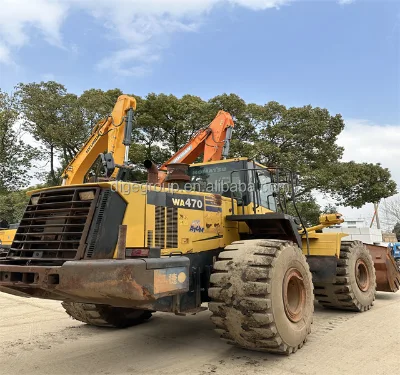

Japanese Brand Komastu Wa600 Used Wheel Loader Heavy Duty Slightly Construction Machinery
$25000.00 - $28000.00
MOQ: 1 Sets

Comprehensive Sourcing Guide
Strategic Sourcing Guide for 2018-2023 Used Komatsu Wheel Loaders
The global market for used heavy construction equipment has seen a significant surge in demand for reliable, mid-to-large capacity wheel loaders, with Komatsu remaining a dominant brand in this segment. For procurement professionals targeting units manufactured between 2018 and 2023, the focus shifts from simple acquisition to rigorous verification of operational history, compliance status, and technical specifications. The available inventory data indicates a diverse range of models, including the Komatsu WA320, WA380, and PC210LC series, with varying bucket capacities and weight classes. Buyers must navigate a complex landscape where attributes such as transmission type, condition, and original manufacturing location play a critical role in determining the total cost of ownership. This guide provides a structured approach to sourcing these machines, ensuring that procurement decisions are grounded in verified facts rather than speculative claims.
Technical Specifications and Model Differentiation
Understanding the specific technical configurations of the available inventory is the first step in effective sourcing. The market data reveals a mix of medium and large loader types, with specific model designations such as the Komatsu WA320-6, WA320-5, and WA380-3 appearing frequently. These models are not interchangeable; they serve different operational needs based on their rated load capacities and bucket volumes. For instance, the WA320 series is often associated with a rated load between 3 and 6 tons, featuring a bucket capacity of approximately 1.2 cubic meters. In contrast, larger variants like the WA380 or specific configurations may support rated loads ranging from 6 to 9 tons, with bucket capacities extending up to 6.5 cubic meters in certain high-capacity listings.
The physical dimensions and performance metrics also vary significantly across the observed inventory. Transport dimensions for some units are recorded with a length of 8.79 meters, a height of 3.55 meters, and a width of 2.206 meters. Weight is another critical differentiator, with some units listed at 23.1 tons, while others fall into the 16.5-ton category. Buyers must verify the working weight against the specific application requirements, as the standard for a 13,995 kg unit differs substantially from a 23.24-ton machine. Furthermore, the transmission systems observed include both hydraulic and power transmission types, which directly impact fuel efficiency and torque delivery. The walking mode is consistently noted as wheeled, distinguishing these units from tracked excavators, although some data points reference track shoe widths of 600 mm, suggesting a need for careful model verification to ensure the correct walking mechanism is being procured.
Compliance, Certification, and Regulatory Standards
In the international trade of used heavy machinery, compliance with international standards is non-negotiable. The observed inventory includes a wide array of certifications, ranging from CE and ISO to RoHS, UL, and TUV. These certifications are not merely marketing labels; they indicate that the equipment meets specific safety, environmental, and quality benchmarks required for operation in various jurisdictions. For example, a unit listed with CE, RoHS, ISO, UL, and TUV certifications suggests a comprehensive adherence to European and international safety protocols. However, buyers must treat these certifications as observations of specific listings rather than universal attributes of all available units.
The standards referenced in the data, such as "Iron" for material composition or specific model standards like "PC210LC-11," provide a baseline for material quality and design. The "Export Standard Nude Packing" or "Container or Bulk Cargo Shipping" notes indicate that the equipment is prepared for international logistics, but the specific packaging requirements must be confirmed for each transaction. When sourcing from origins like Japan, with locations often listed as China for the current seller, the certification chain must be traceable. A buyer should verify that the CE mark is valid for the specific year of manufacture and that the ISO certification covers the current operational status of the machine. Relying on a single certification without cross-referencing the model year and specific component standards can lead to regulatory hurdles during import or operation.
Cost Drivers and Pricing Dynamics
The pricing landscape for used Komatsu loaders between 2018 and 2023 is highly variable, with observed listed prices ranging from $28.50 to $48,000 USD. This wide disparity is not indicative of a single product line but rather reflects the vast differences in model capacity, condition, working hours, and packaging requirements. A unit with 932 working hours and a 1.2 cubic meter bucket will naturally command a different price point than a larger 6.5 cubic meter unit with a 23-ton weight class. The "Used" condition is a universal attribute in the current data, but the degree of wear and tear is not explicitly quantified beyond the working hour count.
Several factors drive the final cost beyond the base listing price. The "Moving Type" and "Walking Mode" influence logistics costs; wheeled loaders are generally easier to transport than tracked units, but the specific dimensions (e.g., 8.79m length) may require specialized flat rack or RO RO shipping. The "Year of Manufacture" is noted as 5-10 years old in some contexts, which conflicts with the 2018-2023 keyword, suggesting that buyers must clarify the exact production date against the "Year" field (e.g., 2019) to ensure the unit falls within the desired age range. Additionally, the "Original" location of Japan often implies higher residual value due to stricter maintenance standards, whereas units sourced from other locations may have different depreciation curves. The MOQ of 1 for all observed listings indicates a flexible procurement environment, allowing buyers to acquire single units without the burden of bulk purchasing, which can significantly impact cash flow and inventory management strategies.
Typical Applications and Operational Suitability
The versatility of the Komatsu loader range allows for deployment in diverse sectors, from mining and quarrying to municipal waste management and construction. The "Load and Unload Mode" of Front Discharge is standard for these machines, making them ideal for material handling in environments where direct loading into trucks or hoppers is required. The bucket capacity is a primary determinant of application suitability. A 1.2 cubic meter bucket is well-suited for medium-sized loader tasks, such as loading smaller trucks or handling aggregate in confined spaces. Conversely, the 6.5 cubic meter capacity observed in some listings points toward heavy-duty applications, such as large-scale earthmoving or high-volume material handling in ports and mines.
The "Rated Load" of 3-6 tons or 6-9 tons further refines the application scope. A 3-6 ton loader is typically used for general construction, landscaping, and light material handling, while the 6-9 ton range is better suited for more demanding industrial applications. The "Travel Speed" of 37 km/h is a critical metric for units that need to move quickly between job sites or operate in large open yards. Buyers should match the "Type" of the loader, whether "Medium-sized" or "Large," to the specific terrain and material density of their operation. The "Color" being consistently yellow is a standard safety feature for visibility, but the physical condition of the paint and the structural integrity of the chassis are more important indicators of longevity in harsh environments.
Supplier Evaluation and Transaction Verification
When evaluating potential suppliers for used Komatsu loaders, the focus must be on the transparency of the data provided. The inventory data shows a mix of "Original" locations (Japan) and "Location" fields (China), which may indicate a trading hub or a re-export scenario. Buyers should verify the provenance of the machine, ensuring that the "Year" of 2019 or the "Year of Manufacture" of 5-10 years aligns with the actual production date. The "Condition" is listed as "Used," but the specific maintenance history and the "Working Hours" of 932 Hrs must be corroborated with service records.
The "prod_packing" details, such as "Bulk Ship, Flat Rack," "Container or Bulk Cargo Shipping," or "40hg Container," are essential for logistics planning. A supplier offering "Export Standard Nude Packing" may require additional crating or protection during transit, which adds to the total cost. The "Standard" fields, such as "111011101553mm" or "2206mm2360mm3433mm," likely refer to specific packaging or dimensional constraints that must be accommodated by the shipping method. Buyers should request detailed photos and videos of the specific unit, focusing on the engine, hydraulics, and undercarriage, to verify that the "Transmission" (Hydraulic or Power) and other technical specs match the listing.
Quality Control and Long-Term Procurement Considerations
Quality control for used heavy machinery extends beyond a visual inspection. It involves a comprehensive assessment of the machine's remaining useful life, which is heavily influenced by the "Working Hours" and the "Year of Manufacture." A unit with 932 hours from 2019 is in a different lifecycle stage than a unit with similar hours from 2018. The "Customization" availability noted in the data suggests that buyers may have options to tailor the machine to specific needs, such as adding specialized buckets or attachments, which can extend the machine's utility.
Long-term procurement considerations include the availability of spare parts and the reputation of the manufacturer. Komatsu's global presence generally ensures a steady supply of parts, but the specific model, such as the WA320-6 or WA380-3, should be checked for part compatibility. The "Certification" status, including CE, ISO, and TUV, is a proxy for the quality of the original build and the adherence to safety standards, which can affect insurance premiums and resale value. Buyers should also consider the "Location" of the seller, as proximity to the final destination can reduce shipping costs and simplify the inspection process. Finally, the "Transport Length" and "Transport Height" must be verified against local road regulations to ensure legal transportability without requiring special permits.
Comparative Analysis of Key Model Attributes
To facilitate decision-making, the following table summarizes the key attributes observed in the current market data for Komatsu loaders. This comparison highlights the diversity in specifications and helps buyers identify the most suitable model for their specific operational requirements.
| Attribute | Medium-Sized Loader (e.g., WA320) | Large Loader (e.g., WA380/PC210LC) |
|---|---|---|
| Rated Load | 3-6 tons | 6-9 tons |
| Bucket Capacity | 1.2 cubic meters | Up to 6.5 cubic meters |
| Weight | ~14 tons (13,995 kg) | ~23 tons (23.1 T) |
| Transmission | Hydraulic | Power / Hydraulic |
| Working Hours | Variable (e.g., 932 Hrs) | Variable |
| Year of Manufacture | 2018-2023 (e.g., 2019) | 2018-2023 |
| Certifications | CE, ISO, RoHS | CE, ISO, TUV, UL |
| Packing | Bulk, Container, RO RO | Bulk, Flat Rack, Container |
| Original Location | Japan | Japan |
This table underscores the importance of matching the "Type" and "Rated Load" to the specific job requirements. While the medium-sized loader offers flexibility for general tasks, the large loader provides the power and capacity needed for heavy industrial applications. Buyers must carefully review the "Specification" fields, such as "Track Shoe Width" or "Transport Length," to ensure the selected model fits within their operational constraints. By adhering to these verified facts and avoiding assumptions about unlisted attributes, procurement professionals can make informed decisions that maximize the value and longevity of their equipment investments.
FAQs
What is the rated load capacity for these used Komatsu loaders?
The rated load capacity ranges from 3 to 6 tons for medium-sized models and 6 to 9 tons for larger variants. Buyers should verify the specific model number, such as WA320 or WA380, to confirm the exact load rating before procurement.
Which certifications are available for the listed Komatsu units?
Available certifications include CE, ISO, RoHS, UL, and TUV depending on the specific listing. These marks indicate compliance with safety and environmental standards, but buyers must verify that the certification applies to the specific unit year and model.
Can buyers customize the specifications of these used loaders?
Customization is available for the listed units, allowing for specific modifications to meet operational needs. Buyers should confirm the scope of customization, such as bucket capacity or attachment options, directly with the supplier before finalizing the order.
How does the working hour count affect the machine condition?
Working hours are a key indicator of usage, with some units listed at 932 hours. This metric helps assess remaining useful life, but a full inspection is required to evaluate the actual mechanical condition beyond the hour count alone.
What is the typical bucket capacity for these loader models?
Bucket capacities vary significantly, ranging from 1.2 cubic meters for smaller models up to 6.5 cubic meters for larger units. The specific capacity depends on the model series, such as the WA320 or WA380, and the intended application.
Which transmission types are found in the available inventory?
The inventory includes both hydraulic and power transmission systems for the listed Komatsu loaders. The choice between these types impacts torque delivery and fuel efficiency, so buyers should select based on their specific operational requirements.