Source Luxury Offset Printing Paper Bag for shopping, promotion, and packaging
Compare 30 listings for Luxury Offset Printing Paper Bag options with varying sizes, handle types, and customization features. Buyers can evaluate specifications like weight limits, printing areas, and certifications from suppliers in Shanghai.
Key considerations
Products List


Luxury Custom Size Package Paper Handle Paper Bag Kraft Paper Shopping Bag
$0.20 - $0.35
MOQ: 1000 Pieces


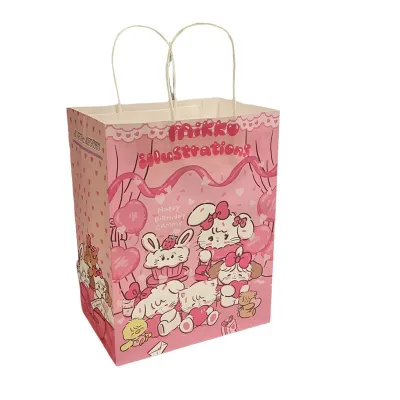


High Quality Paper Gifts Luxury Handbag Handbags Printed Fashion Shopping Gift Bag
$0.10 - $0.24
MOQ: 1000 Pieces

Custom Printed Luxury Famous Brand Shopping Paper Bag with Your Own Logo
$0.10 - $0.21
MOQ: 500 Pieces

Comprehensive Sourcing Guide
Strategic Sourcing Guide for Luxury Offset Printing Paper Bags
Defining Technical Specifications and Material Integrity
When sourcing luxury offset printing paper bags, the foundation of a successful procurement strategy lies in the precise definition of technical specifications. The market offers a diverse array of options, but for a "luxury" designation, the material composition and structural integrity are paramount. Based on observed industry data, the primary material utilized is high-grade paper, specifically Art Paper, which provides the necessary smooth surface for high-fidelity offset printing. This material choice is critical because it ensures that the vibrant colors and intricate details required for luxury branding are rendered with clarity and depth.
The structural design of these bags varies significantly to meet different usage scenarios. Buyers must distinguish between bags with handles and those featuring drawstring mechanisms. The handle type often dictates the weight capacity and the overall aesthetic. For instance, specific models in the market are engineered with a "Partial Hard" structure to maintain shape under load, while others are designed with a "Soft" or "Medium Soft" hardness to offer a more flexible, premium feel. The weight limit is a crucial specification that directly correlates with the bag's intended use. Observed data indicates a range of capacity, from lightweight options under 0.5 kg to robust designs capable of supporting 5 to 10 kg. Selecting the correct weight limit is essential to prevent structural failure during the shopping or gifting process.
Dimensions are another non-negotiable specification. While some standard sizes exist, such as 33407.5 cm or 3613.539 cm, the most effective luxury bags often adhere to a "Size as Your Requirement" model. This customization allows brands to align the bag's proportions with their specific product dimensions, ensuring a snug fit that enhances the unboxing experience. Furthermore, the surface treatment plays a vital role in the tactile luxury feel. Processes such as glossy lamination are frequently employed to protect the print and add a sheen that elevates the perceived value of the packaging. The printing area is typically extensive, often covering 100% of the available surface based on client requests, allowing for immersive brand storytelling.
Compliance, Certification, and Quality Assurance Protocols
In the realm of luxury packaging, compliance and certification are not merely bureaucratic hurdles; they are markers of reliability and trust. Buyers must verify that suppliers adhere to rigorous international standards. The supply chain for high-end paper bags often references certifications such as SGS, ISO 9001, Intertek, BV, and TUV. These certifications indicate that the manufacturer has implemented strict quality control systems throughout their production lifecycle. For example, a standard of "SGS ISO" or "SGS BV ISO" suggests that the production process is monitored against specific benchmarks for consistency and safety.
Quality control (QC) is the mechanism by which these standards are enforced. A reputable supplier will employ strict quality control measures under the guidance of recognized bodies like SGS or Intertek. This ensures that every batch of bags meets the defined specifications for hardness, weight limit, and print quality. The presence of these certifications is particularly important for brands that export to markets with stringent environmental or safety regulations. Buyers should request documentation proving that the specific production run has been audited against these standards.
It is also essential to understand the scope of these certifications. While a supplier may claim "ISO and So On," the buyer must verify the specific scope of the ISO certification. Does it cover the entire manufacturing process, or only the final inspection? Similarly, the presence of BV or TUV certification should be validated to ensure it applies to the specific product line being ordered. The absence of these certifications does not necessarily disqualify a supplier, but their presence provides a layer of assurance that the product will perform as expected. For luxury applications, the consistency of the finish and the durability of the handle attachment are critical quality metrics that should be verified through third-party testing or on-site audits.
Cost Drivers and Pricing Dynamics
Understanding the cost structure of luxury offset printing paper bags is vital for budgeting and negotiation. The observed price range in the market for these items can vary significantly, with some listings showing prices between 0 and 1.8 USD. However, this wide range often reflects differences in volume, customization complexity, and material quality. Several key factors drive the final cost of the product.
First, the customization level is a primary cost driver. Bags that require "Customized" boxes, specific patterns, or unique dimensions will incur higher costs than standard off-the-shelf items. The "100% Printing" capability, while desirable for luxury branding, requires more complex setup and higher ink consumption, which increases the unit price. Second, the material choice plays a significant role. Art paper with glossy lamination is generally more expensive than uncoated kraft paper due to the additional processing steps involved.
Third, the order volume, or Minimum Order Quantity (MOQ), heavily influences the per-unit cost. The observed MOQ range spans from 100 to 10,000 units. Smaller orders, such as those near the 100-unit mark, will naturally have a higher unit cost due to the fixed costs of setup and machine calibration. Conversely, orders approaching the 10,000-unit threshold benefit from economies of scale, resulting in a lower price per bag. Buyers must balance their need for customization and speed against the financial implications of order volume.
Finally, the payment terms and shipping logistics contribute to the overall cost. Standard payment terms often involve a 30% advance via T/T with the balance against the bill of lading. While this is a standard industry practice, it affects cash flow. Additionally, the shipping method, whether by vessel or air express service, will add to the total landed cost. Air express is faster but significantly more expensive, while vessel shipping is cost-effective for large volumes but requires longer lead times. Buyers should calculate the total cost of ownership, including these logistics, rather than focusing solely on the unit price.
Typical Applications and Usage Scenarios
Luxury offset printing paper bags serve a multitude of applications, extending far beyond simple retail packaging. The versatility of these bags allows them to be utilized in various high-value contexts. The primary usage is for shopping, where the bag acts as a mobile advertisement for the brand. The "With Logo Printing" and "With Pattern" attributes are specifically designed to enhance brand visibility in retail environments.
However, the applications extend into the realm of promotion and gifting. The "Suit for Exhibition" attribute highlights the bag's utility in trade shows and corporate events, where it serves as a premium giveaway or a carrier for promotional materials. The "Household" usage category suggests that these bags are durable enough for general storage or gifting within a home setting. The "Gift" application is particularly relevant for luxury brands, where the bag is an integral part of the product presentation. The "Drawstring" type, for instance, is often preferred for gift bags due to its ease of opening and elegant closure.
The specific design features align with these diverse applications. Bags with a "Weight Limit" of 5-10 kg are ideal for heavy retail items or bulk promotional materials, while those under 0.5 kg are perfect for small luxury goods like jewelry or cosmetics. The "Color" options, ranging from classic White to vibrant Blue, allow brands to match their packaging to their seasonal campaigns or brand identity. The "Customized" nature of the boxes and the ability to request specific sizes ensure that the bag fits the product perfectly, enhancing the unboxing experience. Whether used for shopping, promotion, packing, or gifting, the luxury paper bag is a versatile tool that bridges the gap between product and consumer.
Supplier Evaluation and Operational Capabilities
Evaluating a supplier for luxury paper bag production requires a deep dive into their operational capabilities and track record. The origin of the product is a significant factor, with many high-quality suppliers located in major manufacturing hubs like Shanghai, China. This location offers access to a robust supply chain and advanced printing technologies. Buyers should verify the supplier's production capacity and their ability to handle the specific requirements of luxury orders.
Key operational metrics to evaluate include the production lead time and sampling process. A typical production lead time for these items ranges from 10 to 15 days, which is a critical factor for time-sensitive campaigns. The sampling time, often around 7 working days after document confirmation, allows buyers to verify the quality before committing to a large order. The availability of stock samples for free is a positive indicator of a supplier's confidence in their product quality and their willingness to facilitate the buyer's decision-making process.
The supplier's ability to handle customization is another crucial evaluation point. The "OEM Service: Accepted" attribute indicates that the supplier is equipped to handle original equipment manufacturing requests, including custom sizes, patterns, and logos. The "General Packing or as Client's Request" option shows flexibility in packaging, which is essential for protecting the bags during transit. Buyers should also assess the supplier's communication channels and their responsiveness to inquiries. A supplier that provides clear documentation regarding their certifications, such as SGS and ISO, demonstrates a commitment to transparency and quality.
Quality Control and Long-Term Procurement Considerations
Maintaining quality over the long term requires a proactive approach to procurement and supplier management. The "Strict Quality Control Under SGS, ISO9001 Intertek" standard is a baseline expectation, but buyers must ensure that this control is maintained throughout the production cycle. Regular inspections and the use of third-party verification services can help mitigate the risk of defects. The "General Packing or as Client's Request" feature allows for tailored packaging solutions that protect the bags from damage during shipping, which is essential for maintaining the luxury appearance.
Long-term procurement considerations also involve building a sustainable relationship with the supplier. The "OEM Service: Accepted" and "Customization: Available" attributes suggest that the supplier is capable of evolving with the buyer's needs. As the brand grows, the supplier should be able to scale production, adjust designs, and maintain consistent quality. The "Payment: General T/T 30% in Advance, and Balance Against Bl" terms are standard, but buyers should negotiate favorable terms based on their order volume and relationship history.
Finally, buyers should consider the environmental impact of their packaging choices. While the provided data does not explicitly mention eco-friendly certifications, the use of paper as the primary material is generally more sustainable than plastic. Buyers should inquire about the source of the paper and whether it is sourced from sustainable forests. The "Advantage: High Quality with Competitive Price" claim should be balanced with a commitment to ethical sourcing. By focusing on these long-term factors, buyers can ensure that their luxury paper bag procurement strategy is not only effective but also sustainable and aligned with modern brand values.
FAQs
What customization options are available for luxury paper bags?
Customization is available for size, pattern, and logo printing. Buyers can request specific dimensions like 33*40*7.5cm or 36*13.5*39cm, along with offset printing and glossy lamination to meet unique branding needs.
Which certifications do these paper bag manufacturers hold?
Manufacturers typically hold SGS, ISO, BV, and TUV certifications. Strict quality control is maintained under these standards to ensure product consistency and safety for luxury packaging applications.
How long is the production lead time for custom orders?
The standard production lead time ranges from 10 to 15 days. This duration applies after all documents are confirmed and the sampling process, which takes about 7 working days, is completed.
Can I get free stock samples before placing a large order?
Yes, stock samples are available for free to verify quality. This allows buyers to inspect the Art Paper material, print quality, and structural hardness before committing to a bulk purchase.
What is the minimum order quantity for these paper bags?
The minimum order quantity ranges from 100 to 10,000 units depending on the supplier. Lower MOQs may result in higher per-unit costs, while larger orders benefit from economies of scale.
Where are these luxury paper bags manufactured?
These products originate from Shanghai, China. This location provides access to advanced offset printing facilities and a robust supply chain for high-quality Art Paper materials.
What payment terms are accepted for these orders?
General payment terms require a 30% advance via T/T with the balance against the bill of lading. This standard arrangement ensures secure transactions for both buyers and suppliers.