Find 260 Km Range Electric Coach for Bus, Coach, Minibus
Source 30 verified listings for the 260 Km Range Electric Coach suitable for bus, coach, and minibus applications. Buyers can compare specifications like battery capacity, driving range, and power ratings from manufacturers in China.
Key considerations
Products List


New Model Battery Operated City Bus High Traveling Range Electric Coach with CE
$40000.00 - $41000.00
MOQ: 1 Pieces


Aucwell Newest Hiace Model Style Electric Coach with Catl Battery for Sale
$25500.00 - $26000.00
MOQ: 1 unit


Daod High Performance Electric Mini Coach Long Range Factory Price Custom 26 Seat
$36000.00 - $43000.00
MOQ: 1 Vehicle


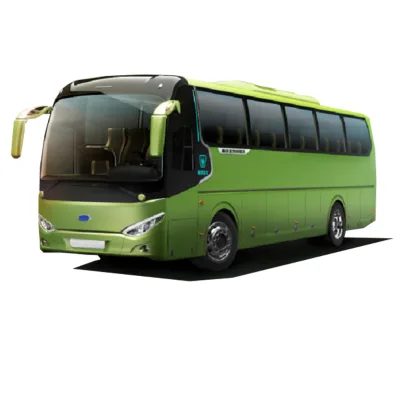


7.7m Multi-Purpose Electric Coach - School/Company/Tourist/Resort Shuttle with USB Charging
$100000.00 - $980000.00
MOQ: 1 Pieces

China Factory 9m New Energy Coach Bus - 39 Seats 250km Range Tourist Transport
$130000.00 - $1290000.00
MOQ: 1 Pieces


New Energy Bus 19-Seat Electric Coach Customizable Public Vehicles
$57000.00 - $57800.00
MOQ: 1 Pieces

Comprehensive Sourcing Guide
Sourcing Guide for 260 Km Range Electric Coach Procurement
Understanding the Technical Profile of 260 km Range Electric Coaches
When sourcing a vehicle with a specific driving range of 260 kilometers, buyers must first align their requirements with the observed technical capabilities of available units in the market. Based on the current product data, a 260 km driving range is a verified attribute for specific electric coach configurations, particularly those utilizing high-capacity battery systems. The data indicates that models achieving this range often pair with battery capacities of 86 kWh, utilizing Catl-branded cells. This specific energy density is critical for sustaining the 260 km operational distance under standard load conditions.
The propulsion systems associated with this range class typically feature rated power outputs around 50 kW with peak capabilities reaching 80 kW, or in other configurations, rated power of 30 kW with peaks up to 50 kW. Torque figures are equally significant for coach performance; observed data shows rated torque values of 130 Nm and peak torque of 270 Nm for certain midibus models, while others in the 260 km class exhibit rated torque of 150 Nm and peak torque of 350 Nm. These figures suggest that the 260 km range is not a singular specification but a performance outcome dependent on the specific motor and battery pairing.
Vehicle dimensions also play a pivotal role in the classification of these units. The 260 km range vehicles are frequently categorized as Minibus or Midibus sizes. For instance, one observed configuration lists a standard size of 5960 mm in length, 2020 mm in width, and 2700 mm in height. Another comparable unit measures 6040 mm by 2020 mm by 2700 mm. These dimensions are consistent with the "Low Floor Bus" structure often required for accessibility in coach applications. Buyers should verify that the physical footprint matches their intended route infrastructure, as the 260 km range is often optimized for these specific chassis sizes rather than full-sized heavy-duty coaches.
Compliance, Certification, and Emission Standards
In the global electric vehicle market, compliance is not merely a regulatory formality but a prerequisite for operational legality and insurance coverage. The supplied product facts explicitly identify the emission standard as "Electric," which confirms the zero-emission nature of these vehicles. However, buyers must look beyond the basic label to verify specific regional certifications. While the data notes the origin as China, specifically Jiangsu, and general production standards, it does not list specific international certifications such as ECE R100 or UL standards.
Procurement teams must verify that the supplier can provide documentation proving the vehicle meets the safety and electromagnetic compatibility standards of the destination country. The "Electric" emission standard is a baseline; the actual compliance involves the integration of the battery, motor, and high-voltage systems with local grid and safety regulations. For example, the climbing capacity observed in similar models ranges from 20% to 30%, which implies a need for robust thermal management and braking systems that must also comply with local safety codes.
Furthermore, the "Intelligence" features listed, such as "Nbt" or "BRT" (Bus Rapid Transit) systems, suggest varying levels of onboard connectivity and fleet management capabilities. Buyers should ensure that these intelligent systems comply with data privacy laws and communication protocols used in their region. The warranty terms, noted as "The Whole Electric Car Have 12 Months Warranty," provide a baseline for quality assurance but do not replace the need for third-party certification of the battery and electrical systems. Verification of these standards is essential before finalizing any purchase agreement.
Cost Drivers and Pricing Structure Analysis
The pricing landscape for electric coaches with a 260 km range is influenced by several distinct factors, including battery capacity, vehicle size, and customization options. The observed market data reveals a significant price variance, with listed prices ranging from 3,500 USD to 1,290,000 USD. This wide spectrum indicates that the "260 km range" label applies to vehicles at different ends of the market, from basic utility models to fully equipped, high-specification coaches.
The primary cost driver is the battery system. The data highlights battery capacities ranging from 41.86 kWh to 86 kWh. A vehicle with an 86 kWh Catl battery, which supports the 260 km range, will inherently carry a higher cost than a unit with a 41.86 kWh battery, which supports a shorter range of 305 km in some configurations. The price difference is directly correlated to the energy density and the brand of the battery cells used. Additionally, the "Customization: Available" attribute suggests that buyers can incur additional costs for tailored features, such as specific seating arrangements, specialized air conditioning, or unique livery.
Other cost factors include the transmission type, which is consistently observed as "Automatic Transmission," and the steering position, which varies between LHD (Left-Hand Drive) and RHD (Right-Hand Drive). RHD configurations may command a premium depending on the target market's import regulations. The "Rated / Peak Power" and "Torque" specifications also influence the motor cost, with higher power outputs generally increasing the unit price. Buyers should analyze the total cost of ownership, considering that a higher initial price for an 86 kWh battery might be offset by reduced operational costs and longer range capability compared to lower-capacity alternatives.
Typical Applications and Operational Use Cases
The 260 Km Range Electric Coach is designed for a variety of specific applications, as indicated by the "Usage" attributes in the product data. These include "Bus," "Coach," "Minibus," and "School Bus." The versatility of these vehicles allows them to serve in urban transit, inter-city travel, and institutional transport. The "Low Floor Bus" structure is particularly advantageous for school buses and community shuttles, facilitating easy boarding for passengers with mobility challenges.
For school bus applications, the 260 km range is sufficient to cover a full day of operations, including multiple pick-up and drop-off routes, without requiring mid-day recharging. The "Intelligence" features, such as BRT systems, are highly relevant for public transit agencies looking to integrate these vehicles into high-frequency urban routes. The climbing capacity of up to 30% makes these vehicles suitable for hilly terrain, expanding their usability beyond flat urban environments to include suburban and semi-rural routes.
The "Cargo Box Size" of 345017802000 mm in some configurations suggests that certain models can be adapted for mixed-use purposes, carrying both passengers and light cargo. This flexibility is valuable for logistics companies or community organizations that require a single vehicle type for multiple operational needs. The 18-seat capacity observed in some models aligns well with minibus applications, while the 9-seat capacity in others targets smaller group transport. Buyers should match the specific seating and cargo requirements of their use case with the exact model specifications to ensure optimal efficiency.
Supplier Evaluation and Quality Control Protocols
Evaluating suppliers for electric coaches requires a rigorous approach to quality control, especially given the variation in observed specifications. The data shows that while the origin is consistently "China," specific locations like "Jiangsu" are mentioned, indicating regional manufacturing hubs. Buyers should verify the specific factory location and its production capacity to ensure the supplier can meet demand without compromising quality.
Quality control should focus on the battery integration and the structural integrity of the vehicle. The "prod_packing" methods, listed as "by Sea" or "by Nude Packing Shipping by Sea," indicate that the vehicles are shipped in a state that requires careful handling. Buyers must ensure that the supplier has robust packaging protocols to prevent damage during transit, particularly for the sensitive battery components. The "Warranty" of 12 months for the whole electric car is a standard baseline, but buyers should negotiate extended warranties for critical components like the battery and motor, given the high cost of replacement.
When evaluating suppliers, buyers should request detailed test results for the "Max.Speed" (observed as 91-110 km/h or 100 km/h) and "Driving Range" (observed as 260 km, 288 km, or 305 km). It is crucial to verify that the 260 km range is achieved under standard test conditions and not under idealized laboratory scenarios. The "Climbing Capacity" of 20% to 30% should also be validated through real-world testing to ensure the vehicle can handle the gradients of the intended route.
Long-Term Procurement and Lifecycle Management
Long-term procurement considerations for electric coaches extend beyond the initial purchase price to include maintenance, battery lifecycle, and total cost of ownership. The "Rated Contained Mass" of 1700 kg in some models highlights the importance of payload management. Over time, battery degradation will affect the driving range, and buyers should understand the expected degradation rate of the Catl batteries used in these vehicles.
The "Automatic Transmission" and electric motor systems generally require less maintenance than internal combustion engines, but the high-voltage systems require specialized technicians. Buyers should ensure that the supplier provides comprehensive training for local maintenance teams and has a supply chain for spare parts. The "Customization: Available" feature also implies that future modifications or upgrades might be necessary, so the supplier should be capable of supporting long-term product evolution.
Furthermore, the "Emission Standard: Electric" status positions these vehicles favorably for regions with strict environmental regulations. However, buyers must plan for the end-of-life disposal of the batteries, ensuring that the supplier adheres to recycling standards. The 12-month warranty covers initial defects, but long-term reliability depends on the quality of the manufacturing process and the durability of the components. Buyers should establish a clear service level agreement (SLA) with the supplier to address any performance issues that arise after the warranty period expires.
Comparative Analysis of Key Specifications
To assist buyers in making informed decisions, the following table summarizes the key technical specifications observed in the market for electric coaches with varying ranges and capacities. This comparison highlights the diversity of options available and the specific attributes associated with the 260 km range class.
| Specification | Model A03 (Minibus) | Model D-11 (Coach) | Model A11 (Midibus) | Model A08 (Midibus) |
|---|---|---|---|---|
| Driving Range | 305 Km | 260 Km | 300 Km | N/A |
| Battery Capacity | 41.86 Kwh | 86 Kwh | 53.58 Kwh | N/A |
| Rated Power (Kw) | 30 / 50 | N/A | 50 / 80 | N/A |
| Max Speed | 100 Km/H | N/A | N/A | N/A |
| Steering Position | LHD | N/A | RHD | N/A |
| Structure | N/A | Low Floor Bus | N/A | N/A |
| Usage | N/A | Bus, Coach, Minibus | N/A | Bus, Coach, School Bus |
| Dimensions (LxWxH) | 449516801990 mm | 604020202700 mm | 596020202700 mm | 533017002260 mm |
| Origin | China | Jiangsu, China | N/A | N/A |
This table illustrates that the 260 km range is specifically linked to the Model D-11 configuration with an 86 kWh battery. Other models offer different ranges and capacities, emphasizing the need for buyers to carefully select the model that matches their specific operational requirements. The variation in dimensions and usage types further underscores the importance of a detailed needs assessment before procurement.
FAQs
What battery capacity supports the 260 km driving range?
An 86 kWh Catl battery capacity supports the 260 km driving range. This specific energy density is required to sustain the operational distance under standard load conditions compared to lower capacity options.
Which models offer a 260 km range with low floor structure?
The D-11 model offers a 260 km range with a low floor bus structure. This configuration facilitates easy boarding for passengers and is suitable for school bus or community shuttle applications.
Can buyers customize the seating capacity for these electric coaches?
Yes, customization is available for these electric coaches. Buyers can tailor seating arrangements and other features to match specific route requirements, though standard models may have 18 or 9 seats.
How is the climbing capacity rated for these electric vehicles?
The climbing capacity is rated between 20% and 30% for these vehicles. This performance level ensures the coaches can handle hilly terrain and suburban gradients effectively during daily operations.
What warranty coverage is provided for the whole electric car?
The whole electric car comes with a 12-month warranty. This baseline coverage applies to the vehicle, but buyers should verify specific terms for critical components like the battery and motor.
Which emission standard do these coaches meet for global compliance?
These coaches meet the Electric emission standard, confirming zero emissions. Buyers must still verify regional safety certifications beyond this baseline label to ensure operational legality in their specific destination.