Source Used Toyota Coaster Bus for Touring, Commercial, and Novice Use
Explore 30 listings for the Used Toyota Coaster Bus, comparing models with varying mileage, seating capacity, and service life. Buyers can evaluate diesel and gasoline options suitable for commercial vehicles, touring, and novice drivers across different road conditions; compare the available evidence and request quotations based on your requirements.
Key considerations
Products List


Used Toyota Coaster, Used Bus, Secondhand Japan Used Coaster Buses Japanese
$8000.00 - $12000.00
MOQ: 1 Sets


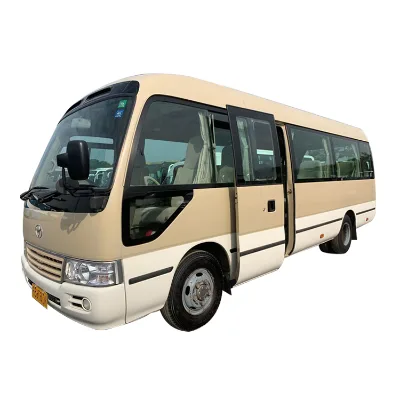
Used toyota coaster Passenger 30 Seats Second Hand Van toyota coaster Buses Used Bus for Sale
$12799.00 - $13599.00
MOQ: 1 units

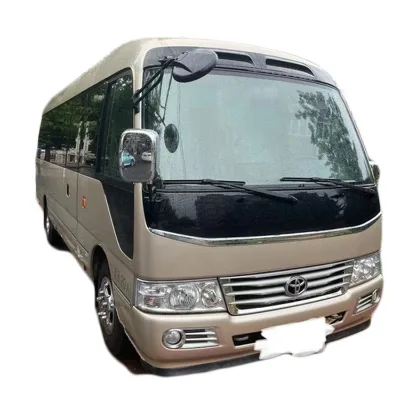
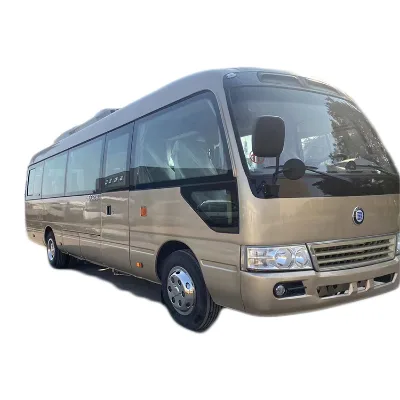
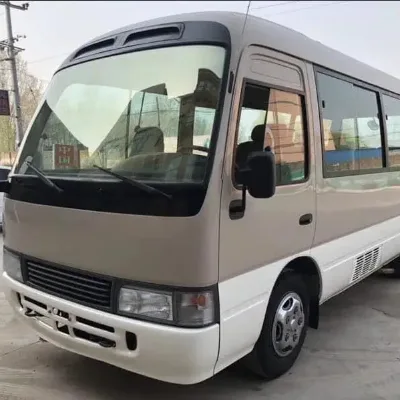
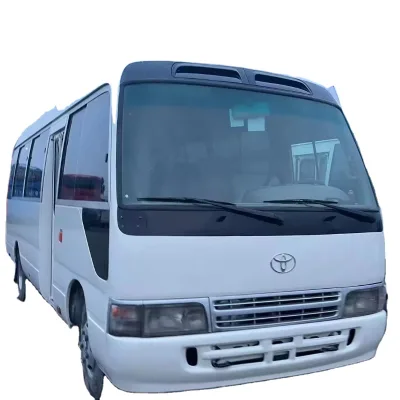
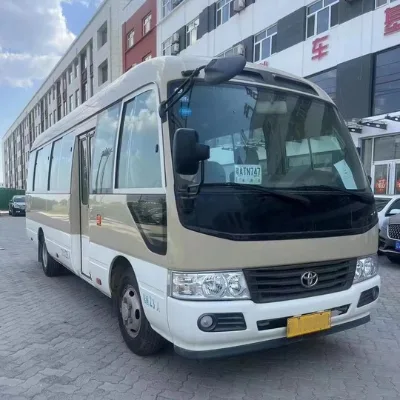


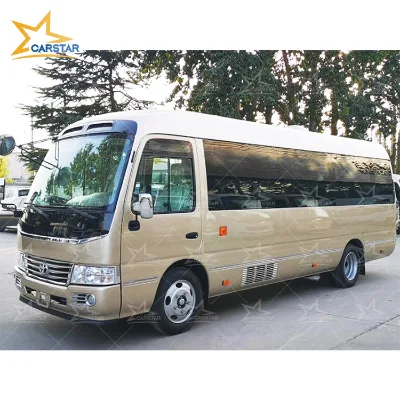
Used Cheap Price Toyo Ta Middle City Bus Coaster Used coaster Buses for Sale
$8000.00 - $12000.00
MOQ: 1 sets


Luxury Toyota Coaster Bus 20 Places Used Coaster Buses 30 Seater Bus
$15800.00 - $21500.00
MOQ: 1 Pieces

Used Coaster Bus Passenger with Best Price Used Toyota Coaster 30 Seater Bus
$9000.00 - $19800.00
MOQ: 1 Pieces


Toyota Coaster 014 Used Coach Bus with Luggage Rack and Central Heating
$8700.00 - $8900.00
MOQ: 1 Pieces

Toyota Coaster 29-Seats Used Coach Bus with Latest Exterior and Interior Design
$18600.00 - $24200.00
MOQ: 1 Pieces

Toyota Coaster Diesel Engine Used Shuttle Bus with Brand New Seat Cover
$18600.00 - $24200.00
MOQ: 1 Pieces
Comprehensive Sourcing Guide
Used Toyota Coaster Bus Sourcing Guide
Procuring a Used Toyota Coaster Bus requires careful navigation of a market where listings vary significantly in origin and condition. Buyers must distinguish between units sourced from China and those imported from Japan, as the latter often feature specific model identifiers like the Cstar-U-Coaster and distinct emission standards such as Euro 4. The observed product range includes vehicles with service lives spanning from one to six years, indicating a diverse inventory of both recently refurbished and older commercial units.
The commercial landscape for these buses presents a wide price spectrum, with observed listings ranging from 5,000 to 25,000 USD, reflecting differences in mileage, year, and structural integrity. While some units are marketed as new with minimal mileage, others are listed with high usage figures exceeding 100,000 kilometers. Buyers should verify the specific condition status, as the market offers both brand-new and used vehicles, necessitating a clear definition of acceptable wear before engaging with suppliers.
Product Scope and Observed Listing Signals
The product scope for used Toyota Coaster buses encompasses a variety of configurations tailored for novice drivers, experienced operators, and commercial touring applications. Listings frequently highlight single-deck structures with seating capacities ranging from 11 to 30 passengers, including specific configurations like the 29+1 seat layout. The color options observed in the market include standard blue and yellow, though customization is often available to meet specific fleet branding requirements.
Mileage and year data present a critical signal for buyers, with observed ranges spanning from 2003 to 2023 and mileage figures varying between 10,000 and 100,000 kilometers. Some units are specified with precise mileage like 35,000 km, while others fall into broader categories exceeding 60,000 km. Buyers must scrutinize these figures against the stated service life, which can range from one to three years for high-mileage units to three to six years for lower-mileage stock, to ensure the vehicle aligns with operational longevity expectations.
Technical Specifications to Verify
Technical verification begins with the powertrain, where displacement figures typically exceed 2.6 liters, with specific models like the 4200cc engine observed in the market. The transmission systems are predominantly manual, often featuring five-gear setups, and the braking systems vary between barometric and mechanical configurations depending on the unit's age and origin. Buyers should confirm the fuel type, as diesel is the primary standard, though some listings may reference gasoline models, requiring careful cross-referencing with the engine capacity specifications.
Dimensional and structural attributes are equally critical, with overall dimensions observed around 6990mm in length and varying widths and heights. The steering form is consistently listed as Left-Hand Drive (LHD), and the vehicle structure is uniformly single-deck. Buyers must verify the specific package size and gross weight, as some listings indicate a single gross weight of 1275 kg and specific package dimensions that impact logistics planning. Ensuring these physical specifications match the intended route and infrastructure is essential for operational success.
Compliance and Safety Documentation
Compliance verification is paramount when sourcing international units, particularly regarding emission standards which are explicitly listed as Euro 4 for certain Japanese imports. Buyers must ensure that the vehicle's origin, whether China or Japan, aligns with the destination country's regulatory requirements for used commercial vehicles. The presence of specific model numbers and standard compliance statements in the listing serves as a baseline, but independent verification of the emission certificate is necessary to avoid import rejection.
Safety documentation should include a detailed inspection of the braking system type and the overall condition of the chassis. While listings claim good quality, the actual safety status depends on the maintenance history and the specific braking technology, whether barometric or mechanical. Buyers should request proof of the vehicle's service life and any recent safety inspections, as the observed service life ranges vary significantly. Confirming that the vehicle meets local road condition standards and safety regulations is a non-negotiable step before finalizing any purchase.
Cost Drivers and Commercial Terms
The cost of a Used Toyota Coaster Bus is driven by a complex interplay of factors including the vehicle's year, mileage, and specific model configuration. The observed price range of 5,000 to 25,000 USD reflects these variables, with newer models and lower mileage units commanding higher premiums. Buyers must account for the fact that some listings offer discounts, but the final price is heavily influenced by the condition, whether new or used, and the specific engine capacity and transmission type.
Commercial terms often include a minimum order quantity of one unit, allowing for flexible procurement strategies for individual operators or small fleets. However, the lead time and shipping logistics are significant cost drivers, especially when importing from Japan or China. Buyers should clarify whether the listed price includes the single package size and gross weight considerations, as these impact freight costs. Understanding the full cost structure, including potential customs duties and transport fees, is essential for accurate budgeting.
Supplier Qualification and Quality Control
Supplier qualification requires a rigorous assessment of the vendor's ability to provide accurate product descriptions and verified vehicle histories. Given the mix of origins, buyers must confirm the supplier's capacity to source units from specific regions like Japan or China and provide transparent documentation regarding the vehicle's condition. The presence of customization options suggests a supplier capable of tailoring vehicles, but this capability must be validated through past performance and references.
Quality control measures should focus on verifying the physical attributes listed, such as the number of doors, seat count, and structural integrity. Buyers should insist on detailed photos or video inspections to confirm the color, interior condition, and exterior wear. Since the market lists both new and used units, a third-party inspection is advisable to validate the claimed service life and mileage. Ensuring the supplier adheres to the stated standards and provides a clear warranty or return policy is crucial for mitigating procurement risks.
Long-Term Procurement Checks
Long-term procurement success depends on establishing a relationship with suppliers who can support the vehicle throughout its service life. Buyers should verify the availability of spare parts and the supplier's ability to provide technical support for the specific model, such as the Cstar-U-Coaster or standard Toyota Coaster. The observed service life of one to six years indicates that maintenance planning is critical, and suppliers should be able to offer guidance on expected maintenance schedules and part replacement intervals.
Continuous monitoring of the vehicle's performance and compliance status is necessary to ensure ongoing operational efficiency. Buyers should track the vehicle's mileage and condition against the initial purchase specifications to identify any discrepancies early. Establishing a protocol for regular safety checks and emission compliance updates will help extend the vehicle's useful life. By maintaining a proactive approach to procurement and maintenance, buyers can maximize the return on investment for their Used Toyota Coaster Bus fleet.
FAQs
What is the typical mileage range for used Toyota Coaster buses?
The typical mileage range for used Toyota Coaster buses is between 10,000 and 100,000 kilometers. This wide range reflects varying usage histories, from low-mileage experience cars to higher-mileage commercial vehicles. Buyers should verify the specific odometer reading for each unit to ensure it aligns with their operational needs and expected service life.
Can I customize the color of a Used Toyota Coaster Bus?
Yes, customization is available for used Toyota Coaster buses, including color options like blue or yellow. Buyers can request specific colors to match their brand identity or operational requirements. This flexibility allows for tailored appearances while maintaining the vehicle's core mechanical integrity and functional specifications for commercial or touring use.
What seating capacity is available for the Toyota Coaster bus model?
Seating capacity for the Toyota Coaster bus typically ranges from 20 to 30 seats, with some configurations offering 29 plus one driver seat. This layout supports various usage scenarios, including novice car experiences, commercial transport, and touring. The spacious interior ensures passenger comfort while adhering to standard single-deck structural designs for optimal utility.
Which braking systems are used in these Toyota Coaster buses?
These Toyota Coaster buses utilize either barometric or mechanical braking systems depending on the specific model year and configuration. Barometric systems offer modern responsiveness, while mechanical systems provide reliable traditional performance. Buyers should confirm the braking type during inspection to ensure compatibility with their safety standards and operational requirements for road conditions.
What is the standard emission standard for used Toyota Coaster buses?
The standard emission standard for many used Toyota Coaster buses is Euro 4. This compliance ensures reduced environmental impact and adherence to regulatory requirements in many regions. Buyers should verify the specific emission certification for each unit to ensure it meets local legal standards for commercial vehicle operation and environmental compliance.