Source 260nm-270nm germicidal uv-c led diode for Water Sterilization, Sensors, and Disinfection
Find 26 verified listings for the 260nm-270nm germicidal uv-c led diode designed for water sterilization, ultraviolet sensors, and general disinfection. Buyers can compare specifications like wavelength, radiant power, and forward current across 26 available products from Chinese manufacturers.
Key considerations
Products List




Comprehensive Sourcing Guide
Strategic Sourcing Guide for 260nm-270nm Germicidal UV-C LED Diodes
Procuring 260nm-270nm germicidal UV-C LED diodes requires a rigorous approach that balances precise optical specifications with robust supply chain verification. This wavelength range is critical for effective pathogen inactivation, yet the market contains significant variance in component quality, packaging standards, and emission consistency. Buyers must navigate a complex landscape where observed attributes, such as specific wattage ratings and material compositions, vary between listings. The following guide outlines the essential technical, compliance, and operational factors necessary to secure reliable UV-C diodes for industrial and commercial sterilization applications.
Technical Specifications and Optical Performance
The core of any successful procurement strategy lies in verifying the exact spectral output and electrical characteristics of the diodes. In the observed market data, specific listings highlight a wavelength range of 255nm to 280nm, with distinct models targeting the 260nm-270nm sweet spot for germicidal efficacy. Buyers must distinguish between general UV sources and those optimized for this specific band. For instance, one observed specification lists a wavelength of 270-280nm, while another specifies 255nm, indicating that the "260nm-270nm" keyword often encompasses a broader spectrum of available inventory that requires careful filtering.
Electrical parameters are equally critical for system integration. The observed data presents a wide variance in power ratings, ranging from 0.25W to 1W. A 1W model typically operates at an input voltage of 6V with a forward current of 150mA, whereas lower-power variants may operate at 5-7V with a forward current of 40mA. The maximum current ratings observed reach up to 100mA for specific high-power configurations. When evaluating potential suppliers, procurement teams must ensure that the forward current and voltage ratings align with their driver circuit designs to prevent premature failure.
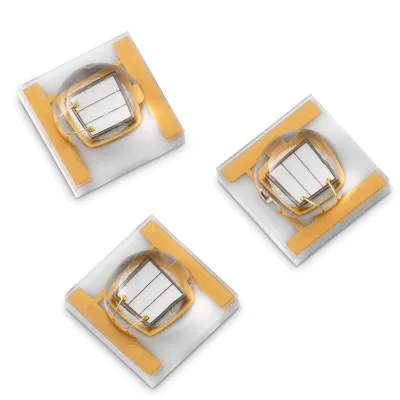
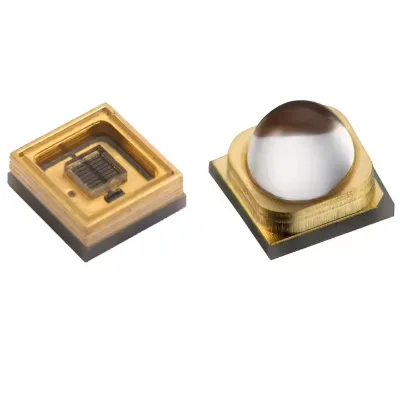
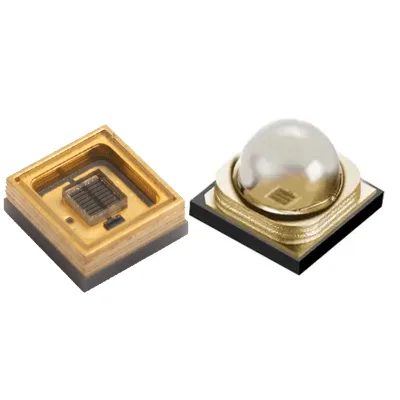
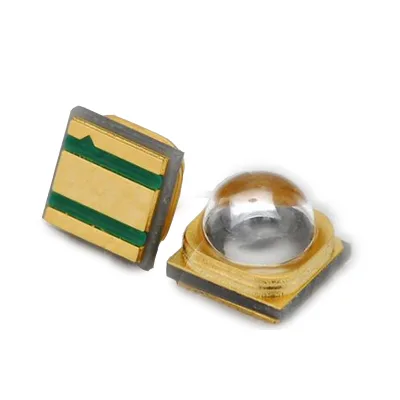
The physical construction of the diode also dictates performance longevity. High-quality units often utilize a base material of Aluminum Nitride or Copper, which offers superior thermal conductivity compared to standard substrates. The wire material is frequently cited as Pure Gold, a standard for ensuring low-resistance connections and high reliability in harsh environments. The packaging type is typically identified as SMD (Surface Mount Device) chips, with dimensions such as 3.53.51.6mm for 3535 form factors. The beam angle is another variable; observed listings show angles ranging from 30° to 120°, necessitating a clear definition of the required optical distribution for the intended application.
Compliance and Certification Verification
Navigating the certification landscape is a non-negotiable step in sourcing UV-C components. The observed product data lists multiple certifications, including CE, RoHS, FCC, LVD, CCC, and ISO. While these marks suggest adherence to safety and environmental standards, buyers must verify the specific scope of these certifications for the exact model number. For example, RoHS compliance is frequently listed, ensuring the absence of restricted hazardous substances, which is vital for international export. However, the presence of a certification label does not automatically guarantee that every unit in a batch meets the standard; it is a claim that must be validated through documentation.
Safety standards for UV-C devices are stringent due to the potential hazards of ultraviolet radiation. The LVD (Low Voltage Directive) and FCC (Federal Communications Commission) marks indicate compliance with electrical safety and electromagnetic interference regulations, respectively. In the context of Chinese manufacturing, the CCC (China Compulsory Certification) is a relevant domestic standard. Buyers should request valid test reports that specifically reference the UV-C wavelength and power output, rather than relying solely on the generic presence of a certification logo. The absence of specific test data for the 260nm-270nm band in a supplier's portfolio is a significant red flag, as general UV certifications may not cover the specific germicidal requirements.
Cost Drivers and Pricing Dynamics
The pricing structure for UV-C diodes is influenced by several key factors, including the chip brand, power rating, and production volume. The observed price range in the market spans from $0.20 to $33.80 USD, a variance that reflects differences in component quality, brand reputation, and order quantity. High-performance chips from established brands, such as Nichia, which is noted in the product attributes, typically command a premium price compared to generic alternatives. The "Chip Brand" attribute is a critical cost driver; branded chips often offer better consistency in wavelength and radiant power, which is essential for reliable sterilization performance.
Order quantity plays a decisive role in the final unit cost. The observed Minimum Order Quantity (MOQ) ranges from 1 to 1000 units. Buyers purchasing small quantities for prototyping or low-volume production may face higher per-unit costs, while bulk orders can significantly reduce the price point. The packaging format also impacts cost; some listings specify 1000 pieces per reel or bag, while others use carton packaging. Understanding the relationship between MOQ and price tiers is essential for budgeting. Additionally, the "Customization" attribute being available suggests that buyers can negotiate specific parameters, though this may introduce additional costs or longer lead times compared to standard off-the-shelf inventory.
Typical Applications and Operational Context
The versatility of 260nm-270nm UV-C diodes allows for deployment across a wide array of industries. The observed usage categories include Street Lights, Spotlights, Bulb Lamps, Underwater Lamps, Ceiling Lamps, Wall Lamps, and Tunnel Lamps. However, for germicidal applications, the focus shifts to specific use cases such as Water Sterilization and Ultraviolet Sensor integration. The high radiant power observed in some models, ranging from 2-4mW to 20-30mW, supports applications requiring rapid pathogen inactivation.
The operating environment is a critical consideration for application success. The observed operating temperature range is -30°C to 60°C, with a storage temperature range extending to 85°C. These limits define the environmental boundaries within which the diodes can function reliably. For outdoor or industrial applications, such as tunnel lighting or street lighting, the ability to withstand extreme temperatures is paramount. Furthermore, the "Support Dimmer" attribute indicates that certain models can be integrated into systems requiring variable light intensity, offering flexibility in energy management and sterilization dosing. The lifespan of these components is a major factor in application planning; while some listings cite a working time of 10,000 hours, others claim a lifespan of 30,000 hours. Buyers must align their maintenance schedules with the specific lifespan claims of the selected component.
Supplier Evaluation and Quality Assurance
Evaluating suppliers requires a deep dive into their manufacturing capabilities and quality control processes. The origin of the products is consistently listed as China, with specific mentions of Shenzhen as a production hub. While this indicates a mature supply chain, it also necessitates rigorous vetting of the specific factory. Buyers should verify the "Chip Material," which is often InGaN (Indium Gallium Nitride), and the "Base Material" to ensure thermal management capabilities are sufficient for the intended power levels. The "Formation" attribute, listed as "Wafer," suggests a direct semiconductor manufacturing process, which is preferable to assembly-only operations.
Quality control should extend beyond the initial purchase order. The "Luminous Intensity" is listed as "Standard," but buyers must define what constitutes "standard" for their specific application. Radiant power consistency is crucial; observed ranges vary from 2-4mW to 8-10mW for different models. A supplier with a robust QC process will provide binning data to ensure that all delivered units fall within a tight power and wavelength tolerance. The "Warranty" period, observed as either 1 year or 3 years, serves as a proxy for the supplier's confidence in their product's longevity. A longer warranty period often correlates with higher manufacturing standards and better after-sales support.
Long-Term Procurement and Lifecycle Management
Sourcing UV-C diodes is not merely a transactional activity but a strategic partnership that impacts long-term operational efficiency. The "Working Time" and "Lifespan" attributes are critical for calculating the total cost of ownership. A diode with a 30,000-hour lifespan may have a higher upfront cost but offers significant savings over time compared to a 10,000-hour unit, particularly in high-usage environments like water sterilization systems. Buyers should also consider the "Packaging" standards, such as 1000PCS/Reel or 1000PCS/Bag, to ensure that the components are protected during shipping and storage, preventing degradation from moisture or physical damage.
Future-proofing the procurement strategy involves monitoring the evolution of standards and certifications. As regulations regarding UV-C safety and environmental impact tighten, suppliers must adapt. The availability of "Customization" allows buyers to specify requirements that may become standard in the future, such as specific beam angles or enhanced thermal resistance. Additionally, the "Support Dimmer" feature offers a pathway to energy efficiency improvements as technology advances. Buyers should maintain a relationship with suppliers who can provide updates on new models that may offer improved efficiency or longer lifespans, ensuring that their sterilization systems remain competitive and compliant over time.
Comparative Analysis of Observed Specifications
To facilitate decision-making, the following table summarizes the key technical variations observed in the market data for 260nm-270nm UV-C diodes. This comparison highlights the diversity in specifications that buyers must navigate.
| Specification | Variant A (High Power) | Variant B (Standard) | Variant C (Specialized) |
|---|---|---|---|
| Wavelength | 255nm | 270-280nm | 260nm-270nm (Target) |
| Power Rating | 1W | 0.25W | 1W |
| Input Voltage | 6V | 5-7V | 6V |
| Forward Current | 150mA | 40mA | 150mA |
| Base Material | Aluminum Nitride | Copper | Aluminum Nitride |
| Radiant Power | 20-30mW | 2-4mW | 8-10mW |
| Beam Angle | 120° | 30° | 120° |
| Lifespan | 30,000 Hours | 10,000 Hours | 30,000 Hours |
| Certifications | CE, RoHS, FCC | RoHS | CE, RoHS, CCC |
| Warranty | 3 Years | 1 Year | 3 Years |
This table underscores the necessity of precise specification matching. A buyer seeking high-intensity sterilization for water treatment would prioritize Variant A or C, focusing on the higher radiant power and longer lifespan. Conversely, a sensor application might benefit from the lower power and specific beam angle of Variant B. The variation in base materials and certifications further illustrates the need for detailed due diligence.
In conclusion, sourcing 260nm-270nm germicidal UV-C LED diodes demands a meticulous approach that integrates technical verification, compliance checks, and strategic supplier evaluation. By focusing on the specific attributes observed in the market and avoiding assumptions about universal standards, buyers can secure components that deliver reliable performance and long-term value. The complexity of the supply chain, characterized by diverse specifications and varying quality levels, requires a disciplined procurement process to ensure that the final product meets the rigorous demands of germicidal applications.
FAQs
What certifications are available for 260nm-270nm germicidal uv-c led diode?
Available certifications include CE, RoHS, FCC, LVD, CCC, and ISO. Buyers must verify that specific test reports cover the exact UV-C wavelength and power output rather than relying solely on generic certification labels for safety compliance.
Which base materials are used in high-quality 260nm-270nm germicidal uv-c led diode?
High-quality units often utilize Aluminum Nitride or Copper as the base material. These materials offer superior thermal conductivity compared to standard substrates, which is essential for maintaining performance and longevity in germicidal applications.
How long is the typical lifespan of a 260nm-270nm germicidal uv-c led diode?
The lifespan varies between 10,000 hours and 30,000 hours depending on the specific model. Buyers should align their maintenance schedules with the specific lifespan claims of the selected component to ensure operational reliability.
Can the 260nm-270nm germicidal uv-c led diode be customized for specific needs?
Customization is available for buyers requiring specific parameters. This option allows for tailored specifications but may introduce additional costs or longer lead times compared to standard off-the-shelf inventory options.
What is the price range for 260nm-270nm germicidal uv-c led diode?
The observed price range spans from 0.20 to 33.80 USD. This variance reflects differences in component quality, brand reputation, and order quantity, with bulk orders significantly reducing the per-unit cost.
Which applications are suitable for 260nm-270nm germicidal uv-c led diode?
Suitable applications include water sterilization and ultraviolet sensor integration. The diodes are also used in street lights, spotlights, and various lamp types, supporting diverse industrial and commercial sterilization needs.