Source 3-25t Hydraulic Log Grabber for Forestry, Recycling, and Construction
Explore 30 listings for the 3-25t Hydraulic Log Grabber to compare specifications like Q355B steel construction, 360-degree rotation, and ISO quick hitch compatibility. Evaluate options from Chinese manufacturers to find the right attachment for your excavator needs.
Key considerations
Products List

Light Weight Hydraulic Wood Grapple Log Grabber for 3-25 Ton Excavator
$1000.00 - $3000.00
MOQ: 1 Pieces


Hydraulic Wood Grabber for Log Loading and Unloading Flexible Operation
$1300.00 - $1600.00
MOQ: 1 Pieces
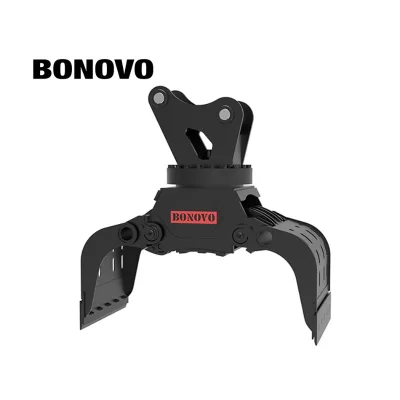


Heavy-Duty Hydraulic Wood Grabber for Efficient Log Handling and Transport
$500.00 - $1800.00
MOQ: 1 Pieces


$2199.00 - $3599.00
MOQ: 1 Sets


Popular Forestry Equipment, Hydraulic Grab for Timber, Logs and Wood
$2800.00 - $3200.00
MOQ: 1 Pieces


Wood Grapple Hydraulic Rotating Log Grab for Forestry and Wood Chipping
$450.00 - $580.00
MOQ: 1 Pieces


Light Hydraulic Timber Grab Grab Wood for Excavators Hydraulic Wood Grapple
$1200.00 - $1300.00
MOQ: 1 Pieces


Forestry Forest Tractor Powered Crane Log Grapple Wood Grabber with Trailer
$6000.00 - $6300.00
MOQ: 1 Pieces

Forestry Equipment Hydraulic Log Grab and Three-Point Suspension Crane
$3550.00 - $5900.00
MOQ: 1 Pieces
Comprehensive Sourcing Guide
3 25t Hydraulic Log Grapple Sourcing Guide
Procuring a hydraulic log grapple for a 25-ton excavator requires a precise alignment between the attachment’s mechanical capabilities and the host machine’s hydraulic output. The market presents a wide array of options, ranging from lightweight models designed for smaller carriers to heavy-duty units built for high-volume timber handling. Buyers must navigate this landscape by focusing on verified technical parameters rather than generic marketing claims. The core challenge lies in ensuring that the grapple’s weight, jaw opening, and gripping force are compatible with the specific 25-ton excavator model in question, as mismatches can lead to reduced lifting capacity, hydraulic system strain, or operational inefficiencies.
This guide provides a structured approach to sourcing these attachments by analyzing observed market signals, technical verification steps, and commercial considerations. It draws upon available product data to highlight common specifications, such as operating pressures, flow rates, and material compositions, while emphasizing the need for independent verification. By adhering to a disciplined procurement process, buyers can mitigate risks associated with quality inconsistencies and ensure that the selected grapple delivers the expected performance in demanding logging or material handling environments.
Product Scope and Observed Listing Signals
The current market for hydraulic log grapples exhibits significant variability in pricing and minimum order quantities (MOQ), reflecting the diverse nature of manufacturing capabilities. Observed listing prices range from approximately $100 to $8,000 USD, a span that suggests the presence of both basic, possibly refurbished or lightweight units, and high-end, heavy-duty models constructed from premium materials. Similarly, MOQs typically range from 1 to 5 units, indicating that suppliers are generally willing to accommodate single-unit purchases for testing or immediate operational needs, though bulk orders may offer different commercial terms. Buyers should interpret this price variance as a signal to scrutinize the build quality, material thickness, and warranty provisions associated with each listing, rather than assuming that lower prices equate to equivalent performance.
Product listings often highlight specific attributes such as customization availability, new condition, and origin, primarily from China, including regions like Shandong and Jiangsu. Common observations include the use of Q355B steel for body construction, which is a standard low-alloy high-strength steel suitable for heavy machinery attachments. Some listings specify models such as "Light log Grapple" or "PLE," with weights ranging from 110-120 kg to over 800 kg, and grabbing capacities varying from 0.3-3.0 cubic meters to 1200 kg. These data points suggest that the "25t" designation in the keyword may refer to the suitable excavator class rather than the grapple's own weight, necessitating careful cross-referencing of the grapple's weight against the excavator's rated lifting capacity to prevent overloading.
Technical Specifications to Verify
Verifying the hydraulic requirements is the most critical technical step in sourcing a log grapple for a 25-ton excavator. Listings indicate operating pressures typically between 20-35 MPa or 22-30 MPa, with hydraulic flow rates ranging from 30-50 L/Min. Buyers must confirm that their excavator’s auxiliary hydraulic system can sustain these pressures and flow rates without compromising the machine’s primary functions, such as digging or lifting. Additionally, the connection type is frequently specified as a Quick Hitch conforming to ISO standards, which ensures compatibility with standard excavator interfaces. However, buyers should physically verify the pin dimensions and hydraulic hose lengths, which are often listed around 3.0 meters, to ensure they fit the specific excavator model without requiring excessive bending or extension that could lead to premature wear or failure.
The mechanical specifications of the grapple, including jaw opening and gripping force, must also be rigorously checked against operational needs. Observed data points include max jaw openings of 80-100 kg/Cm2 (likely a mislabeled pressure unit) or 2700 mm, and oil cylinder pressures of 25-40 MPa. The rotating system is often cited as a 360-degree rotating mechanism, which is essential for efficient log sorting and stacking. Buyers should verify the actual open width and width dimensions, such as 905 mm and 313 mm respectively, to ensure the grapple can handle the diameter of logs typically processed in their operations. Furthermore, the weight of the grapple, which can range from 110 kg to 805 kg or more, directly impacts the excavator’s net lifting capacity; a heavier grapple reduces the amount of timber that can be safely lifted, so this trade-off must be calculated precisely.
Compliance and Safety Documentation
Compliance with international standards is a key indicator of manufacturing quality and safety. Many suppliers provide CE certification, and some list CE ISO9001, suggesting adherence to European safety standards and quality management systems. Buyers should request copies of these certificates and verify their validity through the issuing bodies, as certification marks alone do not guarantee product performance. The presence of video outgoing-inspection services is another positive signal, allowing buyers to visually verify the assembly quality, weld integrity, and hydraulic connections before shipment. This remote inspection capability can significantly reduce the risk of receiving defective units, particularly when sourcing from international suppliers where physical pre-shipment inspections may be logistically challenging.
Safety documentation should also include detailed operation manuals and maintenance guidelines. Buyers should ensure that the supplier provides clear instructions on hydraulic hose routing, lubrication points, and emergency shutdown procedures. The use of high-strength materials like Q355B steel is a positive attribute, but buyers should request material test reports to confirm the steel’s grade and tensile strength. Additionally, warranty terms, such as the 1-year warranty observed in some listings, should be clearly defined in the contract, specifying coverage for hydraulic cylinders, rotating mechanisms, and structural components. Understanding the warranty process and return policies is essential for managing long-term operational risks and ensuring that defects are addressed promptly without significant downtime.
Cost Drivers and Commercial Terms
The cost of a hydraulic log grapple is influenced by several factors, including material costs, manufacturing complexity, and shipping logistics. The use of Q355B steel and robust hydraulic components contributes to the higher end of the price spectrum, while simpler designs or lighter materials may result in lower costs. Buyers should analyze the price-to-weight ratio and price-to-capacity ratio to assess value, rather than focusing solely on the absolute price. Packaging methods, such as wooden crates or pallets, also impact shipping costs and protection during transit, so buyers should ensure that the packaging is sufficient to prevent damage during long-distance freight.
Commercial terms, including payment methods, lead times, and after-sales support, are critical components of the procurement decision. While specific lead times are not provided in the observed data, buyers should negotiate clear delivery schedules and penalties for delays. Payment terms should be structured to protect the buyer’s interests, such as using escrow services or partial payments upon shipment. Additionally, buyers should inquire about the availability of spare parts, such as hydraulic hoses, seals, and pins, to minimize downtime in the event of wear or failure. Establishing a reliable supply chain for consumables and replacement parts is essential for maintaining the grapple’s operational efficiency over its lifespan.
Supplier Qualification and Quality Control
Supplier qualification involves assessing the manufacturer’s production capabilities, quality control processes, and reputation. Buyers should verify the supplier’s business license, production facility size, and history of exporting similar products. The presence of core components like motors and the provision of video inspections are positive indicators, but buyers should also request references from previous clients or check online reviews to gauge reliability. It is advisable to conduct a virtual or physical factory audit to inspect the assembly line, testing procedures, and quality assurance protocols. This due diligence helps ensure that the supplier has the capacity to produce consistent, high-quality grapples that meet the specified technical requirements.
Quality control should extend beyond the initial purchase to include ongoing monitoring of performance and durability. Buyers should establish clear acceptance criteria for the grapple upon delivery, including visual inspections for weld quality, hydraulic pressure tests, and functional checks of the rotating mechanism. Implementing a regular maintenance schedule, based on the supplier’s recommendations, can extend the grapple’s lifespan and prevent costly breakdowns. Buyers should also document any issues encountered during the initial use phase and communicate them to the supplier promptly to facilitate warranty claims or corrective actions. Building a collaborative relationship with the supplier can lead to better support and potential improvements in future orders.
Long-Term Procurement Checks
Long-term procurement success depends on continuous evaluation of the grapple’s performance and the supplier’s reliability. Buyers should track key performance indicators such as uptime, maintenance frequency, and repair costs to assess the total cost of ownership. Regularly reviewing the grapple’s condition and comparing it to initial performance benchmarks can help identify trends in wear and tear, allowing for proactive maintenance and part replacements. Additionally, staying informed about industry advancements and new product offerings can provide opportunities to upgrade or replace grapples with more efficient models as technology evolves.
Market dynamics and supplier relationships should also be monitored to ensure competitive pricing and service quality. Buyers should periodically solicit quotes from multiple suppliers to benchmark prices and terms, while maintaining strong relationships with trusted partners for reliability and support. Engaging in feedback loops with the supplier regarding product performance and any issues encountered can foster continuous improvement and strengthen the business partnership. By adopting a strategic, data-driven approach to procurement, buyers can optimize their investment in hydraulic log grapples and enhance their operational efficiency in the long run.
FAQs
What certifications do the hydraulic log grabbers have?
The products carry CE certification, and some models include ISO9001 certification as well. These certifications ensure compliance with international safety and quality standards for heavy machinery attachments used in excavation and logging operations.
Which excavator weights are suitable for this log grabber?
This equipment is designed for excavators weighing between 6 and 30 tons. The specific model fits machines ranging from 1 to 2 tons up to larger units, ensuring compatibility across a wide range of construction and forestry applications.
How is the hydraulic pressure requirement defined for operation?
The operating pressure requirement ranges from 20 to 35 MPa, with some models needing 22 to 30 MPa. The necessary flow rate is typically between 30 and 50 liters per minute to ensure efficient jaw movement and gripping force.
Can the product be customized for specific needs?
Yes, customization is available for this hydraulic log grabber to meet specific operational requirements. Buyers can request tailored specifications while the standard condition remains new, ensuring the equipment fits unique project demands effectively.
What is the maximum grabbing capacity of the unit?
The maximum grabbing capacity reaches up to 1200 kg per grip, with a volume capacity of 0.3 to 3.0 cubic meters. This allows for efficient handling of large logs and debris in various industrial environments.
Where is the place of origin for these log grabbers?
The products originate from China, specifically from regions like Shandong and Jiangsu. This location indicates the manufacturing base for the heavy steel components and hydraulic systems used in the construction of these durable attachments.