Source 3 Pins Ignition Module for cars, motorcycles, and generators
Explore 30 listings for the 3 Pins Ignition Module suitable for automotive, motorcycle, and generator applications. Buyers can compare specifications, prices, and supplier capabilities to find the right component for their needs.
Key considerations
Products List


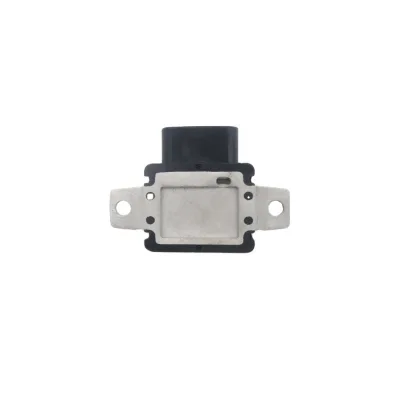




Comprehensive Sourcing Guide
Strategic Sourcing Guide for 3-Pin Ignition Modules
Understanding the Technical Architecture and Component Variants
When sourcing a 3-pin ignition module, buyers must first recognize that this component is a critical element within the ignition system of internal combustion engines, often functioning as a distributorless ignition system or an ignition module that controls the spark timing. The "3-pin" designation typically refers to the electrical interface required to connect the module to the vehicle's wiring harness, power supply, and ground or signal return path. Based on observed product data, these modules are frequently categorized under specific component types such as "Ignition Module" or "Distributorless Ignition System," indicating their role in managing high-voltage generation without a traditional mechanical distributor.
The technical specifications for these units vary significantly depending on the engine architecture. For instance, some observed models are associated with specific part numbers like "131300-2240," which serves as a unique identifier for compatibility with specific vehicle models. The electrical standards observed in the market include a voltage rating of 12V, which is the standard for most automotive applications. However, buyers must verify that the specific module they procure matches the vehicle's electrical system, as deviations can lead to system failure. The physical interface often involves a standard size configuration, though exact dimensions should be confirmed against the vehicle's service manual.
The internal composition of these modules can differ. Some products are described as having a "Distributor" component, while others are explicitly labeled as "Distributorless Ignition System" units. This distinction is vital for procurement because a module designed for a distributorless system may not be compatible with an older engine that utilizes a mechanical distributor. Furthermore, the "Type" attribute in product listings often points to the specific ignition system architecture, such as "Ignition System" or "Ignition Coil" integration. Buyers should note that while some listings mention "Spark Plug" components, the ignition module itself is the control unit that triggers the spark plug, not the plug itself.
Compliance, Certification, and Quality Assurance Standards
In the B2B procurement of automotive electrical components, verifying compliance and certification is paramount to ensuring reliability and safety. The market data indicates that reputable suppliers often provide products backed by specific quality management standards. For example, "ISO9001" and "TSISO9001" are frequently cited certifications in the context of ignition modules and related components like ignition coils. These certifications suggest that the manufacturing process adheres to international quality management systems, which is a strong indicator of consistent production quality.
However, buyers must exercise caution when interpreting certification claims. Some product listings may present certifications in a fragmented manner, such as "TSISO9001: Component:Ignition Coil" or "TSISO9001: Component:Spark Plug." This phrasing implies that the certification may apply to the specific sub-component or the manufacturing facility's general scope rather than the specific ignition module unit being purchased. Therefore, it is essential for buyers to request a valid certificate of conformity that explicitly covers the 3-pin ignition module model number. The presence of "Quality Assurance" as a listed attribute is a positive signal, but it should be supported by tangible documentation rather than being treated as a standalone claim.
Additionally, other certifications like "CE" may be observed in the market, indicating compliance with European safety standards. While the "LPI" standard is mentioned in some contexts, its specific application to the 3-pin ignition module requires verification. Buyers should not assume that a product bearing a generic "LPI" label meets the specific technical requirements of their application without cross-referencing the standard's definition. The "Cold Style: Water-Cooled" attribute observed in some listings suggests that certain ignition systems may be designed for specific thermal management environments, but this is more commonly associated with the engine block or cooling system rather than the electronic module itself. Consequently, buyers must clarify whether the module requires specific thermal ratings or if it is designed for air-cooled applications.
Cost Drivers and Pricing Structure Analysis
The pricing of 3-pin ignition modules is influenced by a complex interplay of factors, including the complexity of the electronic design, the quality of components used, and the supply chain logistics. The observed price range in the market is exceptionally broad, spanning from $0.25 to $4,457.10. This wide variance indicates that the term "ignition module" encompasses a spectrum of products, from simple aftermarket replacements to high-end, specialized industrial units or complete engine control assemblies.
For standard automotive applications, the cost is typically driven by the OEM equivalence of the part. Modules with specific OEM numbers, such as "131300-2240," often command a premium if they are direct replacements for original equipment, whereas generic or "neutral packing" versions may be priced lower. The "Supply Ability" of a supplier, such as "5000 pieces per Week," can also influence pricing; high-volume suppliers may offer more competitive rates due to economies of scale, whereas suppliers with lower capacity might charge higher unit prices to cover fixed costs.
Packaging and customization are significant cost drivers. Products offering "Lpi Brand or OEM Packaging Available" or "Neutral Packing Or Clients Requested" allow buyers to optimize their logistics costs. However, custom packaging or branding requests can increase the unit price. The "MOQ" (Minimum Order Quantity) is another critical factor; while some suppliers offer an MOQ as low as 1 piece, others may require orders of 1000 pieces. Higher MOQs often correlate with lower per-unit costs, making them attractive for large-scale procurement, while low MOQs are suitable for prototyping or small-batch repairs.
Buyers should also consider the "Payment Ways" offered, such as "T/T, Paypal, Western Union." Suppliers accepting flexible payment terms may adjust their pricing to mitigate financial risk. Furthermore, the "Warranty" period, such as "12 Months," adds value to the purchase price. A module with a longer warranty or a more robust quality guarantee may have a higher upfront cost but offers better long-term value by reducing the risk of premature failure.
Typical Applications and Compatibility Verification
The 3-pin ignition module is primarily utilized in automotive and small engine applications where reliable spark generation is critical. The observed "Car Model" attribute is listed simply as "car," which is a broad categorization. In reality, these modules are designed for specific engine types, including those with "1 Cylinder" configurations or more complex multi-cylinder setups. The "Main Market" for these components is often "Southeast Asia," suggesting a high demand in regions with a large volume of two-stroke and four-stroke engine vehicles, such as motorcycles, scooters, and small utility vehicles.
The compatibility of a 3-pin module depends heavily on the engine's ignition system type. As noted in the product data, engines may utilize "Two Stroke" or "Four Stroke Principle" systems, with the latter specifically mentioning the "Exhaust Stroke." This distinction is crucial because the timing and firing sequence of a two-stroke engine differ significantly from a four-stroke engine. A module designed for a two-stroke engine may not function correctly in a four-stroke application, and vice versa. Buyers must verify the engine cycle type before selecting a module.
Furthermore, the "Thermal Machine" attribute, listed as "External Combustion Type," confirms that these modules are intended for traditional internal combustion engines rather than electric or hybrid systems. The "Energy Transformation" attribute, oddly listed as "Atomic Engine" in some data points, appears to be a data anomaly or a misclassification, as ignition modules are not used in atomic engines. Buyers should disregard such conflicting data and focus on verified specifications like "Electric" start systems and "Ignition System" types.
The specific model numbers, such as "EIX-CR7," "R-IZFR6," "B-ILZKR7-11," and "HB6AIX-11P," often correspond to specific engine manufacturers or vehicle makes. These alphanumeric codes are essential for cross-referencing compatibility. For example, a module with the model number "131300-2240" is likely a direct replacement for a specific OEM part. Buyers should always match the part number and the electrical pin configuration (3-pin) to ensure the module fits the vehicle's wiring harness and control logic.
Supplier Evaluation and Supply Chain Reliability
Selecting the right supplier is a critical step in the procurement process, especially for electronic components that are sensitive to environmental conditions and manufacturing variances. The "Place of Origin" for many of these modules is "Guangdong, China," a major manufacturing hub for automotive parts. While this region offers a vast array of suppliers, buyers must evaluate the specific capabilities of each vendor. Key indicators of supplier reliability include their "Supply Ability," such as the capacity to produce "5000 pieces per Week," and their "Product Status," which should ideally be "In Stock" to ensure immediate availability.
The "Port of dispatch," often listed as "Guangzhou/Shenzhen," provides insight into the logistics capabilities of the supplier. Suppliers located near major ports can typically offer more efficient shipping options. The "Shipping Term" options, including "DHL, FEDEX, EMS, UPS," indicate that the supplier is equipped to handle international logistics, which is essential for B2B buyers sourcing from China. Buyers should verify the supplier's ability to meet the required lead times, although specific lead time data is not always explicitly stated in product listings.
Quality control is another vital aspect of supplier evaluation. The presence of "Quality Assurance" and certifications like "ISO9001" and "TSISO9001" suggests that the supplier has established processes for maintaining product consistency. However, buyers should request samples or third-party test reports to validate these claims. The "Warranty" period, such as "12 Months," is a strong indicator of the supplier's confidence in their product. A supplier offering a comprehensive warranty is more likely to stand behind their product and provide support in case of defects.
Additionally, the "Packing Details" provided by the supplier, such as "Netural Packing, Bubble bag, Or clients requested," reflect the supplier's attention to detail in protecting the product during transit. Proper packaging is essential for electronic components to prevent damage from static electricity or physical shock. Buyers should also consider the "Customization" availability, as some suppliers may offer tailored solutions for specific OEM requirements. The "OEM NO" and "Brand Name" attributes, such as "Gangji," can help buyers identify suppliers that specialize in specific parts or brands.
Quality Control Protocols and Long-Term Procurement Strategy
Implementing a robust quality control protocol is essential for mitigating the risks associated with sourcing 3-pin ignition modules. Given the broad price range and the potential for data inconsistencies, buyers should establish a clear set of acceptance criteria before placing orders. This includes verifying the electrical specifications, such as the 12V rating and the 3-pin configuration, against the vehicle's requirements. Buyers should also inspect the physical dimensions and the "Standard Size" to ensure a proper fit within the engine bay.
Long-term procurement strategies should focus on building relationships with suppliers who demonstrate consistency in quality and delivery. The "MOQ" of 10 pieces or higher allows buyers to start with small orders to test the supplier's performance before committing to larger volumes. Over time, buyers can negotiate better terms, such as reduced pricing or extended warranties, based on the supplier's track record. The "Payment Ways" should be structured to protect the buyer's interests, with options like "T/T" allowing for partial payments upon delivery or inspection.
Buyers should also consider the "Aftermarket" nature of some products. While some modules are direct OEM replacements, others may be aftermarket alternatives that require careful testing. The "Component" type, whether it is a "Distributor" or part of a "Distributorless Ignition System," must be verified to ensure compatibility. Regular audits of the supplier's manufacturing processes and quality control measures can help maintain high standards over the long term.
Finally, buyers should stay informed about industry trends and technological advancements in ignition systems. As vehicles evolve, the demand for more efficient and reliable ignition modules will increase. By maintaining a proactive approach to supplier evaluation and quality control, buyers can ensure a steady supply of high-quality 3-pin ignition modules that meet the rigorous demands of the automotive industry.
Comparative Analysis of Product Specifications
To facilitate informed decision-making, the following table summarizes key specifications observed in the market for 3-pin ignition modules and related components. This comparison highlights the diversity in model numbers, standards, and certifications, aiding buyers in identifying the most suitable product for their specific needs.
| Feature | Product A (Example) | Product B (Example) | Product C (Example) |
|---|---|---|---|
| Model Number | 131300-2240 | EIX-CR7 | R-IZFR6 |
| Component Type | Ignition Module | Ignition System | Spark Plug (Related) |
| Voltage Standard | 12V | N/A | N/A |
| Certification | Quality Assurance | ISO9001 | TSISO9001 |
| Origin | Guangdong, China | China | China |
| Packaging | Neutral Packing | Box | Neutral Packaging |
| Warranty | 12 Months | N/A | N/A |
| MOQ | 10 Pieces | 1 Piece | 1000 Pieces |
| Start Type | Electric | Electric | Electric |
| Cylinder Count | 1 Cylinder | N/A | N/A |
Note: The table above synthesizes observed data points. Buyers must verify specific attributes against their vehicle requirements, as not all listed products satisfy every attribute shown.
In conclusion, sourcing 3-pin ignition modules requires a meticulous approach that balances technical specifications, compliance verification, cost analysis, and supplier reliability. By adhering to the guidelines outlined in this guide, buyers can navigate the complexities of the market and secure high-quality components that ensure the optimal performance of their engines.
FAQs
What certifications do 3 Pins Ignition Module suppliers typically hold?
Suppliers typically hold ISO9001 and TSISO9001 certifications for quality assurance. Some listings also mention CE certification for European safety standards. Buyers should verify that the certificate explicitly covers the specific ignition module model number rather than just the manufacturing facility.
Which specifications define the standard 3 Pins Ignition Module voltage?
The standard voltage for these modules is 12V, suitable for most automotive applications. Specific models like the 131300-2240 are designed for car models with standard electrical systems. Buyers must confirm the voltage rating matches their vehicle to prevent system failure.
How can buyers find 3 Pins Ignition Module suppliers with low MOQ?
Buyers can find suppliers offering a minimum order quantity as low as 10 pieces. Some vendors allow orders starting from just 1 piece for prototyping. This flexibility supports small-batch repairs and initial testing without requiring large inventory commitments.
Can 3 pins ignition modules be customized with specific packaging?
Yes, customization is available with options for neutral packing or client-requested branding. Suppliers offer Lpi Brand or OEM packaging to meet specific logistics needs. Custom packaging requests may affect the unit price but allow for optimized shipping and branding strategies.
What is the typical supply ability for 3 Pins Ignition Module manufacturers?
Manufacturers often report a supply ability of 5000 pieces per week. This capacity supports regular replenishment for B2B buyers with steady demand. High-volume suppliers may offer competitive rates due to economies of scale compared to those with lower production capacity.
Which warranty periods are standard for 3 Pins Ignition Module purchases?
A standard warranty period for these modules is 12 months. This coverage indicates supplier confidence in product reliability and reduces risk for buyers. Longer warranties often correlate with higher quality assurance standards and better long-term value for the procurement.