Source 3 speed off-road electric motorbike for Trails, Farms, and Jobsites
Compare 30 listings of 3 speed off-road electric motorbike options featuring brushless motors, aluminum or steel frames, and lithium batteries. Buyers can evaluate speeds up to 120km/h, range capabilities, and customization availability across various models.
Key considerations
Products List


Classic Electric Motorbike High Power E-Bike Powerful Electric Motorbike
$150.00 - $193.00
MOQ: 10 Pieces


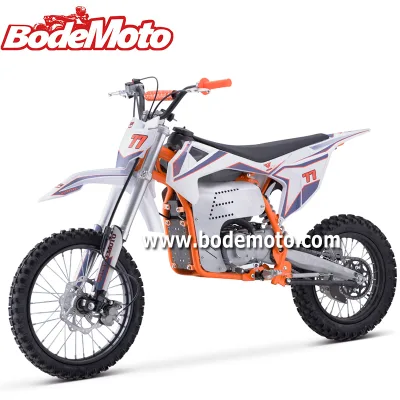


wholesale off Road Electric Motorcycle with High Speed and Long Range Electric dirtbike
$1857.00 - $2500.00
MOQ: 10 Pieces


Electric Tricycle Adult Commuter Street factory High-speed Motorcycle Motobike
$2571.00 - $5500.00
MOQ: 10 Pieces

odm Electric Tricycle Adult Commuter Street factory High-speed Motorcycle Motobike
$2571.00 - $5500.00
MOQ: 10 Pieces

Hot Selling off-Road Motorcycles High Power 8kW 10kW Mountain Cross-Country Electric Motorbike
$1857.00 - $2500.00
MOQ: 10 Pieces


Powered High Speed Electric Motorcycle City Commuter Electric Motorbikes
$385.00 - $585.00
MOQ: 50 Pieces


Comprehensive Sourcing Guide
Strategic Sourcing Guide for 3-Speed Off-Road Electric Motorbikes
The global procurement landscape for electric mobility has expanded rapidly, with a specific surge in demand for high-performance, off-road capable electric motorbikes. For buyers researching the core keyword "3 speed off-road electric motorbike," the market presents a complex array of specifications, particularly regarding power delivery, battery architecture, and regulatory compliance. This guide synthesizes available product data and industry standards to provide a disciplined framework for sourcing these vehicles. The focus remains on identifying critical technical parameters, verifying supplier claims, and understanding the cost structures inherent in manufacturing robust electric two-wheelers.
Technical Architecture and Performance Specifications
When evaluating a 3-speed off-road electric motorbike, the primary differentiator lies in the powertrain configuration and chassis durability. Unlike standard urban commuters, off-road variants require a motor capable of handling variable torque loads and a transmission system that allows for gear shifting to optimize speed and torque. Based on observed market data, the motor technology for these units predominantly utilizes brushless DC motors. These motors are favored for their high efficiency, reduced maintenance requirements, and ability to deliver consistent power output over extended periods.
The power output for these vehicles varies significantly depending on the intended use case. Observed listings indicate wattage ranges from 200W to 250W for lighter models, while heavy-duty off-road variants can reach power outputs of 3000W to 5000W. This disparity necessitates a clear definition of the "3-speed" requirement. In the context of electric motorbikes, a 3-speed system often refers to a mechanical transmission integrated with the motor or a specific electronic controller mapping that simulates gear ratios. High-performance models observed in the market feature speeds ranging from 70km/h up to 120km/h, powered by voltage systems of 72V. Conversely, lower-speed urban or light off-road models operate at 36V with maximum speeds between 20km/h and 40km/h.
Battery technology is another critical technical pillar. The majority of the observed inventory utilizes Lithium batteries, with specific configurations ranging from 10.4Ah to 100Ah capacities. Voltage levels are equally diverse, with 36V, 72V, and higher systems present in the market. The energy density and discharge rate of the battery directly influence the vehicle's range and acceleration. For instance, models equipped with Samsung cells or similar high-grade lithium chemistry report running distances up to 60km on a single charge. Charging times for these systems typically range between 6 to 7 hours, a factor that must be considered for fleet operations or high-utilization scenarios.
Compliance, Certification, and Regulatory Standards
Navigating the regulatory landscape is a paramount concern for international buyers. The market data reveals a fragmented certification environment where different regions require distinct approvals. A single product listing may claim compliance with multiple standards, including CE, DOT, COC, EPA, CQC, ISO, and ENEEC. However, buyers must exercise extreme caution when interpreting these claims. The presence of a "CE" mark is common, but it does not automatically guarantee compliance with specific regional safety directives without further verification.
For off-road vehicles intended for public road use, the distinction between "off-road only" and "street-legal" is legally significant. Some observed models carry certifications like DOT and EPA, which are typically associated with US market compliance, while others list ENEEC or CE, aligning with European standards. The "Standard" field in product data often lists dimensions or voltage ratings rather than safety standards, highlighting the need for buyers to explicitly request valid certification documents for their target market.
Buyers should verify if the specific model they are sourcing meets the EN 15194 standard for electric bicycles or if it falls under the more stringent regulations for motorcycles. The UL 2849 standard, while relevant for electric bicycle safety, is noted in background data but should not be assumed as a default compliance for all motorbikes. It is essential to request the original test reports and certificates from the supplier to confirm that the specific batch of goods matches the certification claims. Relying on a general statement of compliance without documentary evidence poses a significant risk of customs seizure or legal liability.
Cost Drivers and Pricing Dynamics
The pricing structure for electric motorbikes is driven by a combination of component costs, battery capacity, and manufacturing complexity. The observed price range in the market spans from $150 to $5,500 USD. This wide variance reflects the difference between lightweight, low-voltage commuter bikes and heavy-duty, high-voltage off-road machines. The most significant cost driver is the battery system. A 72V 100Ah battery pack, often found in high-speed models, represents a substantial portion of the total unit cost compared to a 36V 10.4Ah pack.
Material selection also plays a crucial role in pricing. Frame materials observed in the market include Aluminum Alloy and Steel. Aluminum alloy frames are generally lighter and more corrosion-resistant, often commanding a higher price point due to material costs and manufacturing precision. Steel frames, while heavier, offer high durability and impact resistance, which is beneficial for rugged off-road terrain but may increase shipping costs due to weight.
Additional cost factors include the motor brand and quality. Motors branded with specific manufacturers, such as "Quanshun," may carry a premium over generic unbranded units. Furthermore, the complexity of the braking system, such as the inclusion of front and rear disc brakes versus simpler drum brakes, affects the final price. Buyers must balance their budget against the required performance metrics, understanding that a lower price point often correlates with reduced range, lower top speed, or less durable materials.
Supplier Evaluation and Operational Capabilities
Selecting a reliable supplier requires a thorough assessment of their operational capabilities and geographic footprint. The product data indicates that manufacturers are primarily located in China, with specific hubs in Guangzhou and Dezhou, Shandong. These regions are known for their established supply chains for electric vehicle components. However, the presence of a location does not guarantee quality; buyers must verify the supplier's production capacity and quality control processes.
Key evaluation criteria include the Minimum Order Quantity (MOQ), which ranges from 1 to 100 units in the observed data. Suppliers offering low MOQs may be more suitable for testing the market or small-scale deployments, while those with higher MOQs might offer better economies of scale. Customization options are frequently available, allowing buyers to specify frame colors, battery capacities, and branding. The ability to customize the product is a strong indicator of a flexible manufacturing partner.
Packaging and logistics are also critical. Observed packing specifications include "Export Thick Carton," "Iron Frame and Cartons," and specific dimensions like 1482583cm. The net weight of packages varies, with some units weighing 45kg and others 48kg. Buyers should calculate the total landed cost, including freight, based on these dimensions and weights. A supplier that provides robust packaging designed to prevent damage during transit is essential, especially for vehicles with sensitive electronic components and fragile battery packs.
Quality Control and Inspection Protocols
Implementing a rigorous quality control (QC) protocol is non-negotiable for sourcing electric motorbikes. Given the variability in observed specifications, such as wheel sizes ranging from 12 inches to 28 inches and frame materials varying between aluminum and steel, a standardized inspection checklist is required. The inspection should begin with a pre-production sample review to verify that the prototype matches the agreed-upon technical specifications, including motor wattage, battery voltage, and speed capabilities.
During production, random sampling should be conducted to check for consistency in welding quality, frame alignment, and component assembly. Special attention must be paid to the electrical system, including the integrity of the wiring harness, the functionality of the 3-speed transmission, and the charging port durability. The braking system, whether disc or drum, must be tested for stopping power and responsiveness.
Post-production testing should include a road test to verify the actual range and speed claims. For example, if a supplier claims a 60km range, a sample unit should be tested under controlled conditions to validate this figure. Additionally, the charging time should be measured to ensure it aligns with the stated 6-7 hour window. Any deviation from these parameters should trigger a rejection of the batch. It is also advisable to conduct a drop test or vibration test to simulate off-road conditions and ensure the structural integrity of the frame and components.
Long-Term Procurement and After-Sales Strategy
Sourcing electric motorbikes is not merely a transactional purchase but a long-term partnership that requires a robust after-sales strategy. Buyers must consider the availability of spare parts, particularly for the motor, battery, and transmission components. The use of proprietary components, such as specific battery cells or branded motors, can complicate repairs if the supplier discontinues support. Therefore, it is crucial to negotiate a spare parts agreement that ensures a steady supply of critical components for at least 3 to 5 years.
Warranty terms are another vital consideration. Given the high cost of battery replacements, the warranty coverage for the battery pack should be clearly defined. Buyers should seek suppliers who offer a minimum warranty period for the battery and motor, with clear protocols for handling defects. The ability to provide technical support and troubleshooting guidance is equally important, especially for fleet operators who may not have in-house expertise in electric vehicle maintenance.
Furthermore, the scalability of the supply chain should be evaluated. As demand grows, the supplier must be able to ramp up production without compromising quality. This includes assessing their raw material sourcing stability and their capacity to handle increased order volumes within the specified lead times. A supplier with a proven track record of meeting delivery deadlines and maintaining consistent quality is essential for building a reliable brand reputation in the competitive electric mobility market.
Comparative Analysis of Key Product Attributes
To facilitate decision-making, the following table summarizes the key technical attributes observed in the market, highlighting the variance in specifications that buyers must navigate.
| Attribute | Low-End / Urban Variant | High-Performance / Off-Road Variant |
|---|---|---|
| Motor Type | Brushless (200-250W) | Brushless (3000W-5000W) |
| Battery Voltage | 36V | 72V |
| Battery Capacity | 10.4Ah | 60Ah - 100Ah |
| Max Speed | 20-40 km/h | 70-120 km/h |
| Frame Material | Aluminum Alloy | Steel / Aluminum Alloy |
| Wheel Size | 26 Inch / 28 Inch | 12 Inch / 14 Inch |
| Brake System | Front Rear Disc | Disc Brake |
| Range | 31-60 km | Variable (High Capacity) |
| Certifications | CE, ENEEC | CE, DOT, COC, EPA, ISO |
This comparison underscores the importance of defining precise requirements before engaging with suppliers. The "3-speed off-road" designation can apply to vastly different machines depending on the interpretation of "off-road" and the intended speed class. By aligning these technical expectations with the supplier's capabilities and verifying all claims through documentation, buyers can mitigate risk and secure a high-quality product that meets their operational needs.
FAQs
What certifications do 3 speed off-road electric motorbikes have?
Products often carry CE, DOT, COC, EPA, CQC, ISO, and ENEEC certifications. Buyers must verify specific batch documents as listings vary and not all models satisfy every standard simultaneously.
Which battery voltage options are available for these motorbikes?
Available voltage options include 36V and 72V systems depending on the model. Higher voltage 72V batteries typically support speeds up to 120km/h while 36V units offer lower performance ranges.
Can I customize the frame color and battery capacity?
Customization is available for frame colors and battery configurations. Suppliers offer multiple color choices and varying battery capacities like 10.4Ah or 100Ah to meet specific operational needs.
How fast can these motorbikes travel at maximum speed?
Maximum speeds range from 20km/h to 120km/h based on the motor wattage and voltage. Lower power 250W models reach 40km/h while high-power 5000W variants can hit 120km/h.
What is the typical charging time for the lithium battery?
The typical charging time is between 6 to 7 hours for a full charge. This duration applies to standard lithium battery packs found in the observed product listings.
Where are the manufacturers of these motorbikes located?
Manufacturers are primarily located in Guangzhou and Dezhou, Shandong, China. These regions serve as key hubs for the production and export of electric mobility vehicles.
What is the minimum order quantity for these electric motorbikes?
The minimum order quantity ranges from 1 to 100 units depending on the supplier. Low MOQs allow for small-scale testing while higher volumes may secure better pricing tiers.