Source 30ml Squeezable Cosmetic Bottle for Lotion, Cream, and Serum
Find and compare 30 suppliers offering the 30ml Squeezable Cosmetic Bottle with customizable features like screw caps and eco-friendly materials. Buyers can review specifications, pricing, and customization options for personal care applications.
Key considerations
Products List


Empty Lotion Bottle Cosmetic Bottle for Skincare Cosmetic with Lotion Pump
$0.21 - $0.88
MOQ: 10000 Pieces


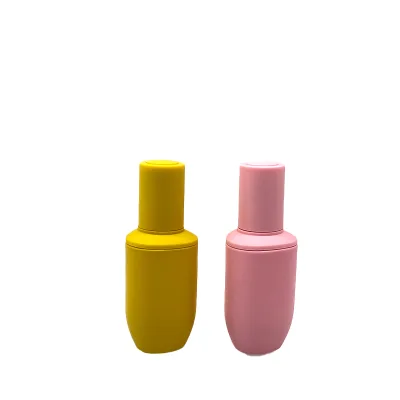


Plastic Portable 10ml 15ml 20ml 30ml Square Spray Bottle for Cosmetics
$0.11 - $0.12
MOQ: 10000 Pieces


Comprehensive Sourcing Guide
Strategic Sourcing Guide for 30ml Squeezable Cosmetic Bottles
Understanding Product Specifications and Material Variability
When sourcing a 30ml Squeezable Cosmetic Bottle, the primary challenge lies in distinguishing between rigid containers and true squeezable formats. The core keyword implies a flexible material, yet the available product data presents a mixed inventory of plastic and glass options. A critical observation from the current market data indicates that while "Plastic Cosmetic Bottle" is a dominant category, specific entries list "Glass" as the material with attributes like "Melt Glass" and "Glass Type." This creates a potential point of confusion for buyers seeking a squeezable item, as glass is inherently rigid and non-squeezable.
For a genuine 30ml squeezable bottle, the material must be flexible plastic, specifically Polyethylene (PE) or Polypropylene (PP), rather than the rigid PET (Polyethylene Terephthalate) or glass variants also present in the dataset. The data explicitly lists "Pet" as a material and "Plastic" as a general category, alongside specific dimensions for a 30ml unit noted as "60mmx17mm." Buyers must verify that the "30ml" specification corresponds to a flexible wall thickness suitable for squeezing. The "Neck Finish" is listed as customizable, which is vital for ensuring compatibility with various pump sprayers or dropper tops. Furthermore, the "Closure Type" data suggests options ranging from "Tamper Evident" to "Airless Pump," but the "Squeezable" requirement necessitates a specific cap design that does not restrict the bottle's ability to deform. The "Surface Handling" options, including "Screen Printing," "Frost," and "Color Printing," must be compatible with the flexible substrate to prevent cracking during the squeezing action.
Compliance, Certification, and Safety Standards
Navigating the regulatory landscape for cosmetic packaging requires rigorous verification of certifications, as the market data presents a fragmented view of compliance standards. Some entries in the dataset cite specific certifications including "RoHS," "REACH," "LFGB," and "ISO," while others reference "SGS" as a standard or "Standard Specifications or Customized" without naming a specific body. A buyer cannot assume that every 30ml bottle in a supplier's catalog meets these rigorous standards; rather, these should be treated as available options that require active confirmation.
The "RoHS" and "REACH" certifications are particularly critical for products intended for the European and North American markets, ensuring that the plastic materials do not contain restricted hazardous substances. "LFGB" is a German standard that is often a prerequisite for food and cosmetic contact materials in Europe, indicating the safety of the plastic for direct contact with the product. The presence of "ISO" in the data suggests that the supplier may adhere to quality management systems, but the specific ISO standard (e.g., ISO 9001) is not detailed in the provided facts. Buyers must explicitly request the current certificate documents for the specific 30ml SKU they intend to purchase.
Additionally, the "Child-Resistant" closure type mentioned in the data is a significant compliance feature for certain product categories, such as pharmaceuticals or high-concentration actives. However, if the target application is standard cosmetics, a "Tamper Evident" or "Single Wall" closure might be more appropriate. The "Disposable" attribute is listed as "No," which implies the bottles are designed for reuse or long-term storage, a factor that influences the material's durability requirements. Buyers should verify that the "Eco-Friendly" claim, if present, is backed by specific recyclability data or material composition statements, as this term is often used loosely in procurement contexts.
Cost Drivers and Pricing Dynamics
The pricing structure for 30ml squeezable cosmetic bottles is influenced by a complex interplay of material costs, customization levels, and order volume. The observed listed price range in the market data spans from 0 to 1.5 USD, a wide variance that suggests significant differences in product quality, material grade, and order quantity. A price at the lower end of this spectrum likely corresponds to high-volume orders of standard, non-customized PET or basic plastic bottles, whereas prices near the upper limit may reflect specialized materials, custom molds, or lower minimum order quantities (MOQ).
The "MOQ range" of 1 to 50,000 units indicates that suppliers are flexible, but the unit cost will fluctuate dramatically based on where the buyer falls within this range. For a 30ml bottle, the "Supply Ability" includes "Customization" and "Mold Opening," which are significant cost drivers. If a buyer requires a unique shape or a specific neck finish not in the standard catalog, the cost of mold development will be amortized over the order volume. The "Safe Export Pack" and "Carton" packing methods add to the final landed cost, as do the "Shrink Wrapped" options for palletized shipments.
Buyers must also consider the cost of the "Cap Closures," which are listed as "Aluminum Screw Caps, Lotion Pumps and Atomizer." The choice of closure can double or triple the unit cost of the bottle itself. For instance, an "Airless Pump" is significantly more expensive than a simple "Screw Cap." The "Color" and "Printing" options also impact pricing; "Customized" colors and multi-color "Screen Printing" or "Electroplating" require additional setup fees and higher per-unit costs compared to standard transparent or white finishes.
Typical Applications and Functional Requirements
The functional application of a 30ml squeezable bottle dictates the necessary material properties and closure mechanisms. The dataset lists "Cosmetic Packing" and "Personal Care" as primary applications, but also includes "Medical" and "Vials, for Child-Proof Bottle Dropper Tops." This diversity means that a single 30ml bottle design may not be suitable for all intended uses. For general cosmetic applications like lotions, creams, or serums, the "Reusable" feature and "Eco-Friendly" attributes are desirable. However, for medical applications, the "Tamper Evident" and "Child-Resistant" features become mandatory, and the material must meet specific biocompatibility standards.
The "Shape" is listed as "Round," which is the most common and cost-effective geometry for squeezable bottles. However, the "Neck Finish" being "Customizable" allows for specialized applications where a specific pump or dropper is required. The "Usage" field mentions "Lotion, Cream," which aligns with the squeezable nature of the product, as these formulations often require the user to apply pressure to dispense the contents. The "Automatic Inspection System for Whole Process" is a notable advantage for high-volume production, ensuring that every bottle is free from defects like pinholes or weak spots that could compromise the squeezable integrity.
Supplier Evaluation and Verification Protocols
Evaluating suppliers for 30ml squeezable cosmetic bottles requires a focus on their ability to deliver consistent quality and adhere to the specific material requirements. The data indicates origins in "Ningbo" and "Zhejiang, China," which are major manufacturing hubs for plastic packaging. However, the presence of "Glass" products in the same dataset suggests that some suppliers may be generalists rather than specialists in flexible plastics. Buyers must verify that the specific 30ml squeezable unit is manufactured by a facility equipped with the necessary extrusion or blow-molding technology for flexible plastics, rather than glass molding.
The "Customization" and "OEM Custom" attributes are listed as "Available" and "Accept," respectively, indicating that suppliers are open to tailored solutions. However, the "Standard Specifications or Customized" note implies that the default products may not meet unique buyer requirements. Buyers should request samples that match their specific "30ml" dimensions of "60mmx17mm" to verify the squeezability and structural integrity. The "Surface Handling" capabilities, such as "Screen Printing" and "Frost," should be tested on the actual material to ensure the ink adheres properly and does not flake off during squeezing.
Quality Control and Inspection Standards
Quality control for squeezable bottles is paramount, as any defect in the wall thickness or seal can lead to leakage or product spoilage. The "Advantage" of an "Automatic Inspection System for Whole Process" is a strong indicator of a supplier's commitment to quality, but buyers should not rely solely on this claim. Instead, they should request detailed quality control reports that include tensile strength tests, drop tests, and seal integrity checks. The "SGS" standard mentioned in the data is a reputable third-party verification body, and buyers should ask for specific test reports related to the 30ml bottle's material composition and mechanical properties.
The "Closure Type" options, including "Single Wall" and "Double Wall," have different quality implications. A "Double Wall" design might offer better insulation or protection but could be more prone to manufacturing defects if not properly molded. The "Tamper Proof Cap" and "Sprayer" mechanisms must be tested for their ability to maintain a seal under pressure. Buyers should also verify the "Disposable" status, ensuring that the "No" designation aligns with the intended reuse or long-term storage requirements. The "Safe Export Pack" and "Carton" packing methods should be inspected to ensure they protect the bottles from crushing during transit, which is a common risk for squeezable containers.
Long-Term Procurement and Sustainability Considerations
Sourcing 30ml squeezable cosmetic bottles is not just a one-time transaction but a long-term partnership that requires consideration of sustainability and supply chain stability. The "Eco-Friendly" feature listed in the data is a key differentiator, but buyers must define what this means in their specific context. Does it refer to the use of recycled materials, biodegradable plastics, or simply the recyclability of the PET or PE material? The "Supply Ability" for "Mold Opening" suggests that suppliers can support long-term growth, but buyers should ensure that the molds are durable and can withstand high-volume production runs without degradation.
The "Lead Time" and "Location" factors, while not explicitly detailed in the numerical data, are critical for long-term planning. With origins in "Ningbo" and "Zhejiang," buyers should anticipate potential logistical variables and ensure that the supplier has a robust track record of meeting delivery schedules. The "Customization" options allow for brand differentiation, but they also introduce complexity into the supply chain. Buyers should establish clear communication channels for design changes and ensure that the supplier can maintain consistency in color, shape, and material quality over time. Finally, the "Standard Specifications" and "Customized" options should be balanced against the need for flexibility, ensuring that the procurement strategy can adapt to market trends and regulatory changes without significant disruption.
FAQs
What material options exist for 30ml squeezable cosmetic bottles?
Flexible plastic like PE or PP is required for true squeezability, though PET and glass are also listed in the inventory. Buyers must verify the specific SKU to ensure the wall thickness allows deformation without cracking during use.
Which certifications are available for 30ml cosmetic bottle suppliers?
Some suppliers offer RoHS, REACH, LFGB, and ISO certifications, while others cite SGS standards. These compliance markers are not universal and must be explicitly confirmed for the specific 30ml unit before purchase to ensure safety.
How does the MOQ affect the price of 30ml cosmetic bottles?
The MOQ ranges from 1 to 50,000 units, causing significant price variance between 0 and 1.5 USD. Lower prices typically apply to high-volume orders of standard PET or plastic, while custom molds increase costs for smaller batches.
Can I customize the neck finish and closure for 30ml bottles?
Yes, the neck finish is customizable to fit various pumps or dropper tops, and closures include tamper-evident or child-resistant options. Customization is available, but specific cap designs must be selected to maintain the bottle's squeezable integrity.
What are the standard dimensions for a 30ml cosmetic bottle?
The observed specification for a 30ml unit is 60mm by 17mm. Buyers should request samples matching these exact dimensions to verify that the flexible plastic substrate supports the required squeezing action without structural failure.
Which packaging methods are used for exporting 30ml cosmetic bottles?
Products are shipped using Safe Export Pack, carton, or shrink-wrapped pallets. These methods protect the bottles from crushing during transit, which is critical for maintaining the integrity of squeezable containers made from flexible plastic.