Source 30A Electromagnetic Vibratory Truck Alternator for Fd, Sca, Nis
Find 30A Electromagnetic Vibratory Truck Alternator options from 30 verified listings. Compare specifications like voltage, current levels, and structure types for Fd, Sca, and Nis applications.
Key considerations
Products List




Comprehensive Sourcing Guide
Strategic Sourcing Guide for 30A Electromagnetic Vibratory Truck Alternators
Understanding the Technical Architecture of Electromagnetic Vibratory Alternators
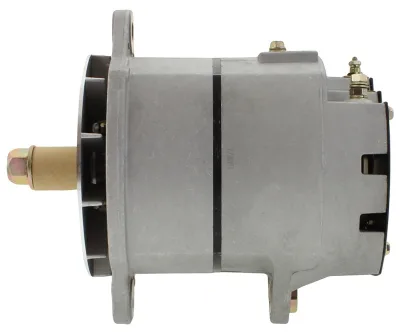
When sourcing a 30A Electromagnetic Vibratory Truck Alternator, buyers must first distinguish the specific mechanical and electrical architecture from standard automotive charging systems. The term "vibratory" in this context often refers to the internal damping or the specific mounting structure designed to withstand the high-frequency oscillations inherent in heavy-duty truck operations. Based on observed product attributes, the core technology frequently involves an electromagnetic vibratory type where the magnetic field winding utilizes an inner bonding structure. This design choice is critical for maintaining magnetic integrity under the thermal and mechanical stress of continuous truck operation.
The electrical output characteristics vary significantly across the market, but for a unit specifically targeting a 30A range, buyers should look for specific current level classifications. While some observed units in the broader category operate at levels such as 9 (≥90A) or 4 (40~49A), a 30A unit represents a mid-range capacity often found in auxiliary systems or specific light-to-medium duty truck applications. The voltage rating is a primary differentiator; observed data indicates units operating at 24V systems, which are standard for heavy trucks, though 12V variants also exist. The rectification structure is another vital technical parameter. High-performance units may feature an eleven-tube rectifier structure, whereas others utilize six-tube configurations. The choice between these depends on the required ripple current reduction and the specific load profile of the truck's electrical system.
Furthermore, the brushless alternator type is a key identifier. The market contains both magnetizing types and permanent magnet types. For a vibratory application, the magnetizing type is often preferred for its ability to maintain field strength under varying load conditions without the wear associated with brushes. The structure of the unit itself may be described as a magneto alternator or an integral alternator, depending on whether the rectifier and voltage regulator are integrated into the housing. The rotation direction, typically clockwise (Cw), must match the engine's drive belt configuration to prevent immediate mechanical failure upon installation.
Compliance Standards and Certification Verification
In the global B2B market for truck components, certification is not merely a formality but a prerequisite for supply chain integration. The primary certification standards observed in this sector include ISO9001 and Ts16949 (now IATF 16949). These standards indicate that the manufacturing facility adheres to rigorous quality management systems and automotive-specific production process controls. Buyers must verify that the supplier's certification is current and covers the specific manufacturing site where the alternator is produced, rather than just a corporate headquarters.
The product origin is a significant factor in compliance. Most observed units in this category originate from China, with specific manufacturing hubs noted in regions like Zhejiang. While this location offers competitive pricing, it necessitates a thorough vetting of the supplier's export compliance and adherence to the destination market's safety regulations. For instance, products destined for the American market must meet specific electrical safety standards, while those for the European market require compliance with E-mark regulations. The "Main Market" designation often aligns with the certification scope; a supplier claiming to serve the Japanese market must demonstrate compliance with JIS standards, whereas those targeting the European market must align with ECE regulations.
Buyers should also scrutinize the product standard specifications. While some listings cite physical dimensions such as 312321cm as a standard, this is likely a packaging or footprint specification rather than a performance standard. The actual performance standard should be verified against the specific part number, such as EB3T-10300-DA or 2470900. These alphanumeric codes serve as the primary reference for dimensional and electrical interchangeability. Without a matching part number or a verified cross-reference, the risk of non-compliance with the truck manufacturer's original equipment (OE) specifications increases significantly.
Cost Drivers and Pricing Dynamics in the Alternator Market
The pricing for electromagnetic vibratory truck alternators is influenced by a complex matrix of factors, including the current level, voltage rating, and the complexity of the rectifier structure. The observed price range in the market spans from $1 to $450 USD. This wide variance suggests that the "30A" specification alone does not dictate the final cost; rather, the build quality, brand reputation, and specific customization options play a larger role. A unit priced at the lower end of the spectrum may be a generic replacement with neutral packing, while a unit at the higher end likely features custom branding, enhanced durability materials, and specific certifications like ISO9001.
The Minimum Order Quantity (MOQ) is another critical cost driver. The observed MOQ range extends from 1 to 500 units. For buyers seeking to test the market or replace a single failed unit, an MOQ of 1 is advantageous, though the unit price may be higher. Conversely, bulk procurement with an MOQ of 500 can significantly reduce the per-unit cost, making it a viable strategy for fleet operators or large-scale distributors. However, buyers must balance the savings against the inventory holding costs and the risk of obsolescence.
Customization is a significant value-add that impacts cost. Many suppliers offer customization for the bonding type of the magnetic field winding, the head cover position, and the packing method. For example, a buyer requiring a specific "Front" head cover position or a "Back" head cover position may incur additional tooling or setup fees. Similarly, the choice between "Neutral Packing" and branded packaging (such as "Rdc Packing") affects the final price. The "Deceleration" driving type mentioned in some specifications also implies a specific mechanical design that may command a premium over standard direct-drive units.
Typical Applications and Market Segmentation
The application of a 30A Electromagnetic Vibratory Truck Alternator is highly specific and depends on the vehicle's electrical load requirements. The observed data indicates suitability for various truck brands and models, including those designated by codes such as "Fd," "Sca," and "Nis." These codes likely refer to specific truck manufacturers or model series that utilize this particular alternator capacity. The 30A output is generally sufficient for auxiliary systems, lighting, and control units in medium-duty trucks, rather than the primary charging of large battery banks in heavy-haulage vehicles, which often require higher amperage outputs like the observed 90A+ units.
The main market distribution provides insight into where these units are most in demand. The American market, European market, and Japanese market are all cited as primary destinations. This global distribution suggests that the design is versatile enough to meet the varying electrical standards of different regions. For example, the 24V system is prevalent in American and European heavy trucks, while the Japanese market may have specific preferences for the 12V or 24V configurations depending on the truck class.
Buyers should also consider the specific structural requirements of the application. The "Integral Alternator" structure is often preferred for compact engine bays, while the "Magneto Alternator" structure might be used in applications requiring a robust, standalone unit. The "Silicon Rectification Generator" structure is another variant that offers high efficiency and reliability, making it suitable for harsh operating environments. The "Rotator" type and "Head Cover" specific attributes indicate that the alternator is designed for specific mounting orientations, which is crucial for vibration management in truck chassis.
Supplier Evaluation and Quality Assurance Protocols
Evaluating a supplier for electromagnetic vibratory truck alternators requires a multi-faceted approach that goes beyond price comparison. The first step is to verify the supplier's ability to provide the specific customization options observed in the market, such as the "Inner Bonding" of the magnetic field winding or the specific "Rectifier Structure." A supplier that can demonstrate flexibility in these areas is more likely to be a reliable partner for long-term procurement.
Quality assurance should be anchored in the supplier's adherence to the observed certifications. The presence of ISO9001 and Ts16949 certifications is a strong indicator of a robust quality management system. However, buyers should request recent audit reports or certificates of conformity to ensure these certifications are active and relevant to the specific product line. The "High Quality" attribute listed in some product descriptions is subjective and should be substantiated by third-party test results or a proven track record of low failure rates in the field.
The origin of the product is another critical evaluation point. With most units originating from China, specifically Zhejiang, buyers should assess the supplier's logistics capabilities and their ability to manage export documentation. The "Standard size" and "Customizable" packing options should be evaluated for their impact on shipping costs and product protection during transit. A supplier that offers "Neutral Packing" may be suitable for private label arrangements, while those offering "Rdc Packing" or branded packaging may be better suited for direct retail distribution.
Long-Term Procurement and Lifecycle Management
Sourcing a 30A Electromagnetic Vibratory Truck Alternator is not just a one-time transaction but a strategic decision that impacts the long-term reliability of the vehicle fleet. Buyers should consider the lifecycle of the product, including the availability of spare parts and the potential for obsolescence. The specific part numbers, such as 0124655009 or 37300-2B400, serve as critical identifiers for future reordering. Ensuring that the supplier can maintain a consistent supply of these specific part numbers is essential for minimizing downtime.
The customization options available, such as the "Head Cover Position" and "Brushless Alternator Type," should be aligned with the long-term maintenance strategy of the fleet. For instance, a "Claw-Pole Type" alternator may offer different maintenance intervals compared to a "Permanent Magnet Type." Buyers should consult with their maintenance teams to determine which configuration offers the best balance of performance and serviceability.
Finally, the "Deceleration" driving type and the specific "Current Level" ratings should be matched to the expected duty cycle of the trucks. A unit designed for a 30A load may not be suitable for a truck that frequently operates at maximum electrical capacity. Buyers should conduct a thorough analysis of the fleet's electrical load profiles to ensure that the selected alternator can handle the peak demands without premature failure. By focusing on these long-term considerations, buyers can secure a reliable supply chain that supports the operational efficiency of their trucking operations.
FAQs
What certifications do these alternators typically hold?
These alternators typically hold ISO9001 and Ts16949 certifications. These standards indicate adherence to rigorous quality management systems and automotive-specific production process controls required for global supply chain integration.
Which voltage ratings are available for this alternator type?
Available voltage ratings include 24V and 12V configurations. The 24V system is standard for heavy trucks, while 12V variants exist for specific applications, ensuring compatibility with various truck electrical systems.
Can the product packaging be customized for specific needs?
Yes, the product packaging is available for customization. Options range from neutral packing to branded packaging like Rdc Packing, allowing buyers to tailor the presentation for private label or direct retail distribution.
What is the typical origin location for these units?
The typical origin location is China, with specific manufacturing hubs noted in Zhejiang. This location offers competitive pricing but requires verification of export compliance and adherence to destination market safety regulations.
How does the rectifier structure vary across different models?
The rectifier structure varies between six tubes and eleven tubes depending on the model. High-performance units often feature an eleven-tube configuration to reduce ripple current, while others utilize a six-tube setup.
Which brushless alternator types are commonly observed in this category?
Commonly observed types include magnetizing, permanent magnet, and claw-pole types. The magnetizing type is often preferred for maintaining field strength under varying loads without brush wear in vibratory applications.