Source 3D Eyes Fishing Soft Lures for River, Ocean Beach, and Ocean Rock Fishing
Compare 30 listings of 3D Eyes Fishing Soft Lures from verified suppliers. Review specifications including size, weight, and material for river, ocean beach, and ocean rock fishing applications.
Key considerations
Products List
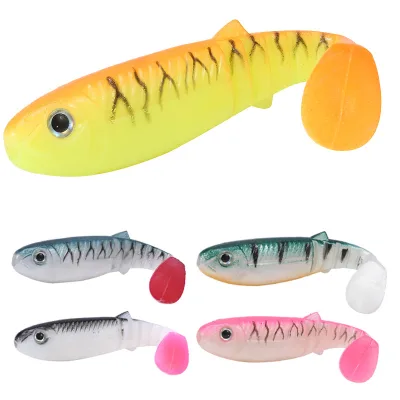


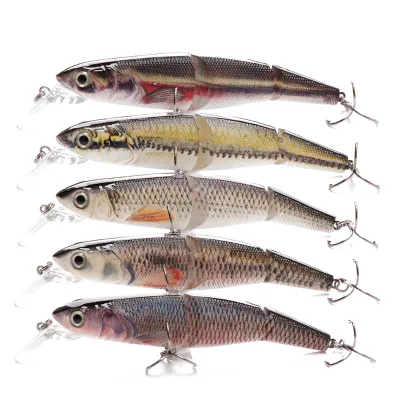


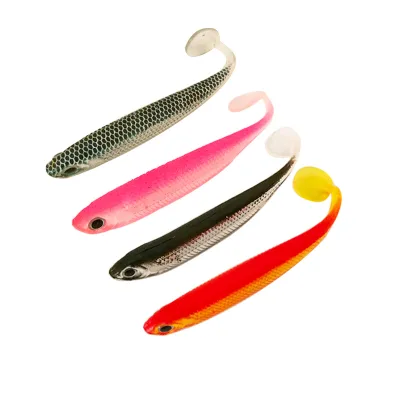
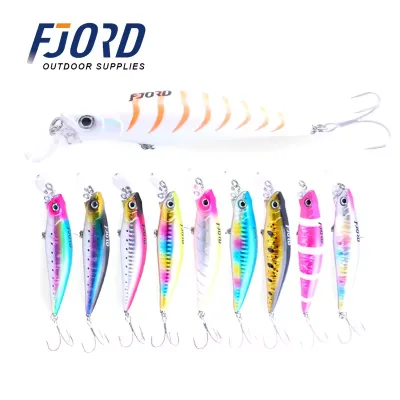

1/2oz High Quality Multiple-Color Fishing Bucktail Jig Trolling Fishing Lure
$1.07 - $1.39
MOQ: 1000 Pieces


Comprehensive Sourcing Guide
Strategic Sourcing Guide for 3D Eyes Fishing Soft Lures
Understanding the Product Category and Technical Specifications
The core keyword "3D Eyes Fishing Soft Lures" identifies a specific segment within the artificial bait market where visual attraction is paramount. These products are engineered to mimic the appearance of live prey, with the "3D eyes" serving as a critical visual trigger for predatory fish. Based on observed market data, these lures are categorized primarily as artificial soft bait or artificial soft lures. The construction typically involves flexible materials designed to replicate the natural movement of fish or crustaceans in the water column.
Technical specifications for these items vary significantly across the supply base, requiring buyers to define precise requirements before initiating procurement. Length is a primary differentiator, with observed standard sizes ranging from 5cm (approximately 2 inches) to 13cm. Specific models in the current market landscape include 8cm, 9cm, and 13cm variants, with some specifications noting 90mm or 4-inch dimensions. Weight is equally critical for casting distance and sink rate; observed data points to weights ranging from 1g for smaller 5cm lures up to 200g for heavier, specialized jigging applications. The presence of 3D simulation eyes is a consistent feature in high-fidelity models, designed to enhance the realism of the lure's head profile.
The material composition is generally soft, flexible plastic or silicone, allowing for natural action. However, some listings in the broader category include hard plastic minnows or metal components for specific jigging styles. For the specific "soft lure" segment, the material must be durable enough to withstand repeated strikes while maintaining the integrity of the 3D eye attachment. The packaging often varies from simple OPP bags to PVC or poly bags, which can influence the perceived value and protection of the product during transit. Buyers must verify that the specific model number, such as WSD-001 or Soft Lure RY78, aligns with the desired physical dimensions and weight class for their target species.
Compliance, Certification, and Safety Standards
When sourcing fishing lures, particularly those intended for international trade, understanding the regulatory landscape is essential. While specific certification documents were not explicitly listed in the provided product facts, buyers must assume that all products entering major markets must comply with local safety and environmental regulations. The "3D eyes" component, often made of plastic or resin, must be free of toxic substances that could leach into waterways or harm the end-user during handling.
In many jurisdictions, fishing tackle is subject to chemical safety standards regarding heavy metals and phthalates. Buyers should verify that the supplier can provide test reports confirming compliance with standards such as REACH in Europe or CPSIA in the United States, even if these are not explicitly stated in the initial product listing. The "Customization" and "OEM" attributes observed in the market suggest that many suppliers are willing to tailor products to meet specific regional compliance requirements. This includes adjusting color palettes, eye designs, or material formulations to meet local environmental restrictions.
Furthermore, the "Location" attributes observed, such as "River," "Ocean Beach Fishing," and "Sea," imply that the lures are designed for diverse aquatic environments. This necessitates that the materials used are resistant to corrosion and degradation from saltwater or freshwater exposure. While the product facts do not list specific durability test results, a compliant product should demonstrate resistance to UV degradation and chemical breakdown. Buyers should request documentation regarding the material safety data sheets (MSDS) and ensure that the manufacturing origin, noted as "China" in the observed data, adheres to the import regulations of the destination country.
Cost Drivers and Pricing Dynamics
The pricing structure for 3D Eyes Fishing Soft Lures is influenced by a complex interplay of factors, including material costs, labor intensity, and order volume. The observed price range in the market spans from $0.10 to $3.68 USD per unit. This wide variance indicates that price is not solely a function of the product's existence but is heavily dependent on the specific configuration, quality of the 3D eyes, and the scale of the order.
The Minimum Order Quantity (MOQ) is a significant driver of unit cost. Data indicates an MOQ range from 10 units to 5,000 units, with specific models showing MOQs of 500 or 1,500 bags. Suppliers often offer lower unit prices for orders that meet or exceed the higher end of the MOQ spectrum. The "Supply Ability" of suppliers, which can reach up to 100 billion pieces per month, suggests that high-volume production is feasible, but the unit cost will only reflect this efficiency at substantial order volumes.
Additional cost factors include the complexity of the 3D eye molding. Lures with highly detailed, multi-color, or reflective eyes typically command a higher price point than those with standard molded eyes. The packaging method also contributes to the final cost; while OPP bags are standard, custom PVC or poly bags with branding may incur additional tooling and material expenses. The "Sample" availability, often offered as free or at a low cost, allows buyers to assess quality before committing to large orders, but the logistics of sample shipping should be factored into the total cost of ownership. Buyers should negotiate based on the total landed cost, including packaging, shipping, and potential tariffs, rather than focusing solely on the ex-factory price.
Typical Applications and Target Environments
The versatility of 3D Eyes Fishing Soft Lures makes them suitable for a wide array of fishing scenarios. The observed "Position" attributes highlight their use in "STREAM," "Ocean Beach Fishing," and "Ocean Rock Fshing," indicating their effectiveness in both freshwater and saltwater environments. The specific "Location" tags of "River" and "Sea" further confirm that these lures are designed to perform in dynamic water conditions.
For freshwater applications, such as river fishing, the smaller 5cm to 9cm lures with weights around 1g to 5.8g are ideal. These sizes mimic the small baitfish and insects found in river systems, making them effective for species like bass, pike, and trout. The soft material allows for a natural swimming action that triggers predatory instincts. In contrast, saltwater applications, particularly ocean beach and rock fishing, often require larger, heavier lures. The observed 13cm hard plastic minnows and 200g lead fish variants are designed for deep-water jigging or casting long distances into surf zones.
The "Fishing Lure Type" classification as "Jigging Lures" suggests that these products are also optimized for vertical presentations. The 3D eyes play a crucial role in these scenarios by providing a visual target for fish that may be hunting in low-light conditions or murky water. The ability to customize colors, with options ranging from 1# to 16# plus custom requests, allows anglers to match the hatch or adjust to specific water clarity levels. Whether targeting freshwater streams or saltwater reefs, the key is selecting the correct size and weight combination to achieve the desired depth and action.
Supplier Evaluation and Sourcing Strategy
Evaluating suppliers for 3D Eyes Fishing Soft Lures requires a due diligence process that goes beyond the basic product listing. The "Brand Name" VSTARFISH and various model numbers like WSD-001 or RY78 indicate that there are established manufacturers in the market, but buyers should not rely on brand recognition alone. Instead, focus on the supplier's production capabilities and quality control systems. The "Supply Ability" of 100 billion pieces per month is a theoretical maximum; verify if the supplier has the actual infrastructure to meet your specific order volume without compromising quality.
The "Customization" and "OEM" attributes are critical indicators of a supplier's flexibility. A capable supplier should be able to accommodate custom mold requests, color variations, and packaging requirements. However, customization often comes with higher MOQs and longer lead times. Buyers should assess the supplier's willingness to provide samples and their track record in delivering customized orders. The "Single package size" of 10x2x2 cm and "Single gross weight" of 0.007 kg provide baseline data for logistics planning, but confirm these dimensions for the specific order to ensure accurate freight cost calculations.
When evaluating potential partners, request evidence of their quality control processes. While specific test results were not provided in the initial data, ask for internal inspection reports and their policy on defect rates. The "Product Name" variations, such as "Fresh Water Fishing Lures Soft 8cm" versus "13cm Fish Minnow Hard Plastic," suggest that some suppliers may have diverse product lines. Ensure that the supplier specializes in the specific type of lure you require, as expertise in soft bait manufacturing differs from hard plastic lure production.
Quality Control and Long-Term Procurement Considerations
Maintaining consistent quality is paramount in the fishing lure industry, where product performance directly impacts customer satisfaction. The "3D Eyes" are a common point of failure; they must be securely attached and resistant to peeling or fading. During the quality control phase, buyers should inspect a random sample of the batch for eye integrity, color consistency, and material flexibility. The "Color" options, ranging from 1# to 16#, must be matched precisely to the agreed-upon specifications to avoid discrepancies in the final product.
Long-term procurement considerations involve building a sustainable relationship with the supplier. The "MOQ" of 500 or 5,000 units suggests that buyers should plan for recurring orders to maintain cost efficiency. Establishing a clear communication channel for quality feedback and order adjustments is essential. Suppliers offering "Free" samples demonstrate confidence in their product, but buyers should use these samples to establish a baseline for future production runs.
The "Packaging Details" of OPP bags, PVC bags, or poly bags should be evaluated for durability. Poor packaging can lead to product damage during shipping, resulting in financial loss and customer complaints. For long-term contracts, consider negotiating for reinforced packaging or custom branding options that add value to the end product. Additionally, monitor the supplier's ability to adapt to changing market trends, such as new color trends or eco-friendly material requests. The "Customization" capability observed in the market suggests that suppliers are responsive to these needs, but formalizing these expectations in a contract ensures accountability.
Comparative Analysis of Product Variants
To facilitate informed decision-making, the following table compares key attributes of the observed product variants. This comparison highlights the diversity in specifications and helps buyers identify the most suitable option for their specific needs.
| Attribute | Variant A (Soft Lure) | Variant B (Hard Plastic) | Variant C (Jigging/Lead) |
|---|---|---|---|
| Product Name | Fresh Water Fishing Lures Soft 8cm | 13cm Fish Minnow Hard Plastic | Wholesale Fishing Tackle 200g Lead Fish |
| Model Number | WSD-001 / Soft Lure NO15 | hard plastic lures 852 | Lead fish A005 / JH-01 |
| Length | 8cm / 9cm | 13cm | 11.5cm - 15cm |
| Weight | 5.8g / 5.5g | Not specified (Hard Plastic) | 200g |
| Material | Artificial Soft Bait | Hard Plastic | Metal |
| Eyes | 3D Simulation Eyes | Not specified | Not specified |
| MOQ | 500 / 5000 | Not specified | Not specified |
| Target Location | River | Ocean Beach / Sea | Sea |
| Packaging | OPP Bag / PVC Bag | Not specified | Not specified |
This table illustrates that while all variants fall under the broad category of fishing lures, their specific applications differ significantly. Variant A is optimized for freshwater soft bait fishing with a focus on 3D eyes. Variant B is a hard plastic option suitable for larger predatory fish in saltwater. Variant C is a heavy-duty jigging lure designed for deep-sea fishing. Buyers must align their procurement strategy with the specific fishing environment and target species to ensure optimal performance.
FAQs
What are the standard sizes for 3D Eyes Fishing Soft Lures?
Standard sizes range from 5cm to 13cm, with specific models available at 8cm, 9cm, and 90mm. These dimensions allow anglers to select the appropriate lure for different target species and water conditions effectively.
How much does a single 3d eyes fishing soft lure weigh?
Weights vary by model, with observed values including 1g, 5.5g, 5.8g, and up to 200g for specialized jigging types. Buyers should verify the specific weight of the chosen model to ensure proper casting distance and sink rate.
Which customization options are available for 3D Eyes Fishing Soft Lures?
Customization is available for colors, with options ranging from 16 standard shades to fully custom requests. Suppliers also offer OEM services and can adjust packaging details like OPP or PVC bags to meet specific branding needs.
Can I get free samples of 3D Eyes Fishing Soft Lures?
Free samples are often available for buyers to assess product quality before placing a bulk order. However, specific availability depends on the supplier, and some may require payment for shipping or offer samples only for certain models.
What is the minimum order quantity for 3D Eyes Fishing Soft Lures?
Minimum order quantities typically range from 10 to 5000 units, with common thresholds set at 500 or 1500 bags. Lower MOQs may apply for specific models, while higher volumes often secure better pricing and supply stability.
Where are 3D Eyes Fishing Soft Lures manufactured and shipped from?
These products are primarily manufactured in China and shipped to various global destinations. The origin location ensures access to established supply chains capable of meeting high production volumes and diverse customization requirements efficiently.