Source 3D Iron-On Football Jersey Patch for Teams, Clubs, and Fans
Compare 30 listings for 3D Iron-On Football Jersey Patch options from Guangdong suppliers. Buyers can review custom designs, materials like polyester and twill, and pricing details for soccer wear applications.
Key considerations
Products List
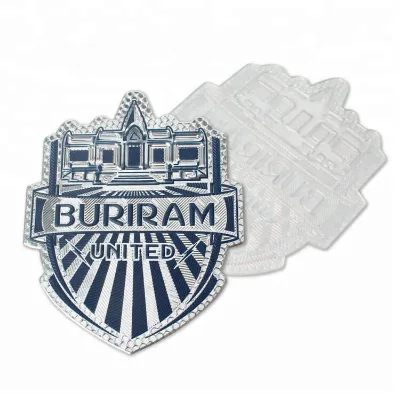


in-Stock Football League Patch Durable Jersey Accessory Badge Heat Transfer Patch
$0.70 - $1.00
MOQ: 100 Pieces


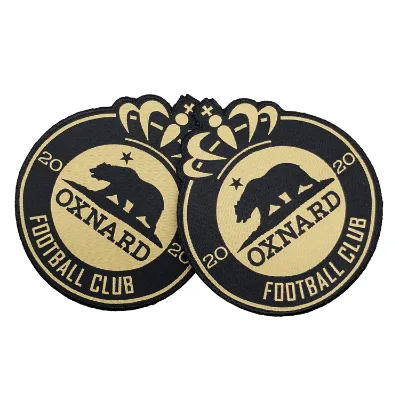


High Quality Embroidery Patches Custom Cartoon Iron on Patches Football Soccer Patch
$0.30 - $0.79
MOQ: 50 Pieces





Comprehensive Sourcing Guide
Strategic Sourcing Guide for 3D Iron-On Football Jersey Patches
The procurement of 3D iron-on football jersey patches represents a specialized niche within the broader apparel customization market. Buyers seeking these items must navigate a landscape defined by specific technical requirements, material constraints, and manufacturing capabilities. The core objective is to secure high-quality, durable patches that adhere securely to athletic wear while maintaining the aesthetic integrity of the design. This guide synthesizes available product attributes and industry standards to provide a structured approach for sourcing these specific components. The focus remains on evidence-based decision-making, ensuring that procurement strategies align with the physical realities of the product category.
Technical Specifications and Material Composition
Understanding the technical architecture of a 3D iron-on patch is the first step in defining a successful procurement request. The product attributes indicate a divergence in manufacturing techniques, specifically between heat transfer methods and embroidery. For the specific keyword "3D iron-on football jersey patch," the material composition is critical. The supply data highlights Polyester and Twill as primary materials, with some listings specifying Cotton, Cotton Twill, and Cotton Thread. The choice of material directly influences the texture, durability, and the final "3D" effect of the patch.
The production technique is equally significant. While some listings cite Heat Transfer Printing and Heat Transfer as the primary method, others explicitly mention Embroidered and Embroidery techniques. A true 3D effect in patches is often achieved through high-density embroidery or specialized silicone molding, rather than flat heat transfer printing alone. The data notes a Silicone model number, suggesting that silicone-based 3D patches are a viable option alongside traditional embroidered varieties. The backing is a crucial technical specification; the supply chain offers Iron-on, Sew-on, and Hook and Loop options. For football jerseys, where flexibility and washability are paramount, the Iron-on backing with a Hot Cut border is frequently observed.
Buyers must verify the specific Thread type, as Polyester Yarn is listed as a standard component. This material choice ensures colorfastness and resistance to the high friction and washing cycles associated with sports uniforms. The Size of the patch is another variable; while some listings specify a range of 7-9 Cm, others indicate Customized or Customizable dimensions. The Single package size is often listed as generic (XX cm), requiring direct confirmation with the supplier to ensure accurate logistics planning. The Artwork Format required for production is typically AI, PDF, PSD, or CDR, necessitating that buyers prepare digital files in these specific vector or raster formats to avoid production delays.
Compliance, Certification, and Quality Standards
In the realm of B2B apparel sourcing, compliance is not merely a formality but a prerequisite for market access. The provided data mentions that the prod_standard is "AS REQUIRED," which indicates a lack of a universal, pre-defined standard for this specific product category in the supplied context. This places the burden of verification on the buyer. While the product features are described as Eco-Friendly, this claim requires substantiation through third-party testing or specific material certifications, which are not explicitly detailed in the general product attributes.
Buyers should verify that the materials used, particularly the Polyester and Cotton blends, comply with relevant safety regulations for textiles in their target market. For football jerseys, which are often worn by minors, chemical restrictions regarding azo dyes and heavy metals are critical. The Quality is described as High Quality in the source data, but this is a qualitative assertion rather than a quantifiable metric. To validate this, procurement teams must request test results regarding washability, as the product feature explicitly lists Washable as a characteristic. The durability of the Hot Cut border and the adhesion strength of the Iron-on backing under repeated laundering must be confirmed through physical testing.
Furthermore, the Place of Origin is consistently listed as Guangdong, China or generally China. While this provides a geographic anchor, it does not guarantee specific compliance levels. Buyers should inquire about the factory's adherence to international standards such as ISO 9001 for quality management or specific textile safety standards like OEKO-TEX, even if these are not explicitly mentioned in the basic product listing. The absence of specific certification data in the source material means that the buyer must treat "Eco-Friendly" and "High Quality" as claims to be verified rather than established facts.
Cost Drivers and Pricing Dynamics
The pricing structure for 3D iron-on football jersey patches is influenced by several distinct variables. The observed price range in the market is 0.05-2.5 USD per unit, a wide spectrum that reflects differences in complexity, material, and order volume. The MOQ (Minimum Order Quantity) varies significantly, with observed ranges from 1 to 1000 units, and specific listings citing 50 Pcs/small MOQ or 100PCS. This variability allows for flexibility in procurement but requires careful cost modeling.
The primary cost driver is the Customization level. The product attributes confirm that Customized Designs and Custom Color options are available. Customization inherently increases the cost due to the setup of digital files, the creation of new molds or embroidery patterns, and the potential for lower production efficiency. The Model Number (e.g., DS-069-3, USA Peace Fingers) suggests that pre-existing designs may be cheaper than fully bespoke creations. Additionally, the Technics employed—whether Heat Transfer Printing or Embroidery—will impact the unit cost. Embroidery, particularly high-density 3D embroidery, typically commands a higher price point than flat heat transfer methods due to the time and labor intensity involved.
Shipping costs are another significant factor. The SHIPPING methods listed include DHL, FEDEX, UPS, and EMS. These are premium courier services, and their costs can escalate quickly depending on the weight and volume of the order. The prod_packing is noted as 500PCS/Package for some items, while others are Variable. Bulk packaging can reduce per-unit shipping costs, but the buyer must balance this against storage capacity and cash flow. The Sample Time of 5-7 days indicates a relatively quick turnaround for prototyping, which can reduce the overall project timeline but may incur higher per-unit sample costs compared to bulk production.
Typical Applications and Usage Scenarios
The primary application for these patches is clearly defined in the product attributes as Garment and Soccer Wear. The Usage field explicitly mentions Clothing Accessories, indicating that these patches are intended to be decorative or functional additions to athletic apparel. Football jerseys, in particular, require patches that can withstand rigorous physical activity, including stretching, sweating, and frequent washing. The Style is identified as Iron-On, which suggests a direct application method suitable for mass customization of team kits.
Beyond standard football jerseys, the versatility of the product allows for application on other textile and garment types. The advantage of being able to iron on any garment and textile expands the potential market to include casual wear, team uniforms for other sports, and fan merchandise. The 3D feature adds a tactile dimension that is highly valued in sports branding, as it creates a sense of depth and prominence for logos or player numbers. The Border type, specifically Hot Cut, is ideal for complex shapes often found in sports logos, allowing for precise edges without the need for additional trimming.
Buyers should consider the specific demands of the end-user. For professional teams, the durability and washability of the patch are non-negotiable. For amateur or recreational leagues, the aesthetic appeal and ease of application may take precedence. The Customization capability allows for team-specific colors and designs, making these patches a versatile tool for branding. The Product Type is listed as Patches, confirming their role as an accessory rather than a primary garment component.
Supplier Evaluation and Verification
Selecting the right supplier is critical when dealing with customized textile products. The supply data indicates that the Brand Name associated with some listings is Dishan, and the Place of Origin is Guangdong, China. While these details provide a starting point, buyers should not rely solely on brand recognition. The Advantage section highlights Factory Direct and Test Before Shipping, which are strong indicators of a direct manufacturer relationship. This suggests that the supplier may offer better pricing and more control over quality than a trading company.
When evaluating potential suppliers, buyers should verify the Sample availability. The data confirms that an actual sample could be offered, and the Sample Time is 5-7 days. Requesting a physical sample is essential to validate the 3D effect, the quality of the Embroidery or Heat Transfer, and the strength of the Iron-on backing. Buyers should also check the Artwork Format requirements to ensure their design team can meet the supplier's technical specifications (AI, PDF, PSD, CDR).
The Quality claim of "High Quality" must be backed by evidence. Buyers should request references or case studies from previous clients, particularly those in the sports apparel sector. The prod_standard being "AS REQUIRED" means the supplier is flexible, but the buyer must define their own quality benchmarks. Communication regarding the Customization process is vital; the supplier must demonstrate an ability to handle Customized Designs and Custom Color requests without compromising the integrity of the Polyester or Twill materials.
Quality Control and Long-Term Procurement
Implementing a robust quality control (QC) protocol is essential for maintaining product consistency. Given the Washable feature, buyers should establish a testing regimen that includes repeated washing cycles to ensure the patch does not peel, fade, or distort. The Hot Cut border should be inspected for fraying or uneven edges. Since the Material can vary between Polyester, Cotton, and Twill, QC checks must be material-specific to ensure the correct thread tension and adhesive application.
For long-term procurement, the MOQ flexibility is a key consideration. With ranges from 1 to 1000 units, buyers can start with smaller orders to test the market before committing to larger volumes. However, the prod_packing of 500PCS/Package suggests that economies of scale are realized at higher volumes. Buyers should plan their inventory management to align with these packaging constraints to minimize waste and storage costs.
The Lead Time is another factor for long-term planning. While the Sample Time is 5-7 days, the production lead time for bulk orders is not explicitly stated in the data. Buyers must negotiate clear timelines for production and shipping, considering the SHIPPING methods available (DHL, FEDEX, UPS, EMS). The Factory Direct advantage suggests that the supplier may have the capacity to scale production, but this should be confirmed through a capacity audit.
Finally, the Advantage 2 of Factory Direct / test before shipping implies a commitment to quality assurance. Buyers should leverage this by insisting on pre-shipment inspections. This ensures that the final product meets the High Quality standards expected for football jerseys. By maintaining a close relationship with the supplier and adhering to strict QC protocols, buyers can ensure a steady supply of high-performance 3D iron-on patches that meet the demands of the sports apparel market.
Summary of Key Sourcing Parameters
To facilitate quick reference, the following table summarizes the critical parameters identified in the sourcing analysis. This consolidation helps buyers align their requirements with the available market data.
| Parameter | Observed Value / Range | Verification Requirement |
|---|---|---|
| Product Type | Patches, 3D Iron-On | Confirm 3D effect via sample |
| Material | Polyester, Twill, Cotton | Verify material composition |
| Technique | Embroidery, Heat Transfer | Specify preferred method |
| MOQ | 1 - 1000 Pcs | Negotiate based on volume |
| Price Range | 0.05 - 2.5 USD | Request quote for specific specs |
| Backing | Iron-on, Sew-on, Hook & Loop | Select based on application |
| Artwork | AI, PDF, PSD, CDR | Prepare files in correct format |
| Origin | Guangdong, China | Verify factory location |
| Sample Time | 5-7 Days | Plan for prototyping phase |
| Shipping | DHL, FedEx, UPS, EMS | Calculate logistics costs |
By adhering to these guidelines and verifying all claims against physical samples and technical documentation, buyers can effectively source 3D iron-on football jersey patches that meet the rigorous demands of the sports apparel industry. The focus on evidence-based verification ensures that the final procurement decision is grounded in the actual capabilities of the supply chain rather than marketing assertions.
FAQs
What materials are used for 3d iron on football jersey patches?
These patches are primarily made from Polyester or Twill, with some options using Cotton and Cotton Twill. The thread is typically Polyester Yarn to ensure durability and colorfastness during washing and physical activity.
Can I get custom designs for these iron-on patches?
Yes, custom designs and custom colors are available for these products. Buyers must provide artwork in AI, PDF, PSD, or CDR formats to enable the factory to produce the specific customized designs required.
What is the minimum order quantity for these patches?
The minimum order quantity varies, with observed ranges from 1 to 1000 units and specific listings starting at 50 or 100 pieces. Buyers should verify the exact MOQ with the specific manufacturer before placing an order.
How long does it take to receive a sample?
An actual sample can be offered with a typical sample time of 5 to 7 days. This allows buyers to verify the 3D effect, iron-on backing quality, and washability before committing to a larger production run.
Which printing techniques are used for these football patches?
Manufacturers use Heat Transfer Printing, Embroidery, and Silicone molding techniques depending on the desired effect. The choice of technique influences the final texture and the specific 3D appearance of the patch on the jersey.
Where are these patches manufactured?
The place of origin for these products is consistently listed as Guangdong, China or generally China. Buyers should expect the supply chain to be anchored in this region when sourcing for these specific textile accessories.
What is the price range for these custom patches?
The observed price range is between 0.05 and 2.5 USD per unit, depending on complexity and order volume. Pricing is often quoted as EXW or wholesale price, with costs influenced by customization levels and material choices.