Source 3D Leak Prevention Adult Nappies for Care Homes, Hospitals, and Home Use
Compare 30 listings of 3D Leak Prevention Adult Nappies from verified Chinese manufacturers. Buyers can evaluate absorbency, customization options, and pricing to find suitable disposable incontinence solutions for clinical or personal care settings.
Key considerations
Products List


Ultra Thin Soft Disposable Adult Diaper 3D Leak Guard High Absorption Nappies
$0.20 - $0.23
MOQ: 50000 Pieces


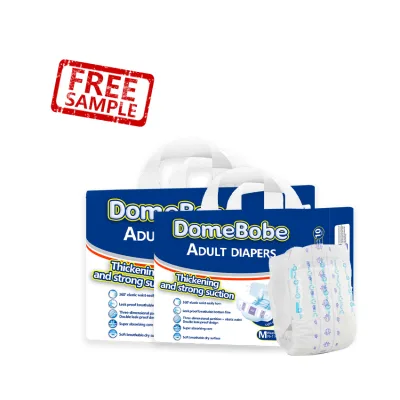


China Wholesale Disposable Nappies Adult Diaper Nappies Adult Products
$0.08 - $0.09
MOQ: 150000 Pieces

China Wholesale Disposable Nappies Adult Diaper Nappies Sanitary Napkin
$0.08 - $0.09
MOQ: 150000 Pieces


Disposable Super Thick Pull up Nappies Breathable Leak Guard Adult Diaper
$0.11 - $0.13
MOQ: 30000 Pieces

Manufacturer Disposable Hospital Incontinence Nursing Adult Nappies Diaper Adults Pull up Pant
$0.11 - $0.13
MOQ: 30000 Pieces


Ultra-Absorbent Adult Diapers with 3D Leak Guards, Adjustable Fit, and High Absorption Capacity
$0.12 - $0.15
MOQ: 40000 Pieces


Comprehensive Sourcing Guide
Strategic Sourcing Guide for 3D Leak Prevention Adult Nappies
The global demand for high-quality incontinence care products has driven a significant shift toward specialized procurement strategies, particularly for items featuring advanced fluid management systems. When sourcing 3D Leak Prevention Adult Nappies, buyers must navigate a complex landscape of technical specifications, material science, and supply chain logistics. This guide provides a disciplined framework for evaluating suppliers and products, ensuring that procurement decisions are grounded in verifiable data rather than marketing assertions. The focus remains on the specific attributes observed in the current market, including the "3D Leak Prevention Channel" technology, which distinguishes premium offerings from standard disposable diapers.
Technical Specifications and Core Engineering
The defining characteristic of the target product category is the integration of a 3D leak prevention system. In the context of adult incontinence care, this engineering feature is critical for maintaining dryness and preventing skin irritation. Based on observed product attributes, the core technology often involves a specialized channel design that actively directs fluid away from the skin and toward the absorbent core. This is distinct from simple barrier layers; it implies a structural modification to the inner surface of the diaper.
When evaluating technical specifications, buyers should verify the composition of the core material. The supplied data indicates a preference for Cotton Core materials in several listings, which suggests a focus on softness and hypoallergenic properties. However, the absorbency capacity varies significantly across different models. For instance, specific product lines list absorbency ranges between 1000ml and 1800ml, a critical metric for overnight use or high-volume incontinence. Buyers must cross-reference these figures with the intended user profile, as a mismatch can lead to product failure.
Furthermore, the backsheet material plays a dual role in leak prevention and comfort. The market data highlights the use of Breathable PE Film as a standard component. This material allows moisture vapor to escape while preventing liquid leakage, a balance that is essential for long-term wear. The dimensions of the product also vary, with observed standards ranging from 20x17x23.5cm to larger configurations like 800x640mm or 950x800mm. These measurements often correlate with the size classification (M, L, XL, XXL) and the specific target demographic, such as bedridden patients versus mobile adults.
Compliance and Certification Verification
In the medical and personal care sector, certification is not merely a formality but a prerequisite for market entry and liability protection. The sourcing data reveals a mix of certification claims, including ISO, CE, SGS, and references to OEKO-TEX standards. While ISO appears frequently as a standalone attribute, the presence of CE and SGS suggests compliance with European safety standards and third-party quality verification, respectively.
Buyers must exercise caution when interpreting these labels. The data notes that some certifications are "high-confidence" while others are "low-confidence background" information. For example, while ISO is explicitly listed as a product property in several entries, specific standards like ISO9001 or ISO13485 are noted in the background with lower confidence. This distinction implies that while a supplier may hold a general ISO certification, they may not necessarily possess the specific medical device quality management system certification required for certain markets.
The verification process should involve requesting valid, up-to-date certificates from the supplier. Buyers should confirm that the certification covers the specific manufacturing facility and the specific product model, not just the company in general. Additionally, the presence of Japan Sap (Super Absorbent Polymer) is a notable attribute in some listings. While this indicates a high-performance absorbent material, it does not automatically confer a specific certification. The buyer must verify that the SAP used meets the relevant chemical safety standards for the destination market, ensuring that the raw materials themselves are compliant.
Cost Drivers and Pricing Dynamics
Understanding the cost structure of 3D Leak Prevention Adult Nappies is essential for budgeting and negotiation. The observed price range in the market is $0.03 to $0.40 USD per unit. This wide variance is driven by several factors, including the complexity of the leak prevention technology, the quality of the core material, and the volume of the order.
The MOQ (Minimum Order Quantity) is a primary driver of unit cost. The data shows an MOQ range from 1,000 to 150,000 units, with some suppliers requiring a full 20FT Container or 1*20FT as the minimum. This suggests that the lower end of the price spectrum is likely reserved for bulk container loads, while smaller orders will incur a significantly higher per-unit cost. Buyers must calculate the total landed cost, including shipping and duties, rather than focusing solely on the FOB price.
Other cost drivers include customization options. The product attributes confirm that Customization is available, including Logo Printing (though some listings specify "Without Logo Printing," indicating it is an optional add-on) and Packing customization. Customized packaging, such as Transparent Polybag or specific Carton configurations, adds to the production cost. Additionally, the use of premium materials like Cotton Core or Japan Sap will increase the base price compared to standard synthetic alternatives.
Typical Applications and User Demographics
The versatility of 3D Leak Prevention Adult Nappies allows them to serve a wide range of applications. The product attributes explicitly state that the Gender is Unisex and the Suitable for category is Adult. This broad applicability means the product can be utilized in various care settings, from home care to institutional facilities.
The Type is consistently listed as Disposable Diaper, indicating a single-use design optimized for hygiene and convenience. The Anti-Leak features, such as the 3D Leak Prevention Channel or Leak Guard, are specifically designed to handle the higher fluid volumes associated with adult incontinence. The absorbency range of 1000-1800ml suggests these products are suitable for both daytime and nighttime use, depending on the specific model and the user's needs.
The Product Name "Incontinence Adult Diaper" and "Adult Diaper" confirms the primary application. However, the presence of Sample offerings, including "Free Sample Baby Diaper" in some contexts, indicates that some suppliers may have overlapping product lines. Buyers must ensure that the specific sample provided is indeed an adult model, as the structural requirements for adult diapers (larger surface area, higher absorbency) differ significantly from baby diapers. The Style is described as "Disposable Adult Diaper," reinforcing the intended use case for long-term care and mobility assistance.
Supplier Evaluation and Operational Capabilities
Selecting the right supplier requires a rigorous evaluation of their operational capabilities and reliability. The Lead Time is a critical metric, with observed values ranging from 25 Days to 30 Days. This timeline is essential for inventory planning and supply chain continuity. Buyers should verify if these lead times are consistent or if they fluctuate based on order volume or raw material availability.
The Payment terms observed are generally 30% Deposit, 70% Balance (either before loading or via TT). This standard structure protects both parties but requires careful cash flow management. The Location of the suppliers is primarily in China, with specific mentions of Hebei and Fujian provinces. These regions are known for their manufacturing clusters in the textile and hygiene product sectors. Buyers should consider the logistical implications of shipping from these locations, including port proximity and transit times.
The Product Packing methods vary, with options including Bags, Poly Bag, Export Packing, and specific configurations like 10PCS/Pack or 8packs/Carton. The ability to customize packing is a significant advantage for buyers looking to optimize shelf space or meet specific retailer requirements. Additionally, the Brand is often listed as OEM, indicating that suppliers are capable of producing private-label goods. This is a crucial capability for buyers who intend to market the product under their own brand name.
Quality Control and Long-Term Procurement
Ensuring consistent quality is paramount in the incontinence care industry. The Sample policy, which often includes Freely Offered samples, provides an opportunity for buyers to conduct physical testing before committing to a large order. Buyers should test the samples for absorbency, leak prevention efficacy, and material comfort. The Anti-Leak features, such as the 3D Leak Prevention Channel, should be verified through practical testing to ensure they perform as advertised.
Long-term procurement considerations involve building a sustainable relationship with the supplier. The availability of Customization allows for product evolution based on market feedback. Buyers should establish clear communication channels regarding quality control protocols and defect rates. The Certificate status should be reviewed periodically to ensure ongoing compliance with changing regulations. Furthermore, the Standard dimensions and Size options (M, L, XL, XXL) should be maintained consistently to avoid confusion in the supply chain.
In conclusion, sourcing 3D Leak Prevention Adult Nappies requires a meticulous approach that balances technical performance, cost efficiency, and regulatory compliance. By focusing on verified attributes such as the Cotton Core, Breathable PE Film, and specific Absorbency ranges, buyers can make informed decisions that meet the needs of their end-users. The market offers a diverse range of options, but success lies in rigorous supplier evaluation and a commitment to quality assurance throughout the procurement lifecycle.
FAQs
How long is the typical lead time for these diapers?
The typical lead time ranges from 25 to 30 days for production. This duration depends on order volume and specific customization requests like logo printing or packaging adjustments.
What is the minimum order quantity required?
Minimum order quantities vary from 1,000 units up to 150,000 units depending on the supplier. Some vendors require a full 20FT container as the minimum threshold for bulk pricing.
Which certifications are commonly available for these products?
Common certifications include ISO, CE, and SGS, with some suppliers also holding ISO9001 or ISO13485 status. Buyers should verify specific certificates for the manufacturing facility and product model.
Can I request custom packaging for these adult diapers?
Yes, customization is available for packaging, including options like transparent polybags or specific carton configurations. Suppliers often offer tailored packing solutions to meet retailer requirements.
What is the price range per unit for these diapers?
The observed price range is between 0.03 and 0.40 USD per unit. This variance is driven by factors such as absorbency levels, core material quality, and total order volume.
Which materials are used for the absorbent core?
Many products utilize a cotton core for softness and hypoallergenic properties, while others feature Japan SAP for high absorbency. The backsheet typically consists of breathable PE film to prevent leaks.
What payment terms are standard for these orders?
Standard payment terms usually require a 30% deposit with the remaining 70% paid before loading or via TT. This structure is common across most suppliers in the region.