Source 3D Laser Crystal Engraving Machine for Crafts, Advertising, and Molds
Source a 3D Laser Crystal Engraving Machine from 30 verified listings. Compare key specifications such as laser power, cooling systems, and marking speeds to find the right equipment for your manufacturing needs.
Key considerations
Products List
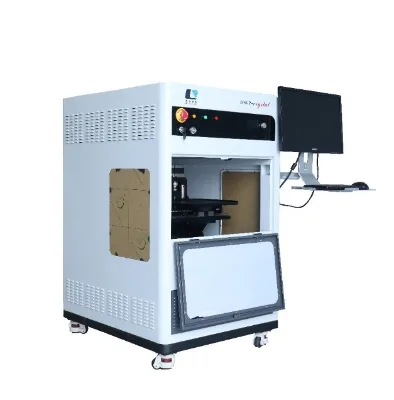


Green Laser Marking Machine 3D Crystal Internal Laser Engraving Machine
$11550.00 - $14900.00
MOQ: 1 Sets


3D Crystal Laser Inner Engraving Machine 355nm 5W UV Laser Glass Engraving Machine
$4500.00 - $5500.00
MOQ: 1 Pieces


Crystal 3D Engraving Machine UV Laser Small 3D Crystal Laser Inner Engraving Machine
$4900.00 - $5500.00
MOQ: 1 Pieces

Green Laser 3D Crystal Subsurface Laser Engraving Machine Factory Price
$4200.00 - $5500.00
MOQ: 1 Pieces


3D Inner Crystal Glass Engraving Machine 5W UV Marking Machine Glass Laser Engraving Machine
$2900.00 - $5800.00
MOQ: 1 Pieces


Comprehensive Sourcing Guide
3D Laser Crystal Engraving Machine Sourcing Guide
Selecting the right 3D Laser Crystal Engraving Machine requires a clear understanding of the distinct technologies available in the market, primarily CO2 and fiber laser systems. Buyers must first determine whether their production needs align with the capabilities of a CO2 laser, which is traditionally used for non-metallic materials like acrylic, glass, and crystal, or a fiber laser system designed for metal marking and engraving. The supplied data indicates a diverse range of products, with some listings specifying CO2 sources with air cooling and others detailing fiber-based systems with water cooling and high-speed scanning mirrors. This divergence means that a single machine rarely excels in both domains, making the initial classification of your material requirements the most critical step in the sourcing process.
The observed market signals reveal a significant variation in machine configurations, ranging from compact, stand-alone units to larger industrial-grade equipment. For instance, some listings highlight a maximum working scope of 80x80x100mm, suitable for small, intricate jewelry or souvenir engraving, while others offer larger envelopes up to 300x400x130mm for broader production runs. Additionally, the presence of "3D" features in product attributes suggests that buyers should look for machines equipped with Z-axis adjustment or specialized 3D engraving software, which allows for depth control and volumetric engraving within transparent materials. Understanding these physical and functional distinctions ensures that the procurement team does not invest in a machine that lacks the necessary axis movement or software integration for true 3D crystal work.
Product Scope and Observed Listing Signals
The product scope for 3D laser crystal engraving machines encompasses a wide array of industrial applications, including the advertising, crafts, leather, and printing industries. Listings indicate that these machines are often marketed as "Easy To Operate" and feature automatic grading, which suggests a user-friendly interface suitable for small to medium-sized enterprises. The supported graphic formats, such as AI, PLT, BMP, and DXP, are standard in the design and engraving sectors, ensuring compatibility with common CAD and vector graphics software. Buyers should verify that the machine’s control system can seamlessly import these file types without requiring complex conversion steps, as this directly impacts workflow efficiency and production speed.
Observed listing signals also highlight the importance of cooling systems and laser types in defining the machine’s operational limits. While some units utilize air cooling, which is simpler and requires less maintenance, others employ water cooling, which is often necessary for high-power fiber lasers to maintain beam quality and prevent thermal drift. The data shows laser powers ranging from 2.7W to higher wattage options, with specific mentions of pulse frequencies like 3kHz or 3000kHz. These parameters are crucial for determining the engraving depth and speed; for example, a pulsed mode operation with a marking speed of up to 8000mm/s is ideal for high-volume metal marking, whereas lower power CO2 lasers may be better suited for delicate crystal art. Buyers must match these technical signals to their specific throughput requirements.
Technical Specifications to Verify
When evaluating technical specifications, the laser source brand and type are paramount for ensuring consistent output quality. Listings mention brands such as Raycus, BWT, Max, JPT, and IPG for fiber lasers, and YAG for other types, indicating that the source component significantly influences performance and longevity. Buyers should verify the beam quality, often expressed as M2<5, which is a key indicator of how tightly the laser can focus its energy. A lower M2 value typically results in finer detail and deeper engraving capabilities, which is essential for high-resolution 3D crystal work. Additionally, the lifetime of the laser source, cited as 100,000 hours in some listings, should be cross-referenced with the manufacturer’s warranty to ensure long-term reliability and reduced downtime.
Dimensional constraints and engraving area are other critical factors that must be verified against your physical production needs. The observed dimensions vary widely, from compact units measuring 700x290x530mm to larger machines at 890x580x695mm, with weights ranging from 115kg to 280kg. These physical attributes impact not only the footprint of your workspace but also the stability of the machine during high-speed operation. Buyers should confirm the maximum working scope, which may be listed as 110x110x80mm or larger, to ensure it accommodates the largest items in your product line. Furthermore, the availability of customization options and the specific model numbers, such as sw-1010 or SWT-GDB, should be documented to facilitate accurate spare parts ordering and future upgrades.
Compliance and Safety Documentation
Compliance with international safety and quality standards is non-negotiable when importing industrial laser equipment. Listings frequently cite certifications such as CE, SGS, FDA, RoHS, and ISO, which serve as indicators that the manufacturer adheres to specific regulatory frameworks. The CE mark, for instance, is essential for selling or operating machinery within the European Economic Area, ensuring that the equipment meets health, safety, and environmental protection standards. Buyers must request valid certificates for each machine model, verifying that they are issued by accredited bodies and are current. It is also important to confirm that the laser classification, whether listed as a Free Electron Laser or a Pulse Laser, aligns with local occupational safety regulations regarding laser exposure limits.
Safety documentation should also include detailed user manuals and hazard warnings specific to the machine’s operation. Since these machines often involve high-voltage components and focused laser beams, proper grounding, interlock systems, and protective eyewear requirements must be clearly defined. Buyers should verify that the machine includes necessary safety features, such as emergency stop buttons and enclosed laser chambers, to protect operators from accidental exposure. Additionally, the provision of after-sales service, including overseas third-party support, is a critical component of compliance and operational continuity. Ensuring that the supplier can provide localized technical assistance helps in maintaining compliance with local maintenance and safety inspection schedules.
Cost Drivers and Commercial Terms
The cost of a 3D Laser Crystal Engraving Machine is influenced by several key drivers, including the laser source power, brand, and the complexity of the mechanical structure. Higher wattage fiber lasers and premium brand components typically command a higher price, but they offer greater durability and precision. The observed price range of $1 to $22,000 USD reflects this disparity, with lower-end models likely being entry-level CO2 machines and higher-end models featuring advanced fiber laser technology with scanning heads. Buyers should analyze the total cost of ownership, which includes not only the initial purchase price but also the cost of consumables, such as lenses and cooling fluids, and potential energy consumption differences between air-cooled and water-cooled systems.
Commercial terms, such as Minimum Order Quantity (MOQ) and packaging, also play a significant role in the procurement strategy. The observed MOQ range of 1-2 units suggests that many suppliers are flexible, allowing for single-unit purchases, which is beneficial for small businesses or pilot projects. However, buyers should negotiate for volume discounts if they plan to scale their operations. Packaging is another critical consideration, with wooden cases being a common standard for shipping heavy machinery. Buyers must ensure that the packaging is robust enough to prevent damage during transit, especially for machines weighing up to 280kg. Additionally, the warranty period, typically listed as 1 year, should be clearly defined in the contract, including what components are covered and the response time for service requests.
Supplier Qualification and Quality Control
Supplier qualification is a vital step in mitigating procurement risks, particularly when sourcing from international markets. Buyers should verify the supplier’s place of origin, with Shandong, China, being a common hub for such machinery, and assess their manufacturing capabilities. The condition of the machines, listed as "New," should be confirmed through factory audits or third-party inspections to ensure that the equipment is not refurbished or used. Suppliers providing "Automatic Grade" machines with "Stand-alone" configurations should demonstrate a robust quality control process, including pre-shipment testing of laser output, scanning accuracy, and software integration.
Quality control checks should also extend to the supplier’s after-sales support structure. The availability of overseas third-party support is a strong indicator of a supplier’s commitment to long-term customer satisfaction. Buyers should inquire about the supplier’s track record in providing technical training, spare parts availability, and software updates. It is advisable to request references from existing customers in similar industries, such as crafts or advertising, to validate the supplier’s reliability. Additionally, verifying the supplier’s certification status, such as ISO compliance, can provide assurance that their manufacturing processes meet international quality management standards, reducing the risk of defects and inconsistencies in the supplied machinery.
Long-Term Procurement Checks
Long-term procurement success depends on establishing a sustainable supply chain that can adapt to evolving technological and market demands. Buyers should monitor the supplier’s product development roadmap to ensure that they continue to offer updated models with improved features, such as higher engraving speeds or enhanced 3D capabilities. The laser industry is rapidly advancing, with new fiber laser sources and software algorithms emerging regularly. Maintaining a relationship with a supplier who invests in R&D ensures that your business can upgrade its equipment without having to switch vendors, thereby preserving operational continuity and reducing retraining costs.
Regular performance reviews and maintenance planning are also essential for maximizing the lifespan of the engraving machines. Buyers should establish a preventive maintenance schedule based on the manufacturer’s recommendations, including regular cleaning of optical components and checking the cooling system. Tracking the machine’s performance metrics, such as engraving quality and speed, over time can help identify potential issues before they lead to costly downtime. Furthermore, staying informed about changes in industry standards and regulations, such as new laser safety classifications or environmental regulations, will allow buyers to proactively adjust their operations and ensure ongoing compliance. By focusing on these long-term checks, buyers can secure a competitive advantage through reliable, high-quality 3D laser engraving capabilities.
FAQs
What laser types are available for 3d laser crystal engraving machines?
Available laser types include CO2 and YAG sources. Some models support pulsed operation with specific frequencies like 3000kHz. These systems are designed for high precision marking on various materials.
Which certifications do these machines typically hold?
Machines often carry ISO, CE, SGS, FDA, and RoHS certifications. These standards ensure safety and compliance for industrial use. Buyers should verify specific certificates for their target market requirements.
How fast can a 3D Laser Crystal Engraving Machine operate?
Engraving speeds range from 3000 to 8000 points per second depending on the model. Some units achieve 3800 dots per second while others reach 8000mm per second. Speed varies by configuration and material.
Can I customize the engraving area size?
Yes, customization is available for various working scopes. Options include 80x80x100mm, 150x200x100mm, or 300x400x130mm dimensions. Buyers can select specific areas based on their production needs.
What materials are compatible with this equipment?
Applicable materials include acrylic, crystal, glass, and most metals. The system supports vector engraving on leather, plastic, and construction materials. It is suitable for advertising, crafts, and packaging industries.
What cooling systems are used in these machines?
Cooling options include air cooling and water cooling modes. Selection depends on the specific model and power requirements. Proper cooling ensures stable operation during extended engraving sessions.
Is after-sales service provided for overseas buyers?
Overseas third-party support is available for international customers. Warranty periods typically last one year. Buyers should confirm specific service terms before placing orders.