Source 3D Printer Filament Sensor for Architecture, Desktop, and Education
Compare 30 listings for 3D Printer Filament Sensor from verified suppliers. Buyers can evaluate models like FLD-35 and WS001, check specifications such as nozzle diameter and material compatibility, and review pricing details for PLA, ABS, and ASA filaments; compare the available evidence and request quotations based on your requirements.
Key considerations
Products List


$15000.00 - $20000.00
MOQ: 1


High-Speed 3D Printer Filament Production System for Efficient Manufacturing
$23000.00 - $23800.00
MOQ: 1 Pieces


Comprehensive Sourcing Guide
3D Printer Filament Sensor Sourcing Guide
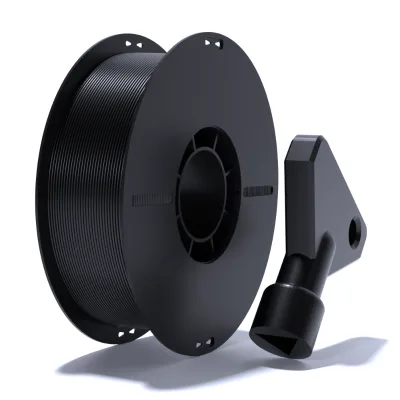
Procuring a 3D Printer Filament Sensor requires distinguishing between the sensor hardware itself and the filament materials it monitors, as the provided market data heavily emphasizes filament specifications rather than sensor components. Buyers must recognize that listings often bundle filament types like PLA, ABS, and ASA with specific diameter tolerances, such as 1.75mm +/- 0.03mm, which are critical for sensor calibration. The observed product range includes models like FLD-35 and WS001, suggesting a diverse market where sensor compatibility depends on the specific printer architecture and filament feed mechanism.
Sourcing decisions should prioritize verifying that the filament sensor aligns with the intended printing technology, such as FDM, which is explicitly noted in the available product attributes. Since the market data highlights various filament materials including PLA and ABS with distinct temperature resistances, buyers must ensure the sensor can accurately detect material changes or jams across these different thermal profiles. The presence of single-nozzle configurations and specific software formats like .stl indicates that sensor integration often relies on the printer's operating system, such as Windows XP, to function correctly during the printing process.
Product Scope and Observed Listing Signals
The current market landscape for 3D printing consumables reveals a wide spectrum of filament types, ranging from standard PLA to high-strength ABS and heat-resistant ASA variants. Listings indicate specific product models such as Bambulab ABS and Creality Ender PLA, which serve as reference points for the physical characteristics sensors must monitor. Buyers should note that packaging varies significantly, from wooden boxes to carton bags, which can influence how the filament is stored and subsequently fed into the sensor mechanism.
Observed listing signals also include detailed physical attributes like spool dimensions and net weights, which are essential for ensuring the sensor can accommodate the physical load of the filament roll. The data shows products with specific features like high strength and heat resistance, implying that sensors must be robust enough to handle the mechanical stress of these advanced materials. Additionally, the presence of desktop printer suitability suggests that the sensor ecosystem is tailored for smaller-scale operations rather than industrial extrusion lines, requiring precise calibration for consistent feed rates.
Technical Specifications to Verify
Buyers must rigorously verify filament diameter tolerances, as the provided data specifies a standard of 1.75mm with a tight variance of +/- 0.03mm, which is critical for sensor accuracy. A deviation beyond this range can cause feeding issues that a sensor might misinterpret as a jam or a break, leading to unnecessary print failures. The nozzle diameter, observed at 0.2mm in some listings, further dictates the required filament precision, as the sensor must detect inconsistencies relative to the extrusion path defined by the nozzle size.
Operating parameters such as printing temperatures and software compatibility are equally vital for sensor performance, with data indicating ranges like 170-230℃ for PLA and 190-230 for ABS. Sensors must be capable of monitoring these thermal transitions to prevent material degradation or nozzle clogging, especially when switching between different filament types like the heat-resistant ASA. Furthermore, the operating system compatibility, noted as Windows XP in some contexts, suggests that the sensor's firmware must integrate seamlessly with legacy or specific printer control environments to ensure reliable data transmission.
Compliance and Safety Documentation
Safety documentation for 3D printing consumables often focuses on material safety data sheets (MSDS) rather than sensor certifications, as the primary risks involve thermal exposure and chemical emissions. Buyers should request documentation confirming that materials like ABS, which has a temperature resistance of 70°C, meet local safety standards for indoor use, particularly in architecture or desktop environments. The absence of explicit certification data in the provided facts necessitates a proactive approach where buyers verify that the supplier can provide proof of material compliance for the specific filament type being purchased.
While the product data lists standards like SJ45 and 522, these appear to be internal or dimensional specifications rather than recognized safety certifications. Consequently, procurement teams must ensure that the filament sensor and the associated materials adhere to general electrical safety standards if the sensor is powered, and chemical safety standards if the filament emits fumes during high-temperature printing. It is essential to confirm that the supplier maintains records for the specific models listed, such as JAYO ASA, to guarantee that the materials used in the printing process do not violate workplace safety regulations.
Cost Drivers and Commercial Terms
The cost of 3D printing filament sensors and materials is influenced by the complexity of the filament formulation, with high-strength ABS and heat-resistant ASA commanding different price points than standard PLA. The observed price range of 4 to 32,000 USD suggests a vast disparity based on volume, material quality, and whether the listing includes the sensor hardware or just the consumable filament. Buyers must analyze whether the high-end pricing correlates with specialized features like high-speed printing capabilities or specific diameter tolerances that justify the investment.
Commercial terms such as MOQ and lead times are critical factors, with observed MOQs ranging from 1 to 300 units, allowing for flexible procurement strategies. The variation in packaging, from wooden cases to simple box packages, also impacts the final cost, as specialized packaging may be required to protect sensitive filament properties during transit. Buyers should negotiate based on the specific model requirements, such as the Bambulab ABS or Elegoo PLA Filament, to ensure that the total cost of ownership includes necessary accessories like SD card connections or specific software formats.
Supplier Qualification and Quality Control
Supplier qualification should focus on their ability to maintain consistent filament diameter and material composition, as the data highlights specific tolerances like 1.75mm +/- 0.03mm that are non-negotiable for sensor reliability. Buyers must verify that the supplier, originating from locations like Zhangjiagang or China, has a documented quality control process for their spool sizes and net weights, which are listed as 1000g or 1kg in various listings. Consistency in these physical attributes ensures that the filament sensor can operate without frequent false alarms or mechanical jams.
Quality control also extends to the manufacturing process, with FDM forming technology explicitly mentioned as a standard method for producing these filaments. Buyers should assess whether the supplier adheres to the stated standards, such as SJ45 or 424231cm, to ensure that the product dimensions match the printer's requirements. Additionally, the availability of customization and specific features like high strength indicates that a qualified supplier must have the technical capacity to produce tailored filament solutions that meet the unique demands of different 3D printing applications.
Long-Term Procurement Checks
Long-term procurement strategies must account for the evolving nature of 3D printing materials, particularly the shift towards high-strength and heat-resistant filaments like ASA and ABS. Buyers should establish a schedule for re-evaluating supplier performance against the observed specifications, such as the 0.025mm thickness or 100mm/s speed, to ensure that the filament continues to meet the sensor's detection thresholds over time. Regular audits of the supplier's ability to maintain the 1.75mm diameter tolerance are essential to prevent long-term degradation in print quality.
Sustainability and supply chain resilience are also key considerations, given the diverse packaging options and origin locations observed in the market. Buyers should verify that the supplier can consistently provide materials like PLA and ABS with the required temperature resistance and color consistency, such as the white color noted in the data. Establishing a long-term relationship with a supplier who can guarantee the availability of specific models, such as the ANYCUBIC High Speed PLA, will help mitigate risks associated with supply disruptions and ensure continuous production capabilities.
FAQs
What is the standard nozzle diameter for 3D printer filament sensors?
The standard nozzle diameter is typically 0.2mm for compatible sensors. This specification ensures precise filament detection during the printing process. Users should verify their printer's hardware requirements before installation. Proper alignment with the 0.2mm nozzle prevents false triggers and ensures reliable operation across various printing tasks.
Can 3D printer filament sensors work with PLA material?
Yes, these sensors are compatible with PLA material. PLA is a common printer material that works well with standard detection systems. The sensor monitors filament flow regardless of the specific polymer type. This compatibility allows users to switch between different materials without changing the detection hardware setup.
Which packing method is used for 3D printer filament sensors?
The standard packing method is a wooden box or carton bag. This packaging protects the sensor during shipping and storage. Wooden cases are often used for larger units, while smaller components may use box packages. Proper packaging ensures the device arrives undamaged and ready for immediate installation on compatible 3D printers.
What is the operating system requirement for 3D printer filament sensors?
The sensor typically requires Windows XP or similar operating systems for configuration. This software format ensures compatibility with standard control interfaces. Users can manage settings through simple software connections. The system supports basic file formats like .stl for model integration, ensuring straightforward setup and operation.
How does the speed affect 3D Printer Filament Sensor performance?
The sensor supports speeds up to 100mm/s for accurate detection. This speed ensures reliable filament monitoring during high-speed printing operations. Faster speeds require precise calibration to maintain accuracy. Users should adjust settings based on their specific printing speed to prevent filament runout errors and ensure consistent print quality.
What is the origin of 3D printer filament sensors?
The primary origin is Zhangjiagang, China. This location is a known hub for manufacturing these components. Products from this region often meet specific industry standards like SJ45. Buyers can source reliable units from verified suppliers in this area, ensuring consistent quality and availability for global distribution needs.