Source 3D Printer Stepper Motor Driver for CNC, 3D Print, and Textile
Find and compare 30 listings for the 3D Printer Stepper Motor Driver, including models like TB6600 and SC5780. Evaluate options for bipolar and hybrid stepper motors with features such as automatic control, DC power supply, and CE certification to suit your manufacturing needs.
Key considerations
Products List


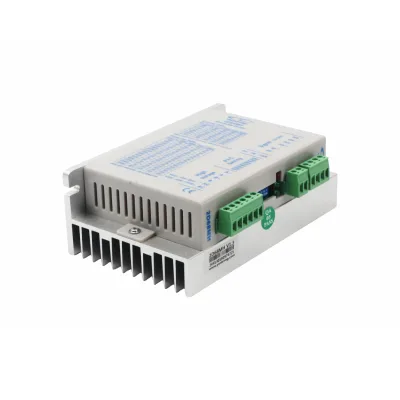
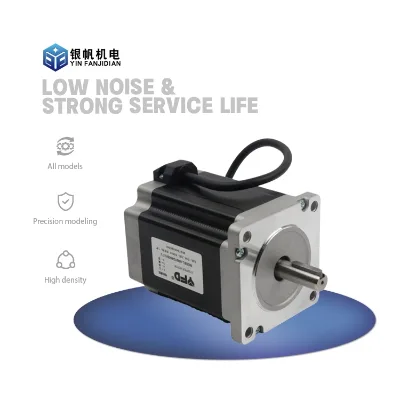



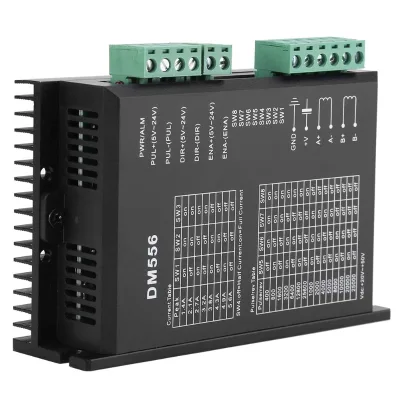
DM556 Digital 42/57 Stepper Motor Driver Module for 3D Printers CNC Controller
$14.12 - $15.15
MOQ: 10 Minimum
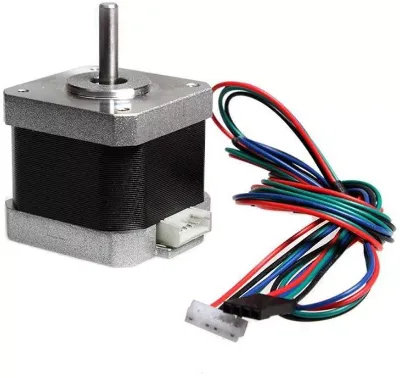
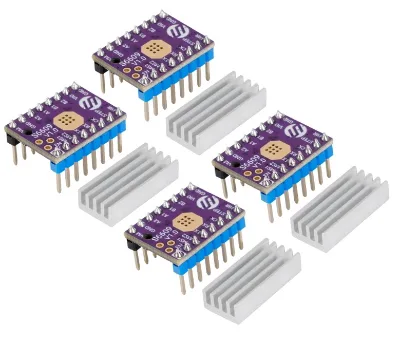
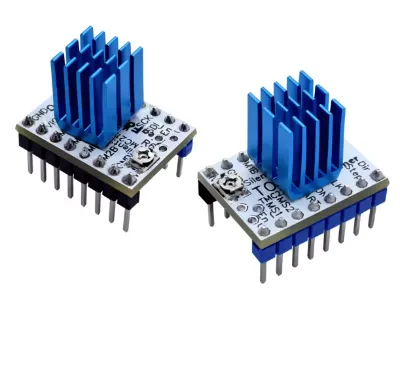
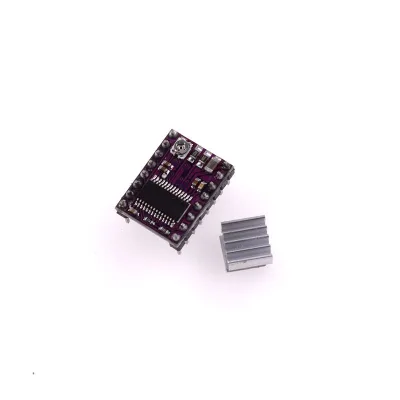
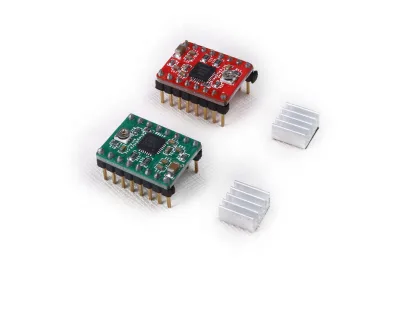
TMC2208 Stepper Motor V1.1/ V1.2 SPI StepStick Driver Module for 3D Printer
$5.83 - $6.14
MOQ: 10 Minimum


Comprehensive Sourcing Guide
3D Printer Stepper Motor Driver Sourcing Guide
The global market for 3D printer stepper motor drivers has evolved to support a diverse range of automation needs, from hobbyist desktop printers to industrial CNC textile machines. Buyers in this sector must navigate a landscape where products are defined by specific control architectures, such as open-loop and closed-loop systems, which dictate the precision and stability of the final print. The observed product listings indicate a strong presence of bipolar stepper motor drivers designed specifically for 3D printing applications, alongside models tailored for broader CNC and textile machinery tasks. Understanding the distinction between these variants is the first critical step in aligning procurement with operational requirements.
Sourcing decisions for these components hinge on the specific control signals and power requirements of the target machinery. The available inventory includes drivers operating on DC power supplies with voltage ranges that must be matched to the motor's specifications, typically falling within the 18-80V spectrum observed in high-performance units. Furthermore, the signal type, whether continuous or differential, plays a pivotal role in the driver's ability to maintain accurate positioning without losing steps. Buyers should prioritize verifying these electrical parameters against their existing motor inventory to ensure seamless integration and optimal performance in their specific 3D printing workflows.
Product Scope and Observed Listing Signals
The current market offers a wide spectrum of stepper motor drivers, ranging from basic models like the TB6600 series to specialized units such as the 5605-X3 and 6008SA. These products are frequently marketed with distinct advantages, including the capability to drive three motors simultaneously or provide stable operation for high-precision tasks. The product names often reflect their intended use, such as "Bipolar Stepper Motor Driver for 3D Printer" or "Servo Stepper Motor Driver for Printer," signaling that the manufacturer has optimized the internal logic for specific motion control scenarios. This variety allows buyers to select a solution that matches the complexity of their 3D printing setup, whether it involves simple extrusion control or complex multi-axis movement.
Customization availability is a significant differentiator among the observed listings, with some suppliers offering fully customized solutions while others provide standard, non-customized units. The "Customized" attribute appears alongside "Non-Customized" options, indicating that buyers can request specific modifications to the driver's structure or function, such as adjusting the excitation mode or altering the physical dimensions. For instance, the standard dimensions of 11875.533 mm are observed in certain models, but the availability of customization suggests that fitment constraints in compact 3D printer frames can be addressed through tailored orders. This flexibility is essential for integrators who need to fit drivers into unique chassis designs or specific industrial enclosures.
Technical Specifications to Verify
When evaluating technical specifications, the structure of the driver—whether open-loop or closed-loop—is the primary determinant of system reliability. Open-loop systems, which rely on the driver to execute commands without feedback, are common in cost-effective applications, while closed-loop structures offer enhanced stability by incorporating feedback mechanisms to correct errors in real-time. Buyers must verify which structure is present in the unit they intend to purchase, as this choice directly impacts the printer's ability to handle high-speed movements or heavy loads without losing synchronization. The observed data confirms the existence of both types, necessitating a clear understanding of the application's tolerance for positional drift.
Electrical characteristics, including the number of poles and excitation modes, require rigorous verification to ensure compatibility with the stepper motors. The listings highlight "Two-Phase" stator configurations and "HB-Hybrid" excitation modes, which are critical for achieving smooth motion and high torque at low speeds. Additionally, the control signal type, noted as "Difference" in some specifications, must be compatible with the controller board of the 3D printer to prevent communication errors. Buyers should also confirm the power supply requirements, ensuring the driver can handle the specific DC voltage range of their system, as mismatched voltage inputs can lead to premature failure or erratic motor behavior.
Compliance and Safety Documentation
Certification status is a non-negotiable aspect of procurement for industrial and commercial 3D printing equipment. The observed product listings consistently reference RoHS, CE, and ISO9001 certifications, which indicate adherence to international safety and environmental standards. RoHS compliance ensures that the drivers are free from hazardous substances, a requirement for many export markets, while CE marking confirms that the product meets EU safety, health, and environmental protection requirements. Buyers must request and verify these certificates for every batch of drivers purchased, as the presence of these marks on a product page does not guarantee that every unit in a shipment carries the same compliance status.
Safety documentation extends beyond certifications to include machinery test reports and warranty terms that protect the buyer's investment. The availability of machinery test reports suggests that suppliers are willing to provide evidence of performance and safety testing, which is crucial for validating the reliability of the driver under load. Furthermore, the observed warranty period of 18 months and the promise of 24-hour online after-sales service provide a safety net for operational continuity. Buyers should ensure that these service commitments are explicitly stated in the purchase contract, as they define the recourse available in the event of a defect or failure during the critical early stages of production.
Cost Drivers and Commercial Terms
The pricing for 3D printer stepper motor drivers varies significantly based on the complexity of the control system and the level of customization required. The observed price range spans from $0.38 to $500, reflecting the difference between basic, mass-produced units and high-performance, specialized drivers capable of driving multiple motors or operating in closed-loop configurations. Factors such as the material used, such as stainless steel components, and the inclusion of advanced features like automatic control functions, contribute to the higher end of the price spectrum. Buyers must balance their budget constraints with the performance needs of their 3D printing operations to avoid overpaying for unnecessary features or under-specifying for critical applications.
Commercial terms, including Minimum Order Quantity (MOQ) and lead times, are equally critical in shaping the procurement strategy. The observed MOQ range of 1 to 10 units offers flexibility for small-scale prototyping or low-volume production runs, while larger orders may benefit from economies of scale. Sample delivery times are noted as "Fast," which is advantageous for buyers who need to validate a driver's performance before committing to a bulk order. However, buyers should clarify the exact lead times for production runs, as these can vary based on the supplier's capacity and the specific customization requests. Understanding these terms helps in planning inventory levels and managing production schedules effectively.
Supplier Qualification and Quality Control
Supplier qualification involves verifying the origin and manufacturing standards of the stepper motor drivers to ensure consistent quality. The observed data indicates that many products originate from Shandong, China, a region known for its manufacturing capabilities in electromechanical components. Buyers should investigate the supplier's production facilities and quality control processes, looking for evidence of adherence to ISO9001 standards and the provision of machinery test reports. The "Best" quality attribute observed in some listings should be treated as a marketing claim rather than a guaranteed standard, requiring independent verification through sample testing and reference checks.
Quality control measures must be integrated into the procurement process to mitigate the risk of receiving defective units. The "New" condition of the products is a baseline requirement, but buyers should also verify the packaging standards, such as the "Green Export Package" observed in some listings, to ensure that the drivers are protected during transit. Additionally, the availability of a 24-hour online support channel suggests that suppliers are committed to resolving technical issues promptly. Buyers should establish clear communication channels with the supplier to address any quality concerns immediately, ensuring that any non-conforming products are identified and replaced before they impact the production line.
Long-Term Procurement Checks
Sustaining a reliable supply chain for 3D printer stepper motor drivers requires ongoing monitoring of supplier performance and product consistency. Buyers should regularly review the supplier's ability to meet delivery timelines and maintain the quality standards promised in the initial agreement. The "Stable" advantage noted in some product descriptions implies a focus on long-term reliability, but this must be validated through continuous performance tracking and feedback from the end-users of the 3D printers. Establishing a relationship based on trust and consistent delivery is essential for minimizing downtime and ensuring the longevity of the printing equipment.
Future-proofing the procurement strategy involves staying informed about technological advancements and changes in industry standards. As 3D printing technology evolves, the requirements for motor drivers may shift towards higher precision, faster response times, or more advanced control algorithms. Buyers should maintain a dialogue with their suppliers to understand upcoming product developments and ensure that their current inventory remains relevant. By proactively managing the procurement process and adapting to market changes, organizations can secure a competitive advantage and maintain high standards of production efficiency in their 3D printing operations.
FAQs
What certifications do the stepper motor drivers have?
The drivers hold RoHS, CE, and ISO9001 certifications. These standards ensure compliance with safety and environmental regulations for industrial and 3D printing applications.
Can I get customized stepper motor drivers for my needs?
Customization is available for specific models like the 5605-X3. However, some variants such as the SC5780 are listed as non-customized options for standard requirements.
How long is the warranty period for these drivers?
The warranty period is 18 months for the supplied products. This coverage ensures reliability for new condition units used in CNC and 3D printer setups.
What is the power supply requirement for the drivers?
The drivers operate on a DC power supply with a voltage range of 18 to 80 volts. This specification supports various motor types including bipolar stepper motors.
Which models support driving multiple motors simultaneously?
Certain models can drive three motors at the same time while maintaining stability. This feature is highlighted as a key advantage for complex automation tasks.
What is the lead time for sample delivery?
Sample delivery time is fast for the available inventory. Buyers can expect quick turnaround for initial testing before placing larger orders with factories in China.
Are the drivers suitable for CNC and 3D printing applications?
Yes, the drivers are explicitly designed for CNC, textile, and 3D printing applications. Models like the TB6600-1 are optimized for these specific industrial and hobbyist uses.