Source 4-10 Grade Citrus Color Sorter for Apple Orange Tomato
Find and compare 4-10 Grade Citrus Color Sorter options from 30 verified listings. Evaluate CCD and rotary drum grading technologies for sorting apples, oranges, and tomatoes with LED light sources and customized channel configurations.
Key considerations
Products List
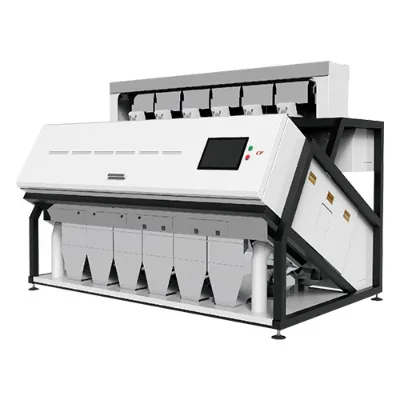


Orange Sorting Machine Fruit Size Mandarin Orange Citrus Grading Machine
$4500.00 - $8000.00
MOQ: 1 Pieces


Peanut Color Sorter Peanut Color Sorting Machine Color Separation Machine
$6000.00 - $40000.00
MOQ: 1 Pieces


$22000.00 - $24000.00
MOQ: 1 Pieces


Rice Color Sorting Machine Color Sorter Coffee 10 Channels Rice Color Sorter
$8000.00 - $30000.00
MOQ: 1 Pieces


Good Quality Walnut Nut Color Sorter
$5000.00 - $50000.00
MOQ: 1 Pieces
Anhui Wenyao Intelligent Photoelectronic Technology Co., Ltd.


High Quality Chili Color Sorter
$5000.00 - $50000.00
MOQ: 1 Pieces
Anhui Wenyao Intelligent Photoelectronic Technology Co., Ltd.

Intelligent Multifunction Peanut Color Sorter
$4500.00 - $5500.00
MOQ: 1 Pieces
Anhui Wenyao Intelligent Photoelectronic Technology Co., Ltd.

Multifunction Sorghum Color Sorter
$5000.00 - $50000.00
MOQ: 1 Pieces
Anhui Wenyao Intelligent Photoelectronic Technology Co., Ltd.

Comprehensive Sourcing Guide
4-10 Grade Citrus Color Sorter Sourcing Guide
Procuring a color sorter capable of handling 4 to 10 grades of citrus requires a clear understanding of the specific mechanical and optical architectures available in the current market. The observed product landscape includes machines designed for freefall and rotary drum grading, with specific models like the SXM-32 and TZ series offering varying channel counts and executive units to manage throughput. Buyers must distinguish between CCD-based optical sorting systems and mechanical grader configurations, as the choice dictates the precision of color separation for round fruits like apples, oranges, and tomatoes.
The decision to source a customized unit often hinges on the need for specific sorting functions, such as shape sorting or color sorting, which are explicitly listed as available machinery functions. While some units are marketed for multi-application grain sorting, the specific requirement for citrus grading necessitates verifying that the light source, typically LED, and the chute configuration are optimized for the curvature and reflectivity of citrus skins. Understanding these foundational differences ensures the selected equipment aligns with the operational goal of achieving the desired 4 to 10 grade separation without excessive waste or misclassification.
Product Scope and Observed Listing Signals
The market for citrus sorting equipment presents a wide variance in physical dimensions and structural designs, ranging from compact mini units to large industrial frames measuring up to 4530mm in length. Listings indicate that standard dimensions can vary significantly, with some models occupying a footprint of 39001400950mm while others are designed as smaller units at 11005001500mm. Buyers should carefully cross-reference the physical space available in their facility against the specific standard dimensions provided in the product specifications, as the 30001100900mm and 25001000950mm configurations represent distinct capacity tiers.
Listing signals also reveal that packaging and shipping requirements are critical for international procurement, with options including wooden packages, standard wooden boxes for exporting, and polywood suitable for sea shipping. The weight of these machines varies considerably, with observed values ranging from 120kg for smaller units to 350kg for larger industrial sorters, directly impacting logistics planning and floor load requirements. Additionally, the observation of "Single item" selling units and a minimum order quantity (MOQ) of 1 suggests that buyers can procure individual units without needing to aggregate orders, though the specific model availability may fluctuate based on the supplier's current stock of the GSL-FS 01 or TT series models.
Technical Specifications to Verify
When evaluating the technical core of a color sorter, the voltage and power consumption are primary verification points, with 220V and 0.75KW being common specifications for the observed units. The sorting mechanism itself is a critical differentiator, as the market offers both freefall structures and rotary drum graders, each suited to different fruit sizes and throughput speeds. Buyers must confirm that the chosen model, whether it is the SL, SXM-32, or TT1 series, utilizes the appropriate executive units and channel numbers to handle the specific volume of citrus intended for processing.
The optical and grading capabilities must be scrutinized to ensure they meet the 4 to 10 grade requirement, particularly regarding the light source and the number of sorting chutes. While LED light sources are standard, the number of chutes, which can be 0.5 or 1 in some configurations, directly influences the granularity of the sorting process. Furthermore, the application scope listed for these machines often includes rice, wheat, corn, and beans, but for citrus, the buyer must verify that the specific sensor resolution and rejection mechanisms are calibrated for the unique color variations and surface textures of oranges and similar round fruits.
Compliance and Safety Documentation
Safety and regulatory compliance are non-negotiable aspects of sourcing industrial machinery, with CE certification appearing as a standard requirement for many of the listed units. Buyers should request proof of this certification to ensure the electrical and mechanical safety standards meet the regulations of their destination country, as the absence of such documentation can lead to customs delays or operational bans. The presence of ISOCE certification in some listings further indicates a commitment to quality management systems, which should be validated through official certificates rather than relying solely on product descriptions.
In addition to safety certifications, the condition of the machinery is a vital compliance factor, with "New" being the predominant status observed in the market. Buyers must verify that the "New" condition refers to the actual manufacturing state of the unit and not a refurbished or reconditioned item, as this affects the warranty terms and expected lifespan. The inclusion of after-sales services, such as video technical support, serves as a secondary compliance layer, ensuring that the buyer has access to remote diagnostics and troubleshooting to maintain operational continuity and safety standards throughout the machine's lifecycle.
Cost Drivers and Commercial Terms
The price range for these sorting machines is substantial, with observed listings spanning from 1200 to 50000 USD, reflecting the vast differences in capacity, technology, and customization levels. The cost is heavily influenced by the complexity of the sorting algorithm, the number of grades the machine can handle, and the specific structural design, such as the freefall versus rotary drum configuration. Buyers should anticipate that higher-end models with advanced CCD technology and multiple executive units will command prices at the upper end of this spectrum, while basic grain sorters may fall toward the lower limit.
Commercial terms regarding customization and packaging also play a significant role in the final cost structure. Since customization is available and the standard packing often involves wooden cases or polywood for sea shipping, buyers should clarify whether these services are included in the base price or billed as add-ons. The "Workable" OEM status suggests that branding and specific feature modifications are possible, but these requests will likely incur additional costs and extended lead times. Understanding these variables is essential for budgeting, as the final invoice may differ significantly from the initial listing price depending on the specific configuration and shipping requirements.
Supplier Qualification and Quality Control
Supplier qualification should focus on the manufacturer's ability to provide consistent quality control and after-sales support, as evidenced by the availability of video technical support and customized service options. Buyers should verify the supplier's track record in producing machines for the specific application of citrus sorting, ensuring they have experience with the unique challenges of grading round fruits like apples and tomatoes. The presence of multiple model numbers, such as the TT series and SXM-32, indicates a diverse product line, but the buyer must confirm that the specific model selected has been successfully deployed in similar agricultural or processing environments.
Quality control extends to the physical construction and material standards of the machine, with observations noting dimensions and weights that must be strictly adhered to during the manufacturing process. Buyers should request detailed inspection reports or factory audit results to confirm that the "New" condition and the specified dimensions, such as 45301130900mm, are accurate and consistent across production batches. The origin of the products, consistently listed as China, requires buyers to establish clear communication channels for quality assurance, ensuring that any deviations from the agreed specifications are identified and rectified before the final shipment.
Long-Term Procurement Checks
Long-term procurement success depends on establishing a robust framework for maintenance and spare parts availability, given the mechanical complexity of color sorters. Buyers should verify the supplier's policy on warranty coverage and the availability of replacement parts for critical components like the LED light sources, executive units, and sorting chutes. The "Customized" nature of many units means that standard spare parts may not fit, necessitating a clear agreement on the supply of proprietary components to prevent operational downtime.
Finally, the scalability of the procurement strategy should be considered, as the observed product count and varying specifications suggest a dynamic market. Buyers should plan for potential upgrades or expansions, ensuring that the initial purchase allows for modular additions or software updates to increase the number of sorting grades or throughput capacity. Regular performance reviews against the initial specifications, such as the 4 to 10 grade separation capability, will help identify any degradation in performance over time and ensure the machine continues to meet the evolving needs of the citrus processing operation.
FAQs
What sorting technologies are available for citrus color sorters?
CCD and shape sorter technologies are available for citrus color sorting. These systems utilize LED light sources to detect color defects and physical imperfections. The freefall structure ensures efficient separation of graded fruits. This approach supports precise grading for round fruits like apples, oranges, and tomatoes, ensuring high-quality output for processing lines.
Can I customize the grading levels for my citrus sorting needs?
Yes, customization is available for grading levels. You can specify between 3 to 8 grades based on your quality requirements. The machine supports customized configurations to match specific market standards. This flexibility allows you to sort citrus fruits into precise categories, ensuring consistent quality control and meeting diverse buyer expectations in the global market.
What certifications do these citrus color sorters typically hold?
These machines typically hold CE and ISO certifications. These standards ensure compliance with international safety and quality regulations. The equipment is manufactured in China and exported with standard wooden packaging. This certification status provides assurance of reliability and safety for industrial use, facilitating smoother import processes and operational confidence for buyers worldwide.
How is the citrus color sorter packaged for international shipping?
The sorter is packaged in standard wooden boxes or polywood cases suitable for sea shipping. This robust packaging protects the machinery during transit. The dimensions vary by model, ranging from compact sizes to larger industrial units. This secure packing method ensures the equipment arrives in new condition, ready for installation and immediate operation upon delivery to your facility.
What after-sales support is provided for these sorting machines?
Video technical support is provided for after-sales service. This assistance helps with installation, operation, and troubleshooting. The machines are in new condition and come with detailed operational guidance. This support structure ensures that users can maintain optimal performance and resolve any technical issues efficiently, minimizing downtime and maximizing the productivity of your sorting line.