Source 4 Stroke Fiberglass Fishing Boat for Coastal, Inshore, and Recreational Use
Find and compare 30 listings for a 4 Stroke Fiberglass Fishing Boat, featuring models like the 1060 and Shine series. Evaluate specifications including hull material, engine options, and beam width to identify suitable vessels for various maritime applications.
Key considerations
Products List


5.6 M 18FT Speed Fiberglass Yacht Fiberglass Sport Boats for Fishing Boat
$15700.00 - $17000.00
MOQ: 1 Pieces


FRP 46FT Fiberglass Fishing Boat Sport Speed Boat Passenger Boat for Sale
$235000.00 - $320000.00
MOQ: 1 Pieces


18FT Fiberglass Boat for Fishing and Sporting with Immediate and Safe Delivery
$12800.00 - $13000.00
MOQ: 1 Pieces




Comprehensive Sourcing Guide
4 Stroke Fiberglass Fishing Boat Sourcing Guide
Sourcing a 4 Stroke Fiberglass Fishing Boat requires a disciplined approach to verifying hull construction, propulsion compatibility, and regulatory compliance. The market offers a wide spectrum of vessels, ranging from compact 5.2-meter utility craft to large 14-meter offshore models, each with distinct operational profiles. Buyers must navigate this variety by focusing on material integrity, engine integration, and certified safety standards rather than relying solely on visual marketing or generic model names. This guide provides a structured framework for evaluating these vessels, ensuring that procurement decisions are grounded in verifiable technical data and commercial reality.
The following sections detail the critical verification steps for product scope, technical specifications, compliance documentation, cost structures, supplier qualification, and long-term maintenance. Each section is designed to help procurement professionals identify red flags, validate supplier claims, and negotiate terms that protect their investment. By adhering to these evidence-based criteria, buyers can mitigate risks associated with substandard construction, non-compliant engines, or opaque supply chains, ultimately securing a vessel that meets both operational needs and regulatory requirements.
Product Scope and Observed Listing Signals
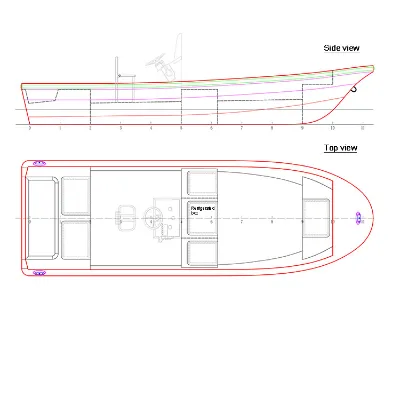
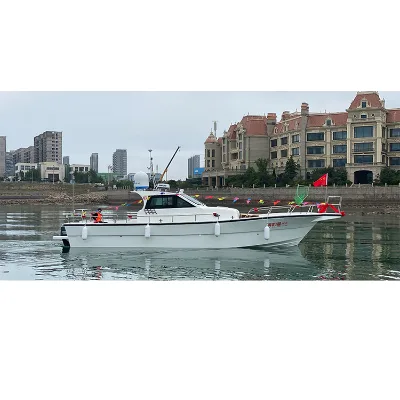
The observed product landscape for fiberglass fishing boats reveals a significant diversity in size, capacity, and intended use. Listings indicate models ranging from 5.2 meters to 14 meters in length, with beam widths typically between 2.2 and 2.86 meters. High-capacity vessels, such as the 10.6-meter model, support up to 10 passengers and feature dual 250HP engines, suggesting suitability for commercial or serious recreational fishing in open waters. In contrast, smaller models like the 5.2-meter and 7.2-meter variants are often configured for lighter duties, with weights ranging from 725kg to 1025kg for the hull alone. Buyers should carefully match these physical dimensions to their specific operational environment, considering factors such as draft, stability, and payload capacity.
Listing signals also highlight variations in propulsion and customization options. While many vessels are designed for outboard engines, specific configurations allow for engine selection from brands like Mercury, Yamaha, or Honda, with power outputs ranging from 150HP to 300HP. The presence of "Customized" attributes and "Acceptable" customization options indicates that suppliers may offer tailored solutions for fuel tank capacity, seating arrangements, or hull modifications. However, buyers must distinguish between standard factory offerings and bespoke requests, as customization can impact lead times and cost structures. The observation of "New" condition and "Unfolded" status confirms that these are rigid fiberglass vessels, not inflatable or collapsible types, which simplifies logistics but requires appropriate storage and transport infrastructure.
Technical Specifications to Verify
Hull construction is the primary determinant of a fishing boat’s durability and performance. The supplied facts confirm the use of fiberglass as the primary hull material, manufactured via composite material vacuum forming. This process generally ensures consistent wall thickness and reduced voids, contributing to structural integrity. Buyers should verify the specific layup schedule and resin type used, as these factors influence resistance to osmosis and impact damage. Additionally, the presence of an underfloor fuel tank, such as the 226-liter capacity noted in some models, is a critical feature for extended range. Buyers must confirm the tank’s material compatibility with fuel types and its integration with the hull to prevent leaks or structural weakening.
Propulsion and engine integration require careful scrutiny to ensure compatibility and performance. The observed engine configurations, such as dual 250HP setups or single outboards ranging from 150HP to 300HP, must align with the vessel’s displacement and design speed. Buyers should verify the engine mounting system, transom strength, and wiring harness compatibility with the selected outboard brand. Furthermore, the beam width, typically between 2.2 and 2.86 meters, directly affects stability and fuel efficiency. Buyers should request detailed stability calculations and performance curves from the supplier to validate that the vessel can handle the specified engine power without compromising safety or handling characteristics.
Compliance and Safety Documentation
Regulatory compliance is non-negotiable for fishing vessels, particularly those intended for international waters or commercial use. The observed certifications, including CE, ISO 9001, ISO 14001, and ISO 45001, indicate a supplier’s commitment to quality management, environmental standards, and occupational health and safety. However, buyers must verify that these certifications apply to the specific vessel model and not just the manufacturing facility. The CE certificate, in particular, is crucial for vessels operating in European waters, as it confirms adherence to the Recreational Craft Directive or relevant commercial vessel standards. Buyers should request copies of these certificates and cross-reference them with the vessel’s hull identification number and production date.
Safety features and documentation must be thoroughly reviewed before purchase. This includes the availability of stability certificates, load line markings, and emergency equipment specifications. The observed "Allowable Passenger" count of up to 10 for larger models suggests compliance with specific capacity regulations, but buyers must confirm that this rating is certified by a recognized classification society or maritime authority. Additionally, the presence of a trailer option for smaller models indicates versatility, but buyers should verify the trailer’s weight rating and compatibility with the vessel’s hull. Ensuring that all safety documentation is up-to-date and legally valid in the destination country is essential to avoid operational restrictions or fines.
Cost Drivers and Commercial Terms
The cost of a fiberglass fishing boat is influenced by multiple factors, including hull size, engine configuration, and customization level. The observed price range of $22 to $320,000 USD reflects this diversity, with smaller, simpler models at the lower end and larger, fully equipped vessels at the higher end. Buyers should analyze the cost breakdown to understand the value proposition, distinguishing between hull cost, engine cost, and optional features. The presence of a 40’ HQ container or standard container shipping option also impacts logistics costs, which should be factored into the total landed cost. Buyers must request detailed quotations that itemize these components to avoid hidden fees or unexpected charges.
Commercial terms, such as minimum order quantity (MOQ) and lead time, vary significantly across suppliers. The observed MOQ range of 1-5 units suggests flexibility for individual buyers, while lead times of 1-2 weeks for some models indicate rapid production capabilities. However, buyers should verify these timelines in writing, as they may be subject to change based on engine availability or customization requests. Payment terms, warranty coverage, and after-sales support are also critical considerations. Buyers should negotiate clear terms for defect resolution, spare parts availability, and technical support to ensure long-term operational readiness. Understanding these commercial dynamics helps buyers align their procurement strategy with their budget and timeline constraints.
Supplier Qualification and Quality Control
Supplier qualification is a critical step in mitigating procurement risk. Buyers should assess the supplier’s manufacturing capabilities, including their facility size, equipment, and workforce expertise. The observed use of composite material vacuum forming suggests a modern production process, but buyers should verify the supplier’s quality control protocols, such as incoming material inspection, in-process testing, and final vessel inspection. Requesting references from previous clients and visiting the manufacturing facility, if possible, can provide valuable insights into the supplier’s reliability and consistency. Buyers should also evaluate the supplier’s ability to handle customization requests, as this indicates their flexibility and technical competence.
Quality control extends beyond the manufacturing phase to include logistics and delivery. Buyers should verify the supplier’s packaging standards, such as the use of containers or 40’ HQ units, to ensure the vessel is protected during transit. The observed "Containerizing" and "40' HQ" packing options suggest standardized logistics, but buyers should confirm the supplier’s experience with international shipping and their ability to handle customs clearance. Additionally, buyers should establish clear communication channels with the supplier to address any issues that may arise during production or delivery. A proactive approach to supplier management helps ensure that the procurement process runs smoothly and that the final product meets all specified requirements.
Long-Term Procurement Checks
Long-term procurement success depends on establishing a robust maintenance and support framework. Buyers should verify the availability of spare parts, such as hull fittings, engine components, and electrical systems, to minimize downtime. The observed compatibility with major engine brands like Mercury, Yamaha, and Honda is advantageous, as it ensures access to a wide network of service centers and parts suppliers. Buyers should also inquire about the supplier’s warranty policy, including coverage for hull defects, engine issues, and electrical systems. A comprehensive warranty provides peace of mind and protects the buyer’s investment against unforeseen failures.
Regular inspections and maintenance are essential for extending the lifespan of a fiberglass fishing boat. Buyers should develop a maintenance schedule that includes hull cleaning, gelcoat polishing, engine servicing, and electrical system checks. The observed "New" condition and "Unfolded" status suggest that the vessel is ready for immediate use, but buyers should still conduct a thorough pre-delivery inspection to identify any potential issues. Additionally, buyers should stay informed about regulatory changes and industry best practices to ensure ongoing compliance and operational efficiency. By prioritizing long-term maintenance and support, buyers can maximize the value and reliability of their fishing boat investment.
FAQs
What is the maximum capacity of the 4 Stroke Fiberglass Fishing Boat?
The maximum capacity exceeds 500kg for the listed models. This specification ensures the vessel can handle substantial loads while maintaining stability during fishing operations on various water conditions.
Which engine options are available for the 4 Stroke Fiberglass Fishing Boat?
Available engines include 250HP units or 150-300HP outboard engines from brands like Mercury, Yamaha, and Honda. Buyers can request specific motor brands to suit their performance and budget requirements.
Can the 4 Stroke Fiberglass Fishing Boat be customized for specific needs?
Yes, customization is acceptable for the 4 Stroke Fiberglass Fishing Boat. Buyers can request tailored features while the standard production utilizes composite material vacuum forming for the hull construction.
What are the standard dimensions for the 4 Stroke Fiberglass Fishing Boat?
Standard dimensions vary by model, with lengths ranging from 5.2m to 14m and beams between 2.2m and 2.86m. Specific models like the 1060 measure 10.6m in length with a 2.86m width.
How long is the lead time for the 4 Stroke Fiberglass Fishing Boat?
The lead time is typically 1-2 weeks for production. This duration applies to standard orders, though specific customization requests may require additional processing time depending on the manufacturer's schedule.
What certifications are available for the 4 Stroke Fiberglass Fishing Boat?
Certifications include CE, ISO 9001, ISO14001, and ISO45001 for quality and safety compliance. Some models also carry CCC certification, ensuring they meet specific regional regulatory standards for operation.
What is the minimum order quantity for the 4 Stroke Fiberglass Fishing Boat?
The minimum order quantity ranges from 1 to 5 units depending on the supplier and model. This flexibility allows buyers to start with small batches while testing the market or specific vessel performance.