Find 4 Color Manual Screen Printer for packaging, cloth, and flat-bed uses
Source 30 verified options for a 4 Color Manual Screen Printer suitable for packaging, cloth printing, and flat-bed applications. Compare specifications like station count, print area, and machine structure to find the right equipment for your production needs.
Key considerations
Products List
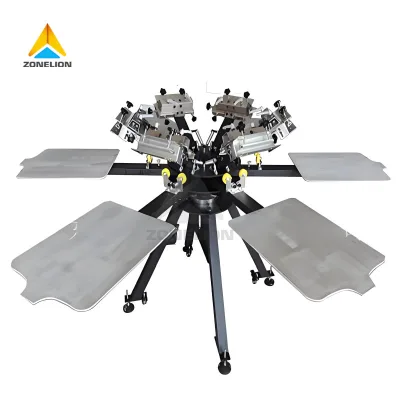
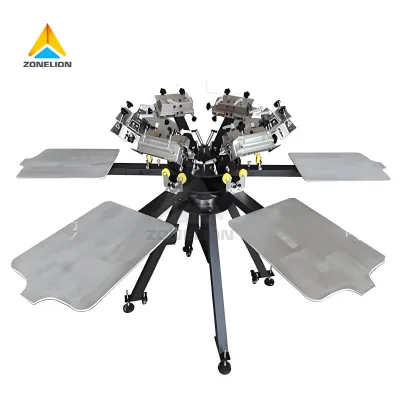


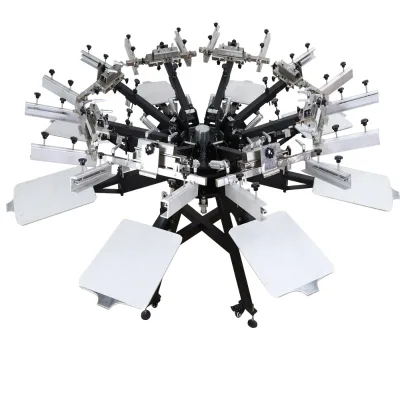
Rotary Manual 4 Color 2 Station Screen Printing Machine Cloths Printing Press
$127.00 - $150.00
MOQ: 1 Pieces


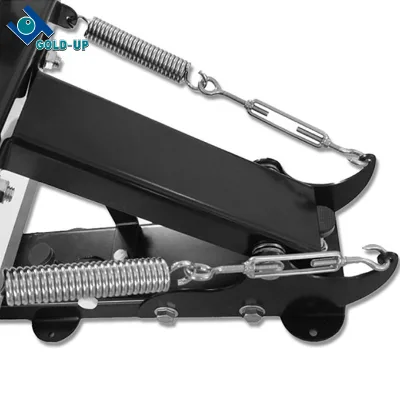

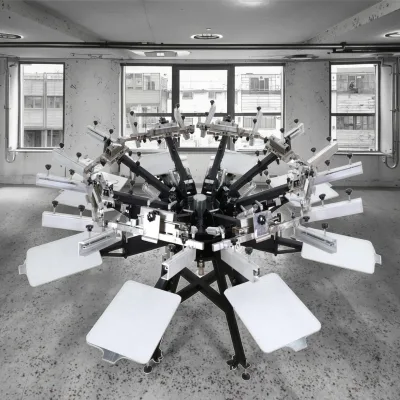


Comprehensive Sourcing Guide
Strategic Sourcing Guide for 4 Color Manual Screen Printers
The global market for manual screen printing equipment continues to evolve, driven by the demand for versatile, cost-effective solutions in small to medium-scale production environments. A "4 Color Manual Screen Printer" represents a specific category of machinery designed to handle multi-color applications without the high capital expenditure associated with fully automated rotary or flat-bed systems. For procurement professionals, understanding the nuances of this equipment is critical. The available data indicates a diverse range of configurations, from flat-bed cylinder presses to vertical machines, with varying structural designs and material compositions. This guide provides a disciplined approach to sourcing these machines, focusing on technical verification, compliance, and long-term operational viability based on observed market facts.
Technical Architecture and Operational Specifications
When evaluating a 4 Color Manual Screen Printer, the primary distinction lies in the machine's structural architecture and motion system. The observed market data reveals that these units are not monolithic; they vary significantly in their mechanical design. Buyers must distinguish between "Flat-bed cylinder press" structures and "Rotary Printing Press" or "Vertical Screen Printing Machine" configurations. The choice of structure directly impacts the workflow, the type of substrates that can be processed, and the operator's ergonomic experience.
A critical specification to verify is the printing area. Data points indicate a wide variance in maximum print capabilities, ranging from specific dimensions like 450600mm to 400350mm, or even 2218 inches. Procurement teams must align these dimensions with their specific production requirements. A machine with a 450600mm capacity may be suitable for large packaging applications, whereas a 400*350mm unit might be optimized for smaller textile or promotional items. Furthermore, the number of stations is a defining feature. The market frequently lists "6 Station" configurations, which allow for sequential processing of the four colors plus drying or curing stages within a single manual cycle. This station count is a vital metric for throughput estimation.
The automation level is another non-negotiable specification. Despite the "4 color" designation, the "Automatic Grade" is consistently observed as "Manual." This means the operator is responsible for the squeegee pressure, the registration of screens, and the substrate placement. While this reduces the initial cost, it increases the dependency on operator skill. Buyers should verify the "Gross Power" specifications, noting that many manual units are described as having "manual" power characteristics, implying a lack of electric motor-driven squeegee mechanisms. The structural integrity is often built upon "Steel Plate" for the main frame, with "Aluminum Profile" used for important components to ensure rigidity without excessive weight.
Material Composition and Surface Engineering
The longevity and print quality of a screen printer are heavily influenced by the materials used in its construction and the surface treatments applied. The supplied facts highlight that the "Machine Using Material" is predominantly "Steel Plate," providing the necessary mass and stability to resist vibration during the printing process. However, the specific components that interact with the ink and substrate often utilize different materials. For instance, attachments and critical moving parts are frequently constructed from "Stainless Steel or Zinc Plating, Nickel Plating." This choice is essential for corrosion resistance, particularly when using solvent-based inks or operating in humid environments.
Surface treatment is a key differentiator in build quality. The data explicitly mentions "Electrostatic Spraying" as a common "Machine Surface Treatment." This process ensures a uniform, durable finish that protects the steel frame from rust and wear, which is crucial for machines operating in industrial settings. The welding technology employed, described as "Welding Mainly," suggests a robust construction method, but buyers should inspect the weld quality to ensure there are no gaps or weak points that could compromise the alignment of the printing stations.
The pallet system, which holds the substrate during printing, also requires careful material selection. Observed specifications indicate the use of "HDF (High Density Fiberboard)" for pallet materials. While cost-effective, HDF can be susceptible to moisture damage. Buyers must assess whether this material suits their specific application environment or if they should request alternative pallet materials for high-humidity applications. The "Pallet Size" varies, with observed dimensions including 450 X 610mm and 450 X 550mm, necessitating a direct match with the substrate dimensions to ensure proper registration and prevent slippage.
Compliance, Certification, and Safety Standards
In the B2B procurement landscape, compliance is not merely a formality but a prerequisite for market access and operational safety. The provided data points to the existence of "CE" as a "prod_standard" for certain models. The CE marking indicates conformity with health, safety, and environmental protection standards for products sold within the European Economic Area. However, the presence of this standard in the data is not universal across all listed models. Buyers must not assume that every manual screen printer on the market carries this certification. Instead, the procurement strategy must involve a direct verification of the specific model's documentation.
When evaluating a supplier, the buyer should request the full technical file or declaration of conformity. The "prod_standard" field in the data suggests that compliance is a variable attribute rather than a universal guarantee. For markets outside the EEA, other regional standards may apply, such as OSHA guidelines in the United States or local industrial safety regulations. The absence of a specific standard in the initial product listing should trigger a request for clarification rather than an assumption of non-compliance. Additionally, the "Machine Surface Treatment" and "Machine Welding Technology" should be reviewed against local fire safety and structural integrity codes, especially if the machine is to be used in a facility with strict insurance requirements.
Cost Drivers and Economic Considerations
The economic profile of a 4 Color Manual Screen Printer is defined by a complex interplay of factors. The observed price range in the market is vast, spanning from $1 to $60,000 USD. This extreme variance suggests that the "4 color manual" label encompasses everything from small, benchtop units to large, industrial-grade floor-standing presses. The cost is driven primarily by the "Structure" type, the "Max. Print Area," and the quality of materials used. A "Rotary Printing Press" or a "6 Station" flat-bed unit with a 450*600mm capacity will naturally command a higher price than a basic 4-color vertical unit with a smaller print area.
Other cost drivers include the "Packing Material" and "prod_packing" specifications. The data shows a mix of "Export Carton," "Wooden Box with Tray," and "Standard Wooden Packaging." While the packaging itself is a logistical cost, the choice of packaging often reflects the value of the machine inside. Heavy-duty wooden packaging is typically reserved for larger, more expensive units to prevent damage during transit. Buyers should also consider the "Net Weight" and "Gross Weight" as indicators of the machine's mass and potential shipping costs. For example, a unit with a net weight of 36kg and a gross weight of 38kg represents a different logistical profile than a heavy industrial press.
The "Selling Units" are typically listed as "Single item," indicating that these are sold as complete machines rather than modular kits. This simplifies the procurement process but requires a thorough understanding of the total cost of ownership, including the cost of screens, squeegees, and inks, which are not included in the machine price. The "Customization" availability is another factor; while listed as "Available," this often incurs additional costs and lead times. Buyers should clarify if customization is limited to branding or if it extends to structural modifications, which would significantly impact the final price.
Typical Applications and Operational Scope
Understanding the intended application of a 4 Color Manual Screen Printer is essential for selecting the right model. The data indicates a broad range of applications, from "Packaging Printing" to "Cloths Printer." This versatility allows these machines to serve diverse industries, including textiles, promotional products, and industrial packaging. The "Usage" field explicitly mentions "Cloths Printer," highlighting the machine's capability to handle flexible substrates. However, the "Max. Image Area" and "Pallet Size" constraints must be respected to ensure the machine can handle the specific product dimensions required by the buyer.
The "Style" of the machine, described as "Screen-process Printing Press," is well-suited for applications requiring high ink opacity and texture, which are common in textile printing and heavy-duty packaging. The "4 Colors" capability allows for complex graphic reproduction, making these machines ideal for full-color branding on apparel, bags, and boxes. However, the manual nature of the operation means that high-volume, continuous production is less efficient compared to automated systems. These machines are best suited for short to medium runs, custom orders, or prototyping where the flexibility of manual adjustment outweighs the speed of automation.
Buyers should also consider the "Important Components" such as the "Aluminum Profile" when evaluating the machine's suitability for specific tasks. Aluminum components often offer a better balance of weight and strength, which is beneficial for machines that require frequent reconfiguration or movement. The "Structure" type, whether "Flat-bed cylinder press" or "Rotary Printing Press," will also dictate the type of substrates that can be fed into the machine. Flat-bed systems are generally more versatile for rigid and semi-rigid materials, while rotary systems may offer better handling for continuous web materials.
Supplier Evaluation and Quality Assurance
Selecting a supplier for a 4 Color Manual Screen Printer requires a rigorous evaluation process that goes beyond the initial product listing. The data shows that products originate from "China" and specifically "Zhejiang, China (Mainland)," which is a major manufacturing hub for this equipment. While this location offers competitive pricing and a wide range of options, it necessitates a robust quality control strategy. Buyers should verify the "Machine Welding Technology" and "Machine Surface Treatment" through video calls or third-party inspections to ensure the claimed "Electrostatic Spraying" and "Welding Mainly" standards are met in practice.
The "prod_model" variations, such as "ZL-D," "MK-T421B," "MK-F442B," and "SPM-450," indicate that different manufacturers or product lines exist. Buyers should not rely solely on the model number but should request detailed technical drawings and material certificates. The "Packing Size" and "Pallet Size" specifications should be cross-referenced with the buyer's shipping and storage capabilities. For instance, a "Packing Size" of 606024cm or 606030cm will have different storage implications than a larger wooden crate.
Quality assurance should also extend to the "Attachment Material." The use of "Stainless Steel or Zinc Plating, Nickel Plating" should be verified to ensure that the components will not corrode or degrade over time. Buyers should ask for sample prints or video demonstrations of the machine in operation to assess the registration accuracy and ink coverage. The "Customization" availability should be clearly defined in the contract, specifying the scope of work and the timeline for delivery. Finally, the "prod_standard" verification, particularly the "CE" certification, should be a mandatory step before finalizing the purchase to ensure compliance with international safety regulations.
Long-Term Procurement and Maintenance Strategy
The acquisition of a 4 Color Manual Screen Printer is a long-term investment that requires a proactive maintenance strategy. The "Machine Using Material" of "Steel Plate" and the "Machine Surface Treatment" of "Electrostatic Spraying" are designed for durability, but regular maintenance is essential to preserve the machine's performance. Buyers should establish a schedule for inspecting the "Important Components" like the "Aluminum Profile" and the "Attachment Material" for signs of wear or corrosion. The "Welding Mainly" construction should be checked periodically for any cracks or stress points, especially in high-vibration areas.
The "Pallet Materials" of "HDF" require specific care to prevent moisture damage. Buyers should implement a storage protocol that keeps the pallets in a dry environment and inspects them regularly for warping or swelling. The "Max. Print Area" and "Max. Image Area" specifications should be monitored to ensure that the machine is not being pushed beyond its design limits, which could lead to premature wear. The "Gross Weight" and "Net Weight" data can help in planning the facility layout and ensuring that the floor can support the machine's mass.
Furthermore, the "Selling Units" being "Single item" means that the buyer is responsible for sourcing all necessary consumables, such as screens, squeegees, and inks. A long-term procurement plan should include a relationship with a reliable supplier for these consumables to ensure consistent print quality. The "Customization" feature, while available, should be used judiciously to avoid voiding warranties or complicating future maintenance. By adhering to a disciplined maintenance and procurement strategy, buyers can maximize the lifespan and efficiency of their 4 color manual screen printers, ensuring a strong return on investment in a competitive market.
FAQs
What is the maximum print area for these machines?
The maximum print area varies by model, with observed dimensions reaching 450 by 600mm or 400 by 350mm. Buyers must verify the specific model's capacity to ensure it matches their substrate size requirements for optimal registration.
Which automation grade do these screen printers operate on?
These units consistently operate on a manual automatic grade, requiring operator control for squeegee pressure and screen registration. This design reduces initial costs but increases dependency on skilled labor for consistent output quality.
Can I find models with CE certification for export?
Yes, some models listed in the market data carry CE certification as a product standard. However, this is not universal, so buyers must verify the specific documentation for the chosen model before purchasing for European markets.
How many stations are typically available on these presses?
A common configuration observed in the market is a 6-station layout, allowing for sequential color application and drying. This setup supports efficient multi-color processing within a single manual cycle for short to medium production runs.
What materials are used for the machine frame and pallets?
The main frame is predominantly constructed from steel plate for stability, while pallets often utilize High Density Fiberboard. Critical attachments may use stainless steel or zinc plating to resist corrosion from inks and humid environments.
What is the price range for 4 color manual screen printers?
The observed price range spans from 1 to 60,000 USD, reflecting differences in structure and capacity. Costs are driven by factors like print area size, station count, and the quality of materials such as aluminum profiles or steel plates.
Where are these machines typically manufactured and shipped from?
Products originate primarily from China, with specific manufacturing hubs noted in Zhejiang, China (Mainland). Shipping is typically handled in export cartons or wooden boxes to protect the machinery during transit to international destinations.