Source 48V Golf Cart Charger Plug for Sightseeing, Utility, and Lsv
Find 29 verified 48V Golf Cart Charger Plug options from Chinese manufacturers. Compare specifications like voltage, material, and certification to select the right component for sightseeing cars, utility vehicles, or LSVs.
Key considerations
Products List




Comprehensive Sourcing Guide
Strategic Sourcing Guide for 48V Golf Cart Charger Plugs
Understanding Technical Specifications and Compatibility
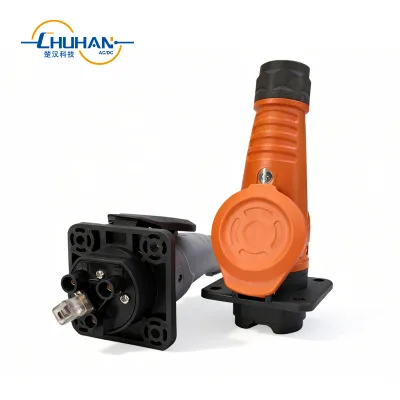
When sourcing a 48V Golf Cart Charger Plug, the primary objective is to ensure absolute compatibility with the existing electrical architecture of the vehicle. The market presents a variety of models, but the core technical requirement remains the voltage rating and the physical interface. Based on observed product data, specific models such as the Jr1-H235A-00 are explicitly designed for compatibility with G19, G22, and G29 types of golf carts. This indicates that "48V" is a critical baseline, but the specific application model is equally vital for a successful procurement. Buyers must verify that the plug's pin configuration matches the charger port on their specific fleet vehicles.
The electrical characteristics of the plug are defined by its interface type and current handling capabilities. The observed data highlights an AC/DC interface type, which is standard for converting utility power into the direct current required by the battery bank. The voltage options typically span 110V AC to 220V AC, allowing for international usage, while the entrance voltage range is often cited as 110V-240V. This wide input range suggests the plug is part of a system capable of handling global grid variations, but the physical connector must still match the specific socket type, such as those designated for USA/Canada markets.
Material composition plays a significant role in the durability and conductivity of the plug. The supply chain features components made from Alloy, Zinc-Al Alloy, and Copper. Copper is frequently cited for its superior conductivity, essential for minimizing heat generation during high-current charging cycles. The production process often involves Cold Pressing, a method that ensures tight tolerances and structural integrity for the terminals. Furthermore, the shape of the connector is typically square, and the device is characterized as an explosion-proof unit, a crucial safety feature for environments where battery gases may accumulate. The output power for the associated charging system is often rated at 800W, which dictates the thermal load the plug must withstand continuously.
Compliance and Certification Verification
In the B2B procurement of electrical components, certification is not merely a formality but a fundamental risk mitigation strategy. The observed product listings consistently reference CE certification. While this indicates compliance with European safety standards, buyers must verify if this certification is current and applicable to the specific region of operation. For instance, a plug intended for use in North America may require UL or ETL certification in addition to CE, depending on local electrical codes. The absence of specific certification data in general listings necessitates a rigorous request for documentation from the supplier before finalizing an order.
Safety standards are further reinforced by the "Explosion-Proof" character noted in the product attributes. This classification implies that the component is designed to prevent internal sparks from igniting external flammable atmospheres, a common requirement in battery charging stations. Buyers should demand test reports that validate this claim, as the term can sometimes be used loosely in marketing materials. Additionally, the standard dimensions provided in the data, such as 30x23x5 cm, 20x10x10 cm, or 13x10x10 cm, likely refer to the packaging or the unit's physical footprint rather than an electrical standard. Procurement teams must distinguish between physical packaging standards and electrical safety standards to avoid confusion during the inspection phase.
The "Made in China" and "Place of Origin: Anhui" facts confirm the manufacturing hub but do not guarantee quality on their own. Buyers should treat these location markers as logistical data points rather than quality assurances. The presence of OEM (Original Equipment Manufacturer) capabilities suggests that suppliers can customize the product, but this also introduces the need for strict adherence to the original design specifications to maintain certification validity. Any modification to the plug's internal structure or material composition could void existing certifications, making it essential to verify that the customized unit retains the same safety profile as the standard model.
Cost Drivers and Pricing Dynamics
The pricing landscape for 48V golf cart charger plugs is influenced by a combination of material costs, customization levels, and order volume. The observed price range spans from $3.99 to $490, a variance that reflects the difference between a simple plug component and a complete charging assembly or a high-specification unit with advanced safety features. The lower end of the spectrum likely represents basic connector units, while the higher end may include integrated safety mechanisms, heavy-duty copper conductors, or specialized packaging.
Material selection is a primary driver of cost. Products utilizing pure Copper or Zinc-Al Alloy generally command a premium over those using standard Alloy due to the raw material value and the enhanced conductivity provided. The production process, specifically Cold Pressing, adds value through improved manufacturing precision but may also increase the unit cost compared to simpler casting methods. Furthermore, the "Customization: Available" attribute indicates that bespoke orders will incur additional costs. Customization can range from branding (e.g., "Excar" or "Yeeda" logos) to specific pin configurations or cable lengths, all of which impact the final price.
Minimum Order Quantity (MOQ) is another critical factor in the total cost of ownership. The observed MOQ range of 1 to 30 units suggests flexibility for small buyers but also highlights that larger volumes may secure better per-unit pricing. Buyers should calculate the total cost by factoring in the MOQ, as ordering exactly at the minimum might result in a higher unit price compared to a bulk order that qualifies for volume discounts. Additionally, packaging requirements, such as Corrugated Boxes or Carton Boxes, can influence shipping costs, especially for international orders where weight and volume are charged separately.
Typical Applications and Usage Scenarios
The versatility of the 48V Golf Cart Charger Plug extends beyond standard recreational golf courses. The product attributes explicitly list applications for Sightseeing Cars, Utility Cars, and LSVs (Low-Speed Vehicles). This broadens the potential buyer base to include municipal agencies, resort operators, and industrial facilities that utilize electric utility vehicles. The "Application: Cable" and "Usage: Golf Cart" tags confirm the primary function, but the inclusion of LSVs suggests a need for plugs that can withstand more rigorous, daily usage cycles typical of utility fleets.
The electrical environment of these applications varies. In a golf course setting, the charger plug may be used intermittently, whereas in a utility vehicle fleet, the plug might be cycled multiple times a day. The "800W" output power rating indicates that the plug is suitable for moderate charging speeds, balancing efficiency with thermal management. The "1 Year" after-sales service warranty observed in the data is a standard expectation for this category, but buyers should clarify the scope of this service. Does it cover the plug only, or does it extend to the entire charging cord assembly?
The "Type No.: Pg4815" and "Model: Y-30" identifiers suggest that specific applications may require specific model numbers. For example, a sightseeing car with a different battery bank configuration might require a plug with a different current rating than a standard golf cart. Buyers must map their specific vehicle models to the correct product specifications to ensure optimal performance. The "Dual Hole Terminals" and "Square" shape are design features that facilitate secure connections in various vehicle types, reducing the risk of accidental disconnection during operation.
Supplier Evaluation and OEM Capabilities
Evaluating a supplier for 48V golf cart charger plugs requires a focus on their manufacturing capabilities and their ability to support long-term partnerships. The presence of OEM services ("OEM: Yes") is a strong indicator of a supplier's flexibility. However, buyers should not assume that all suppliers offering OEM services have the same level of quality control. The "Brand Name: Yeeda" and "Brand: Excar" mentions in the data suggest that some suppliers operate under their own brands while others may produce white-label goods for larger distributors.
When assessing a supplier, buyers should verify their production process capabilities. The "Cold Pressing" process mentioned in the data is a specific manufacturing technique that requires specialized machinery. A supplier capable of this process likely has a higher level of technical expertise than one relying on less precise methods. Additionally, the "Place of Origin: Anhui" provides a geographical context, but buyers should investigate the specific factory's capacity and history. A supplier with a long-standing presence in the region may have more established supply chains for raw materials like Copper and Zinc-Al Alloy.
The "Condition: New" attribute is a basic requirement, but buyers should also inquire about the supplier's inventory management. Given the "1 Year" after-sales service, the supplier must be able to provide replacement parts or units for at least that duration. This requires a stable supply chain and a commitment to product longevity. Buyers should also check if the supplier offers technical support for installation and troubleshooting, as the "Application: Transmission of Electrical Signals" implies a need for precise installation to ensure signal integrity and safety.
Quality Control and Long-Term Procurement
Quality control is paramount when dealing with electrical components that operate in potentially hazardous environments. The "Explosion-Proof" character of the plug necessitates rigorous testing protocols. Buyers should request detailed quality assurance documentation, including results from stress tests, thermal cycling tests, and electrical load tests. The "1 Year" after-sales service is a baseline, but high-quality suppliers often offer extended warranties or guarantees that reflect their confidence in the product's durability.
Long-term procurement considerations involve the stability of the supply chain and the consistency of the product. The "Material: Alloy" and "Material: Copper" variations indicate that different batches might use different material mixes. Buyers should establish strict material specifications in their contracts to ensure that every unit received meets the required conductivity and durability standards. The "Standard: 30X23X5 cm" and similar dimensions refer to packaging, but the physical dimensions of the plug itself must be consistent to ensure fitment across all vehicles in the fleet.
Packaging is also a critical aspect of quality control. The observed "Corrugated Boxes" and "Carton Box" options suggest that different suppliers may use different packaging standards. Proper packaging is essential to prevent damage during transit, especially for components with delicate terminals. Buyers should specify packaging requirements in their purchase orders to ensure that the products arrive in pristine condition. Finally, the "Color: Black" specification is a minor aesthetic detail, but consistency in color can be important for fleet standardization and ease of identification during maintenance.
Summary of Key Product Attributes
To facilitate quick reference during the sourcing process, the following table summarizes the key attributes observed in the market for 48V golf cart charger plugs. This summary is derived strictly from the provided product data and serves as a checklist for buyers.
| Attribute Category | Observed Value / Range | Relevance for Procurement |
|---|---|---|
| Voltage | 48V (Input: 110V-240V AC) | Critical for battery compatibility |
| Material | Alloy, Zinc-Al Alloy, Copper | Determines conductivity and durability |
| Certification | CE | Indicates compliance with safety standards |
| Application | Golf Cart, Sightseeing Car, Utility Car, LSV | Defines the scope of vehicle compatibility |
| Output Power | 800W | Indicates charging speed and thermal load |
| Interface | AC/DC, Dual Hole Terminals | Ensures correct electrical connection |
| Safety | Explosion-Proof | Essential for battery room safety |
| Origin | China (Anhui) | Logistics and supply chain context |
| Warranty | 1 Year | Baseline for after-sales support |
| Customization | Available | Allows for branding and specific needs |
| Packaging | Corrugated Boxes, Carton Box | Impacts shipping and protection |
| Condition | New | Standard requirement for all units |
By adhering to these specifications and verification steps, buyers can navigate the complex landscape of 48V Golf Cart Charger Plug procurement with confidence, ensuring that the selected components meet both technical and safety requirements for their specific fleet operations.
FAQs
What certification do 48v golf cart charger plugs typically have?
Most listed products carry CE certification for European safety compliance. Buyers should verify if additional regional certifications like UL are required for their specific market before purchasing.
Which materials are used to construct these charger plugs?
Manufacturers commonly use Alloy, Zinc-Al Alloy, and Copper for construction. Copper is often preferred for superior conductivity to minimize heat during high-current charging cycles.
Can these plugs be customized for specific golf cart models?
Yes, customization is available for specific requirements. Buyers must ensure that any custom modifications do not void existing safety certifications or compromise the explosion-proof character.
What is the typical output power for this charging system?
The observed output power rating is 800W for the associated charging system. This power level dictates the thermal load the plug must withstand continuously during operation.
How are these products packaged for shipping?
Products are typically packed in Corrugated Boxes or Carton Boxes. Packaging dimensions vary, with observed sizes including 30x23x5 cm and 20x10x10 cm for logistics planning.
What is the minimum order quantity for these plugs?
The minimum order quantity ranges from 1 to 30 units depending on the supplier. Ordering at the minimum may result in higher per-unit costs compared to bulk orders.
Which golf cart models are compatible with these plugs?
Specific models like Jr1-H235A-00 are designed for G19, G22, and G29 types. Buyers must verify pin configurations match their specific fleet vehicles for successful procurement.