Find 4x4 Diesel Cargo Van for Mining, Agriculture, and Logistics
Source 30 listings of 4x4 Diesel Cargo Van options with varying horsepower, load capacity, and tire certifications. Compare specifications from Chinese manufacturers to identify suitable models for rugged terrain and heavy-duty transport needs.
Key considerations
Products List

4X2/4X4/6X4 150HP Diesel 5-Ton 4X4 Light Cargo Truck Van with 4 Wheels
$35000.00 - $65000.00
MOQ: 1 Pieces

Dongfeng Brand Cargo Van Truck for Sale 5 Tons Diesel 4X2 Cargo Truck
$5500.00 - $7500.00
MOQ: 1 Pieces


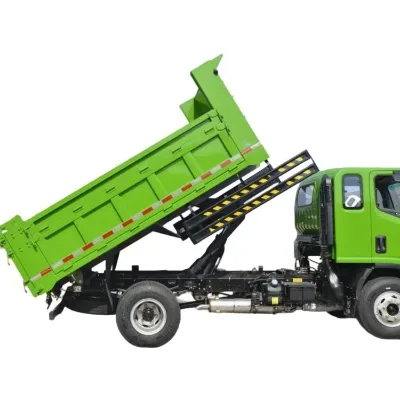
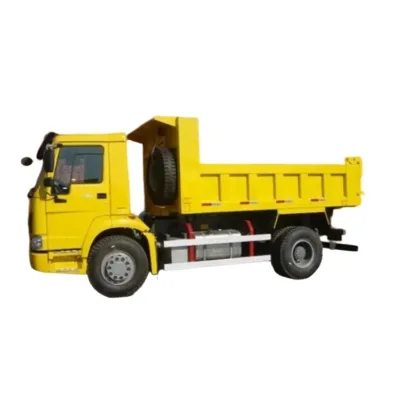


Hot Sale 4X2 Diesel 4.5t Light Van Transporter Light Cargo Transport Truck
$14065.00 - $17345.00
MOQ: 1 Pieces


Great Quality 4X2 6X4 8X4 Cargo Truck Heavy Cargo Box Truck Cargo Van Truck
$8600.00 - $58800.00
MOQ: 1 Pieces


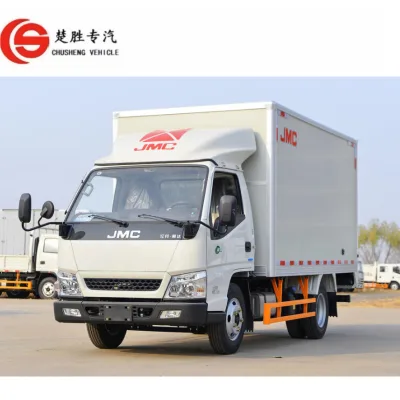


$6999.00 - $9800.00
MOQ: 1 Pieces


Comprehensive Sourcing Guide
Strategic Sourcing Guide for 4x4 Diesel Cargo Van Procurement
Sourcing a 4x4 Diesel Cargo Van requires a rigorous understanding of the intersection between off-road capability and commercial utility. The global market for light-to-medium duty diesel trucks presents a complex landscape where specifications often vary significantly between manufacturers and regions. Buyers must navigate a field where product attributes are observed rather than guaranteed across all listings. This guide provides a structured approach to evaluating 4x4 diesel cargo vans, focusing on technical verification, compliance standards, cost analysis, and supplier reliability. The objective is to equip procurement professionals with the evidence-based framework necessary to make informed decisions without relying on unverified marketing claims.
Technical Specification Analysis and Verification
The core of any successful procurement for a 4x4 Diesel Cargo Van lies in the precise interpretation of technical specifications. When reviewing product listings, buyers must distinguish between fixed attributes and variable configurations. For instance, while many units in the observed market are described as having a 4x4 drive configuration, the actual drivetrain architecture can vary. Some listings explicitly mention a 4x2 configuration alongside 4x4 options, indicating that the "4x4" designation in a search keyword may not apply to every unit in a specific supplier's catalog.
Engine capacity is a critical differentiator. Observed data indicates a prevalence of engines with displacement under 4 liters, often ranging from 1300ml to 1900ml, with specific models citing 1499cc. Horsepower ratings in the current market observation are predominantly under 150hp, with some specific units listed at 130hp. This suggests that the "4x4 Diesel Cargo Van" category often encompasses light-duty vehicles rather than heavy industrial trucks. Buyers must verify the specific engine model, such as the 4kh1cn5HD, and confirm the emission standard, which frequently aligns with Euro 5 or Euro 6 requirements depending on the destination market.
Transmission and chassis dimensions are equally vital. Manual transmission is a common observation in this segment, though automatic options may exist. The wheelbase is a decisive factor for cargo capacity and maneuverability. Data points show wheelbases ranging from 2900mm to 3815mm, with specific models offering options like 3050mm or 3400mm. The cargo body style also varies; while some units are described as "Rack-body Style," others are "Flatbed Style." The cargo tank dimensions, such as 3950x1750x1750mm, directly impact the volume of goods that can be transported. Buyers should not assume a standard dimension but must request specific cargo tank measurements for the exact model being procured.
Compliance, Certification, and Regulatory Alignment
Navigating the regulatory landscape is perhaps the most critical step in international procurement. The 4x4 Diesel Cargo Van market is subject to diverse certification requirements based on the destination country. Observed listings reference a wide array of certifications, including ISO, DOT, ECE, and GCC standards. The presence of these certifications in a product description does not guarantee that a specific unit possesses them; rather, it indicates the manufacturer's capability to meet these standards.
Buyers must verify the Emission Standard compliance explicitly. While some listings mention Euro 5 or Euro 6 engines, others may only specify "Euro" without a numerical tier. For markets with strict environmental regulations, such as the European Union or North America, the absence of a specific Euro rating or a mismatch with local standards can render the vehicle unsellable. Additionally, tire certification is a key compliance area. Listings often cite ISO and DOT for tire design, which can be either tubeless or radial. The tire size, observed as 185r14 or 7.00r16, must be compatible with the vehicle's load capacity and the road conditions of the intended operating region.
The Harmonized System (H.S.) Code is another essential compliance element. The observed H.S. Code for these vehicles is 87042100.00, which classifies trucks for the transport of goods. However, buyers must confirm this code with their local customs authority, as variations in classification can affect duty rates. Furthermore, the product standard, often listed as specific dimensions like 5995x1840x2790mm or 3235x1790x380mm, must be cross-referenced with local vehicle size regulations. Non-compliance with local width, height, or weight limits can lead to significant logistical delays and fines.
Cost Drivers and Pricing Structure
Understanding the cost structure of 4x4 diesel cargo vans is essential for budgeting and total cost of ownership (TCO) analysis. The observed price range for these vehicles spans from $5,500 to $74,600 USD. This wide disparity is driven by several factors, including engine power, cargo capacity, body style, and the level of customization available. Lower-priced units often correspond to smaller payloads, such as the 1249kg payload observed in some listings, while higher-priced units may feature larger capacities up to 10 tons or more advanced engine configurations.
The Minimum Order Quantity (MOQ) is another significant cost driver. In the current market observation, the MOQ is consistently listed as 1 unit. This flexibility allows buyers to test the market with a single vehicle before committing to a larger fleet. However, the unit price for a single unit may be higher than the price per unit in a bulk order. Buyers should negotiate based on volume, even if the supplier allows single-unit purchases.
Customization is a major variable in pricing. The market data confirms that customization is available, which can include modifications to the cargo body, engine tuning, or interior features. These customizations will inevitably increase the base price. Additionally, the origin of the vehicle, often listed as China (specifically Shiyan or Hubei), influences the cost due to labor rates and manufacturing scale. Shipping costs, which depend on the packing method (e.g., by sea or land transportation), must also be factored into the final landed cost. Buyers should request a detailed breakdown of costs, including the base price, customization fees, and shipping estimates, to avoid hidden expenses.
Typical Applications and Operational Use Cases
The versatility of 4x4 diesel cargo vans makes them suitable for a broad spectrum of applications. The primary use case is light to medium-duty cargo transport in environments where road conditions are variable. The 4x4 drivetrain provides the necessary traction for off-road scenarios, making these vehicles ideal for construction sites, agricultural operations, and remote logistics. The observed load capacity range of 1 to 10 tons allows for flexibility in carrying different types of goods, from small parcels to heavy equipment.
Specific applications include municipal services, where the compact dimensions and maneuverability are advantageous. The "Small mini diesel truck" classification suggests suitability for urban delivery and last-mile logistics. The payload capacity of around 3665kg in some models supports medium-weight cargo, while the 1249kg payload in others is better suited for light delivery tasks. The cab configuration, with options for 3 persons, supports a small crew for on-site operations or delivery teams.
For industries requiring specialized cargo handling, the flatbed or rack-body styles offer adaptability. A flatbed is ideal for transporting construction materials or machinery, while a rack-body style might be preferred for utility work or equipment transport. The engine power, typically under 150hp, ensures sufficient torque for climbing grades and carrying loads without excessive fuel consumption. However, buyers must align the vehicle's specifications with their specific operational needs, ensuring that the 4x4 capability is utilized effectively rather than being an unnecessary cost.
Supplier Evaluation and Quality Assurance
Evaluating suppliers for 4x4 diesel cargo vans requires a focus on transparency and consistency. The market data indicates that suppliers often list multiple product models, such as the RT2466 or the 600P 4x2 Cargo Truck, which suggests a diverse inventory. Buyers should verify the supplier's ability to provide the exact specifications required, as product attributes are observations and not guaranteed for every unit.
Quality control is paramount. Buyers should request detailed inspection reports, including test results for engine performance, braking systems, and structural integrity. While some listings mention the absence of ABS, others may offer it as an option. It is crucial to confirm the presence of safety features like ABS before finalizing a purchase. The packing method, whether standard export packing or customized to buyer requirements, also reflects the supplier's attention to detail and care during transit.
Supplier location, often cited as Hubei, China, or Shiyan, provides insight into the manufacturing ecosystem. These regions are known for their automotive industry clusters, but buyers should verify the specific factory's reputation and production capacity. The lead time, though not explicitly detailed in the provided data, is a critical factor for procurement planning. Buyers should establish clear timelines for production, shipping, and delivery to avoid delays.
Long-Term Procurement Considerations
Sourcing a 4x4 Diesel Cargo Van is not just a one-time transaction but a long-term investment. Buyers must consider the availability of spare parts and the after-sales support provided by the supplier. The engine model, such as the 4kh1cn5HD, should have a robust supply chain for maintenance and repairs. If the vehicle is intended for use in a remote location, the availability of local service centers or the supplier's ability to provide remote technical support becomes critical.
The total cost of ownership extends beyond the purchase price to include fuel efficiency, maintenance costs, and resale value. Diesel engines, while powerful, require regular maintenance to ensure longevity. Buyers should review the maintenance schedule and the cost of routine services. Additionally, the vehicle's condition, listed as "New" in the observed data, should be verified upon delivery to ensure no transit damage has occurred.
Finally, buyers should consider the scalability of their procurement strategy. If the initial purchase is successful, the ability to expand the fleet with identical or compatible models can streamline maintenance and training. The flexibility of the supplier to accommodate future orders and customization needs will determine the long-term viability of the partnership. By focusing on these long-term factors, buyers can ensure that their investment in 4x4 diesel cargo vans delivers sustained value and operational efficiency.
FAQs
What is the price range for a 4x4 Diesel Cargo Van?
The observed price range spans from 5500 to 74600 USD. This variation depends on engine power, cargo capacity, and body style configurations available from different suppliers.
Can I customize the cargo van specifications?
Yes, customization is available for these vehicles. Buyers can request specific modifications to the cargo body, engine tuning, or interior features to meet operational needs.
Which certifications do these trucks typically hold?
Products often list ISO, DOT, ECE, and GCC certifications. Buyers must verify that specific units possess these standards as they indicate capability rather than guaranteeing every unit.
What is the minimum order quantity for these trucks?
The minimum order quantity is consistently one unit. This allows buyers to test the market with a single vehicle before committing to a larger fleet purchase.
How much cargo weight can these vans carry?
Load capacity ranges from 1 to 10 tons depending on the model. Specific listings show payloads as low as 1249 kg or as high as 3665 kg.
Where are these diesel trucks manufactured?
Most units originate from China, specifically Shiyan or Hubei regions. These locations are known for automotive industry clusters that support manufacturing scale and cost efficiency.