Source 8-core black cat5e network cable for offices, schools, and data centers
Explore 30 listings for the 8-core black cat5e network cable designed for local communication and LAN applications. Buyers can compare conductor materials like bare copper, insulation types such as PVC or LSZH, and customization options including length and shielding.
Key considerations
Products List


Patch Cord Data Communication Cat5e CAT6 Network Cable LAN Cable Audio Cable
$0.15 - $1.50
MOQ: 300 Pieces


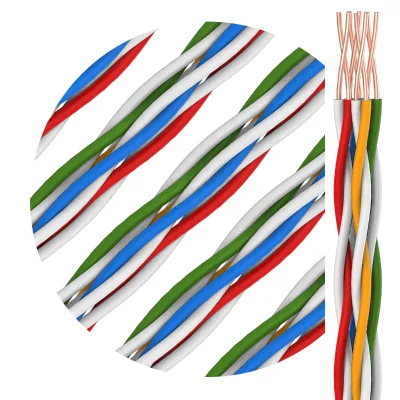
Lan networking cat5 cat5e cat6 cat7 cable Semi Finish Ethernet Cable Network Cable
$15.00 - $100.00
MOQ: 100 Minimum

$50.00 - $55.00
MOQ: 1000 Pieces


Comprehensive Sourcing Guide
Strategic Sourcing Guide for 8-Core Black Cat5e Network Cable
Procuring specialized cabling infrastructure requires a disciplined approach that balances technical performance with supply chain reliability. When sourcing an 8-core black Cat5e network cable, buyers must navigate a market defined by specific material compositions, certification landscapes, and application-specific requirements. This guide outlines the critical factors for evaluating potential suppliers and ensuring the final product meets the rigorous demands of modern local communication networks. The focus remains on evidence-based criteria derived from industry standards and observable product attributes, avoiding speculative claims while providing actionable procurement strategies.
Technical Specifications and Conductor Architecture
The foundation of a reliable Cat5e network cable lies in its internal architecture, specifically the conductor material and configuration. For an 8-core solution, the cable must contain eight individual conductors, typically arranged in four twisted pairs to minimize crosstalk. The supplied product data indicates that conductor materials can vary significantly, including Bare Copper (BC), Copper-Clad Steel (CCS), Copper-Clad Aluminum (CCA), and Tinned Copper (TC). A critical distinction for procurement is the conductor type: stranded versus solid. The market data shows both stranded and solid options are available, with stranded configurations often preferred for patch cords due to flexibility, while solid conductors are standard for permanent link installations.
The physical shape of the wire is consistently observed as round, which is essential for maintaining the geometric integrity of the twisted pairs. The insulation and jacket materials are equally vital. The jacket is frequently specified as PVC or Low Smoke Zero Halogen (LSOH), depending on the installation environment. PVC offers cost-effectiveness and durability for general indoor use, whereas LSOH is mandated for areas with strict fire safety regulations due to its reduced toxic smoke emission. The color black is a standard aesthetic choice, often available in yellow, white, blue, green, or orange, but the black variant is specifically noted for its ability to blend into ceiling spaces or server racks.
Buyers must verify the specific American Wire Gauge (AWG) size, as the data suggests options ranging from AWG 24 to AWG 20. The standard for Cat5e typically utilizes AWG 24, but thicker gauges like AWG 22 or 20 may be requested for specific long-distance or high-current applications. The shielding configuration is another technical variable, with options including Unshielded Twisted Pair (UTP), Shielded Twisted Pair (STP), and Foil Shielded Twisted Pair (SFTP). The selection depends on the electromagnetic interference (EMI) environment of the deployment site.
Compliance and Certification Verification
In the global B2B market, compliance is not merely a formality but a prerequisite for market access and liability protection. The observed product attributes highlight a robust landscape of certifications, including RoHS, CE, ISO, and UL. RoHS compliance ensures the cable is free from hazardous substances, a mandatory requirement for electronics in many jurisdictions. CE marking indicates conformity with health, safety, and environmental protection standards for products sold within the European Economic Area.
ISO certifications, particularly ISO9001, signal that the manufacturer adheres to established quality management systems. The presence of UL certification is a strong indicator of safety compliance, particularly for the North American market, suggesting the cable has undergone rigorous fire and electrical safety testing. However, buyers must exercise caution; while these certifications are listed as high-confidence facts for the category, the specific certification status of a supplier's batch must be verified against the actual Certificate of Conformity (CoC) provided at the time of shipment.
The data also references SGS as a standard, implying third-party inspection capabilities. Buyers should request SGS test reports to validate claims regarding fire resistance, tensile strength, and electrical performance. It is important to note that while the category supports these certifications, the specific application of a cable (e.g., for overhead, underground, or auto equipment) may require additional, specific testing not covered by general certifications. Therefore, the procurement process must include a direct request for the most recent test reports relevant to the specific project location and regulatory environment.
Cost Drivers and Pricing Dynamics
Understanding the cost structure of network cabling is essential for budgeting and negotiation. The observed price range in the market spans from $0.01 to $100, a wide variance that reflects differences in conductor material, length, and packaging. The primary cost driver is the conductor material. Cables utilizing Bare Copper (BC) are generally more expensive than those using Copper-Clad Aluminum (CCA) or Copper-Clad Steel (CCS), but they offer superior conductivity and signal integrity. CCA cables are often cheaper but may suffer from higher resistance and oxidation issues over time, making them unsuitable for PoE (Power over Ethernet) applications requiring high current.
Packaging also influences the final cost. The data indicates various packing methods, including cartons, boxes, coils, and drums. Bulk orders packaged in drums or coils often reduce per-unit shipping costs compared to individual box packaging. The Minimum Order Quantity (MOQ) ranges from 10 to 10,000 units, providing flexibility for both small projects and large-scale deployments. Buyers should be aware that smaller MOQs might carry a premium per unit, while larger volumes can negotiate better pricing tiers.
Lead times and origin are secondary cost factors. With the product origin listed as China, specifically Henan, buyers must account for international shipping logistics and potential tariffs. The "Produceing Experience" of 15 years suggests a mature supply chain, which can stabilize pricing, but buyers should confirm current lead times as they fluctuate with raw material availability. The "Export to" destinations, including Malaysia, Russia, Tanzania, and Dubai, indicate a global reach, but specific regional logistics costs should be calculated separately.
Typical Applications and Deployment Scenarios
The versatility of the 8-core black Cat5e network cable allows for a wide array of applications. The primary use case is identified as Local Communication Cable and LAN Cable, making it ideal for office networks, data centers, and residential installations. The data also lists applications in Long Distance Symmetric Cable, Overhead, Underground, Auto, Interphone, Robot, and Charger equipment. This breadth suggests that while the cable is optimized for data transmission, it can be adapted for specialized industrial or vehicular uses if the insulation and jacket materials are suitable.
For standard LAN deployments, the UTP configuration is the most common choice, offering a balance of performance and cost. However, in environments with high EMI, such as near heavy machinery or in industrial settings, the STP or SFTP variants should be selected. The black color is particularly useful in commercial settings where aesthetics matter, allowing the cable to be less obtrusive in ceiling plenums or under floor tiles.
The data mentions "Computer Cable" and "Patch Cord" as specific item types, highlighting the cable's role in connecting end-user devices to network switches. The availability of custom lengths (1M, 2M, 3M, 5M, 8M, 10M, etc.) and standard 305M reels provides flexibility for both pre-terminated patch cords and bulk installation wire. Buyers should match the cable type to the specific application; for example, using a solid conductor for wall-to-wall runs and a stranded conductor for patch cords.
Supplier Evaluation and OEM Capabilities
Selecting the right supplier is as critical as selecting the right cable. The market data highlights several key attributes for supplier evaluation, including OEM (Original Equipment Manufacturer) capabilities and customization options. The "OEM: Yes" attribute indicates that suppliers can produce cables with custom branding, which is valuable for enterprises looking to standardize their infrastructure with their own corporate identity. Customization is also available for size, length, and color, allowing buyers to tailor the product to specific project needs.
When evaluating suppliers, buyers should verify the "Produceing Experience" of 15 years, which suggests a level of stability and technical expertise. However, experience alone is not a guarantee of quality; it must be corroborated by current production capacity and quality control processes. The "Export to" list serves as a proxy for market acceptance, indicating that the supplier has successfully navigated the regulatory requirements of diverse markets.
Buyers should also assess the supplier's ability to handle different packaging requests, such as cartons, coils, or drums, as this impacts logistics efficiency. The "Customised" specification attribute suggests that the supplier can accommodate non-standard requirements, but this often comes with a higher MOQ or longer lead time. It is advisable to request samples before placing a large order to verify the physical quality of the conductor, jacket flexibility, and labeling accuracy.
Quality Control and Long-Term Procurement Considerations
Ensuring long-term reliability requires a robust quality control (QC) framework. The observed product attributes include specific standards like SGS and various certifications, but buyers must implement their own QC checks. This includes verifying the conductor material through chemical analysis or conductivity testing to ensure it matches the specification (e.g., verifying BC is not CCA). The insulation material, which can range from PE, PVC, XLPE, HDPE, Silicone, to PTFE, must be tested for dielectric strength and fire resistance.
For long-term procurement, buyers should consider the lifecycle of the cable. While Cat5e is a legacy standard, it remains widely used for cost-effective deployments. However, for future-proofing, buyers might consider the transition path to Cat6 or Cat6A, though the current focus remains on Cat5e. The "15 Years" production experience suggests that the supplier has a track record of consistency, but buyers should establish a contract that includes regular quality audits and performance guarantees.
The "Hot Export" markets, including the USA, Russia, Philippines, and Malaysia, indicate that the supplier is accustomed to international standards. However, buyers should ensure that the cable meets the specific local building codes of their deployment location. For instance, fire codes in the USA (UL) differ from those in Europe (CE/LSOH). The procurement strategy should include a clause for compliance with local regulations, ensuring that the supplier provides the necessary documentation for local inspections.
Final Procurement Strategy and Risk Mitigation
The final step in the sourcing process involves consolidating technical, compliance, and commercial data into a clear procurement strategy. Buyers should create a detailed Request for Quotation (RFQ) that specifies the exact conductor material, jacket type, shielding, and certification requirements. The use of a comparison table can help visualize the differences between potential suppliers, focusing on price, MOQ, lead time, and certification validity.
| Feature | Requirement | Supplier A | Supplier B | Supplier C |
|---|---|---|---|---|
| Conductor Material | Bare Copper (BC) | Verified | CCA | BC |
| Certification | RoHS, CE, UL | Yes | No | Yes |
| MOQ | 1000 units | 500 | 1000 | 2000 |
| Lead Time | 30 Days | 25 | 35 | 30 |
| Packaging | Cartons/Drums | Cartons | Drums | Cartons |
Note: Data above is illustrative of how to structure a comparison based on verified attributes.
Risk mitigation involves diversifying the supplier base and maintaining a buffer stock of critical cable types. Given the variability in conductor materials and the potential for counterfeit products, buyers should prioritize suppliers with a proven track record of exporting to their target region. Regular audits and sample testing should be part of the ongoing relationship to ensure that the quality remains consistent over time. By adhering to these evidence-based guidelines, buyers can secure a reliable supply of 8-core black Cat5e network cables that meet both technical and regulatory standards.
FAQs
What conductor materials are available for 8-core black cat5e network cable?
Available conductor materials include Bare Copper, Copper-Clad Steel, Copper-Clad Aluminum, and Tinned Copper. Buyers must verify the specific material type as it significantly impacts conductivity and suitability for Power over Ethernet applications.
Which certifications are standard for 8-core black cat5e network cable?
Standard certifications include RoHS, CE, ISO, and UL. These marks indicate compliance with safety and environmental standards, though specific project requirements may demand additional third-party testing reports like SGS.
Can I request custom lengths for 8-core black cat5e network cable?
Yes, customization is available for lengths such as 1M, 2M, 3M, 5M, 8M, and 10M, or standard 305M reels. Custom orders may require a higher minimum order quantity and specific packaging arrangements.
How is the 8-core black cat5e network cable typically packaged?
Packaging options include cartons, boxes, coils, and drums, often tailored to customer requests. Bulk orders frequently utilize drums or coils to optimize shipping costs, while smaller quantities may come in individual boxes.
What is the typical minimum order quantity for 8-core black cat5e network cable?
The minimum order quantity ranges from 10 to 10,000 units depending on the supplier and customization level. Smaller orders might carry a higher per-unit cost compared to large volume purchases.
Which insulation materials are used for 8-core black cat5e network cable?
Insulation materials include PE, PVC, XLPE, HDPE, Silicone, and PTFE. The choice depends on the application environment, with PVC being common for general indoor use and LSOH required for fire safety zones.
Can suppliers provide OEM branding for 8-core black cat5e network cable?
Yes, OEM services are available to apply custom branding to the product. This allows enterprises to standardize their infrastructure with their own corporate identity while maintaining specific technical specifications.