Source 8-Channel 1U Power Distribution Unit for telecom stations
Compare 30 available options for the 8-Channel 1U Power Distribution Unit designed for telecom stations, cabinets, and base stations. Buyers can review specifications like voltage, current ratings, and communication interfaces to find the right fit.
Key considerations
Products List
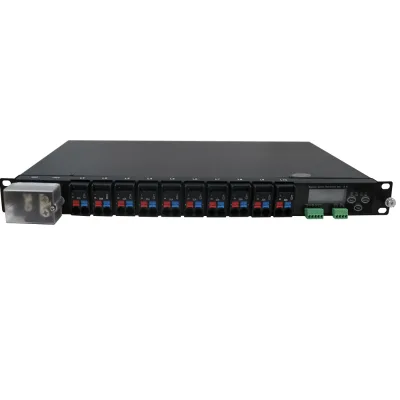
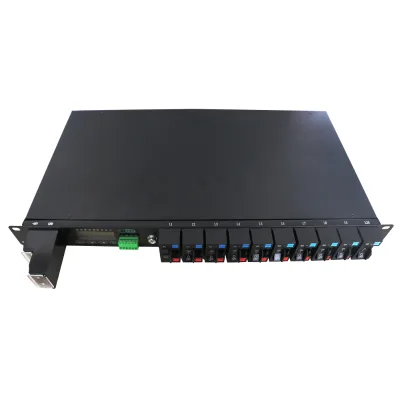


Power Distribution Cabinet for Medium Voltage Distribution Ring Main Unit
$3000.00 - $6000.00
MOQ: 1 Pieces


Comprehensive Sourcing Guide
Strategic Sourcing Guide for 8-Channel 1U Power Distribution Units
Understanding the Technical Architecture and Form Factor
When sourcing an 8-channel 1U Power Distribution Unit (PDU), buyers must first distinguish between the physical form factor and the electrical channel configuration. The "1U" designation refers to a standard rack-mount height of approximately 1.75 inches (44.45 mm), a critical dimension for data centers and telecom cabinets where vertical space is at a premium. In the current market, products labeled as 1U PDUs often vary significantly in their internal channel counts, with 6, 8, 10, and even 12 channels being common configurations. The core keyword "8 channel" implies a specific distribution topology where a single input is split into eight distinct output circuits, each typically protected by its own fuse or circuit breaker.
Technical specifications for these units often center on the input and output voltage requirements. For telecom and data center applications, the industry standard is a negative DC voltage system, specifically -48VDC. This voltage range is critical because it powers the majority of active networking equipment, including routers, switches, and base station transceivers. The observed market data indicates a dynamic voltage range of -40V to -60V, which accommodates the voltage drop that occurs over long cable runs. Buyers should verify that the specific unit they are evaluating supports this dynamic range rather than a rigid -48VDC nominal, as this ensures reliability during fluctuating load conditions.
The physical dimensions of the unit are another primary technical consideration. While the height is standardized at 1U, the width and depth can vary. Some units are designed to fit standard 19-inch racks with a width of 48 cm, while others may have a depth of 25 cm or 44 cm depending on the internal busbar layout and cooling requirements. The material composition is equally important; stainless steel and aluminum alloy are the two predominant materials observed in high-quality units. Aluminum alloy offers a favorable strength-to-weight ratio, which is beneficial for reducing the overall load on the rack structure, while stainless steel provides superior corrosion resistance for harsh environments. The IP rating, often cited as IP for the shell material, indicates the degree of protection against dust and water ingress, a vital factor for outdoor telecom stations or unconditioned server rooms.
Compliance, Certification, and Regulatory Standards
Navigating the compliance landscape is essential for international procurement, as regulatory requirements vary significantly by region. The most frequently cited certifications for power distribution units in the global market are CE (Conformité Européenne) and RoHS (Restriction of Hazardous Substances). The CE mark indicates that the product meets EU safety, health, and environmental requirements, while RoHS compliance ensures that the unit does not contain specific hazardous materials such as lead, mercury, or cadmium in concentrations that exceed legal limits.
Buyers must also consider the ISO 9001 certification, which validates the supplier's quality management system rather than the product itself. A supplier with ISO 9001 certification demonstrates a commitment to consistent manufacturing processes, which reduces the risk of batch-to-batch variability. Additionally, some regions may require REACH compliance, which addresses the registration, evaluation, authorization, and restriction of chemicals. While these certifications are common, buyers should not assume that every listed product automatically possesses them; verification of the specific certificate for the exact model number is necessary.
Regarding electrical standards, the industry often references IEC 60297 for rack-mount dimensions and IEC 60884 for plug and socket-outlet requirements. However, these are general industry standards rather than specific product certifications. Buyers should verify if the manufacturer explicitly states compliance with these standards or if they adhere to local equivalents. For telecom applications, the unit must also meet specific safety standards regarding short-circuit protection and overload handling. The absence of a specific standard number in a product listing should not be interpreted as non-compliance, but rather as an indication that the buyer must request the manufacturer's test reports or declaration of conformity to ensure the product meets the necessary safety thresholds for the intended application.
Cost Drivers and Pricing Variables
The pricing of an 8-channel 1U PDU is influenced by a complex interplay of factors, including material costs, manufacturing complexity, and the level of customization required. The observed price range in the market spans from approximately $6.50 to over $8,400, a disparity that reflects the difference between basic passive distribution units and advanced smart units with integrated monitoring capabilities. A basic unit, consisting primarily of busbars, fuses, and a metal enclosure, will sit at the lower end of this spectrum. In contrast, units equipped with communication modules such as RS485, NB-IoT, or 4G capabilities command a significantly higher price due to the added electronics and firmware development costs.
Material selection is a primary cost driver. Units constructed from stainless steel are generally more expensive than those made from aluminum alloy due to the higher raw material cost and the more intensive machining processes required. Furthermore, the rated current capacity of the unit plays a crucial role in pricing. Models rated for 100A, 60A, or even 300A require thicker busbars and more robust fusing mechanisms, which increases the bill of materials. The number of sockets is another variable; while the core keyword specifies 8 channels, some manufacturers offer modular designs where the number of sockets can be adjusted, potentially affecting the unit price.
Customization is a significant factor that can inflate costs. Options such as custom cable lengths, specific connector types, or tailored branding (OEM services) add to the manufacturing time and complexity. Buyers should be aware that "Customized" or "OEM Service: Accept" listings often imply a higher unit cost and potentially longer lead times compared to stock items. The selling unit configuration also matters; purchasing a single item versus a bulk order can impact the per-unit price, as suppliers often offer volume discounts for orders exceeding a certain threshold, such as 300 units.
Typical Applications and Deployment Scenarios
The primary application for 8-channel 1U PDUs is in telecommunications infrastructure, specifically within telecom stations and base stations. These units serve as the central distribution point for DC power, splitting the main -48VDC input into eight separate circuits to power various network elements. The compact 1U form factor makes them ideal for installation in standard 19-inch telecom cabinets where space is limited and airflow management is critical. In these environments, the PDU must withstand vibration and temperature fluctuations, which is why the material choice of aluminum alloy or stainless steel is often mandated.
Beyond traditional telecom stations, these units are increasingly deployed in edge data centers and small server rooms. The ability to monitor power distribution via communication protocols like RS485 allows facility managers to track power usage per channel, detect faults, and manage load balancing remotely. This capability is particularly valuable in distributed networks where physical access to the equipment is infrequent. The "Smart DCDU" (DC Distribution Unit) variant, which includes communication features, is specifically designed for these scenarios, offering real-time data on voltage, current, and temperature.
The installation method is typically rack-mounted, which simplifies the integration into existing infrastructure. The unit's dimensions, such as 48252.5 cm or 484424 cm, are designed to fit standard rack depths, ensuring compatibility with a wide range of server and networking equipment. The warranty period, often cited as one year, is a standard industry practice for these components, reflecting the reliability expectations of the telecom sector. Buyers should ensure that the PDU is compatible with the specific voltage range of their power system, particularly the dynamic range of -40V to -60V, to prevent equipment damage during voltage sags or surges.
Supplier Evaluation and Quality Assurance
Evaluating a supplier for 8-channel 1U PDUs requires a rigorous assessment of their manufacturing capabilities and quality control processes. Buyers should prioritize suppliers who provide clear documentation of their production standards, including ISO 9001 certification, and who can demonstrate a track record of delivering consistent product quality. The "Brand Name" field in product listings can vary, with some suppliers offering OEM services under their own brand and others operating as private label manufacturers. It is crucial to verify the origin of the product, with Sichuan, China, being a notable manufacturing hub for these components, indicating a concentration of supply chain expertise in the region.
Quality assurance should extend beyond the final product inspection to include the raw material sourcing. The use of high-grade aluminum alloy or stainless steel is a key indicator of durability. Buyers should request material certificates to verify the composition and grade of the metals used in the enclosure and busbars. Additionally, the condition of the product, typically listed as "New," should be confirmed to ensure that no refurbished or used units are being sold as new. The "Products Status: Stock" attribute is a positive indicator of immediate availability, reducing the risk of supply chain delays.
Communication capabilities are a differentiator in supplier evaluation. Suppliers offering units with RS485, NB-IoT, or 4G connectivity demonstrate a higher level of technical sophistication. Buyers should verify the compatibility of these communication protocols with their existing network infrastructure. The single gross weight of the unit, ranging from 4.6 kg to 5.0 kg, is another metric that can help assess the build quality; a unit that is significantly lighter than the average may indicate the use of lower-grade materials or thinner components. Finally, the warranty terms, typically one year, should be clearly understood, including the scope of coverage and the process for claims.
Long-Term Procurement and Lifecycle Management
Long-term procurement strategies for 8-channel 1U PDUs must account for the lifecycle of the equipment and the potential for future upgrades. The modular nature of these units allows for scalability, but buyers should consider the availability of spare parts and the compatibility of future models with existing infrastructure. The "Customization: Available" attribute suggests that suppliers can adapt the product to meet evolving needs, which is a valuable asset for long-term contracts. However, buyers should ensure that any customizations do not compromise the standardization of the rack environment, which could lead to compatibility issues with future equipment.
Lead times and supply chain resilience are critical considerations for long-term planning. While some suppliers offer "Stock" items with immediate availability, custom orders may have longer lead times. Buyers should establish a relationship with suppliers who can provide reliable lead time estimates and have contingency plans for supply disruptions. The MOQ (Minimum Order Quantity) range of 1 to 300 units offers flexibility for both small-scale deployments and large-scale rollouts, but buyers should negotiate terms that align with their projected growth.
Maintenance and monitoring are essential for maximizing the lifespan of the PDU. Units with smart monitoring capabilities allow for predictive maintenance, enabling facility managers to identify potential failures before they occur. This proactive approach can significantly reduce downtime and extend the operational life of the power distribution system. Buyers should also consider the environmental impact of the product, ensuring that the materials used are recyclable and that the manufacturing process adheres to sustainability standards. By focusing on these long-term factors, buyers can ensure a reliable and efficient power distribution infrastructure that supports their operational goals for years to come.
Comparative Analysis of Key Product Attributes
To facilitate decision-making, the following table summarizes the key attributes observed in the market for 8-channel 1U PDUs, highlighting the variations that buyers should consider during the sourcing process.
| Attribute Category | Common Observation | Variations to Verify |
|---|---|---|
| Input Voltage | -48VDC | Dynamic range (-40V to -60V) |
| Output Voltage | -48VDC | Compatibility with specific load requirements |
| Rated Current | 100A, 60A, 300A | Maximum load capacity per channel |
| Material | Aluminum Alloy, Stainless Steel | Corrosion resistance and weight |
| Communication | RS485, NB-IoT, 4G | Protocol compatibility with existing systems |
| Dimensions | 48252.5 cm, 484424 cm | Rack depth and width constraints |
| Certification | CE, RoHS, ISO9001 | Regional compliance requirements |
| Warranty | 1 Year | Terms of coverage and claim process |
| Installation | Rack-Mounted | 19-inch rack compatibility |
| Application | Telecom Station, Base Station | Environmental conditions (indoor/outdoor) |
This comparison underscores the importance of detailed specification verification. While the core keyword defines the general category, the specific attributes of each unit can vary significantly. Buyers must align these attributes with their specific operational requirements to ensure optimal performance and reliability. By carefully evaluating these factors, procurement professionals can secure high-quality 8-channel 1U PDUs that meet the rigorous demands of modern telecommunications and data center environments.
FAQs
What voltage range does the 8-Channel 1U Power Distribution Unit support?
The unit supports a dynamic voltage range of -40V to -60V DC. This range accommodates voltage drops over long cable runs while maintaining a nominal -48VDC input for telecom stations and base stations.
Which certifications are available for the 8-Channel 1U Power Distribution Unit?
Available certifications include CE, RoHS, and ISO 9001. These indicate compliance with EU safety standards, restriction of hazardous substances, and a validated quality management system for consistent manufacturing processes.
Can the 8-Channel 1U Power Distribution Unit be customized for specific needs?
Yes, customization is available for this unit. Buyers can request tailored options such as specific cable lengths or connector types, though this may affect the unit cost and lead time compared to stock items.
How is the 8-Channel 1U Power Distribution Unit installed in a rack?
The unit is designed for rack-mounted installation in standard 19-inch telecom cabinets. Its compact dimensions, such as 48 by 44 by 24 cm, ensure compatibility with limited vertical space and existing infrastructure.
What communication protocols does the smart 8-Channel 1U Power Distribution Unit use?
Smart models support RS485, NB-IoT, and 4G communication protocols. These features enable remote monitoring of power usage per channel and real-time detection of faults in distributed network environments.
Which materials are used to construct the 8-Channel 1U Power Distribution Unit?
Units are constructed from stainless steel or aluminum alloy. Aluminum alloy offers a favorable strength-to-weight ratio, while stainless steel provides superior corrosion resistance for harsh outdoor or industrial environments.