Source 8 Events Programmable Timer Module for Kitchen, Industrial, Multifunctional
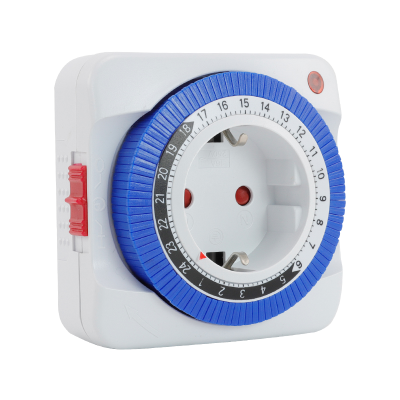
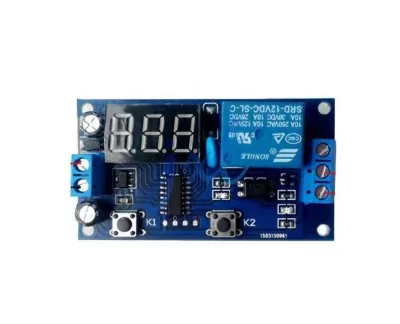
Compare 30 listings of the 8 Events Programmable Timer Module designed for kitchen, industrial, and multifunctional applications. Buyers can review specifications like LCD screen size, battery requirements, and customizable features to find the right fit.
Key considerations
Products List


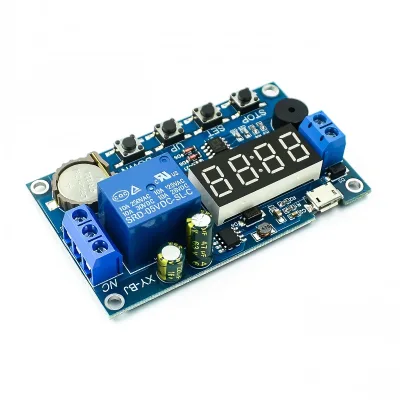


$60.00 - $200.00
MOQ: 1 Pieces


Comprehensive Sourcing Guide
Strategic Sourcing Guide for 8-Event Programmable Timer Modules
Procuring an 8-event programmable timer module requires a rigorous approach that balances technical precision with supply chain reliability. These components serve as the logical backbone for complex automation sequences, allowing industrial and commercial systems to execute specific tasks in a defined order. Unlike simple countdown timers, programmable modules with multiple event capabilities offer the flexibility to manage intricate workflows, from kitchen appliances to heavy industrial machinery. The following guide outlines the critical factors buyers must evaluate to ensure successful procurement, focusing on the specific attributes observed in the current market landscape.
Technical Specifications and Functional Architecture
The core of any sourcing decision lies in understanding the technical architecture of the module. In the current market, programmable timer modules often operate on electronic theories utilizing synchronous counter mechanisms. This architecture ensures that the counting process remains stable and synchronized across different operational states. Buyers should look for modules that support a "Reversible Counter" function, which allows the system to increment or decrement based on the specific application requirements, such as tracking production cycles or managing time intervals in reverse.
The display interface is a critical component for user interaction. High-confidence market data indicates that successful modules feature an LCD screen with specific dimensions, such as 5.45 cm by 2.45 cm or 68 mm by 35.8 mm, depending on the model. These screens typically display hours, minutes, and seconds, often including an AM/PM indicator to facilitate 12-hour cycle management. For applications requiring complex scheduling, the module must support a "Count Down Timer" capability extending up to 99 hours, 59 minutes, and 59 seconds. Some advanced configurations allow for up to four distinct sets of these parameters, enabling multi-stage programming.
Power requirements are another vital specification. Many observed units require two 1.5V LR44 lithium batteries, which are often included in the packaging. This battery configuration suggests a design focused on portability and ease of installation in locations where hardwiring is impractical. However, for industrial applications, buyers must verify if the module supports alternative power inputs or if the battery life is sufficient for the intended duty cycle. The physical dimensions of the module also vary, with standard footprints ranging from approximately 8.82 cm by 6.62 cm by 1.32 cm to larger industrial enclosures measuring 87 mm by 78 mm by 23.8 mm.
Material Composition and Environmental Durability
The physical construction of the timer module directly impacts its longevity and suitability for harsh environments. The majority of observed units utilize ABS (Acrylonitrile Butadiene Styrene) or a combination of ABS and PC (Polycarbonate) for the case material. This choice of material provides a robust balance between impact resistance and electrical insulation. A critical safety attribute to verify is the flammability rating. Market observations confirm that compliant modules often meet the V0 flammability standard, indicating that the material will self-extinguish quickly if exposed to an open flame, a non-negotiable requirement for safety in industrial settings.
The internal circuitry and display are housed within these protective casings. The LCD screen is a standard feature, ensuring clear visibility of the programmed events. Buyers should also consider the weight of the unit, which typically averages around 90 grams for standard models. This lightweight characteristic facilitates easy mounting on various surfaces without requiring heavy-duty brackets. However, for heavy industrial use, the structural integrity of the ABS/PC casing must be verified against potential vibration or impact stresses. The material choice also influences the module's resistance to chemicals and temperature fluctuations, which are common in kitchen and industrial environments.
Compliance, Certification, and Safety Standards
When sourcing programmable timer modules, compliance with international and regional safety standards is paramount. While specific certification marks may vary by manufacturer, buyers must ensure that the product adheres to recognized electrical safety standards. The observed data indicates that some modules are packaged in cartons or double blister packs, which suggests adherence to specific shipping and handling protocols. However, the absence of explicit certification names in general product descriptions means buyers must request documentation directly from the supplier.
Key areas of compliance include electrical safety, electromagnetic compatibility (EMC), and environmental regulations. The module's signal output, described as "Continuous" in some contexts, must not interfere with other nearby electronic equipment. Buyers should verify that the product meets the necessary EMC standards for the target market, such as CE marking for Europe or FCC regulations for the United States. Additionally, the "New" condition of the product is a standard expectation, but buyers must confirm that the unit has not been refurbished or modified, as this can void safety certifications.
The packaging itself often provides clues about compliance. Standard packaging includes cartons with specific quantities, such as 48 pieces per carton, which implies a standardized manufacturing process. For custom orders, the availability of customization is a positive indicator, suggesting that the supplier can adapt the product to meet specific regulatory requirements. However, buyers should not assume that all listed products are certified for every market; verification of the specific model's compliance status is essential before placing a bulk order.
Cost Drivers and Procurement Economics
The pricing of 8-event programmable timer modules is influenced by several factors, including the complexity of the programming logic, the quality of the display, and the durability of the casing. Market observations show a wide price range, from $0.01 to $265 USD, reflecting the diversity of product tiers available. The lower end of the spectrum typically represents basic models with limited functionality, while the higher end includes industrial-grade units with advanced features like automatic control and programmable task management.
Minimum Order Quantity (MOQ) is another significant cost driver. The observed MOQ ranges from 1 to 2400 units, offering flexibility for both small-scale prototyping and large-scale production runs. Buyers with smaller needs can source individual units or small batches, while those requiring mass production should negotiate bulk pricing tiers. The packaging type also affects the final cost; units shipped in double blister packs may have a higher unit cost due to the additional material and labor, whereas carton-packed units are more economical for large shipments.
Lead times and shipping logistics further impact the total cost of ownership. While specific lead times are not universally standardized, buyers should anticipate variations based on the supplier's location and production capacity. Most observed products originate from China, which is a major manufacturing hub for electronic components. Buyers should factor in shipping costs and potential tariffs when calculating the total landed cost. Additionally, the availability of customization services may incur extra charges, so it is crucial to clarify these costs upfront during the negotiation phase.
Typical Applications and Use Cases
The versatility of 8-event programmable timer modules makes them suitable for a wide range of applications. The "Multifunctional" nature of these devices allows them to be deployed in industrial, kitchen, and commercial settings. In industrial environments, these modules serve as "Summation Meters" or "Electromagnetic Counters," tracking production cycles and managing machine operations. The "Synchronous Counter" feature ensures that the timing remains accurate even under high-load conditions, making them ideal for assembly lines and automated manufacturing processes.
In the kitchen sector, these timers are used for "Timer Switch" applications, managing cooking cycles and appliance operations. The ability to display hours, minutes, and seconds with AM/PM indicators makes them user-friendly for culinary professionals who require precise timing. The "Universal Counter" capability allows these modules to be adapted for various kitchen appliances, from ovens to mixers. Furthermore, the "Automatic Control" function enables the module to manage complex sequences, such as preheating, cooking, and cooling cycles, without manual intervention.
Beyond industrial and kitchen uses, these modules are employed in "Time Counter" applications for general commercial purposes. The "Reversible Counter" function is particularly useful in scenarios where the count needs to be reset or adjusted dynamically. The "Program" task capability allows users to define specific sequences of events, making these modules valuable for security systems, lighting controls, and other automated tasks. The "Non-Customized" status of some models indicates that they are ready for immediate deployment, while others offer customization options for specialized needs.
Supplier Evaluation and Quality Control
Selecting the right supplier is critical for ensuring the quality and reliability of the programmable timer modules. Buyers should evaluate suppliers based on their ability to provide detailed technical specifications, compliance documentation, and after-sales support. The presence of "Customization" services is a strong indicator of a supplier's flexibility and technical capability. However, buyers must verify that the customization process does not compromise the product's safety or performance.
Quality control measures should be a priority during the supplier evaluation process. Buyers should request information about the supplier's quality assurance protocols, including testing procedures for the LCD screen, battery life, and flammability ratings. The "Condition: New" status should be confirmed through inspection reports or third-party verification. Additionally, buyers should assess the supplier's ability to maintain consistent quality across large production runs, especially when dealing with high MOQs.
The packaging and labeling of the product also provide insights into the supplier's attention to detail. Standard packaging, such as cartons or double blister packs, should be clearly labeled with the product model, specifications, and origin. Buyers should verify that the packaging protects the module during transit and that the labeling is accurate and compliant with local regulations. Finally, buyers should consider the supplier's reputation and history of delivering on time, as delays can disrupt production schedules and increase costs.
Long-Term Procurement Considerations
Sourcing 8-event programmable timer modules is not just a one-time transaction but a long-term partnership that requires careful planning. Buyers should consider the availability of spare parts and the potential for future upgrades. The "Non-Linear" mathematical model observed in some specifications suggests that the module's performance may vary under different conditions, so buyers should ensure that the supplier can provide technical support for troubleshooting and optimization.
The "PLC Type" compatibility is another long-term consideration. If the timer module is to be integrated into a larger automation system, buyers must verify that it is compatible with the existing Programmable Logic Controller (PLC) infrastructure. The "SE PLC" type mentioned in some contexts indicates a specific compatibility requirement that must be met to ensure seamless integration. Additionally, buyers should plan for the lifecycle of the product, considering the expected lifespan of the batteries and the durability of the casing.
Sustainability is also becoming an increasingly important factor in procurement decisions. Buyers should inquire about the environmental impact of the materials used, such as the ABS and PC casings, and the disposal methods for the batteries. Suppliers who demonstrate a commitment to sustainability through eco-friendly packaging and responsible manufacturing practices are likely to be better partners for long-term procurement. Finally, buyers should establish clear communication channels with the supplier to address any issues that may arise during the product's lifecycle, ensuring a smooth and efficient procurement process.
FAQs
What display features do 8 events programmable timer modules offer?
These modules typically feature an LCD screen displaying hours, minutes, and seconds with AM/PM indicators. The screen size varies by model, with common dimensions around 5.45 by 2.45 cm or 68 by 35.8 mm for clear visibility of time intervals.
Can these timers support reversible counting functions?
Yes, many models include a reversible counter function allowing both increment and decrement operations. This feature is essential for applications requiring dynamic tracking of production cycles or adjustable time intervals in industrial and kitchen settings.
What materials are used for the casing of these timers?
The casing is commonly constructed from ABS or a combination of ABS and PC materials. These materials provide impact resistance and electrical insulation, often meeting V0 flammability standards for safety in various operational environments.
How many events can these programmable timers manage?
Advanced configurations allow for up to four distinct sets of countdown parameters, supporting complex multi-stage programming. This capability enables the management of intricate workflows ranging from simple kitchen tasks to heavy industrial automation sequences.
What power requirements do these timer modules have?
Many units require two 1.5V LR44 lithium batteries, which are often included in the packaging. This battery configuration supports portability and ease of installation in locations where hardwiring is impractical or unavailable.
Are customization options available for these timer modules?
Customization is available for specific product models to meet unique operational needs. Buyers should verify if the supplier can adapt the product to meet specific regulatory requirements or functional specifications before placing a bulk order.