Source 90 Degree Aluminium Corner Bracket for shelves, frames, and racks
Compare 30 listings of 90 Degree Aluminium Corner Bracket options including models like 45la and 30-45. Buyers can evaluate specifications such as thickness, connection types, and compatibility with 30 and 45 series aluminum profiles from suppliers in China.
Key considerations
Products List


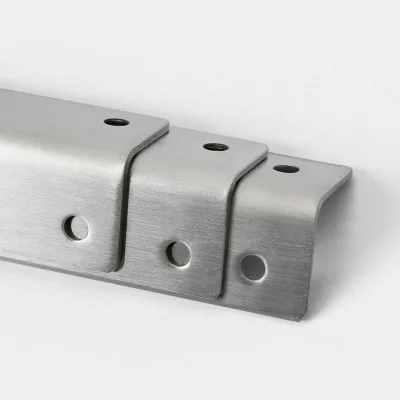


Aluminum Profile 45° Extruded Corner Bracket - Reinforced Bending Support
$1.10 - $1.30
MOQ: 1000 Pieces


Custom Steel Adjustable 90 Degree Corner Bracket for Versatile Mounting
$0.00 - $0.00
MOQ: 1000 Pieces

Comprehensive Sourcing Guide
Strategic Sourcing Guide for 90 Degree Aluminium Corner Brackets
The procurement of 90-degree aluminium corner brackets requires a disciplined approach that balances technical precision with supply chain reliability. These components serve as critical structural elements in aluminum profile framing systems, ensuring rigid connections at right angles for applications ranging from industrial machinery guards to modular shelving units. Buyers must navigate a market where product attributes vary significantly between suppliers, often presenting conflicting specifications regarding material composition, surface treatments, and standard compliance. This guide outlines the essential factors for sourcing these fasteners and brackets, relying strictly on verified product attributes and established industry practices to ensure a robust procurement strategy.
Technical Specifications and Material Composition
When evaluating 90-degree aluminium corner brackets, the primary technical focus must be on the material integrity and dimensional accuracy. The supplied data indicates that while the core keyword specifies "aluminium," the market often presents brackets manufactured from alternative metals such as die-cast zinc or general metal alloys. For instance, specific product listings identify the material as "Die-Cast Zinc" or simply "Metal," with a specific model noted as "30-135" or "TP-302." This discrepancy necessitates a rigorous verification process where the buyer must confirm the exact alloy composition to ensure compatibility with the intended aluminum profile system.
Dimensional specifications are equally critical. The observed data highlights a range of model sizes, including "30mm30mm" and "4242," alongside general classifications like "Mini" or "Common." The thickness of these brackets can vary, with specific records noting a thickness of "9mm." Buyers must verify that the bracket's internal dimensions match the profile series they intend to use, such as the "30 Series" or "45 Series" aluminum profiles. A mismatch in series, such as using a bracket designed for a 45-series profile on a 30-series frame, will result in structural failure or assembly impossibility. Furthermore, the connection method is a key differentiator; some models feature "2 Holes" for bolting, while others may utilize different fastening mechanisms. The thread specification, such as "M8," must align with the fasteners used in the assembly to ensure a secure fit.
Compliance, Certification, and Standard Verification
Navigating the certification landscape for corner brackets requires careful scrutiny of the provided product attributes. The market data presents a mix of standards, including "ISO," "ISO9001: 2000," and "SGS." While "SGS" is frequently cited as a standard in product listings, it is technically a third-party inspection and verification company rather than a manufacturing standard itself. Similarly, "ISO" appears as a general certification attribute, while "ISO9001: 2000" represents a specific quality management system standard. Buyers should not assume that a product listing mentioning "SGS" implies the bracket itself meets a specific international performance standard without further documentation.
The presence of "EN 10346" in background knowledge suggests a potential relevance to cold-rolled steel coils, but this standard is not explicitly confirmed in the high-confidence product facts for aluminium brackets. Therefore, procurement teams must treat such standards as verification targets rather than guaranteed attributes. The buyer should request valid certificates of conformity that explicitly link the specific model number to the claimed standard. For instance, if a supplier claims compliance with "ISO9001: 2000," the buyer must verify that the certificate is current and covers the specific manufacturing facility producing the brackets. Relying on unverified claims of certification can lead to non-compliance in regulated industries such as aerospace or medical device manufacturing.
Cost Drivers and Pricing Dynamics
The pricing structure for 90-degree aluminium corner brackets is influenced by several variable factors, including material type, customization level, and packaging requirements. The observed price range in the market data is listed as "0-10" USD, which suggests a wide variance in unit costs depending on the order volume and specific product configuration. This range likely reflects the difference between standard, off-the-shelf items and custom-manufactured solutions.
Customization is a significant cost driver. The data indicates that "Customization" is available, yet other entries specify "Non-Customized" or "Unadjustable" products. Custom orders, which may involve specific dimensions, unique surface treatments, or specialized packaging, will invariably command a higher price than standard catalog items. Additionally, the "Sample Price" is noted as "Free of Charge" in some instances, which can reduce the initial cost of evaluation but does not reflect the bulk pricing structure. Buyers should be aware that while sample costs may be zero, the Minimum Order Quantity (MOQ) can range from "1" to "10000" units. High MOQs often correlate with lower unit prices, but they also increase the total capital outlay and inventory risk.
Packaging also impacts the final cost. Listings show variations such as "Cartons," "Carton," and specific counts like "200PCS/Packing." Bulk packaging that minimizes handling costs can reduce the overall price, whereas individual or specialized packaging for fragile items may add to the expense. Buyers must calculate the total landed cost, including shipping and handling, rather than focusing solely on the unit price, as the "Delivery" methods (e.g., "by Sea, Express") and "Loading Port" (e.g., "Shenzhen") significantly affect logistics expenses.
Typical Applications and Usage Scenarios
The versatility of 90-degree corner brackets makes them suitable for a diverse array of industrial and commercial applications. The data explicitly identifies usage scenarios such as "Shelf Bracket" and compatibility with "30 Series Aluminum Profile" or "45series Aluminum Profile." This indicates their primary role in constructing modular frameworks for shelving systems, workstations, and machine enclosures. The "Triangle Bracket" structure mentioned in the attributes suggests a design optimized for load-bearing stability in corner joints.
Beyond shelving, the "Structure: Triangle Bracket" and "Usage: Shelf Bracket" attributes imply that these components are integral to creating rigid corners in lightweight aluminum structures. The "Style" attributes, ranging from "New Classical" to "Simple Modern," suggest that these brackets are also used in architectural and interior design applications where aesthetics play a role alongside function. The "Finish: Blue Zinc" indicates a specific aesthetic and protective coating, which is crucial for applications requiring corrosion resistance in humid or industrial environments. Buyers should match the bracket's finish and material to the environmental conditions of the final application to ensure longevity. For example, a "Blue Zinc" finish may be suitable for indoor use, while outdoor applications might require different surface treatments not explicitly detailed in the standard listings.
Supplier Evaluation and Origin Analysis
Evaluating suppliers for 90-degree aluminium corner brackets requires a focus on geographic origin and manufacturing capabilities. The data points to several key locations, including "Zhejiang, China," "Shenzhen, Guangdong, China," and a general "Prc" origin. These regions are known for their robust manufacturing ecosystems, particularly in metalworking and aluminum profile processing. However, the presence of multiple locations suggests that buyers must verify the specific factory location to ensure consistency in quality and logistics.
The "Manufacturing Arts" are listed as "Metal," and the "Technics" include "Casting." This indicates that the production process involves casting techniques, which can affect the grain structure and mechanical properties of the bracket. Buyers should inquire about the specific casting methods used, such as die-casting versus sand casting, as these influence the final product's strength and surface finish. The "Surface Treatment" is noted as "Yes," but the specific type varies; for instance, "Blue Zinc" is one observed finish. Buyers must confirm that the surface treatment process is consistent across the entire batch to prevent issues like uneven corrosion resistance or aesthetic defects.
Furthermore, the "Adjusted" attribute varies between "Unadjustable" and "With Adjusted," indicating that some suppliers offer adjustable brackets while others provide fixed versions. This distinction is critical for applications requiring fine-tuning during assembly. Buyers should request detailed technical drawings that specify the adjustability features and tolerance levels to ensure the supplier can meet the precise requirements of the project.
Quality Control and Long-Term Procurement Considerations
Implementing a robust quality control (QC) protocol is essential when sourcing 90-degree aluminium corner brackets. Given the variation in "Standard" and "Certification" claims, buyers should establish a clear QC checklist that includes dimensional verification, material composition analysis, and surface finish inspection. The "Thickness: 9mm" and "Model Size: 30mm*30mm" specifications serve as baseline metrics for inspection. Any deviation from these dimensions beyond acceptable tolerances can compromise the structural integrity of the final assembly.
Long-term procurement considerations involve managing the relationship with suppliers to ensure consistent supply and quality. The "Lead Time" and "Delivery" methods, such as "by Sea, Express," should be factored into the supply chain planning. While "Shenzhen" is a common loading port, buyers should verify the actual shipping schedule to avoid delays. Additionally, the "Customized" nature of some products means that lead times may be longer for bespoke orders. Buyers should negotiate clear terms regarding lead times and penalties for delays to mitigate supply chain risks.
Finally, the "prod_packing" variations, such as "200PCS/Packing," should be standardized to minimize damage during transit and simplify inventory management. Consistent packaging ensures that the brackets arrive in optimal condition, ready for immediate assembly. By maintaining a rigorous approach to quality control and supplier evaluation, buyers can secure a reliable supply of 90-degree aluminium corner brackets that meet the demanding requirements of modern industrial and commercial applications.
Comparative Analysis of Product Attributes
To facilitate decision-making, the following table summarizes the key variations observed in the product data, highlighting the critical attributes buyers must verify before placing an order.
| Attribute Category | Observed Variations | Verification Requirement |
|---|---|---|
| Material | Metal, Die-Cast Zinc | Confirm exact alloy and composition. |
| Standard/Model | TP-302, 30-135, 3030wj, 45la, 30-45 | Match model number to profile series (30/45). |
| Dimensions | 30mm30mm, 4242, Mini, Common | Verify thickness (e.g., 9mm) and hole spacing. |
| Finish | Blue Zinc, Metallic | Confirm corrosion resistance and aesthetic match. |
| Certification | ISO, ISO9001: 2000, SGS | Request valid, current certificates for specific models. |
| Customization | Available, Non-Customized, Customized | Define exact requirements for custom orders. |
| Origin | Zhejiang, Shenzhen, Prc | Verify factory location for logistics and quality consistency. |
| Packing | Cartons, Carton, 200PCS/Packing | Standardize packaging to reduce damage and handling costs. |
This comparative analysis underscores the importance of precise specification matching. The wide range of attributes observed in the market data demonstrates that a "one-size-fits-all" approach is ineffective. Buyers must engage in detailed technical discussions with suppliers to ensure that the selected 90-degree aluminium corner brackets align perfectly with their project requirements, ensuring structural integrity, compliance, and cost-effectiveness throughout the product lifecycle.
FAQs
What materials are used for 90 degree aluminium corner brackets?
Products are typically made from metal or die-cast zinc rather than pure aluminium. Specific listings confirm materials like die-cast zinc for models such as 3030wj, while others simply list general metal. Buyers must verify the exact alloy composition to ensure compatibility with their specific aluminum profile systems.
Which specifications match 30 Series aluminum profiles?
Brackets designed for 30 Series profiles include models like 30-135 and 30-45 with dimensions such as 30mm by 30mm. These units often feature a triangle bracket structure and are explicitly noted as being used for the 30 Series. Always confirm the model name matches your profile series before ordering.
Can I find customized 90 degree aluminium corner brackets?
Customization is available for some products, while others are listed as non-customized or unadjustable. Suppliers may offer specific finishes like blue zinc or unique packaging options such as 200 pieces per carton. Buyers should check the customization attribute for each specific model to determine if bespoke requirements can be met.
What certifications do these brackets typically hold?
Common certifications include ISO, ISO9001: 2000, and SGS. While SGS is often cited, it is an inspection company rather than a manufacturing standard itself. Buyers should request valid certificates of conformity that explicitly link the specific model number to the claimed standard for verified compliance.
How are these brackets packaged and shipped?
Packaging varies from cartons to specific counts like 200 pieces per packing unit. Shipping methods include sea freight and express delivery, often loading from ports in Shenzhen or originating from Zhejiang. Buyers must calculate total landed costs including these logistics variables rather than focusing solely on the unit price.
What is the typical price range for these brackets?
The observed price range spans from 0 to 10 USD depending on volume and configuration. Unit costs vary significantly between standard off-the-shelf items and custom-manufactured solutions with higher minimum order quantities. Sample prices may be free, but bulk pricing depends heavily on the specific order volume and customization level.