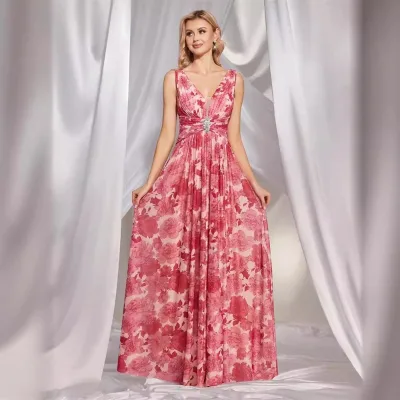
Source A-Line V-Neck Maxi Evening Dress for Weddings, Galas, and Proms
Explore 30 verified listings for the a-line v-neck maxi evening dress tailored for formal events. Buyers can compare materials like polyester and satin, customization options, and pricing details to find the ideal supplier for their needs.
Key considerations
Products List


Brown Satin Long A-Line Prom Dress, off The Shoulder Evening Party Dress
$32.50 - $40.00
MOQ: 2 Pieces


Ladies'elegant Luxury V-Neck Wedding Guest Sleeveless Maxi Evening Prom Dress
$12.60 - $14.60
MOQ: 100 pieces


Comprehensive Sourcing Guide
Strategic Sourcing Guide for A-Line V-Neck Maxi Evening Dresses
Understanding Product Specifications and Design Variations
The core keyword "a-line v-neck maxi evening dress" defines a specific silhouette and neckline configuration that requires precise interpretation during the sourcing process. The "a-line" designation indicates a cut that is fitted at the bodice and gradually widens toward the hem, creating a shape reminiscent of the letter A. This cut is distinct from the "straight skirt" or "mermaid" styles observed in available market data, which feature different structural draping and fit profiles. The "v-neck" specification refers to a collar type that forms a V shape at the front, a feature explicitly noted in the provided product attributes as a standard option for certain garment lines. The "maxi" or "full-length" attribute confirms that the garment extends to the floor or ankle, a length requirement that differentiates it from knee-length or midi variations.
When evaluating potential suppliers, buyers must distinguish between the specific attributes of the target product and those of other available items. For instance, while some market listings feature "sleeveless" or "strapless" configurations with "lace" embellishments, the ideal a-line v-neck evening dress may require specific sleeve treatments or structural support depending on the design intent. The material composition is a critical variable; while "polyester" and "satin" are common materials in the current market, the choice of fabric will dictate the drape, weight, and suitability for evening wear. A high-quality evening dress often utilizes "chiffon" or "satin" for fluid movement, whereas "polyester" may be used for cost-effective, durable alternatives. The "double layer" construction observed in some listings is a relevant technical specification for ensuring opacity and structure in maxi-length garments, particularly when using sheer fabrics.
Compliance, Certification, and Material Standards
In the realm of B2B apparel procurement, compliance and material standards are paramount, yet specific certification data for the "a-line v-neck maxi evening dress" must be verified on a case-by-case basis. The provided context mentions a product standard of "604040," which likely refers to packaging dimensions rather than a textile safety standard. Buyers should not assume that a supplier's general reputation implies specific compliance with international safety regulations such as REACH, CPSIA, or Oeko-Tex without explicit documentation. The "Good Reputation Supplier" attribute suggests a history of reliability, but it does not substitute for verified test reports regarding flammability, chemical residues, or fiber content accuracy.
Material sourcing requires rigorous verification. If the design calls for "satin" or "chiffon," the buyer must confirm the fiber content percentage, as "polyester" blends are common but may not meet the aesthetic requirements of high-end evening wear. The "Chinese" origin of the supply chain indicates a need to understand the specific manufacturing regulations of the region of production. While the context lists "OEM" (Original Equipment Manufacturer) and "Full-Service Apparel Manufacturing" capabilities, these terms describe the service scope rather than a compliance certification. Buyers must explicitly request documentation for any claimed standards, particularly if the dress is intended for export to markets with strict textile regulations. The absence of specific certification data in the general product list necessitates a proactive approach where the buyer defines the required compliance framework in the Request for Quotation (RFQ).
Cost Drivers and Pricing Dynamics
The pricing structure for a-line v-neck maxi evening dresses is influenced by a complex interplay of material costs, labor intensity, and order volume. The observed market price range of $0.50 to $58.25 USD highlights a significant disparity, which is often driven by the quality of materials, the complexity of the design, and the scale of production. A dress constructed from "satin" with "beading" or "lace" embellishments will inherently cost more than a basic "polyester" version. The "OEM" and "customization" capabilities add a layer of cost, as developing a unique pattern or securing specific fabric sources requires additional engineering and setup time.
Minimum Order Quantity (MOQ) is a primary driver of unit cost. The data indicates MOQs ranging from 1 piece to 10,000 pieces. For a buyer seeking a custom a-line v-neck dress, an MOQ of 100 pieces is a common threshold for "customization from designs," while larger orders of 500 or 10,000 pieces may be required for specific factory lines or to achieve lower per-unit pricing. The "sample time" of 3-5 days and "bulk time" of 12-15 days suggest a relatively agile supply chain, but these lead times can fluctuate based on the complexity of the "customize design" requirements. Buyers should anticipate that lower MOQs will result in higher unit costs due to the fixed costs of pattern making and setup being amortized over fewer units. Additionally, packaging requirements, such as "PP/Carton" or "OPP Bag," can impact the final landed cost, especially for international shipping.
Typical Applications and Occasion Suitability
The versatility of the a-line v-neck maxi evening dress makes it suitable for a wide range of applications, though the specific design elements must align with the intended occasion. The provided attributes list "Daily" and "Party" as occasions, indicating that the market offers variations for both casual and formal wear. For evening events, the "maxi" length and "v-neck" cut are particularly appropriate for formal galas, weddings, and cocktail parties. The "mermaid" style observed in some listings is a variation of the evening dress category, but the a-line cut offers a more forgiving silhouette that is often preferred for its comfort and elegance.
The target demographic is also a key consideration. The data mentions "Youth" and "18-25 Years Old" as suitable age groups, suggesting that the design trends often cater to younger consumers. However, the a-line v-neck style is universally flattering and can be adapted for various age groups through adjustments in fabric choice and embellishment. For "Summer" occasions, lightweight fabrics like "chiffon" are ideal, while "winter" or formal evening events might require heavier satins or layered constructions. The "Chinese" design influence noted in some listings suggests that cultural aesthetics may play a role in the design, which could be a differentiating factor for buyers targeting specific cultural markets. Buyers must ensure that the "style" of the dress, whether "casual," "sexy," or "mermaid," aligns with the brand's positioning and the expectations of the end consumer for the specific event.
Supplier Evaluation and Manufacturing Capabilities
Evaluating suppliers for a-line v-neck maxi evening dresses requires a focus on their manufacturing capabilities, customization options, and reputation. The "Full-Service Apparel Manufacturing" attribute indicates that suppliers can handle the entire process from design to production, which is beneficial for buyers seeking a streamlined procurement experience. The ability to "customize your own brand" and "customize design" is a critical feature for buyers looking to establish a unique product line. The "OEM" capability confirms that suppliers are equipped to produce goods under the buyer's label, ensuring brand consistency.
When assessing suppliers, buyers should verify the "High Quality" status, which is described as a "Repeat Buyers Choice." This suggests a track record of customer satisfaction, but it should be validated through reference checks and sample evaluations. The "Good Reputation Supplier" label is a positive indicator, but it should not be the sole criterion for selection. Buyers must evaluate the supplier's capacity to handle the specific technical requirements of the a-line v-neck cut, such as the precision required for the "v-necked" collar and the draping of the "a-line" skirt. The "sample time" of 3-5 days is a strong indicator of responsiveness, allowing buyers to quickly validate the design and fit before committing to bulk production. Additionally, the "package" customization options allow for tailored branding, which is essential for retail presentation.
Quality Control and Long-Term Procurement Considerations
Quality control is essential to ensure that the final product meets the buyer's expectations and brand standards. The "double layer" construction and "beading" or "lace" embellishments observed in the market require specific quality checks to ensure durability and aesthetic consistency. Buyers should implement a rigorous inspection protocol that covers stitching quality, fabric integrity, and the secure attachment of embellishments. The "prod_packing" specifications, such as "PP/Carton" or "Each Packed in a Polybag," must be verified to ensure that the garments arrive in perfect condition.
Long-term procurement considerations involve building a sustainable relationship with suppliers who can consistently deliver high-quality products. The "bulk time" of 12-15 days suggests a relatively short production cycle, which is advantageous for maintaining inventory levels and responding to market trends. However, buyers must plan for potential delays due to material shortages or production bottlenecks. The "MOQ" flexibility, ranging from 1 to 10,000 pieces, offers opportunities for testing the market with smaller orders before scaling up. Buyers should also consider the "customization" aspect as a long-term strategy, allowing for seasonal updates and design iterations without significant retooling costs. Establishing clear communication channels and defining quality benchmarks early in the partnership will help mitigate risks and ensure a successful, long-term procurement strategy for a-line v-neck maxi evening dresses.
Comparative Analysis of Product Attributes
To assist buyers in making informed decisions, the following table compares key attributes observed in the market data against the requirements for a standard a-line v-neck maxi evening dress. This comparison highlights the variability in product offerings and the need for precise specification.
| Attribute Category | Market Observation (General) | Target Requirement (A-Line V-Neck Maxi) | Verification Note |
|---|---|---|---|
| Silhouette | Straight Skirt, Mermaid, A-Line | A-Line | Confirm pattern grading for A-line flare. |
| Neckline | V-Necked, Collar Type varies | V-Neck | Ensure V-shape depth and stability. |
| Length | Full-Length, Maxi | Full-Length/Maxi | Verify hemline measurement against size chart. |
| Material | Polyester, Satin, Chiffon | Fabric dependent on design | Request fabric swatches for drape and weight. |
| Sleeve Type | Sleeveless, Short Sleeve, Strapless | Variable (often Sleeveless) | Confirm sleeve attachment or lack thereof. |
| Embellishment | Lace, Beading, None | Design dependent | Check for secure attachment and finish. |
| MOQ | 1, 100, 500, 10,000 | Negotiable | Align MOQ with budget and volume needs. |
| Lead Time | 3-5 days (Sample), 12-15 days (Bulk) | Standard | Confirm capacity during peak seasons. |
| Origin | China | China | Verify factory location and logistics. |
This table underscores the importance of detailed specification in the RFQ process. While the market offers a wide range of options, the buyer must clearly define the "a-line" cut, "v-neck" style, and "maxi" length to avoid receiving products that do not meet the intended design criteria. By focusing on these specific attributes and verifying them through samples and documentation, buyers can effectively navigate the complexities of sourcing high-quality evening wear.
FAQs
How long does it take to receive samples for this dress?
Sample time is typically 3 to 5 days for customization requests. This duration applies when the supplier offers full-service apparel manufacturing and allows you to customize your own brand or design before bulk production begins.
What is the minimum order quantity for custom designs?
The minimum order quantity for customization from designs starts at 100 pieces. Some specific product lines may require higher volumes, such as 500 or 10,000 pieces, depending on the material and style selected.
Which materials are commonly used for these evening dresses?
Common materials include polyester, satin, and chiffon for various styles. Buyers should verify fabric content as options range from cost-effective polyester to fluid satin or chiffon suitable for summer and party occasions.
Can I customize the packaging design for my brand?
Yes, you can customize the packaging design to match your brand identity. Suppliers offer options like PP cartons or individual polybags, allowing you to specify the packing method to ensure product safety during transit.
What is the lead time for bulk production orders?
Bulk production time is generally 12 to 15 days after sample approval. This timeline assumes the supplier has the capacity for full-service manufacturing and that all design specifications are finalized before production starts.
Which collar types are available for maxi evening dresses?
V-necked collars are a standard option for these dresses. Other styles may include strapless or short sleeve variations, allowing buyers to select the neckline that best fits their target demographic and occasion requirements.
Can suppliers provide OEM services for this product?
Yes, full-service apparel manufacturing and OEM services are available. Suppliers can produce goods under your label with customizable designs, making them suitable for buyers seeking to establish a unique product line in the market.