Source Acrylic Dental Artificial Tooth for Denture Lab and Teaching
Compare 30 listings for Acrylic Dental Artificial Tooth options suitable for dental labs, oral rehabilitation, and teaching models. Buyers can evaluate specifications like material, certification, and packaging to find the right fit for their needs.
Key considerations
Products List
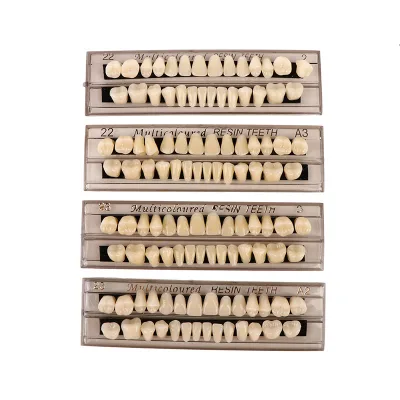


Dental 2- Ply Acrylic Resin Teeth
$0.40 - $1.71
MOQ: 500 Sets
Sainty International Group Jiangsu Yangzhou Sumex Imp. & Exp. Co., Ltd.


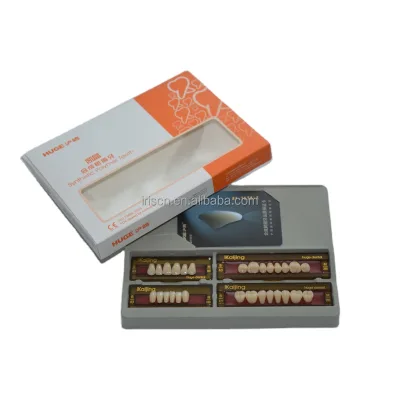
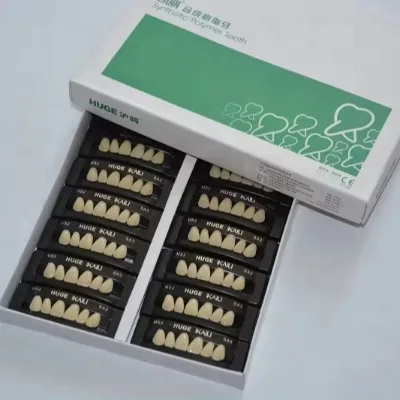


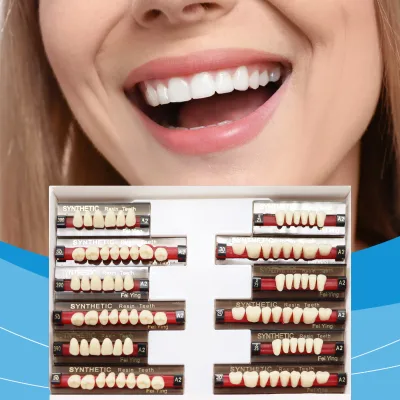
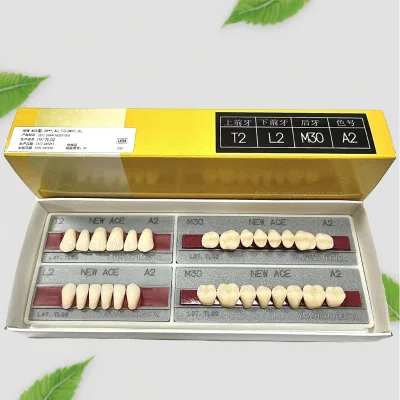
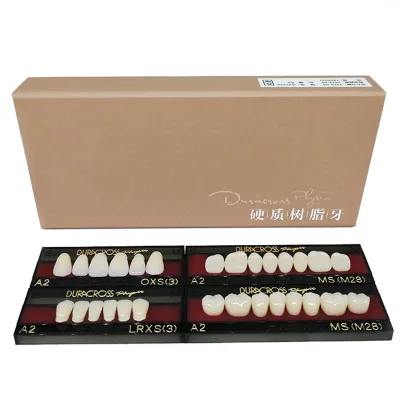
Comprehensive Sourcing Guide
Strategic Sourcing Guide for Acrylic Dental Artificial Teeth
Understanding Product Classification and Technical Specifications
Acquiring acrylic dental artificial teeth requires a precise understanding of the product's classification within the medical device hierarchy and its specific technical attributes. In the context of global procurement, these items are frequently categorized under Class I medical instruments, indicating a lower risk profile but still demanding strict adherence to quality standards. The core material composition is typically a composite material, often referred to as acrylic resin, which forms the basis for both anterior and posterior teeth sets. Buyers must distinguish between products designed for single-use applications and those intended for durable, non-disposable use in dental laboratories.
The physical specifications of these models vary significantly based on the intended application, whether for teaching models or actual denture processing. Key attributes observed in the market include specific model numbers such as YP122, YP01, and the Y1/Y2 series, which often denote different tooth shade ranges or anatomical shapes. The color spectrum is a critical technical parameter, with standard offerings ranging from A1 to D4 to match patient dentition. Packaging dimensions also vary; some units are supplied in compact single packages measuring 10x10x20 cm, while others are bulk-packed in cartons containing 100 to 200 boxes, with gross weights ranging from 0.08 kg for individual units to 1.000 kg for larger sets.
When evaluating the product, procurement teams should verify the "Nature" of the equipment. These are specialized instrument equipment items primarily used in the Dental Department and Oral Rehabilitation Department. The application scope extends to Dental Lab settings where denture processing is the primary function. It is essential to confirm whether the product is a "3 Layers Artificial Teeth" set or a "Full Set Teeth" configuration, as this dictates the complexity of the restoration process. The power source for associated machinery is electric, though the teeth themselves are passive components. Understanding these granular details ensures that the ordered inventory aligns with the specific workflow of the dental laboratory or educational institution.
Compliance, Certification, and Regulatory Standards
Navigating the regulatory landscape is a fundamental step in sourcing acrylic dental artificial teeth. While the product is classified as a Class I instrument, this does not exempt the supplier from providing necessary quality certifications. Buyers must verify the presence of recognized quality certifications such as CE and CCC (China Compulsory Certification). The presence of these marks indicates that the manufacturer has met specific safety and performance requirements, particularly for products originating from China, where the majority of these goods are produced.
The shelf life of these materials is a critical compliance factor, with standard durations observed at 1 year. Procurement officers must ensure that the batch received falls within this validity window to prevent material degradation during storage. Additionally, the warranty period is typically aligned with the shelf life, often offering a 1-year warranty that covers manufacturing defects. However, buyers should not assume that all listed products automatically satisfy every certification claim; verification of the specific certificate for the batch number is necessary.
For international trade, the "Place of Origin" is a key data point. Most supply chains for these items originate from Guangdong, China, a major hub for medical device manufacturing. While the origin is known, the specific standards applied during production must be confirmed. The product standard "16kg/carton" mentioned in some listings refers to packaging weight limits rather than a material standard, so buyers should request the specific material safety data sheets (MSDS) and biocompatibility test results to ensure compliance with local regulations in their destination market. The "OEM" (Original Equipment Manufacturer) status of the brand indicates that many suppliers offer white-labeling services, which requires additional due diligence to ensure the underlying quality remains consistent regardless of the branding.
Cost Drivers and Pricing Dynamics
The pricing structure for acrylic dental artificial teeth is influenced by several variables, including material quality, packaging configuration, and order volume. The observed market price range is broad, spanning from $0.25 to $38.40 USD. This significant variance is not arbitrary but reflects differences in product complexity, such as the number of teeth included (e.g., single items vs. full sets), the precision of the shade matching (A1-D4), and the packaging density.
Minimum Order Quantity (MOQ) is another primary cost driver. The market exhibits an MOQ range from 1 set to 1000 units. For small clinics or educational institutions, suppliers offering an MOQ of 1 set provide flexibility, though the unit cost may be higher. Conversely, large dental laboratories or distributors seeking to optimize logistics costs should target suppliers with higher MOQs, such as 200 boxes per carton, which often come with volume-based pricing advantages. The "Selling Units" being listed as "Single item" for some products suggests that buyers can purchase individual sets without committing to bulk orders, but this convenience often comes at a premium per unit.
Other cost factors include the customization options available. Suppliers that offer "Customization: Available" may charge additional fees for specific tooth shapes, colors, or packaging requirements. The "After-sale Service" component, such as online technical support, can also influence the total cost of ownership. While the initial purchase price is a primary consideration, the long-term value is enhanced by suppliers who provide robust support and clear warranty terms. Buyers should analyze the total cost per tooth rather than just the price per box to make an informed financial decision.
Typical Applications and Usage Scenarios
Acrylic dental artificial teeth serve diverse functions across the dental industry, ranging from clinical practice to education. The primary application is in "Denture Processing" and "Dental Lab" environments, where these teeth are used to fabricate complete or partial dentures. The "Applicable Departments" are clearly defined as the Dental Department and Oral Rehabilitation Department, highlighting their role in restoring oral function and aesthetics.
Beyond clinical use, these products are vital for "Medical Science" education. The "Customer" base explicitly includes "Teachers and hospital" staff, indicating a strong market for teaching models. These models allow students to practice tooth arrangement, occlusion, and denture construction without the risk of using expensive clinical materials. The "Type" of product, often labeled as "tooth model" or "Acrylic Teeth Factory" output, supports this educational function.
The distinction between "Disposable" and "Non-Disposable" usage times is crucial for inventory planning. While some items are designed for single-use scenarios, the majority of acrylic teeth are non-disposable, intended for repeated use in laboratory settings. The "Usage" is specifically noted as "Denture Processing," which involves the precise placement and bonding of teeth to a denture base. Buyers must ensure that the selected product matches the specific workflow of their department, whether it involves high-volume production for a commercial lab or low-volume, high-precision work for a specialized clinic.
Supplier Evaluation and Selection Criteria
Selecting the right supplier requires a multi-faceted evaluation process that goes beyond price comparison. The "Brand Name" is often listed as "oem," meaning many manufacturers produce generic goods for various brands. Buyers should prioritize suppliers who demonstrate transparency in their manufacturing process and provide verifiable documentation. The "After-sale Service" is a key differentiator; suppliers offering "Online Technical Support" can provide immediate assistance with product issues, which is invaluable for maintaining laboratory efficiency.
Geographic location plays a role in logistics and lead times. With the "Place of Origin" consistently identified as Guangdong, China, buyers should anticipate shipping routes and potential customs procedures associated with imports from this region. The "Packing qty" and "Single package size" are critical for logistics planning. For instance, a "Single gross weight" of 1.000 kg per unit versus 0.08 kg per unit will significantly impact freight costs and storage requirements.
Suppliers should also be evaluated on their ability to handle customization. The "Customization: Available" attribute suggests that many manufacturers can tailor products to specific needs. However, buyers must verify the lead times associated with custom orders, as these may differ from standard stock items. The "Warranty" of 1 year is a standard expectation, but the terms of the warranty—such as what constitutes a defect versus normal wear and tear—must be clearly understood. Finally, the "Quality Certification" status, including CE and CCC, should be validated for the specific batch being ordered to ensure regulatory compliance.
Quality Control and Long-Term Procurement Considerations
Maintaining consistent quality in acrylic dental artificial teeth is essential for the success of dental restorations. Quality control should begin at the supplier level, focusing on the "Material" consistency. The "Composite Material" used must be free from impurities that could affect the color stability or structural integrity of the teeth. Buyers should request samples to test the "Color" accuracy against the A1-D4 standard and verify the "Single package size" consistency to ensure that packaging does not damage the product during transit.
Long-term procurement strategies should account for the "Shelf Life" of 1 year. Inventory management systems must be designed to rotate stock effectively, ensuring that older batches are used before they expire. The "Usage Times" attribute, whether disposable or non-disposable, should be factored into the reorder cycle. For non-disposable items, the durability of the material is paramount; buyers should assess the resistance of the acrylic to chipping or staining over time.
The "Model Number" variations, such as YP122 or YP01, indicate different product lines. Procurement teams should standardize their orders to specific models to simplify inventory management and reduce the risk of ordering incorrect shades or sizes. The "Package" configuration, such as "28PCS X 3" or "28*1," should be aligned with the laboratory's production volume to minimize waste and handling time.
Finally, buyers should establish a feedback loop with their suppliers. Regular reviews of the "After-sale Service" and "Warranty" claims can help identify potential issues early. By maintaining a relationship with suppliers who provide reliable "Online Technical Support," buyers can ensure that any quality deviations are addressed promptly. This proactive approach to quality control and supplier management ensures a steady supply of high-quality acrylic dental artificial teeth, supporting the clinical and educational needs of the organization.
FAQs
What certifications do acrylic dental artificial teeth typically have?
These products typically hold CE and CCC quality certifications. Buyers must verify that the specific batch includes valid certificates, as Class I instruments still require strict adherence to safety standards regardless of the low-risk classification.
How long is the shelf life of these dental materials?
The standard shelf life for these items is one year. Procurement teams must ensure the received batch falls within this validity window to prevent material degradation, as the warranty period is often aligned with this duration.
Which model numbers are available for these artificial teeth?
Common model numbers include YP122, YP01, and the Y1 or Y2 series. These codes often denote different tooth shade ranges or anatomical shapes, so buyers should standardize orders to specific models to simplify inventory management.
Can I find suppliers offering customization for these teeth?
Yes, many suppliers offer available customization options for specific needs. However, buyers should verify the lead times associated with custom orders, as these may differ from standard stock items and could affect production schedules.
What is the typical MOQ for ordering these dental products?
The minimum order quantity ranges from 1 set to 1000 units depending on the supplier. Small clinics may find flexibility with a 1-set MOQ, while large laboratories might target higher volumes like 200 boxes per carton for better pricing.
Where are these acrylic teeth typically manufactured?
Most supply chains originate from Guangdong, China. Buyers should anticipate shipping routes and customs procedures associated with imports from this region, which is a major hub for medical device manufacturing.