Source Addressable Cuttable Flexible Led Sheet for Cabinets, Light Boxes, and Backlit Panels
Browse Addressable Cuttable Flexible Led Sheet options and compare specifications such as DC24V operation, 288 LEDs per meter, CRI Ra90, IP20 rating, CE and RoHS certification, customization, MOQ from 1 piece, and lead times across 30 listings.
Key considerations
Products List


300*300mm 1-LED Cut Single Color Flexible LED Sheet Panel for Marble Table
$15.00 - $16.30
MOQ: 10 Sets

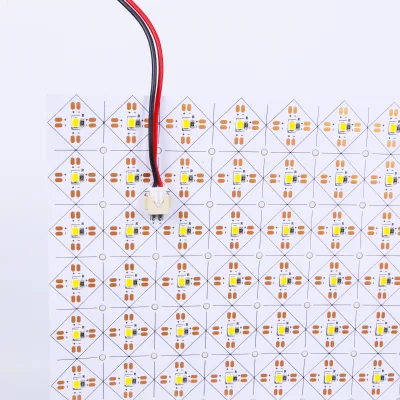
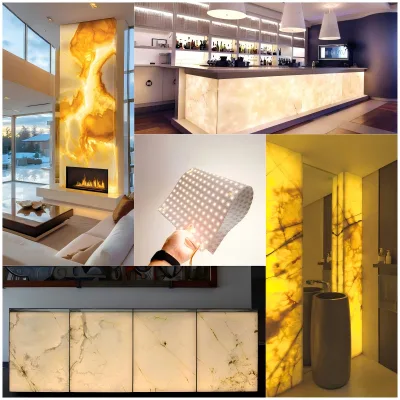
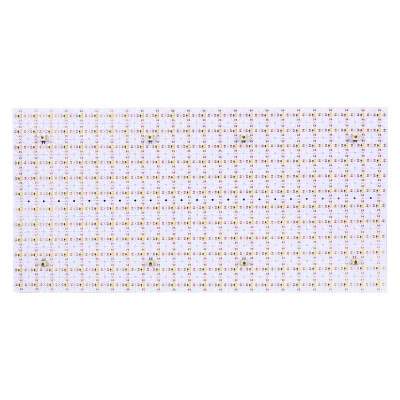
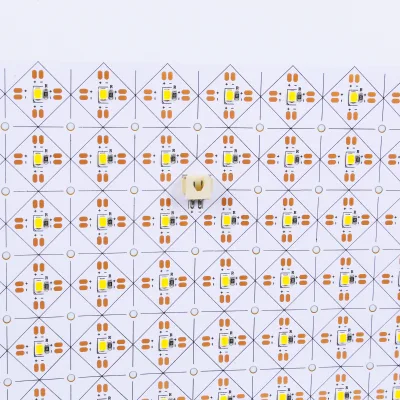
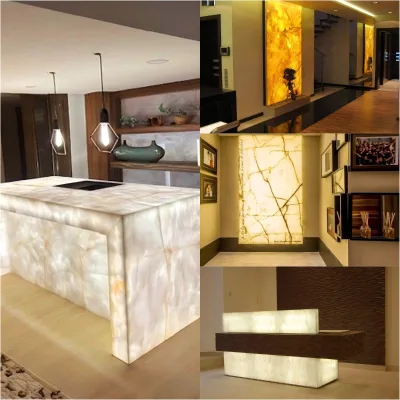
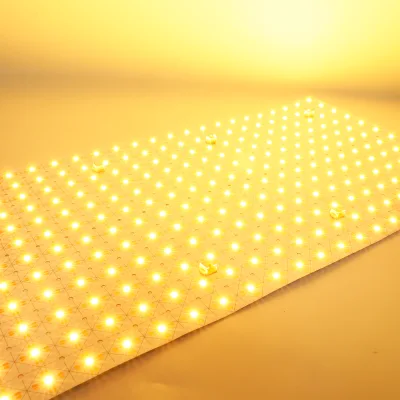
Cuttable DC24V CCT Adjustable Tunable Dual White Flexible Led Sheet Light Panel
$12.00 - $13.50
MOQ: 1000 units


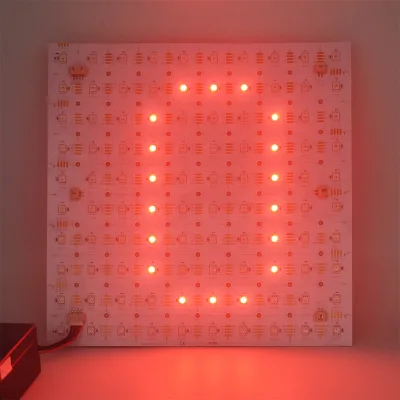
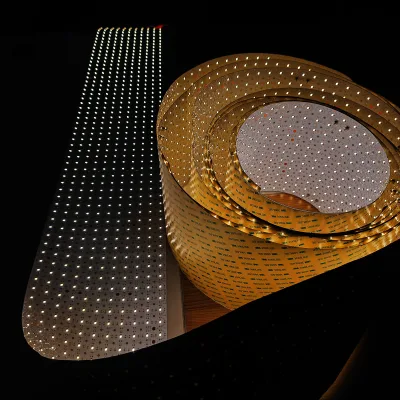
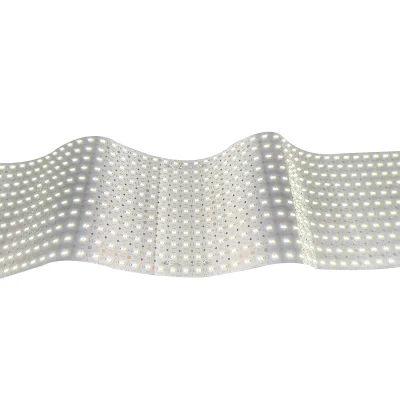


High Quality Single Edge LED Panel Light Flexible LED Light Sheet for Shop
$10.00 - $75.00
MOQ: 1 Pieces


Comprehensive Sourcing Guide
Addressable Cuttable Flexible Led Sheet Sourcing Guide
Sourcing addressable cuttable flexible LED sheets requires a nuanced understanding of the intersection between rigid PCB stability and flexible form factors. These components are distinct from traditional linear LED strips, offering a sheet-like geometry that allows for broader illumination coverage while maintaining the ability to be customized in size. Buyers must recognize that "addressable" implies individual LED control, which introduces complexity in driver selection and programming, whereas "cuttable" defines the physical modularity of the product. The procurement strategy must balance the desire for aesthetic flexibility with the technical realities of power distribution and signal integrity across the sheet surface.
The market for these products is characterized by a wide variance in specifications, particularly regarding LED density, color temperature options, and waterproofing ratings. Procurement teams often encounter listings that mix attributes from different product lines, such as rigid PCB dimensions applied to flexible substrates or conflicting IP ratings. It is critical to treat observed listing data as starting points for verification rather than definitive specifications. A robust sourcing process involves cross-referencing the advertised features with actual sample performance, ensuring that the cuttable segments align with the intended design constraints of the final assembly or installation environment.
Product Scope and Observed Listing Signals
The observed product landscape includes models such as the PSB282C and PSB802C-RGBW, which represent different approaches to sheet-based LED technology. The PSB282C appears to be a rigid PCB variant with dimensions of 480mm x 240mm, utilizing SMD2835 LEDs and offering a power density of 28W per meter. In contrast, the PSB802C-RGBW is explicitly described as an SMD 2835 LED Sheet with a dimension of 503.1 x 235 x 6.5mm, featuring 800 LEDs per sheet and RGBW capabilities. Buyers must carefully distinguish between these rigid sheet formats and truly flexible options, as the mechanical properties and installation methods differ significantly. The presence of both rigid and flexible attributes in search results necessitates a clear definition of the required form factor before engaging with suppliers.
Listing signals also reveal a diversity in color temperature and output characteristics. Products are available in various Kelvin ranges, including 2700K, 3000K, 4000K, and 6500K, with some options offering changeable or RGBW color mixing. The luminous efficacy is observed around 100lm/W, with a Color Rendering Index (CRI) ranging from Ra80 to Ra95, indicating high-quality light output suitable for commercial and residential applications. However, the observed power consumption varies, with some sheets rated at 20W per sheet and others at 35W, highlighting the need to verify the actual wattage per unit area. These variations directly impact thermal management requirements and power supply sizing, making precise specification verification essential.
Technical Specifications to Verify
Voltage and power distribution are primary technical considerations for addressable LED sheets. The observed working voltage is predominantly DC24V, which is a standard for low-voltage LED systems, but buyers must confirm the voltage drop characteristics across the length of the sheet. Addressable LEDs require both power and data lines, and the resistance of the copper traces on the PCB can lead to signal degradation or brightness inconsistency if the sheet is long or if multiple sheets are daisy-chained. Verification should include testing the signal integrity at the far end of the sheet and ensuring that the power injection points are adequate to maintain uniform brightness. The PCB material is noted as copper with a thickness of 2oz, which helps mitigate voltage drop, but this should be confirmed for each specific model.
Cutting precision and LED density are critical for seamless integration into custom designs. The cutting length is specified as 25.4mm for some models, allowing for precise adjustments to fit specific dimensions. The LED quantity per meter or sheet varies, with observations of 288 LEDs per meter and 800 LEDs per sheet, which affects the pixel density and the smoothness of the visual output. Buyers should verify the cutting unit size, such as 20mm per LED for certain strips, to ensure that the cut points align with the LED positions and do not sever electrical connections. Additionally, the beam angle, observed at 120 degrees, influences the spread of light and should be matched to the application’s illumination needs.
Compliance and Safety Documentation
Certification requirements are non-negotiable for B2B procurement, particularly for products intended for export to regulated markets. The observed certifications include CE, RoHS, EMC, and LVD, which are essential for compliance in Europe and other regions with similar regulatory frameworks. Buyers must request valid test reports from accredited laboratories to verify that the products meet the specific directives associated with these marks. The presence of EMC certification is particularly important for addressable LEDs, as the high-frequency switching signals can generate electromagnetic interference that may affect other electronic devices. Ensuring that the supplier can provide up-to-date certification documents is a key step in mitigating regulatory risk.
Safety standards also encompass electrical insulation and fire resistance, which are often covered under LVD (Low Voltage Directive) compliance. Buyers should verify that the PCB material and any conformal coatings meet flammability standards, such as UL94 V-0, especially for indoor installations where fire safety is paramount. The waterproof rating, observed as IP20 for some models and IP65 for others, dictates the suitable installation environments. IP20 indicates protection against solid objects only, suitable for dry indoor areas, while IP65 offers dust tightness and protection against water jets, suitable for outdoor or damp locations. Procurement teams must match the IP rating to the environmental conditions of the end-use application to prevent premature failure.
Cost Drivers and Commercial Terms
The cost of addressable LED sheets is influenced by several factors, including LED quality, PCB complexity, and customization options. The observed price range is broad, from $1 to $210, reflecting the diversity in specifications and order quantities. High CRI LEDs, such as those with Ra95, and premium brands like Epistar, typically command higher prices. The inclusion of RGBW capabilities and addressable ICs also adds to the cost compared to standard white-only strips. Buyers should analyze the cost per lumen or cost per LED to compare value across different suppliers, rather than relying solely on the unit price. Understanding these cost drivers helps in negotiating better terms and selecting products that offer the best balance of performance and price.
Commercial terms such as MOQ, lead time, and payment terms significantly impact the procurement process. The observed MOQ ranges from 1 piece to 1000 pieces, offering flexibility for both sample testing and mass production. Lead times vary, with sample orders taking 3-5 days and mass orders requiring 15-20 days. Buyers should factor in these lead times when planning production schedules and inventory levels. Payment terms, often EXW (Ex Works), place the responsibility for shipping and insurance on the buyer, which can affect the total landed cost. Negotiating FOB or CIF terms may simplify logistics and provide better cost predictability, especially for larger orders.
Supplier Qualification and Quality Control
Supplier qualification is a critical step in ensuring the reliability of addressable LED sheet supplies. Buyers should verify the supplier’s manufacturing capabilities, including their experience with PCB fabrication and LED assembly. The observed origin of many products is Guangdong, China, a hub for electronics manufacturing, but this does not guarantee quality. Due diligence should include reviewing the supplier’s quality management systems, such as ISO 9001 certification, and their track record in producing similar products. Requesting references from existing clients and conducting factory audits can provide valuable insights into the supplier’s operational standards and reliability.
Quality control measures should be established to monitor the performance of the LED sheets upon receipt. Key quality checks include verifying the LED color consistency, ensuring that the addressable ICs function correctly, and testing the cutting precision. Buyers should implement a sampling plan to inspect a representative portion of each batch for defects such as dead LEDs, flickering, or color shifts. The observed warranty period of 3 years is a strong indicator of supplier confidence, but buyers should clarify the terms and conditions of the warranty, including the process for claiming replacements or repairs. Establishing clear quality expectations and communication channels with the supplier helps in resolving issues promptly and maintaining supply chain stability.
Long-Term Procurement Checks
Long-term procurement success depends on the ability to adapt to technological advancements and market changes. Addressable LED technology is evolving rapidly, with improvements in IC efficiency, color accuracy, and connectivity options. Buyers should stay informed about emerging trends, such as the integration of wireless control systems or higher resolution pixel densities, to ensure that their products remain competitive. Regularly reviewing the supplier’s product portfolio and engaging in discussions about future developments can help in planning for upgrades and maintaining a forward-looking procurement strategy.
Sustainability and end-of-life considerations are becoming increasingly important in B2B procurement. Buyers should assess the environmental impact of the LED sheets, including the recyclability of the PCB materials and the presence of hazardous substances. Compliance with RoHS and other environmental regulations is a baseline, but proactive suppliers may offer additional sustainability initiatives, such as using lead-free solder or recyclable packaging. Incorporating these factors into the procurement criteria aligns with corporate social responsibility goals and meets the growing demand for eco-friendly products in the market.
FAQs
How can this Addressable Cuttable Flexible Led Sheet be cut without damaging the circuit?
The sheet can be cut along designated cut points at 20mm per LED segment, so each cut leaves one LED with its own driver. Cut only on the marked lines using sharp scissors, then seal cut ends if the strip version is used in damp locations. Cutting elsewhere breaks the circuit.
What working voltage does the Addressable Cuttable Flexible Led Sheet require?
The sheet operates on DC 24V, which supports longer runs with less voltage drop than lower-voltage options. Use a compatible 24V constant-voltage power supply sized to the total wattage of the connected sheets, and verify polarity before connecting to avoid damaging the LEDs.
What color temperatures are available for the Addressable Cuttable Flexible Led Sheet?
Available color temperatures are 2700K, 3000K, 4000K, and 6500K for white versions, and R/G/B/W variants also offer these white settings. This lets you match warm residential tones or cool commercial lighting within the same product family. Confirm the chosen CCT when ordering.
Can the Addressable Cuttable Flexible Led Sheet be customized with my brand packaging?
Yes, customization is available, including adding your logo on the LED strip and providing OEM, neutral, or carton packing. Provide artwork and branding requirements with your order. Sample orders are typically completed in 3-5 days, while mass orders take 15-20 days.
What is the minimum order quantity for the Addressable Cuttable Flexible Led Sheet?
The listed minimum order quantity is 1 piece, so you can order a single sheet for testing or prototyping. Larger volume orders can be arranged with the supplier, and pricing generally improves with quantity. Confirm volume tiers before placing a mass order.
What certifications does the Addressable Cuttable Flexible Led Sheet carry?
The product line is listed with CE, RoHS, and EMC certification, and some variants add LVD. These certifications support compliance for many commercial and residential lighting projects. Always request current certificates from the supplier for the specific model you intend to purchase.
Which LED type and density does the Addressable Cuttable Flexible Led Sheet use?
The sheet uses SMD2835 LEDs, with some versions providing 288 LEDs per meter or 800 LEDs per sheet at up to 100lm/W. Higher density gives smoother, more even illumination without visible hotspots. Check the specific model datasheet to match density to your application.
What warranty and lifespan can I expect from the Addressable Cuttable Flexible Led Sheet?
The sheet carries a 3-year warranty and a rated working time of about 50,000 hours under normal operating conditions. Lifespan depends on proper heat management and using the correct 24V power supply. Keep installation within specified conditions to maintain warranty coverage.