Source Adjustable Glass Beaded Bracelet for gifts, decor, and fashion
Explore 30 listings for the Adjustable Glass Beaded Bracelet, comparing options in materials like alloy and beads, styles ranging from simple to star fashion, and customization features. Buyers can evaluate MOQs, origins, and packing details across diverse suppliers.
Key considerations
Products List


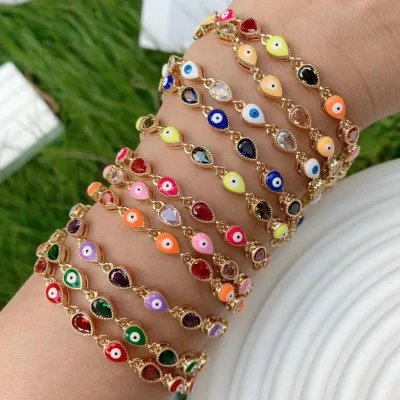


Style Simple Beaded Bracelet Elastic Stacked Bracelet Adjustable Bracelets
$1.25 - $2.15
MOQ: 60 Pieces


$1.00 - $8.00
MOQ: 2000 Pieces
Comprehensive Sourcing Guide
Strategic Sourcing Guide for Adjustable Glass Beaded Bracelets
The global market for fashion accessories has seen a sustained surge in demand for customizable, lightweight, and aesthetically versatile jewelry. Among these, the Adjustable Glass Beaded Bracelet stands out as a high-volume category suitable for diverse retail channels, from boutique gift shops to large-scale promotional merchandise. For B2B procurement professionals, navigating this sector requires a disciplined approach that balances aesthetic customization with rigorous supply chain verification. This guide synthesizes observed market data and technical specifications to provide a framework for sourcing adjustable glass beaded bracelets without relying on unverified claims or speculative market data.
Technical Specifications and Material Composition
Understanding the physical attributes of the product is the first step in defining procurement requirements. The core material for this category is frequently identified as glass beads, often combined with various metal alloys or silicone components to ensure durability and adjustability. Observed product listings indicate that the "Glass Bead Bracelet" is a distinct sub-category, where the primary decorative element is the glass bead itself. These beads are often available in a wide spectrum of colors, including multicolour options, gold finishes, and single-tone variations.
The structural integrity of the bracelet often relies on the connecting material. While some listings specify "Alloy" as the primary material for the chain or clasp, others utilize "Stainless Steel" or "Silicone" for bands designed for health or active usage. The "Adjustable" nature of the bracelet is a critical technical feature, typically achieved through sliding knots, elastic cords, or expandable chain mechanisms. Specifications for size are often listed as "Customized" or available in standard ranges such as Small, Medium, and Large. Buyers must verify that the adjustability mechanism does not compromise the structural integrity of the glass beads, which can be brittle if the tension is uneven.
Furthermore, the surface finish plays a significant role in the product's longevity. High-end variations may feature "PVD Plated" or "IP Plated" finishes, often described as "18K Gold Plating" or "High Mirror Polished." These plating techniques are essential for preventing tarnishing and ensuring the metal components retain their luster over time. The "Craft" section of product data often highlights these plating methods, distinguishing mass-market items from premium fashion accessories. When sourcing, procurement teams should request physical samples to verify the thickness of the plating and the hardness of the glass beads, as these are not always explicitly quantified in standard catalog descriptions.
Compliance, Certification, and Regulatory Standards
In the international jewelry trade, compliance is non-negotiable. Suppliers operating in this sector must adhere to specific chemical and safety standards to ensure their products are safe for consumer use. Observed data points to "SGS" and "Reach" as common certifications associated with these products. These certifications are critical for verifying that the materials used, particularly the alloys and plating, do not contain prohibited levels of heavy metals such as lead, cadmium, or nickel.
The "Reach" regulation, specifically, is a European Union standard that restricts the use of certain hazardous substances. For buyers targeting the European market, verifying that the supplier has valid Reach compliance documentation is mandatory. Similarly, "SGS" testing reports provide third-party validation of the product's safety and material composition. Buyers should not rely solely on a supplier's verbal assurance; instead, they must request current, batch-specific test reports that correspond to the exact materials and plating processes used in the production run.
Additionally, the "prod_standard" field in product data often lists "customized" or "standard." This distinction is vital for procurement. A "standard" product implies adherence to a general industry norm, whereas a "customized" product may require specific compliance protocols agreed upon during the design phase. For instance, if a bracelet is intended for children or sensitive skin, additional testing for nickel release or latex content (if silicone is used) may be required beyond standard jewelry regulations. Buyers must ensure that the supplier's quality management system includes regular testing cycles to maintain these certifications throughout the production lifecycle.
Cost Drivers and Pricing Dynamics
The pricing structure for adjustable glass beaded bracelets is influenced by several variable factors, primarily material costs, customization complexity, and order volume. The observed price range in the market spans from $0.02 to $15.00 USD, a wide disparity that reflects the difference between basic mass-produced items and premium, highly customized pieces. The lower end of this spectrum typically corresponds to simple designs using basic alloy and glass beads with minimal plating, often sourced with a lower Minimum Order Quantity (MOQ). Conversely, the higher price points are associated with complex designs, high-quality plating like PVD, and intricate customization services.
MOQ is a significant cost driver in this sector. Data indicates that MOQs can range from as low as 5 pieces to as high as 2000 pieces, with a common threshold observed at 500 pieces for customized orders. Suppliers often offer tiered pricing structures where the unit cost decreases as the order volume increases. For buyers with smaller budgets, sourcing from suppliers with lower MOQs (e.g., 50 or 500 pieces) allows for market testing without excessive inventory risk. However, for large-scale retail distribution, negotiating MOQs closer to the 2000-piece mark can yield significant per-unit savings.
Customization is another major cost factor. Services such as "OEM Orders," "Customization," and "Design as Photo" add value but also increase production time and cost. The complexity of the design, the number of colors involved (e.g., "Multicolour" vs. "Single Color"), and the specific plating requirements all contribute to the final price. Buyers should clearly define their budget constraints early in the negotiation process to align with the supplier's capabilities. It is also important to consider the "prod_packing" costs, as options like "PP Bag," "OPP Bag," or custom packaging can add to the overall landed cost.
Typical Applications and Market Segmentation
Adjustable glass beaded bracelets serve a broad spectrum of applications, making them versatile for various B2B clients. The primary usage category is "Decoration," where the product functions as a fashion accessory for daily wear. The "Style" attributes observed in the market, such as "Simple," "Natural," and "Star Fashion," indicate that these bracelets cater to diverse aesthetic preferences. This versatility allows them to be marketed to different demographic segments, from teenagers seeking trendy, colorful accessories to adults preferring more elegant, gold-plated designs.
Beyond general decoration, these bracelets are frequently utilized for "Health" and "Gift" purposes. Some product listings explicitly mention "Health" as a usage category, suggesting that certain designs may incorporate beads believed to have therapeutic properties or are marketed as wellness accessories. This opens up opportunities for sourcing in the health and wellness retail sector. The "Gift" usage is particularly relevant for promotional campaigns, corporate events, and seasonal sales. The ability to customize the design, color, and packaging makes these bracelets ideal for branded merchandise, where companies can imprint logos or specific color schemes to match their corporate identity.
The "Occasion" for wearing these bracelets varies from "Informal Occasions" to "Formal Occasions." While the "Simple" and "Natural" styles are best suited for casual wear, "Star Fashion" or "PVD Plated" variants with high mirror polishing can be appropriate for formal events. Procurement professionals should analyze their target customer base to determine the appropriate style mix. For example, a boutique focusing on casual wear might prioritize "Multicolour" and "Natural" styles, while a luxury gift shop might focus on "Gold" and "High Mirror Polished" options.
Supplier Evaluation and Verification Protocols
Selecting the right supplier is critical for ensuring product quality and supply chain reliability. The supply base for these products is primarily located in China, with specific hubs in Fujian and Guangdong provinces. These regions are known for their established jewelry manufacturing ecosystems, offering a wide range of capabilities from basic bead stringing to advanced plating technologies. However, the concentration of suppliers in these areas necessitates a rigorous vetting process.
Buyers should evaluate suppliers based on their "Other Service" capabilities, such as "Sourcing Agent" support, which can facilitate communication and quality control. The ability to accept "OEM Orders" and provide "Customization" is also a key indicator of a supplier's flexibility and technical competence. When evaluating potential partners, buyers must verify the supplier's production capacity and lead times. While specific lead times are not provided in the general data, the complexity of customization (e.g., "Design as Photo") often implies longer production cycles compared to standard stock items.
Quality control is paramount, especially given the fragile nature of glass beads. Buyers should request a detailed quality control plan from the supplier, outlining how they inspect beads for cracks, verify plating thickness, and test the adjustability mechanism. The presence of "SGS/Reach" certifications should be cross-referenced with the supplier's production facilities to ensure that the testing applies to the specific products being manufactured. Additionally, buyers should assess the supplier's packaging standards, as "OPP Bag" or "PP Bag" packaging must be robust enough to prevent damage during transit.
Quality Control and Long-Term Procurement Considerations
Maintaining consistent quality over time requires a proactive approach to quality control. For adjustable glass beaded bracelets, the primary risks include bead breakage, plating wear, and clasp failure. To mitigate these risks, buyers should implement a multi-stage inspection process. This includes pre-production sample approval, where the "Design as Photo" specification is verified against the physical sample. During production, random sampling should be conducted to check for consistency in color, size, and plating quality.
Long-term procurement considerations involve building a sustainable relationship with suppliers who can scale production while maintaining quality. The "Customization" aspect of these products means that specifications can change frequently. A reliable supplier should be able to adapt to these changes without compromising the "Standard" or "Customized" requirements. Buyers should also consider the environmental impact of their sourcing decisions, particularly regarding the disposal of packaging materials and the sustainability of the glass and metal sources.
Finally, buyers must remain vigilant regarding the "prod_model" variations. With models ranging from "Glass Bead Bracelet-048K" to "Eye Shape Beaded Bracelet-072U," each model may have unique quality requirements. A standardized quality control protocol that accounts for these specific model differences is essential. By focusing on these technical and procedural aspects, B2B buyers can ensure a steady supply of high-quality adjustable glass beaded bracelets that meet market demands and regulatory standards.
FAQs
Can I customize the design and color of these bracelets?
Yes, customization is available for design and color. Suppliers accept OEM orders and can produce items as per photo requests, allowing for any color options like multicolour or gold finishes.
What materials are used to make these adjustable bracelets?
These bracelets are primarily made from glass beads, alloy, stainless steel, or silicone. The specific material depends on the model, such as the glass bead bracelet or the eye shape beaded variant.
Which certifications ensure the safety of these jewelry products?
Products often carry SGS and Reach certifications to verify safety. These standards confirm that materials like alloys and plating do not contain prohibited heavy metals for international trade compliance.
What is the typical minimum order quantity for these items?
The minimum order quantity ranges from 5 to 2000 pieces depending on the supplier. Customized orders typically start at 500 pieces, while standard items may be available with lower MOQs.
How are these bracelets packaged for shipment?
Items are commonly packed in PP bags or OPP bags. Some suppliers offer custom packaging requirements, and specific models may be packed as single items or in pairs.
Where are these adjustable bracelets manufactured?
Manufacturing is concentrated in China, specifically in Fujian and Guangdong provinces. These regions host established jewelry ecosystems capable of producing various styles and materials.
What occasions are suitable for wearing these bracelets?
They are suitable for both informal and formal occasions. Styles range from simple and natural designs for daily wear to star fashion and gold-plated options for events.